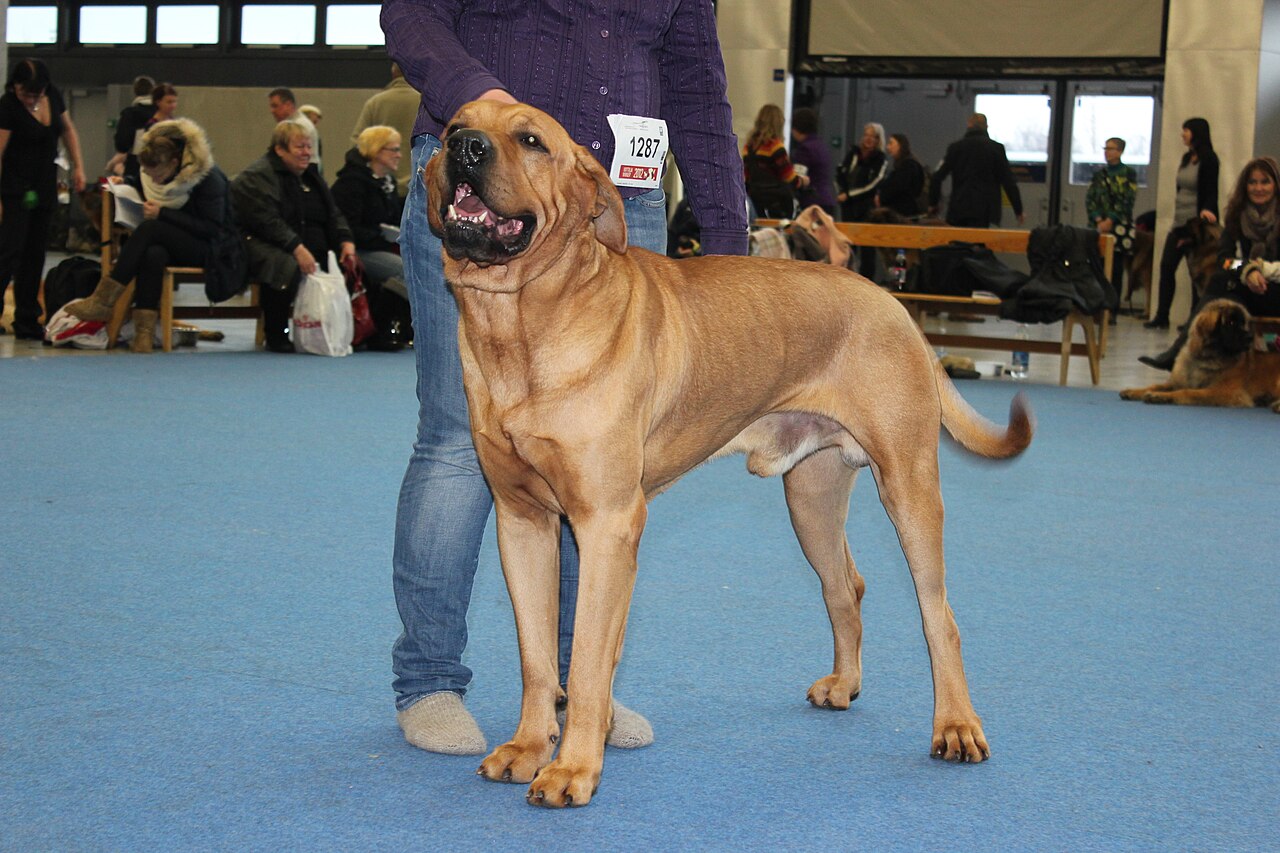
Origin and history
The Tosa comes from Japan, from the old province of Tosa on the island of Shikoku (today Kōchi Prefecture). The FCI standard is blunt about its purpose: its "Utilization" line reads "Formerly fighting dog, nowadays watchdog."
According to the FCI's historical summary, Japan has a long history of dog fighting, beginning in the 14th century, and the Tosa was produced as a hybrid of the native Shikoku-ken and Western breeds. The standard names Bulldogs (1872), Mastiffs (1874), German Pointers (1876) and Great Danes (1924), and says St. Bernards and Bull Terriers may also have been used. The breed is sometimes called the "Japanese Mastiff".
Recognition today:
- FCI: standard No. 260, Group 2, section 2.1 (Molossoid breeds, mastiff type), current standard published December 9, 1997.
- UKC: recognised as the Tosa Ken on January 1, 1998, in the Guardian Dog Group.
- AKC: listed in the Foundation Stock Service, the AKC's record-keeping program for breeds that are not fully recognised. A Tosa cannot compete in regular AKC conformation classes.
The Tosa is rare in the US. Dogs bred in Japan tend to be considerably lighter than many lines bred in the West.
Temperament and character
The FCI standard says: "The temperament is marked by patience, composure, boldness and courage." The UKC standard adds detail that every potential owner should read carefully:
- It describes the Tosa as "normally a tranquil, quiet, and obedient dog with a calm but vigilant demeanor", quietly affectionate with its family and possibly aloof with strangers.
- It warns that the breed "is also by nature watchful of other dogs and may react aggressively to dogs it considers intruders", and notes that "some level of dog aggression is characteristic of this breed".
- Aggression towards people is described as uncharacteristic and highly undesirable.
- The breed "matures slowly and individual dogs may not reach their prime until as late as four years of age."
In practice this is a quiet, self-contained dog that does not bark much and does not need protection training to watch the house. The real management issue is other dogs: a large adult Tosa that decides to fight is very hard to stop. Plan on a life without dog parks and with careful, on-leash greetings.
Size and appearance
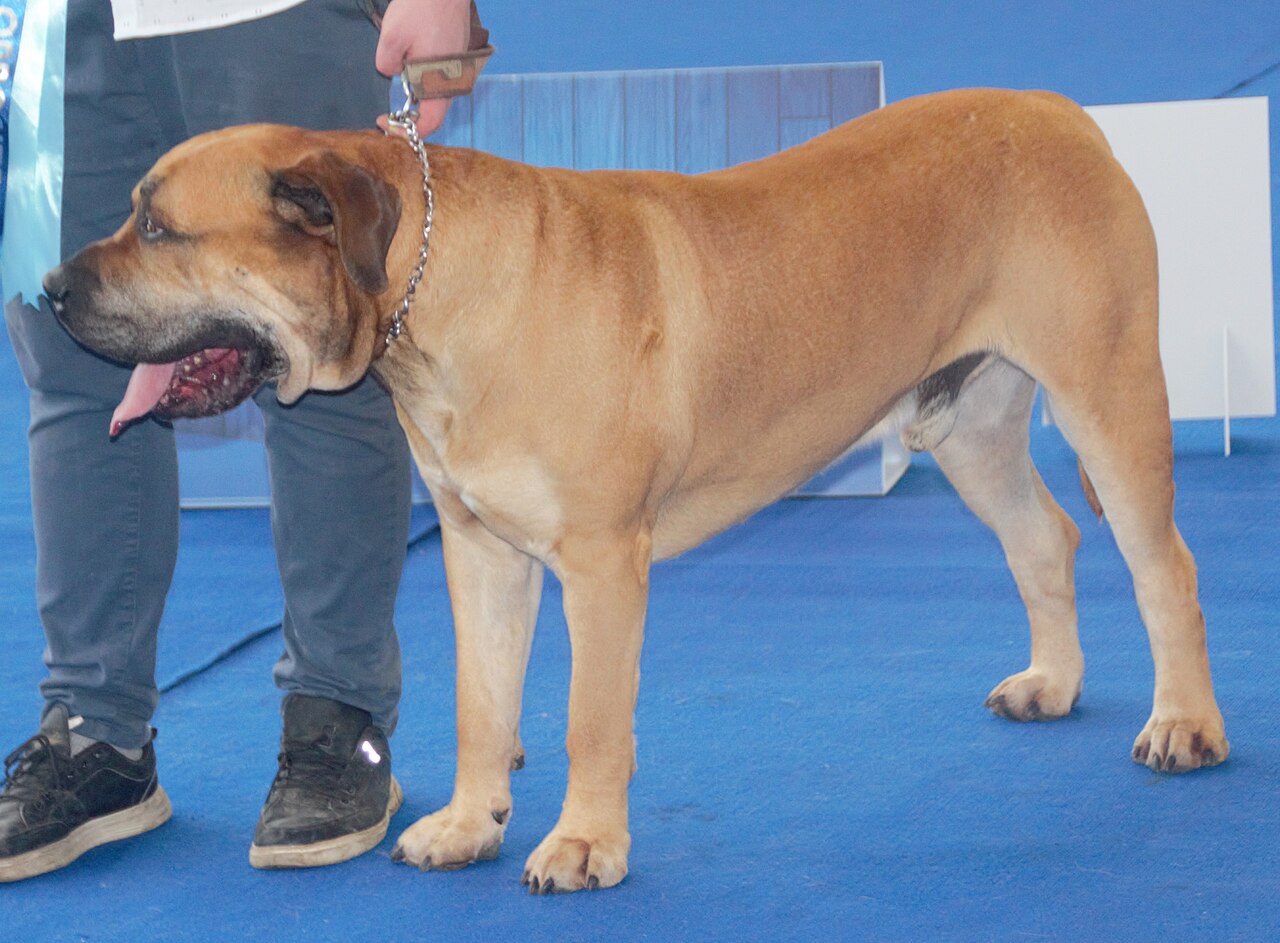
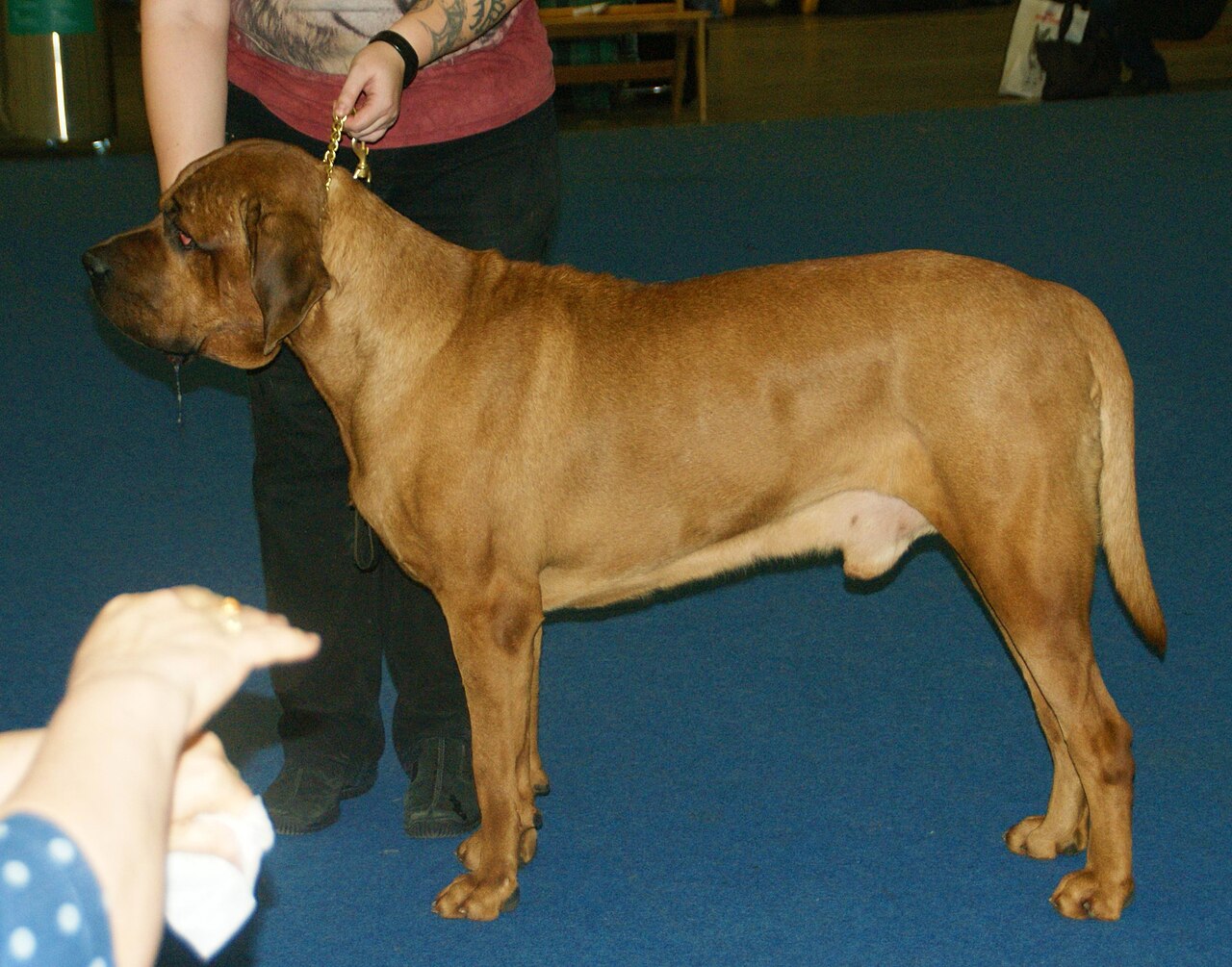
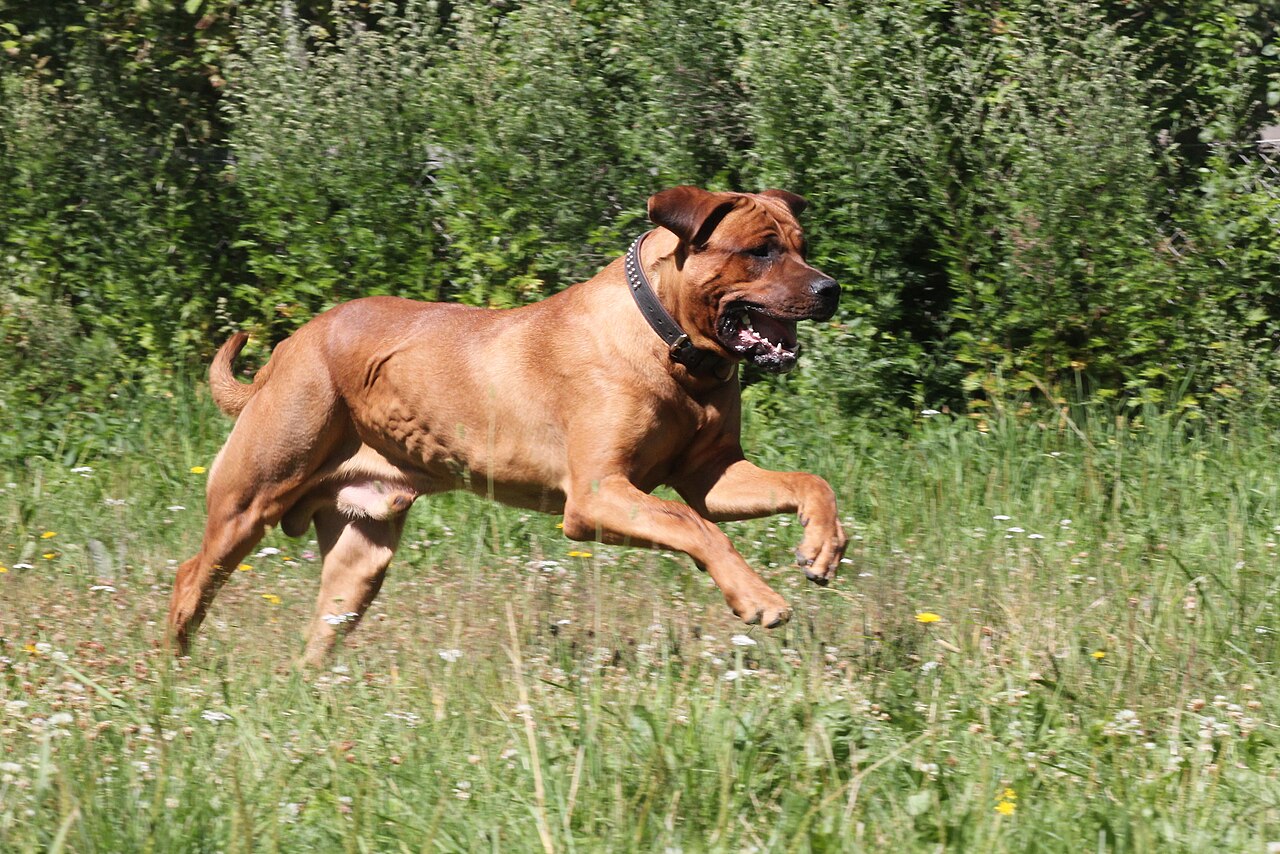
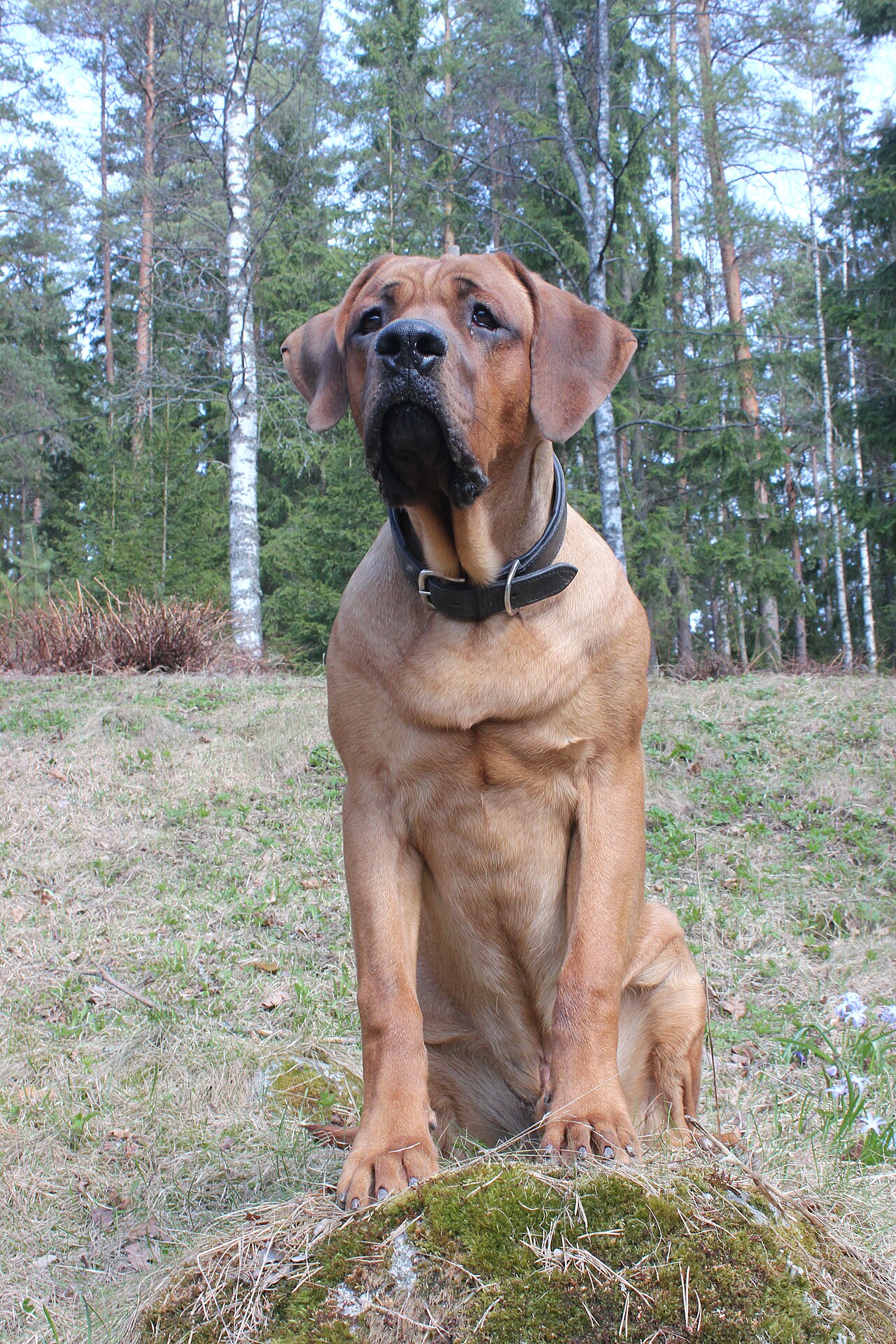
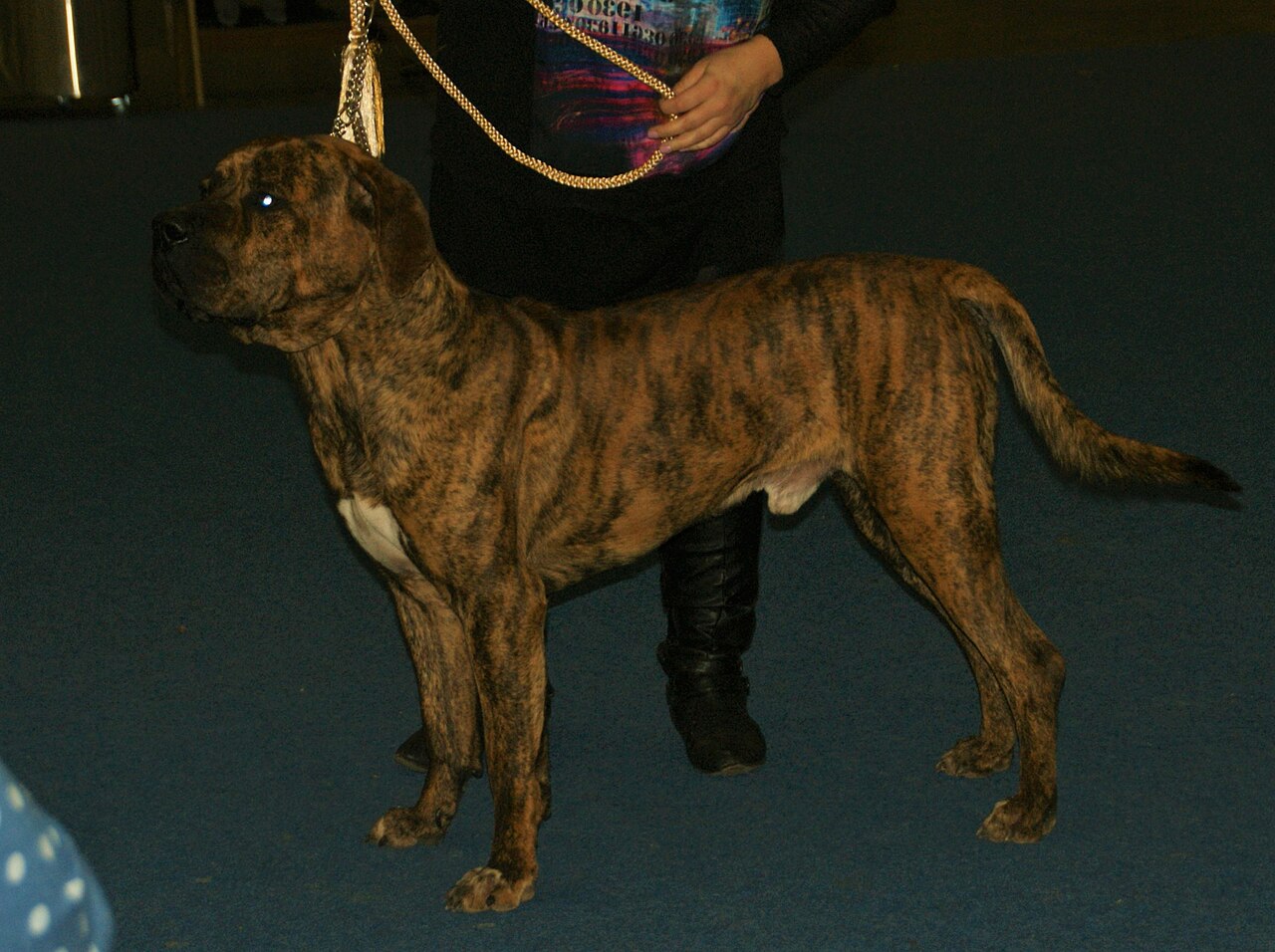
A large, short-coated molosser with a broad skull, a square muzzle, hanging ears, a dewlap and a thick tail that reaches the hocks. The FCI allows red, fawn, apricot, black and brindle, with slight white markings on chest and feet. The UKC prefers a deep, solid red and also accepts black with red markings and pied.
| Males | Females | |
|---|---|---|
| Height (FCI minimum) | 60 cm (about 23.5 in) | 55 cm (about 21.5 in) |
| Weight (AKC) | 100-200 lbs | 100-200 lbs |
| Lifespan | 10-12 years | 10-12 years |
| Coat | Short, hard, dense | Short, hard, dense |
Most adults stand 22 to 32 inches at the shoulder. Neither the FCI nor the UKC sets a maximum height or a weight range. The UKC sets minimums of 23½ inches for males and 21¾ inches for females and gives no preference to bigger dogs once that is met. The AKC lists 100-200 pounds, which reflects the heavy Western lines; Japanese-type dogs are often far lighter.
Exercise and daily life
Adults need moderate daily exercise: long walks, some free movement in a securely fenced yard, and calm mental work. They are not built for jogging or high-impact sports. Puppies grow fast and should not be pushed into long runs, stairs or jumping before their joints are mature.
The realistic setup is a house with a solid, high fence and no shared yard. Apartments are a poor fit: hallways, elevators and neighbours' dogs bring exactly the close encounters this breed handles worst. The Tosa drools, especially after drinking, and handles heat poorly because of its size.
Training
The UKC standard says the Tosa "responds best to positive-enforced training methods". Harsh handling is risky with a dog of this size and self-confidence. What works:
- Calm, consistent, reward-based training from day one, with a few clear rules.
- Early, broad socialisation with people, places and handling, continued well into the second and third year, since the breed matures late.
- Controlled, structured contact with stable adult dogs instead of free play with strangers' dogs.
- Loose-leash walking and a reliable "leave it" while the puppy is still small enough to hold. An adult can outweigh its owner.
- Muzzle training as a routine skill, useful for vet visits and travel.
Typical problems are dog-dog aggression, pulling on the leash and over-guarding of the home and yard.
Grooming
Minimal. Brush weekly with a rubber curry. Wipe the lips and facial folds, keep a towel handy for drool, check ears and trim nails regularly. Get the puppy used to handling early; trimming nails on a reluctant 150-pound adult is not a job you want.
Health
The Tosa is rare, and there is little published breed-specific health data. What matters most:
- Hip and elbow dysplasia, as in other heavy mastiff breeds. Ask for OFA or PennHIP hip results and OFA elbow results on both parents.
- Gastric dilatation-volvulus (bloat), a risk in all large, deep-chested dogs. Learn the warning signs and ask your vet about a preventive gastropexy.
- Eyelid problems. The UKC standard disqualifies any functional abnormality of the eyelids or eyelashes, so ask about entropion and ectropion in the parents and have the puppy's eyes checked.
- Heat intolerance and overweight in very heavy dogs.
We found no breed-specific DNA test established for the Tosa. Typical lifespan is 10 to 12 years.
Cost
A puppy from a breeder who health tests the parents typically costs $1,500 to $4,000. Breeders are few, so expect a waiting list and possibly shipping costs. Be wary of cheap litters with no hip and elbow results.
Running costs for food, routine vet care, preventives and supplies for a dog of 100 pounds or more are roughly $2,000 to $3,500 a year. Add a high, solid fence, a giant crate and, if your insurer charges more or excludes the breed, the cost of a separate dog liability policy.
Who it suits and who it does not
Good fit:
- Experienced owners of large guardian breeds, for example after a Mastiff or Bullmastiff
- A house with a securely fenced yard and no other dogs, or only one calm dog of the opposite sex
- People who want a quiet watchdog and are ready for years of socialisation and management
Not a good fit:
- First-time owners
- Homes with several dogs, frequent dog visitors or regular dog park trips
- Anyone whose city, lease or insurance excludes the breed
- People who want a gentler giant: the Newfoundland or Leonberger are far easier to live with, while the Dogue de Bordeaux and Cane Corso are similar in seriousness