Origin and history
The Neapolitan Mastiff, or Mastino Napoletano, is Italy's giant guardian. The FCI standard calls it a descendant of the great Roman mastiff described by Columella in the first century AD. For centuries it survived as a farm and estate guard in the countryside around Naples and at the foot of Vesuvius, kept for function rather than looks.
The modern breed starts after World War II. According to the AKC's breed history, eight of these dogs were shown at the first postwar dog show in Naples, at the Castel dell'Ovo, in 1946. The Swiss journalist and dog writer Piero Scanziani was struck by one male, Guaglione, who became the first registered Neapolitan Mastiff, the breed's first Italian champion and the model for its first standard. Scanziani drew up that standard, which the Italian kennel club ENCI recognised in 1949. The FCI standard says the breed "has been re-selected since 1947", and the FCI accepted it definitively in 1956. Later breeders, above all Mario Querci of the "di Ponzano" kennel, pushed the type towards the heavy wrinkles you see today.
In the US the AKC approved the standard on January 13, 2004, and the breed joined the Working Group on July 1, 2004. The national parent club is the United States Neapolitan Mastiff Club.
Temperament and character
The AKC standard describes the Neapolitan Mastiff as "steady and loyal to his owner, not aggressive or apt to bite without reason". It adds that "he is always watchful and does not relish intrusion by strangers into his personal space." In daily life that means:
- With its own people it is calm, affectionate and often clingy, happy to lean its whole weight against your legs.
- With strangers it is wary. Its first reaction is usually to watch, block the way and stand its ground.
- It guards by instinct. No protection training is needed, and none is advisable.
- It can be intolerant of strange dogs, especially of the same sex, and it does not back down.
It is a slow, deliberate dog indoors, but it can move surprisingly fast over a short distance. With children of its own family it is usually patient; the risk is sheer mass, plus a guardian that may misread rough play from visiting kids.
Size and appearance
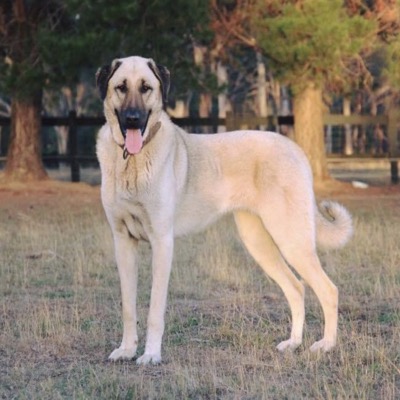
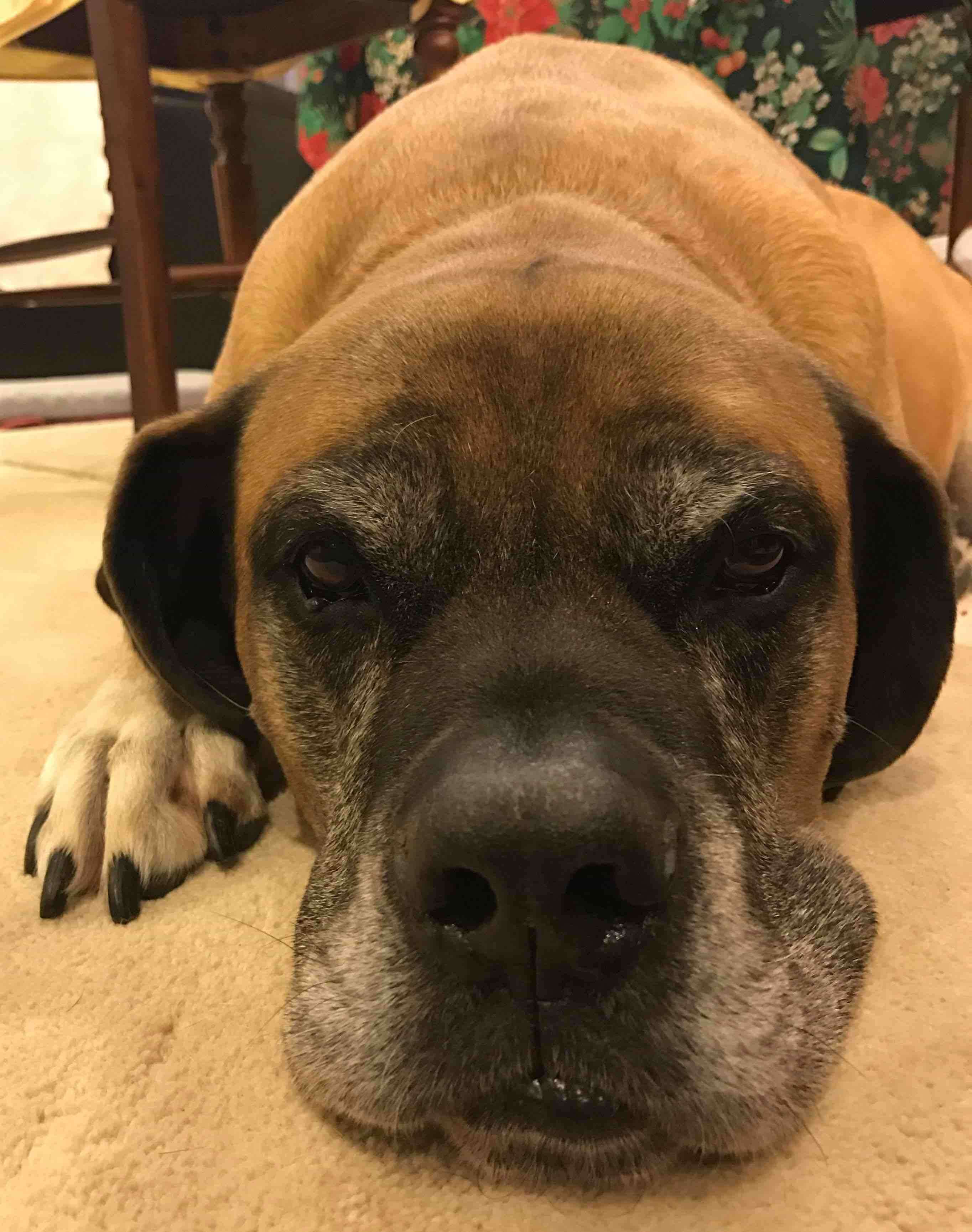
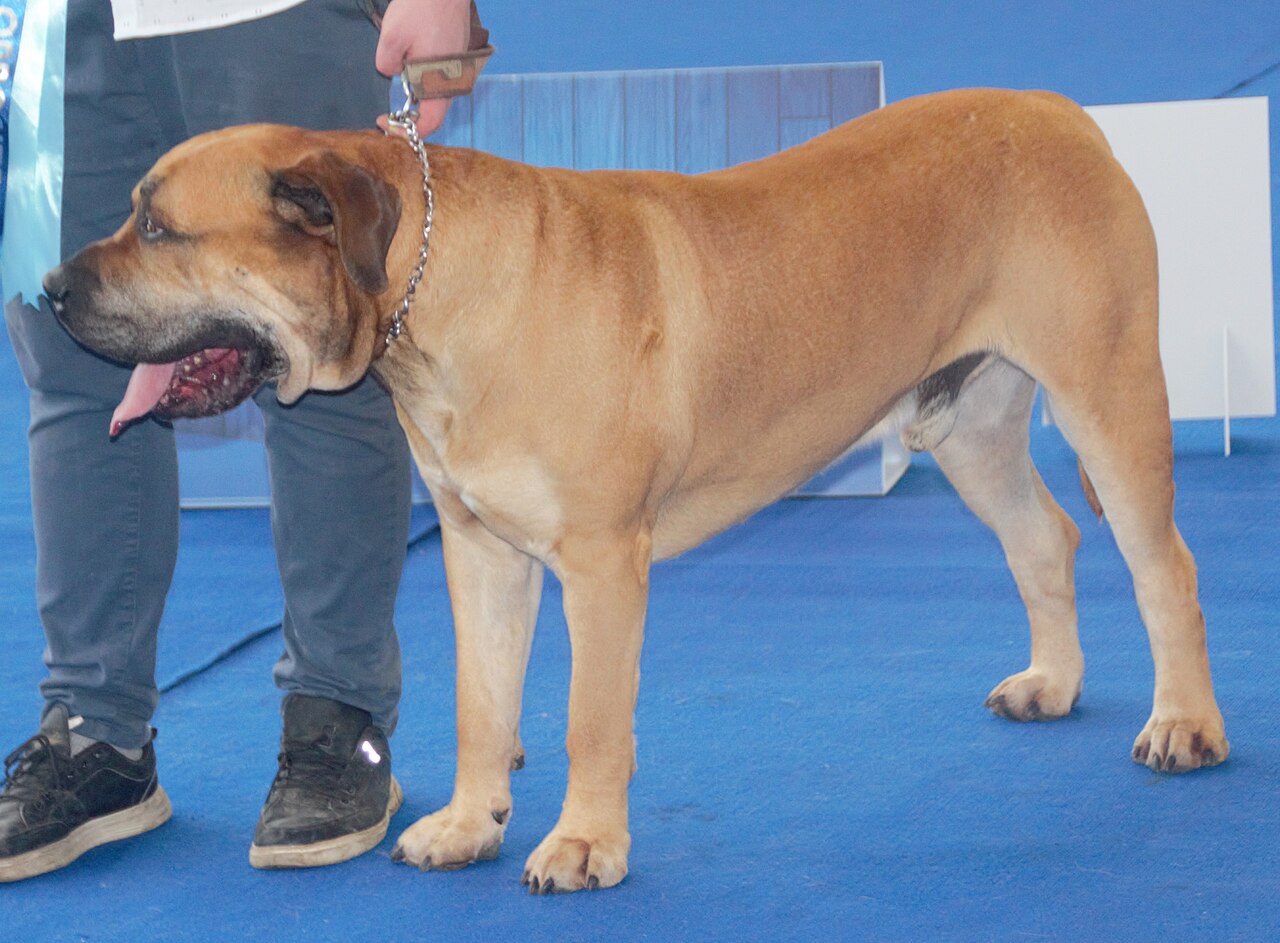
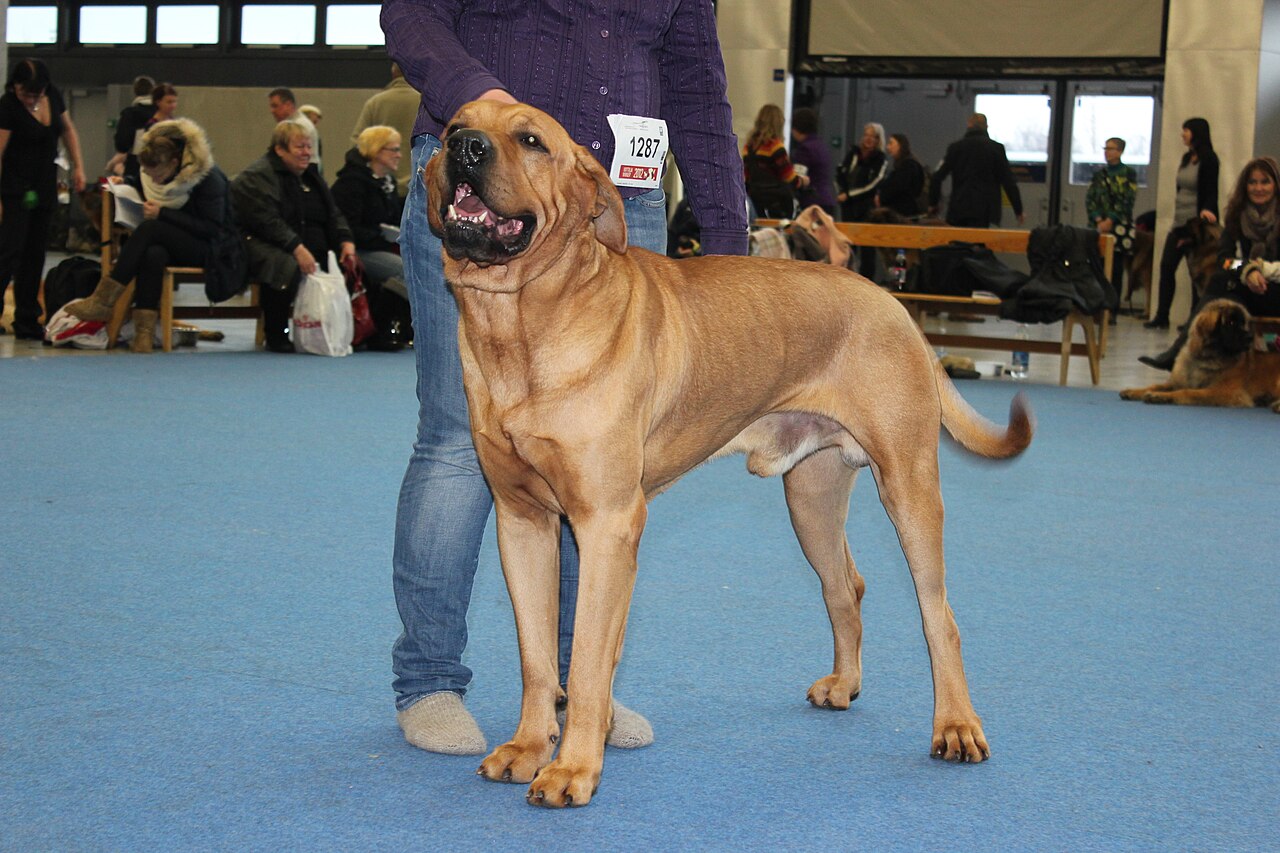
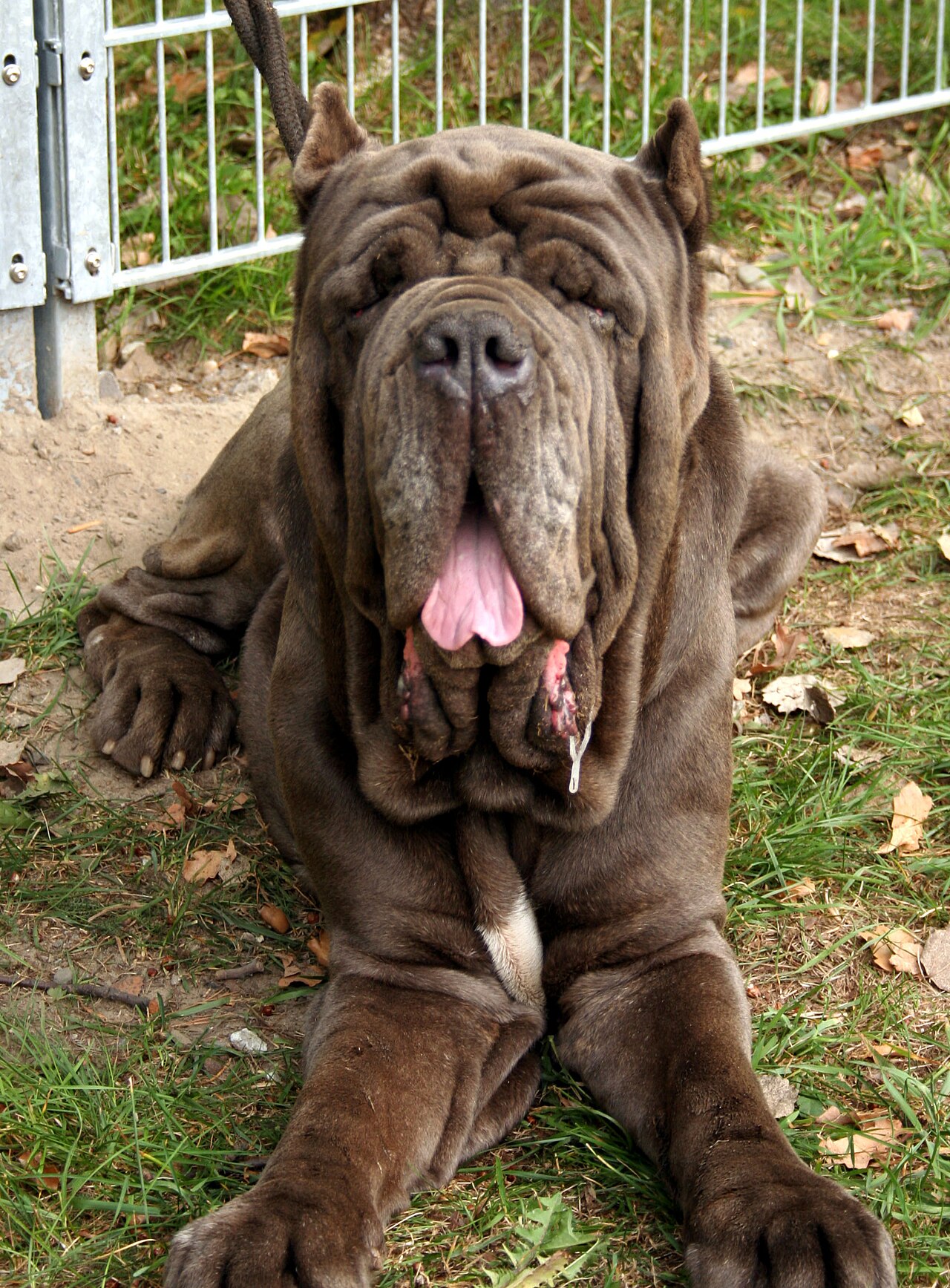
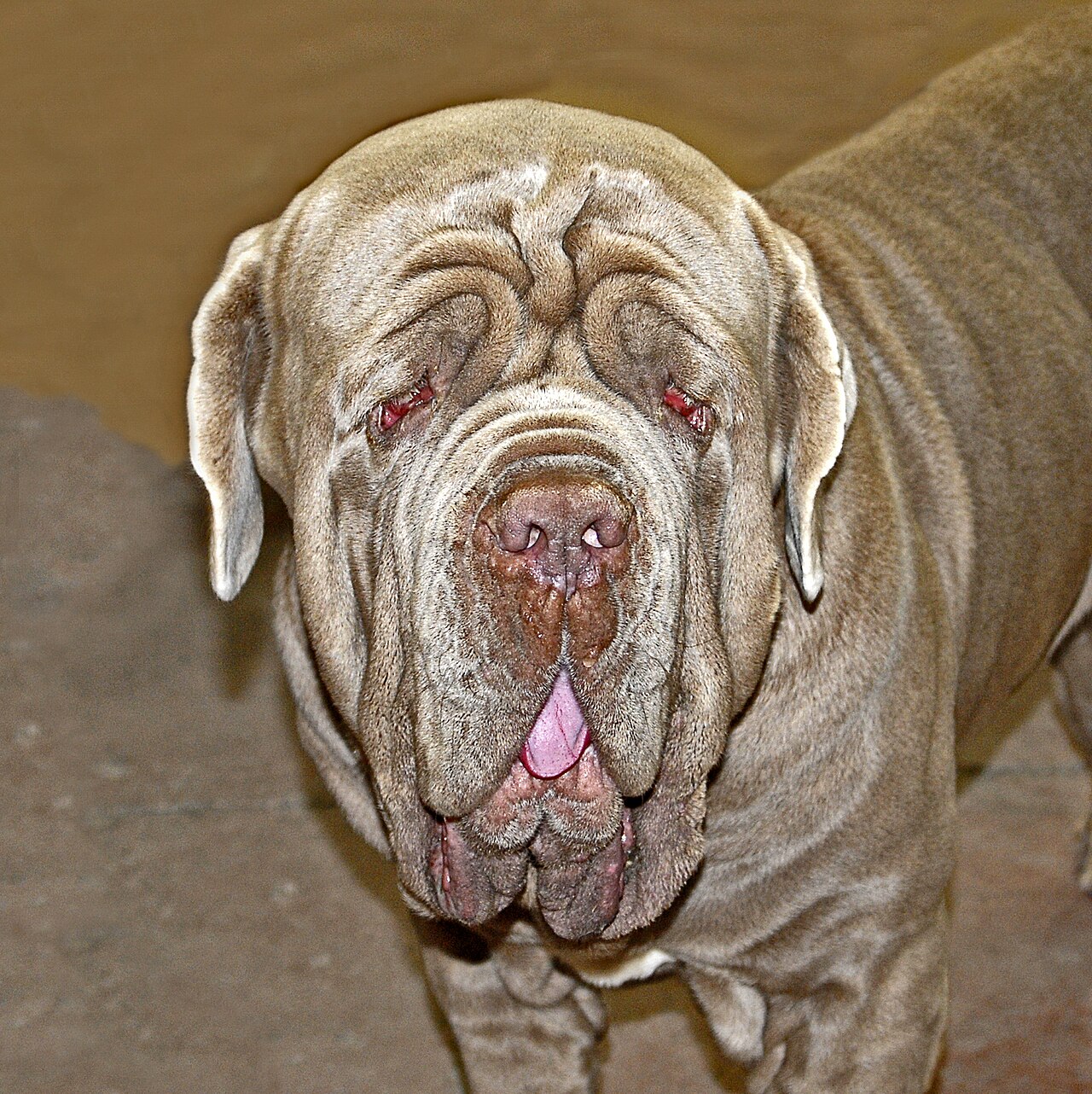
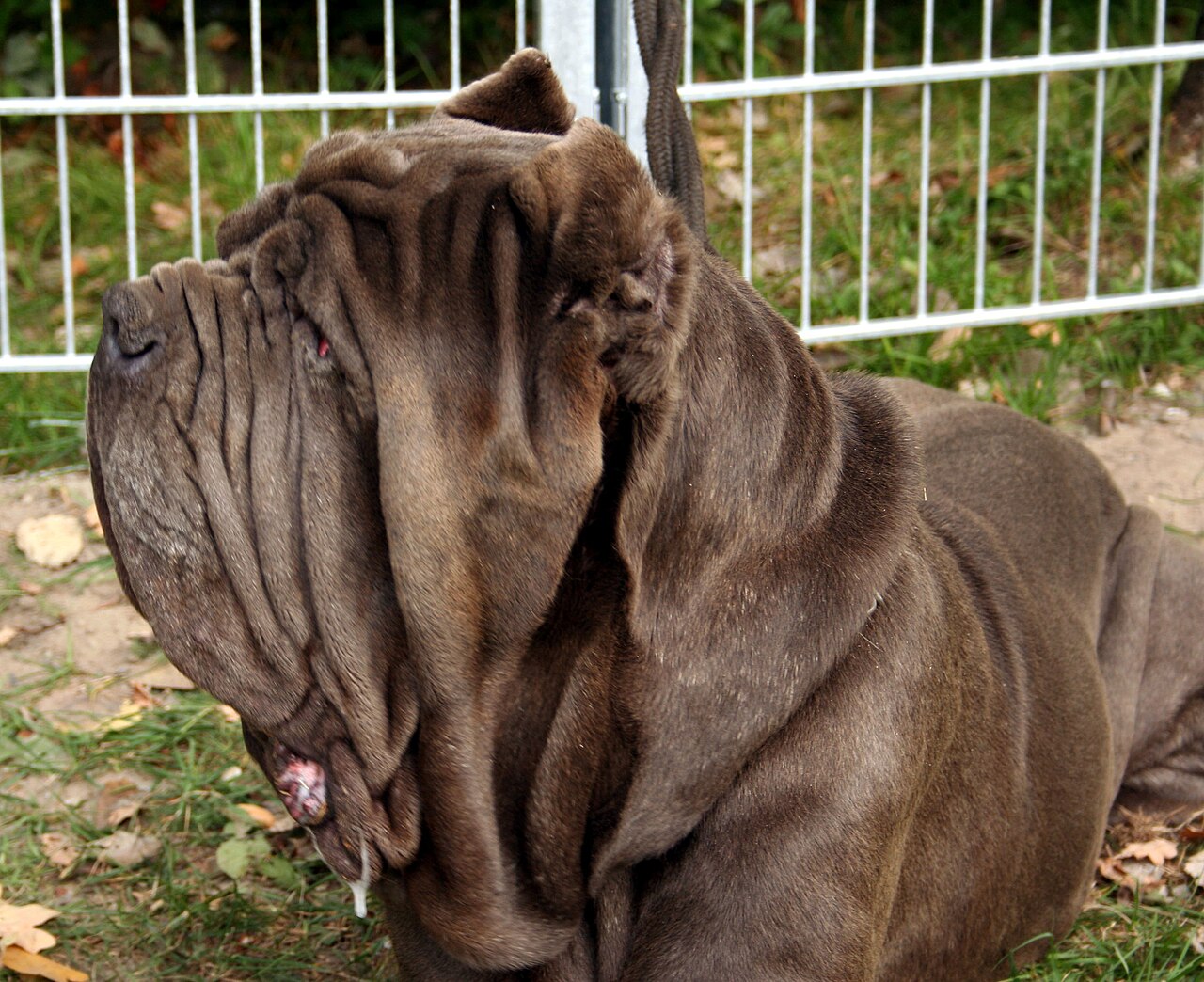
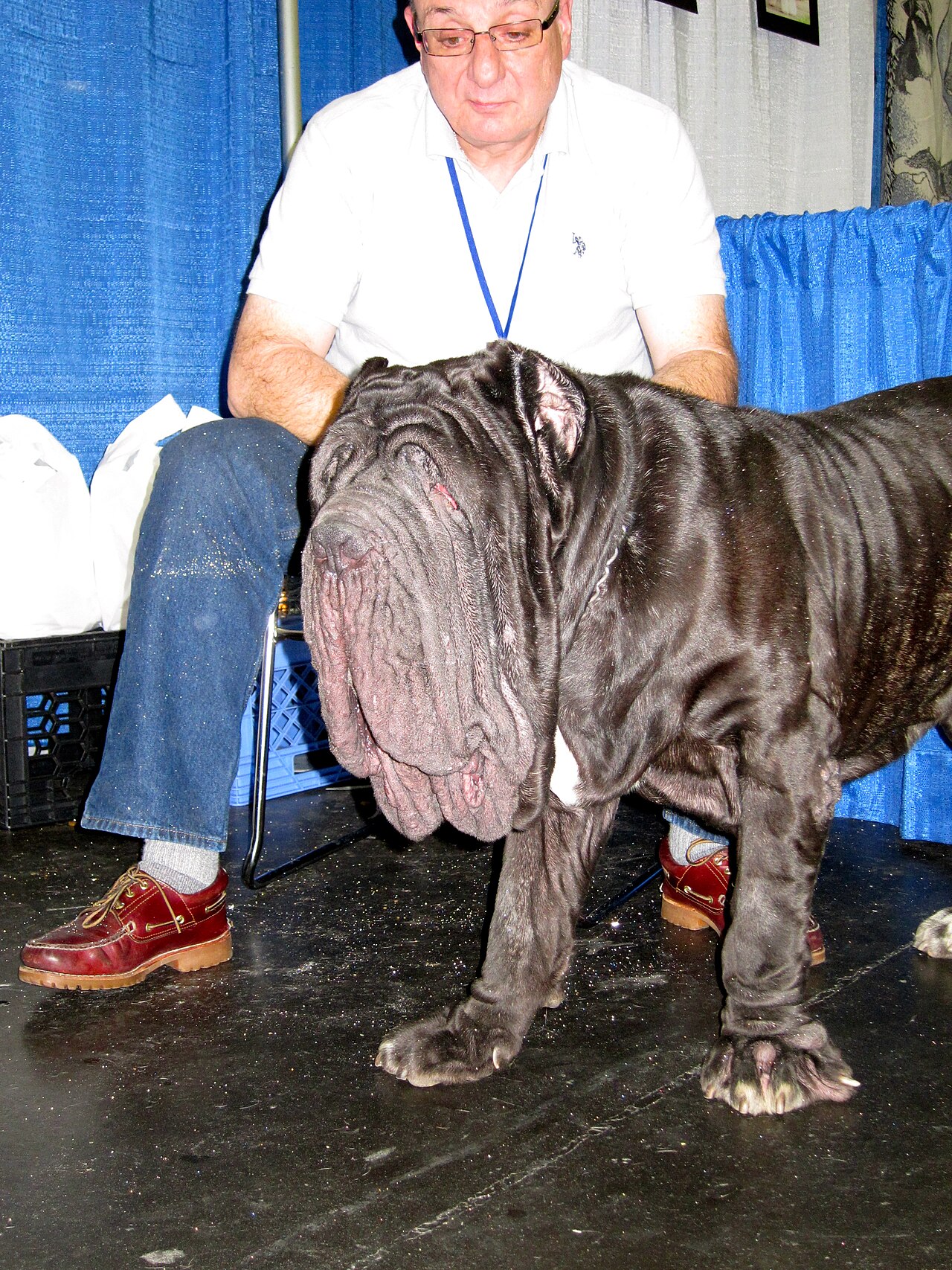
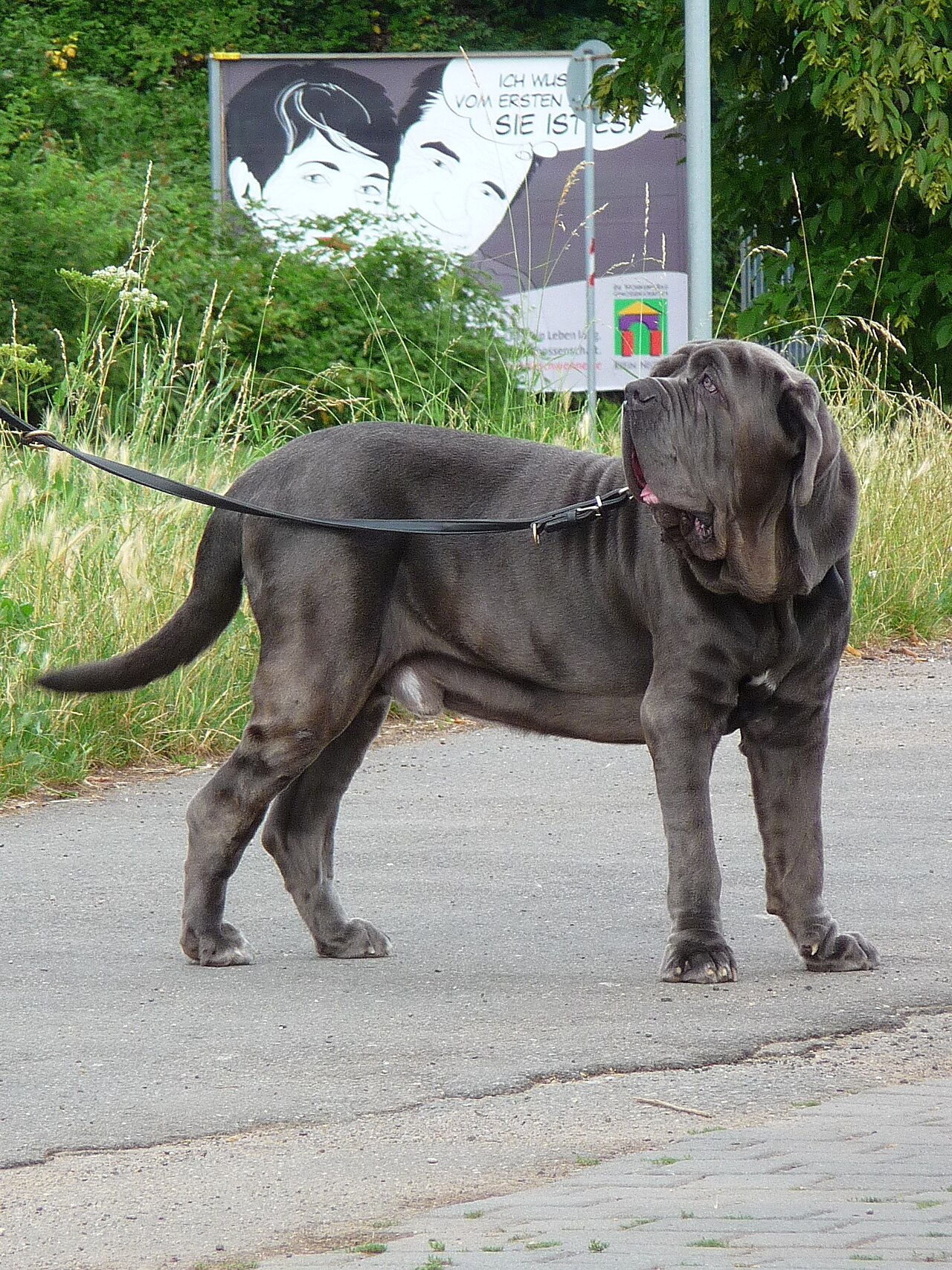
A massive, heavy-boned dog, longer than tall, with loose skin over the whole body, heavy folds on the head and a double dewlap. The coat is short and dense. The AKC allows gray (blue), black, mahogany and tawny, with or without tan brindling, and limited white markings.
| Males | Females | |
|---|---|---|
| Height (AKC) | 26-31 in | 24-29 in |
| Weight (AKC average) | about 150 lbs | about 110 lbs |
| Lifespan | 7-9 years | 7-9 years |
| Coat | Short, dense | Short, dense |
The AKC standard says "greater weight is usual and preferable" as long as proportion and function are maintained. The FCI standard is more restrained: 60-70 kg (132-154 lbs) for males, and it insists the skin is "never in abundance to the extent to interfere with the dogs' health and well-being."
Exercise and daily life
Exercise needs are modest: two or three relaxed walks a day and some time in a fenced yard. This is not a jogging partner. Puppies grow very fast, so no stairs, long walks or jumping until the joints mature.
Heat is a real limit. A dark, heavy dog with loose skin overheats quickly, so walk at dawn and dusk in summer and provide shade, water and, ideally, air conditioning. Expect drool on walls, furniture and guests; many owners keep towels in every room. A house with a fenced yard is the realistic setup; apartments and stairs are not.
Training
The Neapolitan Mastiff learns, but on its own schedule. What works:
- Short, calm sessions with food rewards. Harsh corrections make a guardian defensive.
- Intense socialisation from 8 weeks into the second year: guests, vets, children, traffic, other dogs.
- Leash manners while the puppy is still small. An adult that decides to pull cannot be held by most people.
- Clear house rules for visitors, so the dog learns that you decide who comes in.
Typical problems are guarding of the house and car, pulling towards other dogs and refusing to move when it does not want to.
Grooming
The coat itself needs only a weekly brushing. The work is in the skin: clean and dry the facial folds several times a week, wipe the eyes daily and keep the lips and chin clean. Check ears, trim nails and brush teeth regularly.
Health
The parent club recommends hip and elbow evaluations, a cardiac exam and an eye exam by a veterinary ophthalmologist for breeding dogs (listed on the AKC's breed health testing page). Known problems:
- Hip and elbow dysplasia
- Eyelid problems: entropion, ectropion and loose lower lids. The FCI standard disqualifies entropion and ectropion; the AKC standard, by contrast, describes lower lids that "droop to reveal haw".
- Cherry eye (prolapsed third eyelid gland). In a 2022 VetCompass study of UK dogs, the Neapolitan Mastiff had the highest rate of all breeds, about 4.9% per year, with 34 times the odds of crossbreds.
- Bloat (gastric dilatation-volvulus), as in all giant, deep-chested breeds
- Heart disease, including dilated cardiomyopathy
- Skin fold infections and heat stress
Ask for OFA or PennHIP hip results, elbow results, a cardiac exam and a recent eye exam on both parents. Feed two or three meals a day and learn the signs of bloat. Lifespan is short, typically under 10 years.
Cost
A puppy from health-tested parents typically costs $2,000 to $4,000. Prices well below that usually mean no testing.
Running costs for food, vet care, preventives and supplies come to roughly $2,000 to $3,500 a year. Everything is priced by weight, from medication to surgery, and eye or bloat surgery can cost several thousand dollars. Pet insurance is worth pricing before you buy.
Who it suits and who it does not
Good fit:
- Experienced owners of large guardian breeds, perhaps after a Mastiff or Bullmastiff
- A house with a securely fenced yard in a moderate climate
- People who want a calm home guardian and accept drool and a short lifespan
Not a good fit:
- First-time owners or anyone who wants an active sports dog; the Cane Corso is the more athletic Italian guardian
- Apartments, hot climates or homes without air conditioning
- Households with frequent visitors or several same-sex dogs
- Anyone whose lease or insurance excludes large guardian breeds; a Newfoundland is a gentler giant