Origin and history
The Dogue de Bordeaux, also called the French Mastiff, is one of the oldest French breeds. According to the FCI standard it probably descends from the war and hunting dogs of the Alans. In the 14th century Gaston Phébus, Count of Foix, wrote in his Livre de Chasse that such a dog "holds his bite stronger than three sighthounds".
By the 19th century these dogues were mostly found around Aquitaine. They hunted boar, guarded houses and cattle, worked for butchers and were used in dog fights. At the first French dog show in Paris in 1863 they were entered under their present name. Of several regional types (Toulouse, Paris and Bordeaux), the Bordeaux type became today's breed. The first written standard appeared in Pierre Mégnin's book in 1896.
The two World Wars almost wiped the breed out. It got a fresh start in the 1960s, and in 1971 Raymond Triquet wrote a new standard. The clarifications added to the current standard in 2007 came from officers of the French breed club, the SADB. Today it is FCI standard No. 116, Group 2 (molossoid breeds), without a working trial.
In the US the breed became famous through the 1989 film Turner & Hooch, in which a Dogue de Bordeaux played opposite Tom Hanks. The AKC recognised the breed in 2008 and placed it in the Working Group. The UKC also registers it, and the AKC parent club is the Dogue de Bordeaux Society of America.
Temperament and character
The FCI standard describes "an ancient fighting dog" that "is gifted for guarding, which it assumes with vigilance and great courage but without aggressiveness", and calls it "a good companion, very attached to its master and very affectionate. Calm balanced with a high stimulus threshold." It also notes that "the male normally has a dominant character". In daily life:
- With its own family it is gentle, clingy and happiest lying close to you.
- With strangers it is watchful and reserved. Its size and bark usually do the guarding.
- It is not quick to react, but when it decides to act, more than 100 pounds of dog is hard to stop.
- Dog-to-dog tolerance varies. Same-sex conflicts between adults, especially males, are common.
A well-raised Dogue is usually patient with its own children. Still, a dog this heavy can knock a small child over by accident, so supervision is a must.
Size and appearance
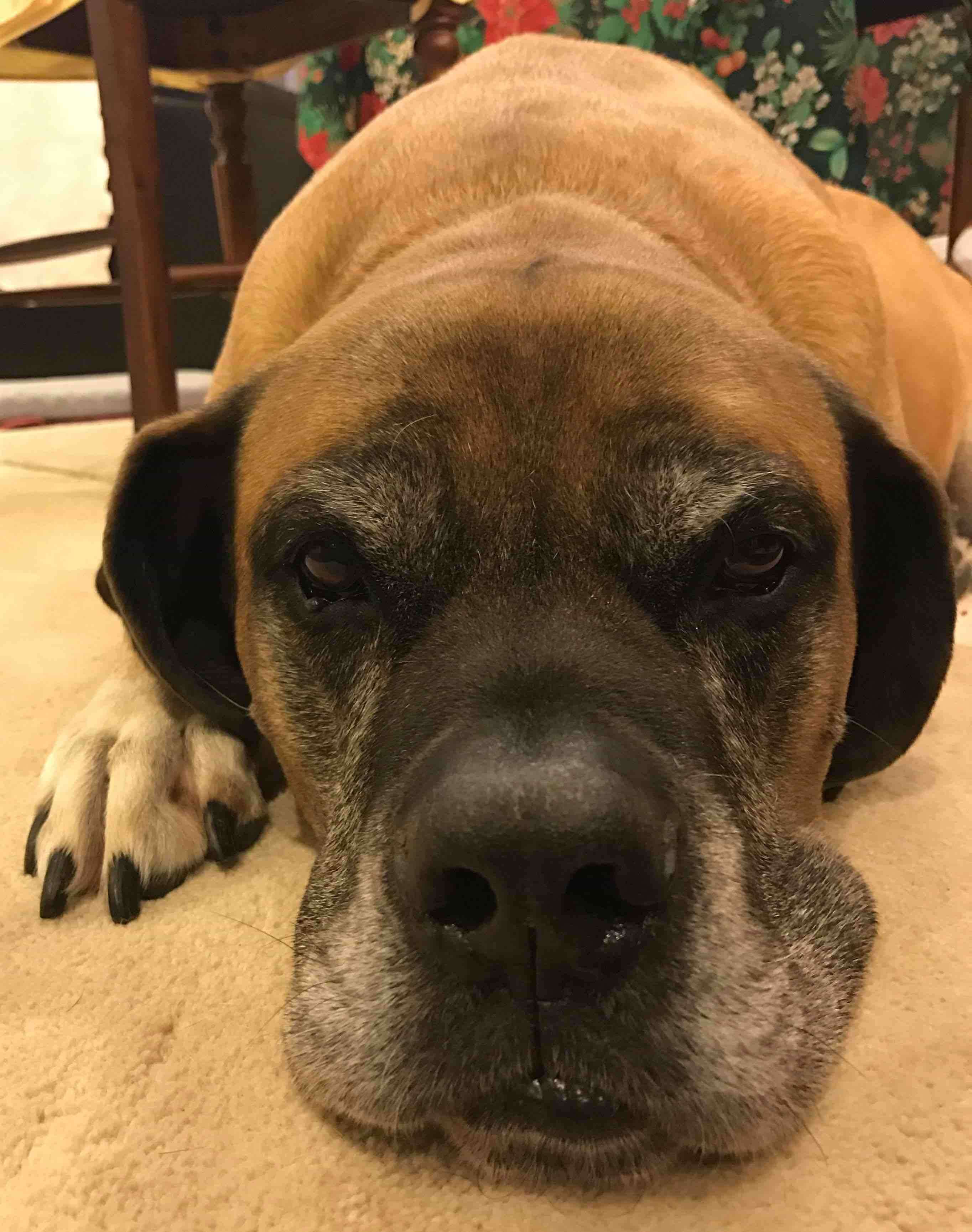
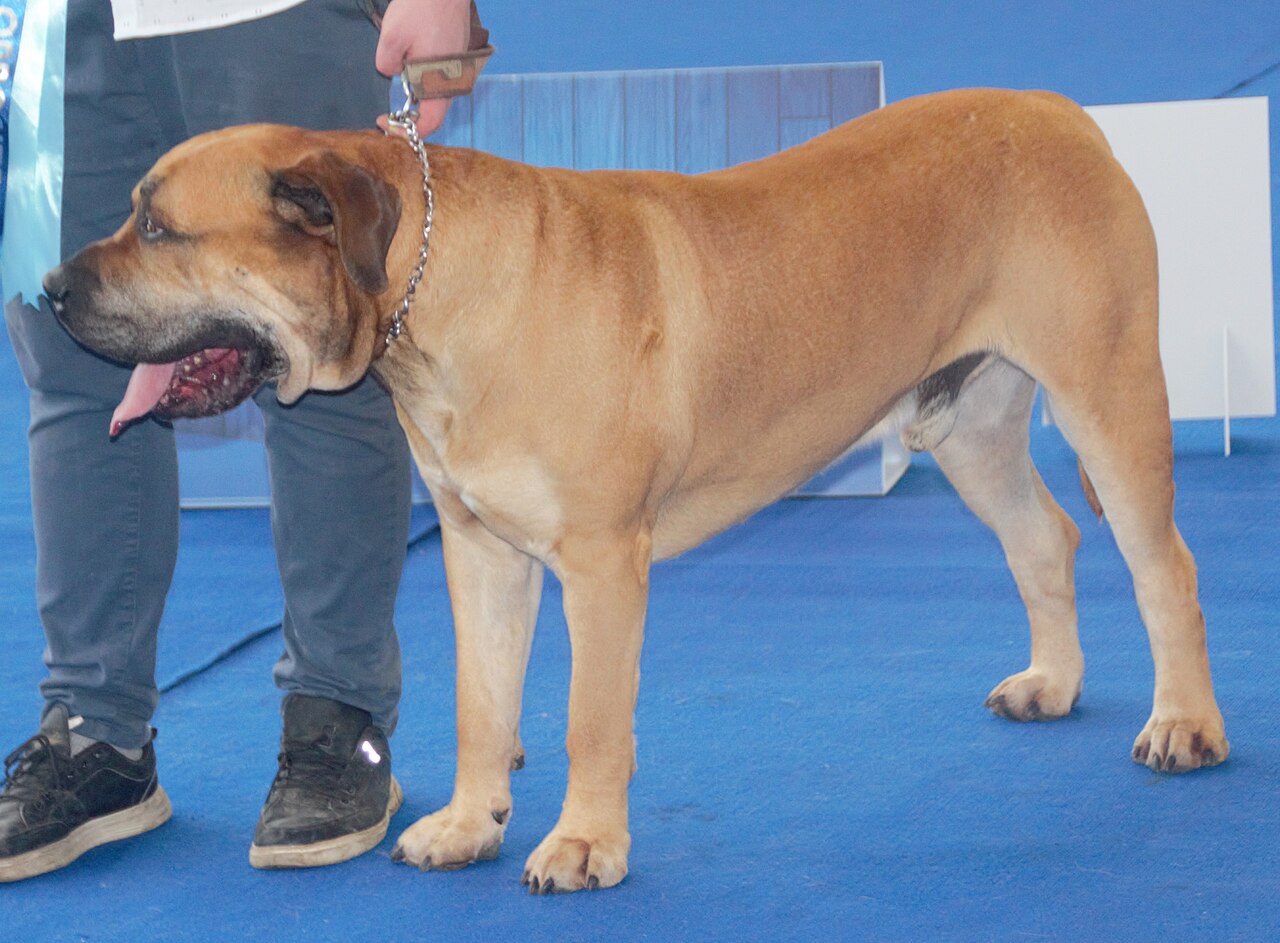
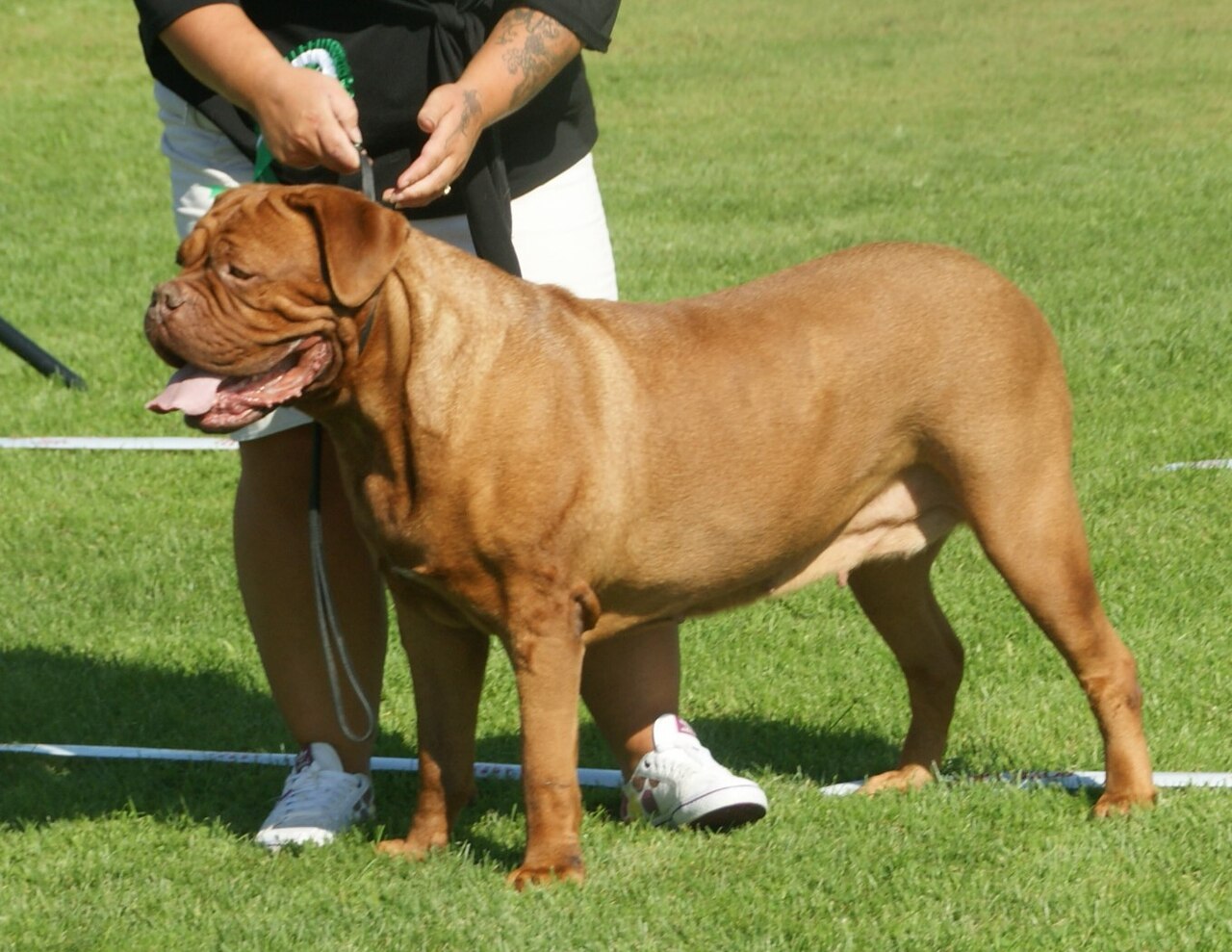
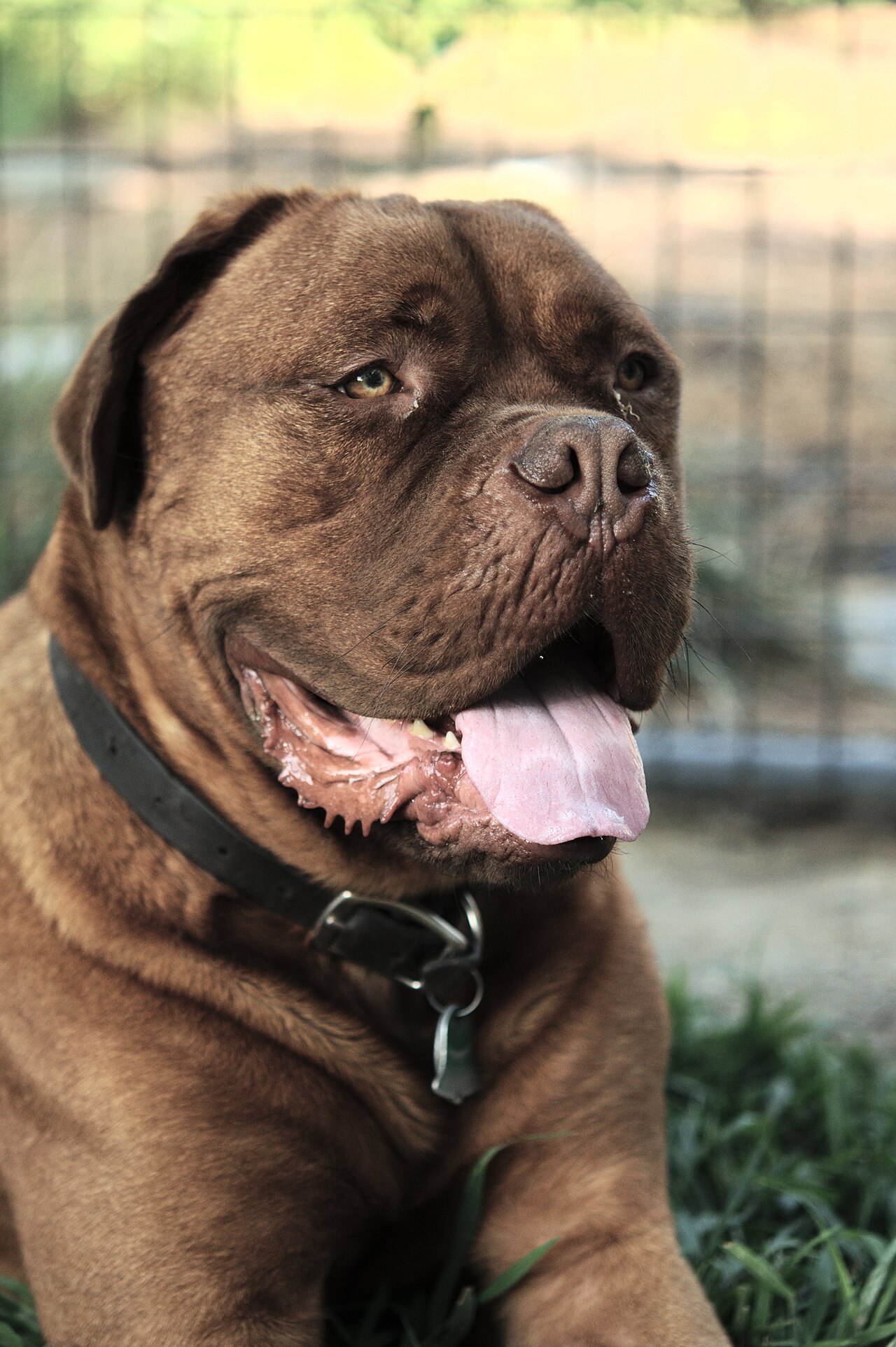
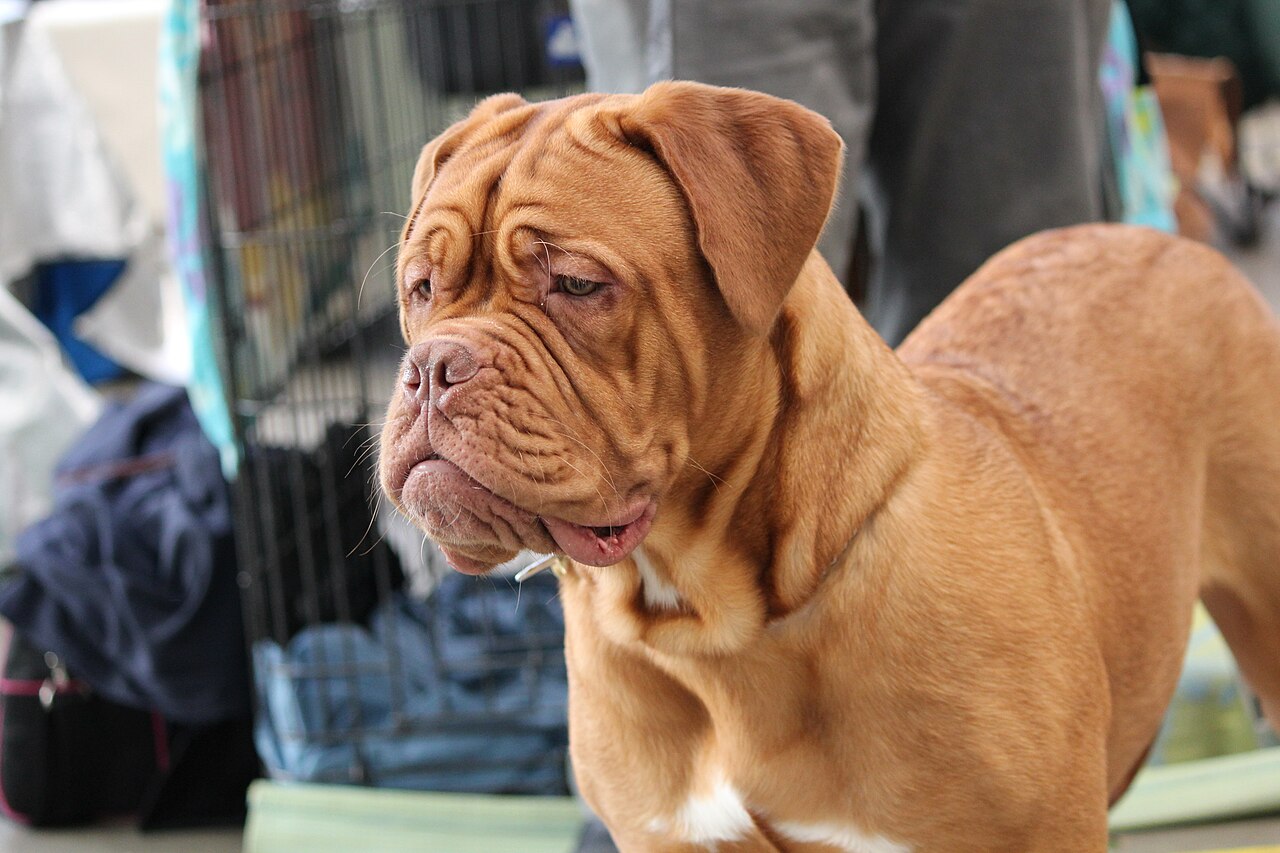
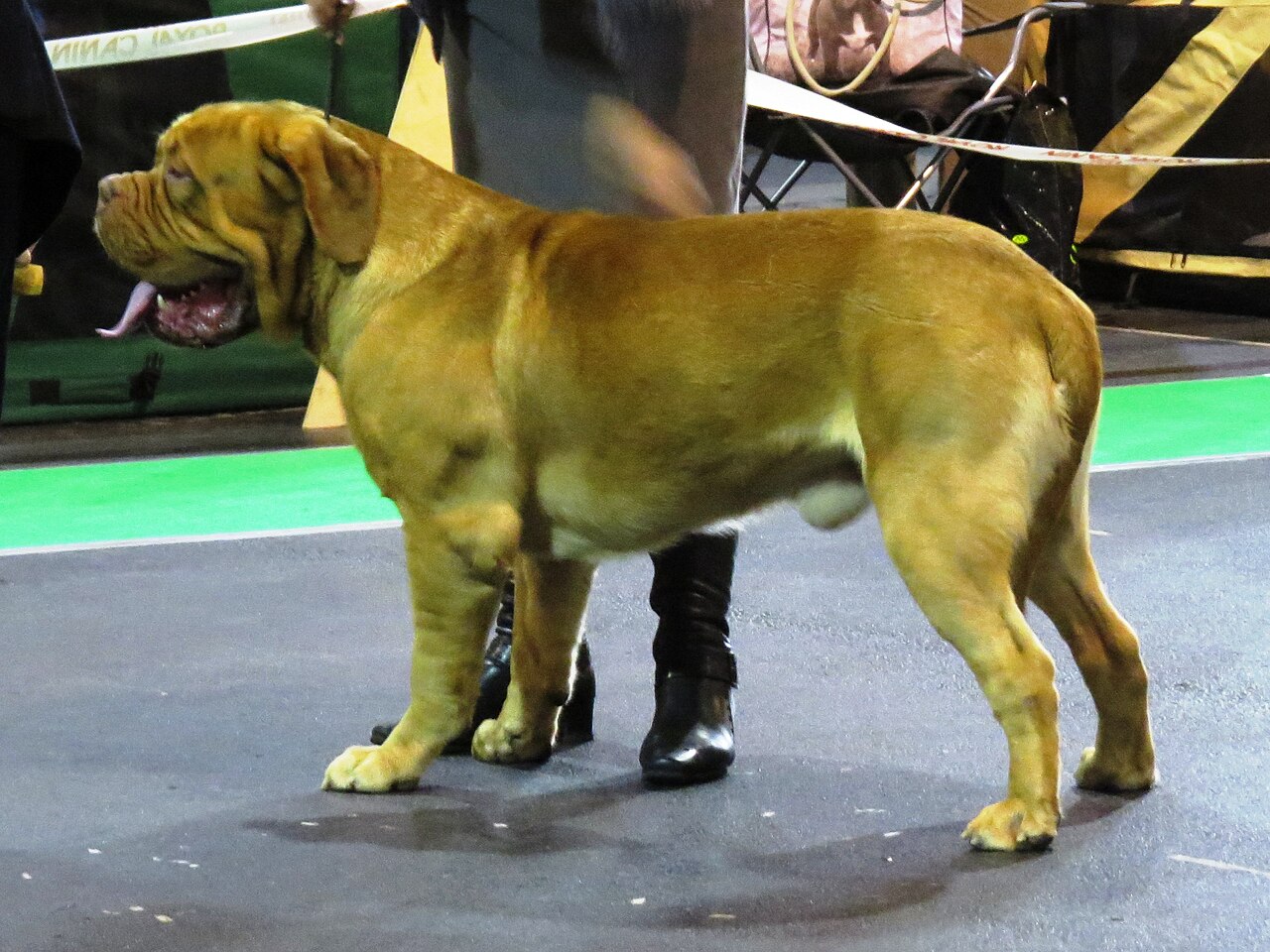
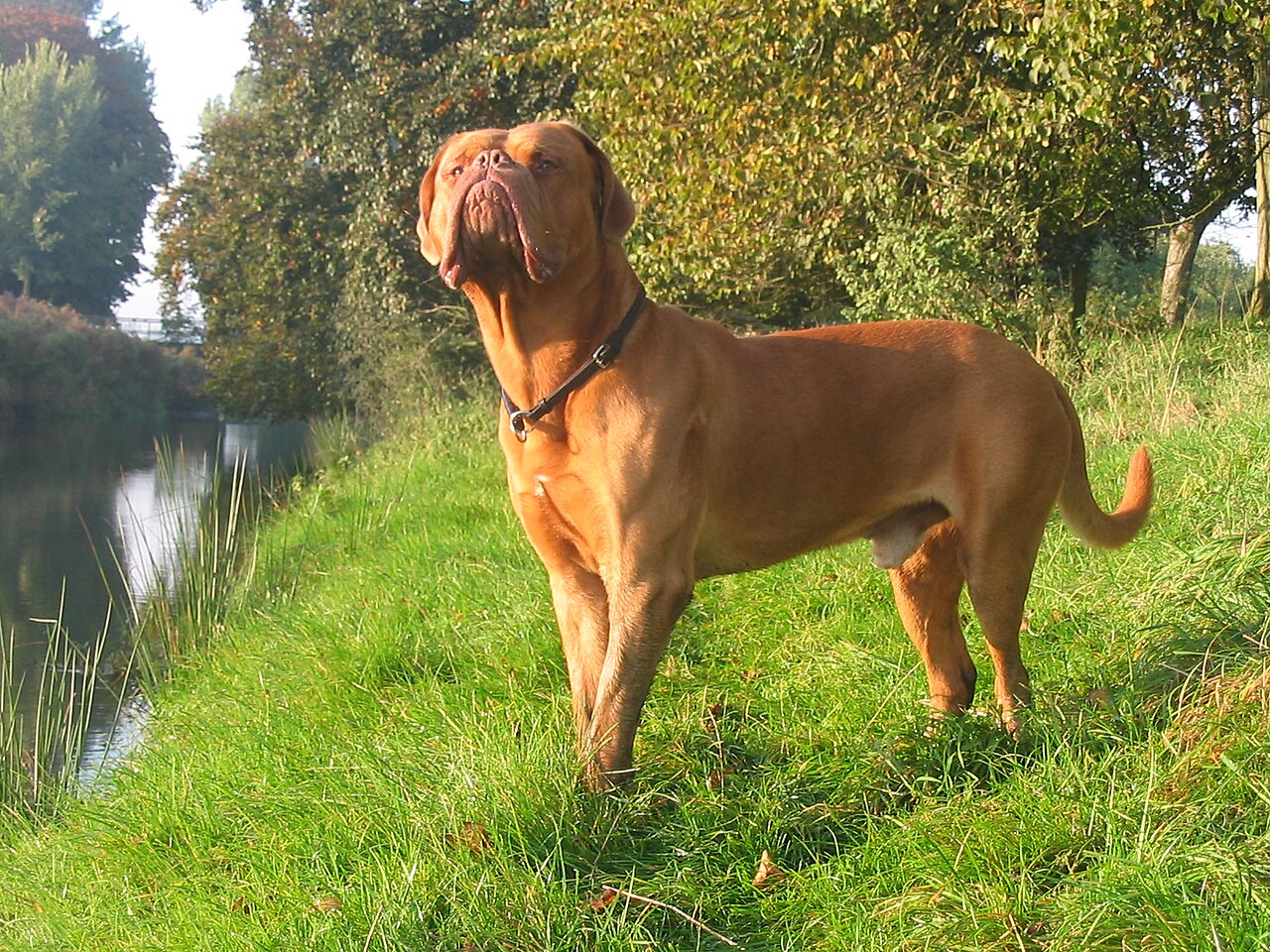
A short, very massive dog, slightly longer than tall, with a huge head, a short, broad muzzle, an undershot jaw and deep wrinkles. The coat is fine, short and soft, always in a single shade of fawn from mahogany to isabella, with a black mask, a brown mask or no mask. Limited white on the chest and toes is permitted.
| Males | Females | |
|---|---|---|
| Height (AKC; FCI in cm) | 23.5-27 in (60-68 cm) | 23-26 in (58-66 cm) |
| Weight (AKC; FCI in kg) | 110 lbs and up (50 kg) | 99 lbs and up (45 kg) |
| Lifespan | 5-8 years | 5-8 years |
| Coat | short, fine, soft | short, fine, soft |
The FCI standard tolerates 1 cm under and 2 cm over its height range; both standards only give minimum weights. Many adult males weigh about 120 to 145 pounds.
Exercise and daily life
The Dogue is not a high-energy breed. One to two calm walks a day, some play and mental work are enough. What it needs is space, a cool place to rest and a family that is home a lot.
Other things to plan for:
- Drool. The AKC notes that the breed "is well-known for how much they drool". Keep towels by the door and expect slobber on walls and clothes.
- Puppy joints. No jogging, long stairs or jumping out of cars until growth is finished at around 18 months.
- Space. A house with a fenced yard is ideal. An apartment can work with an elevator and a calm adult dog, but carrying a sick or old 120-pound dog upstairs is not possible.
Some homeowners and renters insurers and landlords restrict mastiff-type breeds. Check your policy and lease before you buy a puppy.
Training
The Dogue is intelligent but stubborn, and it matures slowly. What works:
- Calm, consistent training with food and praise. Harsh methods make it shut down or dig in its heels.
- Lead training early, while the puppy is still small. An adult that pulls is stronger than most owners.
- Broad socialisation with visitors, children, traffic and other dogs, continued through the second year.
- Clear house rules from day one: no jumping up, no guarding food or sofas.
Typical problems are leash pulling, guarding the house too eagerly and conflict with other dogs of the same sex.
Grooming
Little brushing: a rubber mitt once a week is enough. The real work is the face. Clean the wrinkles and lip folds every day and dry them carefully, or they get infected. Wipe drool off the lips after meals and drinking. Clean the ears, brush the teeth and trim the nails regularly.
Health
The Dogue de Bordeaux has one of the shortest lifespans of any breed. In a UK study of veterinary records (VetCompass, 2013), its median age at death was 5.5 years, the lowest of all breeds studied (the sample was small). The AKC gives a life expectancy of 5 to 8 years. Known problems:
- Heart disease. Congenital subaortic stenosis has been documented in the breed, and a UK study of 64 Dogues seen at two referral hospitals found atrial fibrillation in 39 percent, often together with weak pumping function.
- Hip and elbow dysplasia, and shoulder problems.
- Breathing problems and heat intolerance from the short muzzle.
- Eye problems. The Royal Kennel Club (UK) recommends eye testing for breeding dogs.
- Footpad hyperkeratosis, thick, cracked paw pads from puppyhood. There is a DNA test for the KRT16 variant found in the breed.
- Bloat (gastric dilatation-volvulus), as in all giant, deep-chested breeds. Feed two or three smaller meals and avoid exercise right after eating.
The Dogue de Bordeaux Society of America recommends hip, elbow, cardiac and shoulder evaluations for breeding dogs. Ask for OFA results on both parents, ideally a heart exam by a cardiologist with echocardiography. A breeder who cannot show heart results is a gamble with an already short life.
Cost
A puppy from a breeder who health tests the parents typically costs $1,500 to $3,000. Much cheaper puppies almost always come without heart and hip testing.
Running costs come to roughly $2,000 to $3,500 a year: food for a dog well over 100 pounds, routine vet care, preventives and gear sized for a giant dog. Pet insurance is worth considering, because cardiology work-ups, bloat surgery and orthopaedic problems can easily cost several thousand dollars each.
Who it suits and who it does not
Good fit:
- Owners who want a calm, devoted house guard and are home a lot
- A house with a fenced yard and a cool place to rest
- Experienced owners of big dogs, perhaps after a Boxer or Bullmastiff
Not a good fit:
- First-time owners or anyone who wants a dog for jogging or hiking
- Hot climates without air conditioning
- People who cannot cope with drool or with the high vet bills of a giant breed
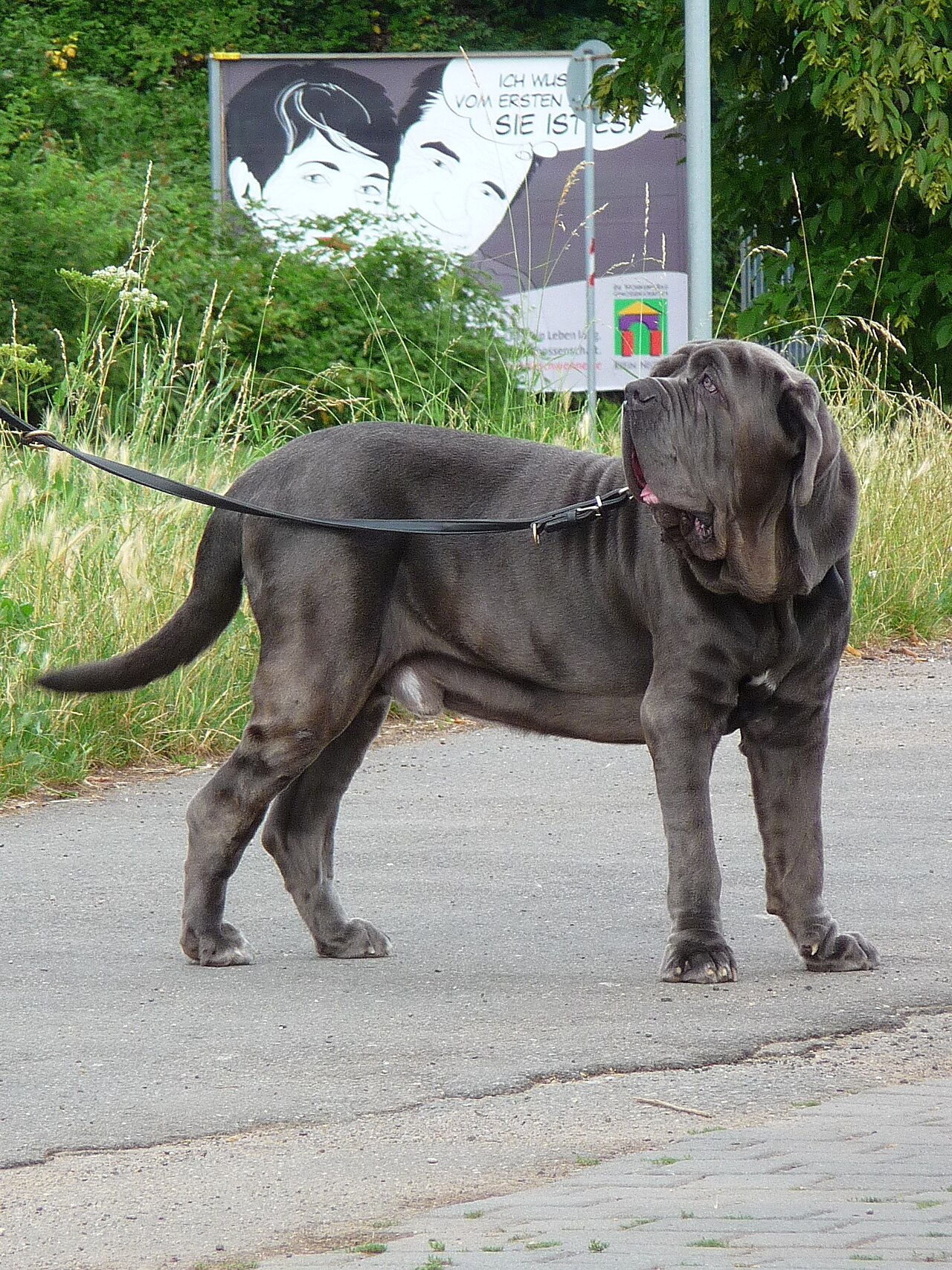
- Anyone who cannot accept a lifespan of often only 5 to 8 years; the Mastiff and Cane Corso are alternatives, and the Neapolitan Mastiff has similar health issues