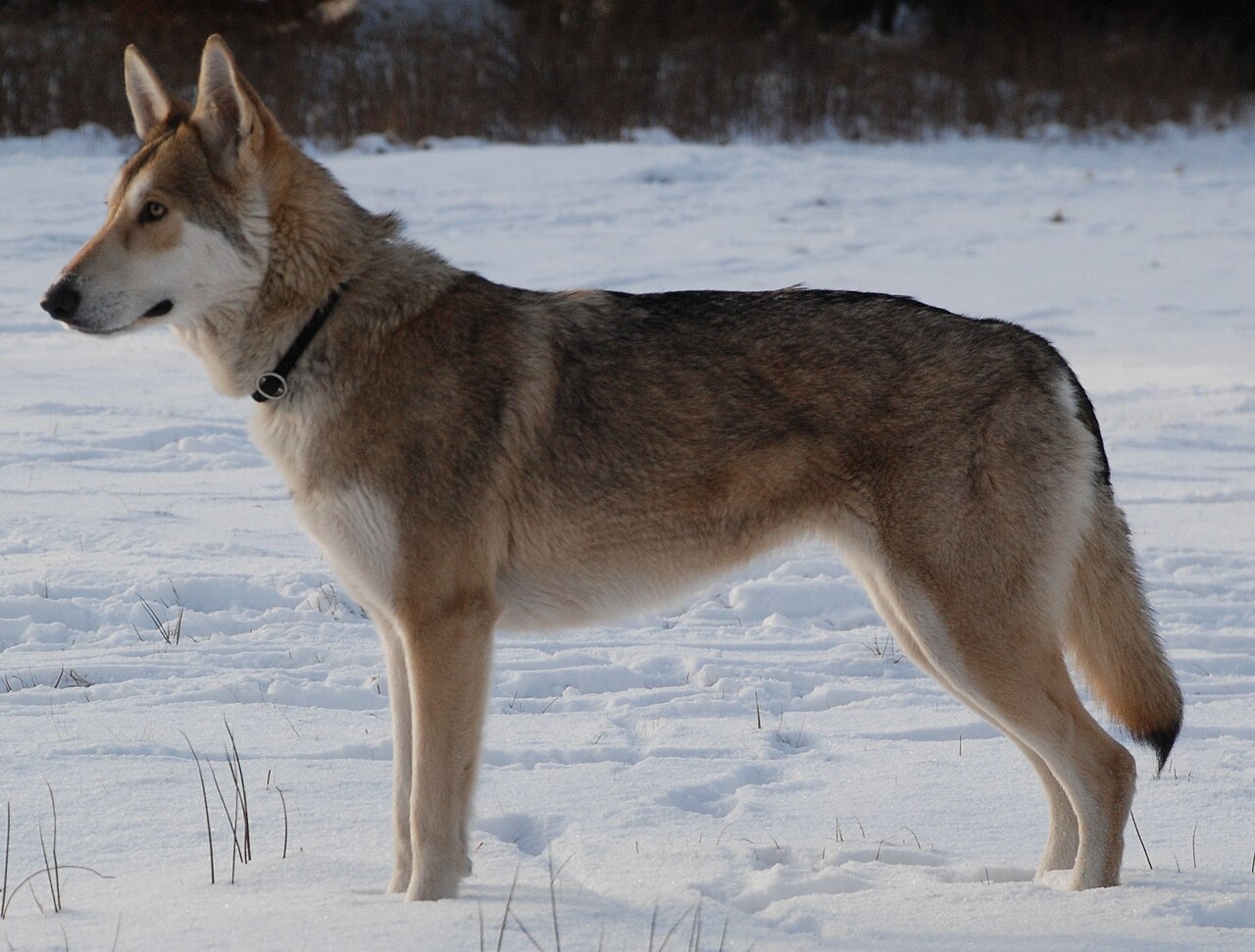
Origin and history
The Saarloos Wolfdog (Dutch Saarlooswolfhond, in the AKC listed as Saarloos Wolfhond) is not a wolf hybrid you can buy off a website. It is a registered Dutch breed with a known founder and a closed studbook. Leendert Saarloos (1884-1969), a Dutch nature lover and German Shepherd fancier, felt that dogs had become too humanized. In 1932 he crossed the German Shepherd male Gerard van der Fransenum, a dog of classic Prussian type, with Fleuri, a she-wolf of the Siberian branch of the European wolf. Breeding the offspring back to Gerard gave him a base population with a quarter wolf blood.
Saarloos wanted a better working dog. For a while some of his dogs served as guide dogs for the blind, but as more wolf blood came in, the working ability faded. The FCI standard says it plainly: his legacy is not a working dog, but "a dog with attributes close to nature". The breed was first called the European Wolfdog. The Dutch kennel club recognized it in 1975 and renamed it Saarlooswolfhond in honor of its founder; the FCI accepted it definitively on November 18, 1981. Today it is FCI standard No. 311, Group 1 (Sheepdogs and Cattledogs), Section 1, without working trial, country of origin the Netherlands.
In the US the AKC added the breed to its Foundation Stock Service at its April 2026 Board meeting, under the name Saarloos Wolfhond. FSS is a record-keeping service, not full recognition: the breed has no AKC group yet and cannot earn AKC conformation championships. The United Kennel Club has recognized it since July 1, 2006, in its Herding Dog Group. Close cousin, different breed: the Czechoslovakian Wolfdog also comes from German Shepherds and wolves, but it was bred as a military dog and has a different standard and temperament.
Temperament and character
The FCI standard describes "a lively dog, bursting with energy, with evidence of a proud independent character. Known to foremost obey his own will. Towards his master he is devoted and reliable to a high degree." Aggressive or overly shy dogs are disqualified. The Dutch pet information center LICG is frank about what that means at home:
- It is cautious, and it runs. In new situations it watches from a distance first. If it decides something is dangerous, even if it looks harmless to you, it backs off or flees, and in that moment it will not listen to you.
- It obeys only when it agrees. It is intelligent, but it does not obey just because you ask.
- It is very attached to its family, follows its people around the house and dislikes being alone. Locked in, it does everything to break out; alone too long, it destroys or howls.
- It is aloof with strangers and does not like people who push themselves on it.
- It has a strong hunting instinct. Small pets are difficult; cats can work if the dog grows up with them. Two dogs of the same sex risk serious fights, so a male and a female is the safer pair.
It is not a guard dog: it rarely barks, makes more of a coughing sound, and would rather flee from an intruder than stop him. With children it can be very reliable if well socialized, but never leave a child and dog alone together.
Size and appearance
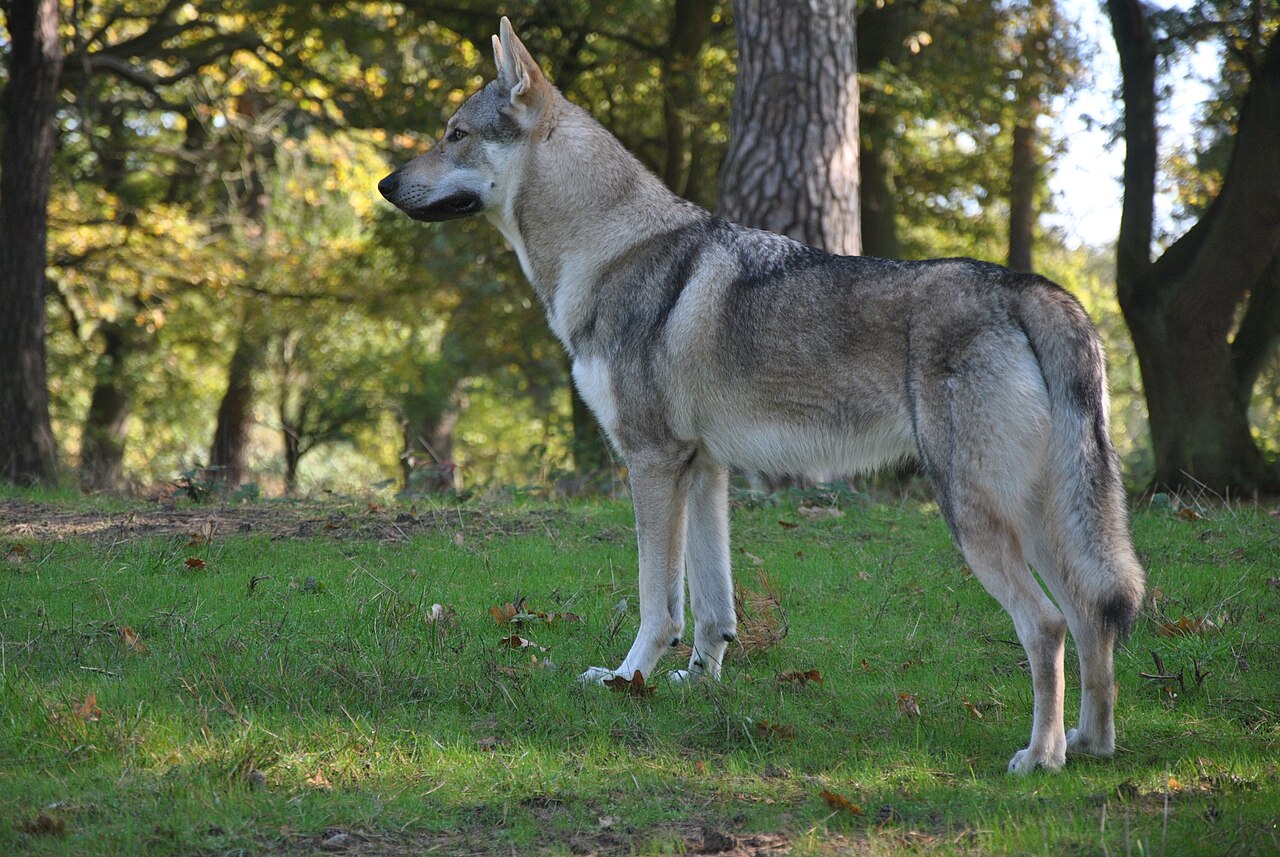
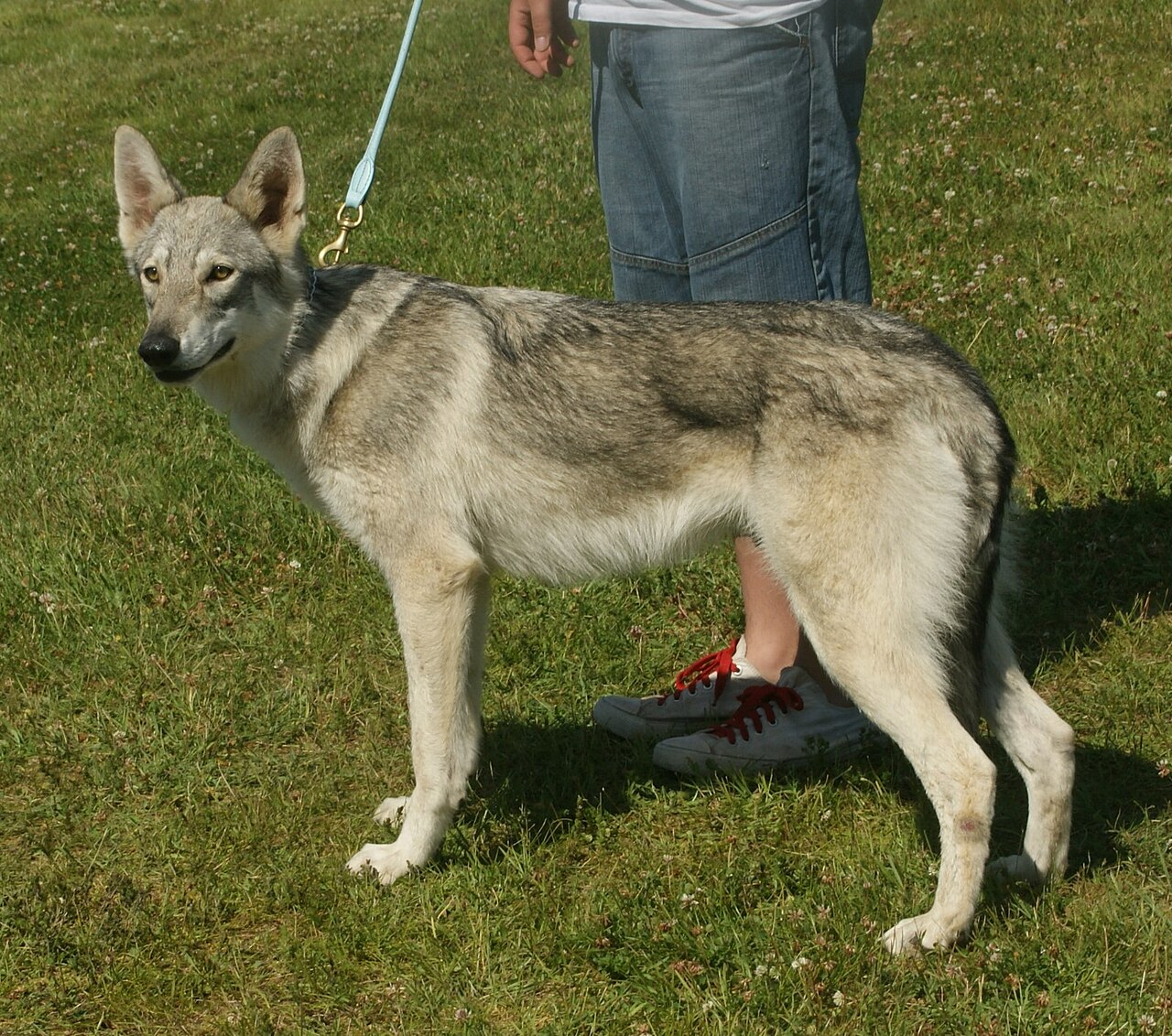
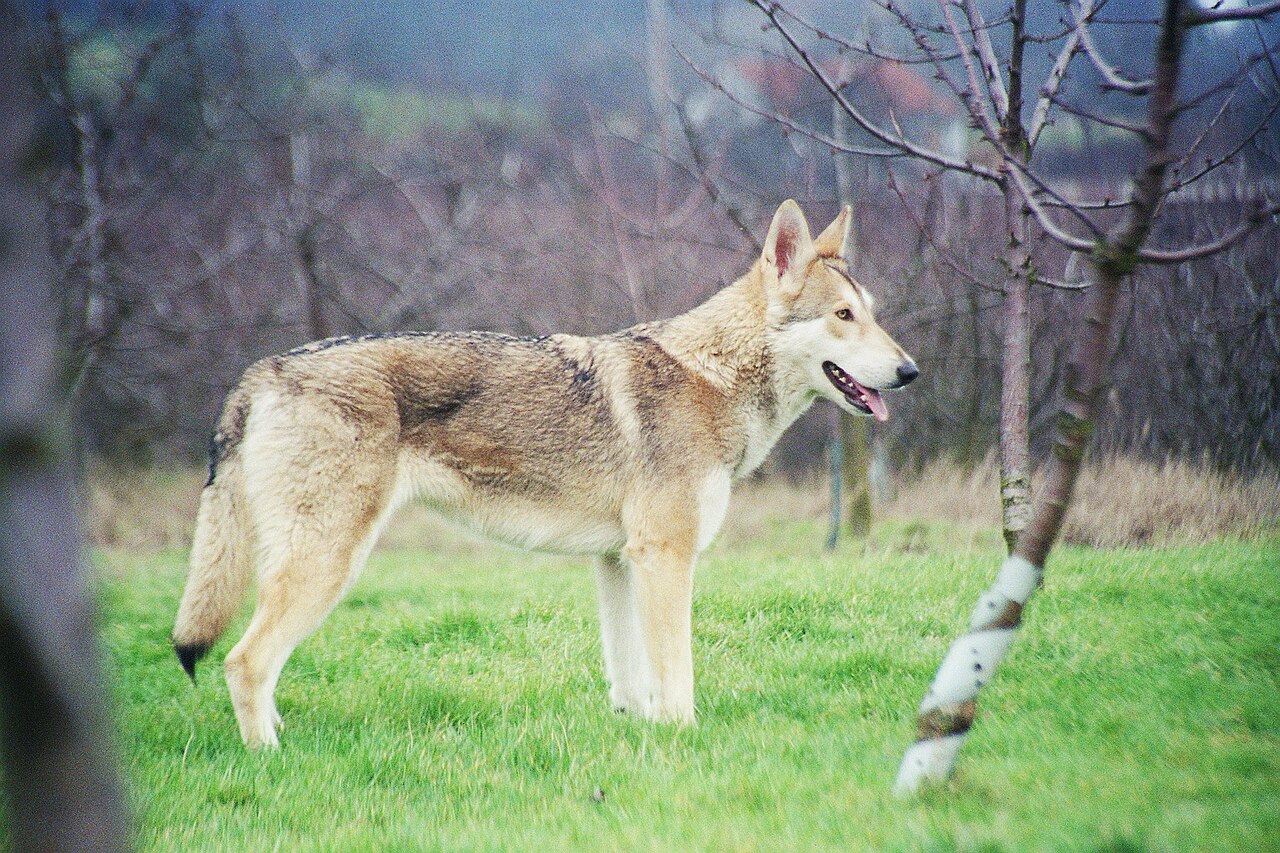
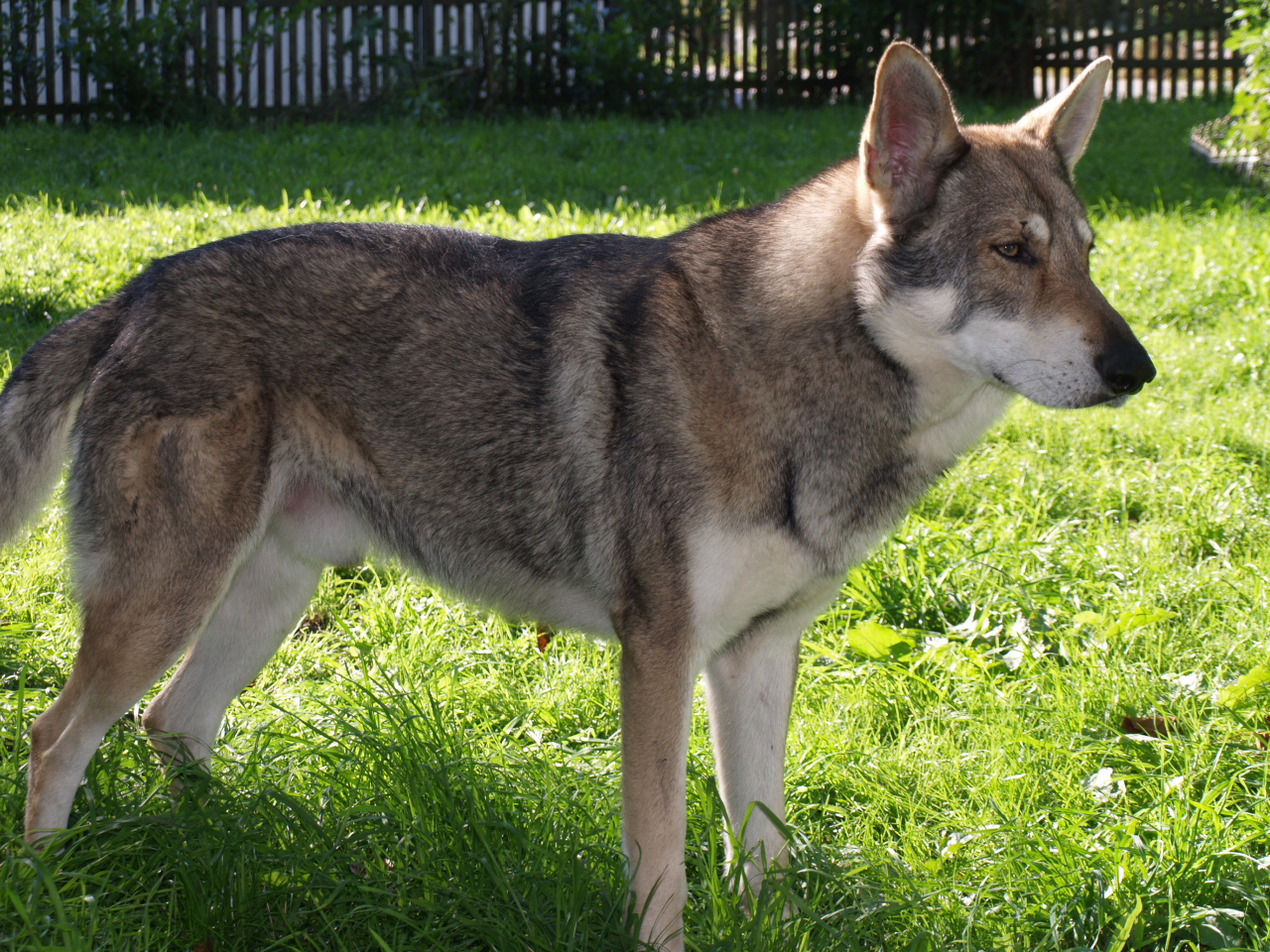
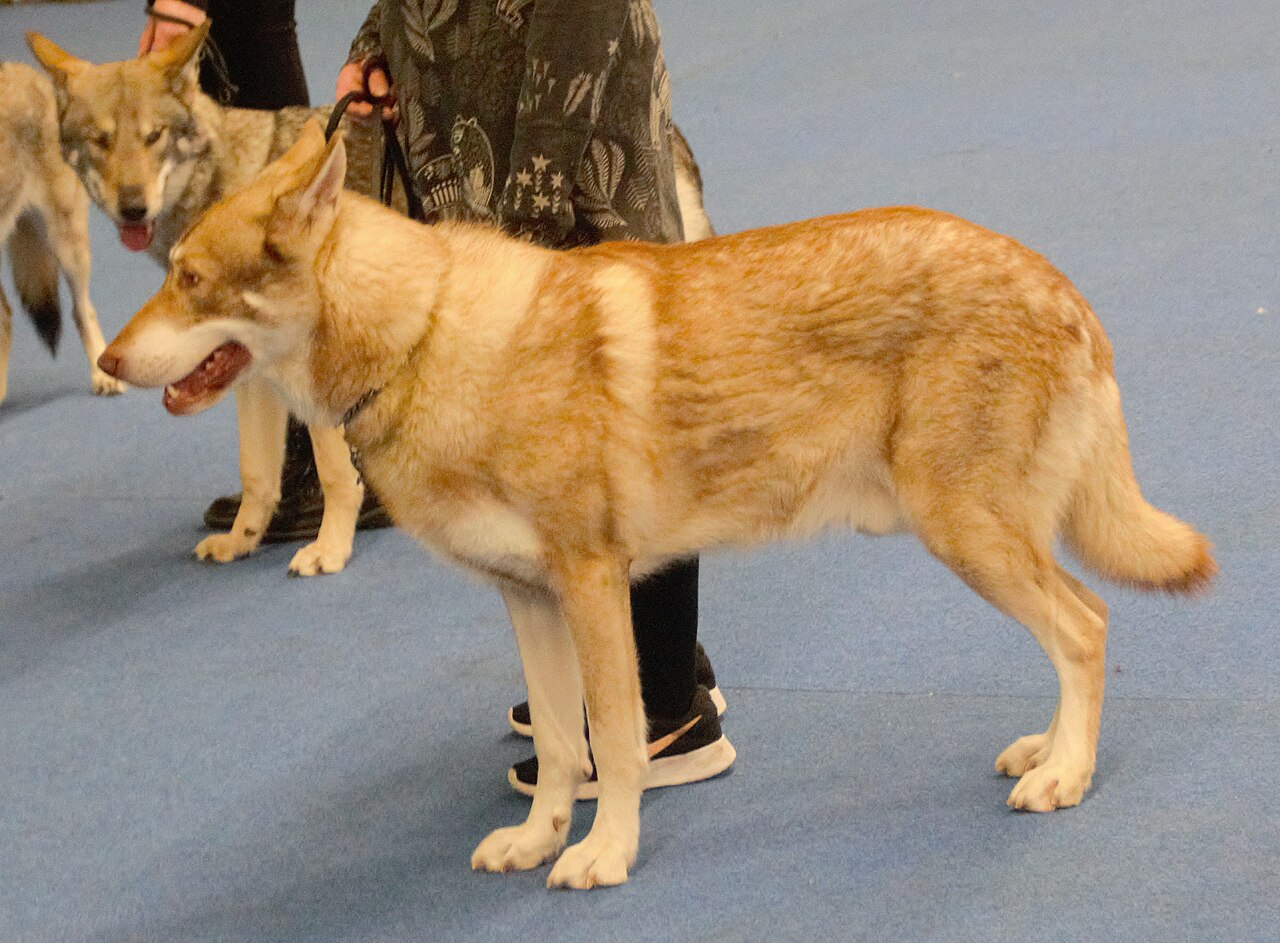
A strongly built, wolf-like dog, slightly longer than tall, with fairly long legs. The head is wedge-shaped, the eyes almond-shaped, slightly oblique and preferably yellow, the ears medium, pricked and triangular with rounded tips. The coat changes with the season: in winter the undercoat dominates and forms a ruff around the neck, in summer the harsh guard hair does. Colors: wolf gray (black-tipped wild color), forest brown (brown-tipped wild color) and, rarely, cream to white, always with the pale wolf markings on the belly, inner legs and under the tail. The standard calls it an untiring trotter that covers great distances at its own light-footed pace.
| Males | Females | |
|---|---|---|
| Height | 25.5-29.5 in (FCI 65-75 cm) | 23.5-27.5 in (FCI 60-70 cm) |
| Weight | about 84 lbs | about 62 lbs |
| Lifespan | 11-13 years | 11-13 years |
| Coat | Harsh guard hair, dense undercoat in winter | Same |
Heights are from the FCI standard, which allows slight deviations upward and gives no weight. Weight and lifespan are LICG's figures for the Dutch population (about 38 and 28 kg); some dogs reach 15 years.
Exercise and daily life
The LICG calls the Saarloos an energetic dog that needs a moderate to generous amount of exercise and is very calm in the house. Plan on long daily walks, hikes and, once grown, running beside a bike. Fetch bores it quickly. Canicross, agility and tracking can work as recreation, not for winning trophies, and not every dog enjoys them.
Off leash only away from roads and game: with its flight and prey instincts, a scared or hunting Saarloos is hard to call back. You need a house with a high, secure fence and a household where the dog is rarely alone. Kennels and boarding are hard too: the breed bonds so strongly that rehoming, and even a week in a boarding kennel, can be difficult.
Training
Training works with patience, not with pressure. The LICG asks for a clear, consistent but very patient owner who radiates calm and treats the dog with respect: reward good behavior, prevent or ignore the rest, and keep sessions varied.
Typical difficulties:
- Socialization. It has to start at the breeder. At home, keep meeting new people, animals and places through at least the first year, calmly and at the puppy's own pace, never forced.
- Being alone. Build it up in tiny steps from day one. Most dogs can learn to stay alone for a few hours, not a full workday.
- Chasing. Teach early that bikes, joggers and wildlife are off limits, and use a long line where the recall is not solid.
- Counter surfing and chewing. It is good at stealing food from counters and trash cans and can be quite destructive. Manage the house and give it things it may chew.
Grooming
Little work most of the year: an occasional brushing is enough. During the molt it sheds heavily. The LICG suggests a bath then to rinse out the loose hair, and warns against overbrushing with a rake, which can pull out more coat than needed. Check ears, eyes and teeth, and trim nails as needed. Females usually come into season only once a year.
Health
The Saarloos descends from a very small founder group, and a Utrecht University study names reduced fertility, pituitary dwarfism and epilepsy as its main hereditary problems in the Netherlands. Epilepsy was found in about 2.1% of dogs registered from 1980 to 2013. Other conditions to know:
- Pituitary dwarfism, a hereditary growth hormone deficiency. DNA test since 2008.
- Degenerative myelopathy (DM), a late-onset spinal cord disease. DNA test.
- PCYT2 deficiency, a recessive disease of the nervous system that starts with night blindness. DNA test.
- Progressive retinal atrophy (PRA) and cataract. Annual eye exam by a veterinary ophthalmologist.
- Hip and elbow dysplasia. X-rays.
Both Dutch breed clubs require tests for HD, pituitary dwarfism, DM, PCYT2 deficiency and an eye exam before breeding, and one also requires elbow X-rays. Ask for all results for both parents, and ask about the inbreeding coefficient: since 2013 one Dutch club, with the Dutch kennel club, has been crossing in carefully chosen dogs of other breeds to widen the gene pool. Tell your vet that the breed can react more strongly to anesthesia because of stress.
Cost
There are very few breeders in North America, so many puppies are imported from the Netherlands or elsewhere in Europe. In its home country a pedigreed puppy costs about €1,600 to €2,000 (one Dutch club sets a fixed price of €1,731), so expect roughly $2,000 to $3,500 for the puppy, plus transport. Since August 2024, CDC rules require dogs entering the US to be at least 6 months old, microchipped and covered by a CDC Dog Import Form, so an imported dog arrives as a teenager, not a young puppy. Cheap "wolfdog" puppies in ads are a red flag.
Running costs are those of a large, active dog: roughly $1,500 to $2,500 a year for food, vet care, preventives and insurance, plus a strong fence and training classes.
Check the law before you buy. Wolf hybrid rules vary by state, county and city, and some are worded broadly enough to catch any animal represented as part wolf. Keep the registration papers at hand, because DNA breed tests can report a wolfdog breed as a wolf hybrid. Ask your state wildlife agency and city, and also your homeowner's insurer and landlord, whether a registered Saarloos Wolfdog is accepted.
Who it suits and who it does not
Good match for:
- Experienced owners who know a primitive, independent breed and respect a cautious dog
- Walkers and hikers who want a calm housemate with a lot of stamina
- A house with a high, secure fence and someone home most of the day
- People who value a quiet dog that rarely barks and is devoted to its own family
Not a match for:
- First-time owners and anyone who wants an obedient dog
- Apartments, busy city centers and long days alone
- Homes with rabbits or other small pets, and owners who want off-leash freedom everywhere
- People drawn mainly by the wolf look. For a similar build with easier training, consider the German Shepherd or the White Swiss Shepherd; for a northern endurance dog that loves people, the Siberian Husky or the Alaskan Malamute