Origin and history
The Czechoslovakian Wolfdog (in the AKC: Czechoslovakian Vlciak, say "vul-chee-ak") is not a wolf hybrid you can buy off a website. It is a registered breed that began as a military experiment. In 1955 the Czechoslovak border guard, led by Karel Hartl, started crossing German Shepherds with Carpathian wolves. The first litter was born on May 26, 1958 in Libějovice, from the she-wolf Brita and the German Shepherd Cézar z Březového háje. In total four wolves were used, and the last wolf cross produced the male Kazan z Pohraniční stráže in 1983. Every pedigreed dog today traces back to those wolves in a known number of generations.
The goal was a border patrol dog with the wolf's endurance, senses and toughness and the trainability of a shepherd. Some dogs from about the fifth generation did serve, but many stayed shy of strangers and bonded to one handler only, and the army pulled out of the project in 1971. Private breeders kept it going. The breed was recognized nationally in 1982, provisionally by the FCI in 1989 and fully in 1999: FCI standard No. 332, Group 1 (Sheepdogs and Cattle Dogs), Section 1, with working trial, under the patronage of Slovakia.
In the US the breed has been recorded in the AKC Foundation Stock Service since 2001 and could enter companion events from January 1, 2010. The UKC recognized it in 2006. On June 26, 2024 it moved into the AKC Miscellaneous Class, the last step before full recognition, under the name Czechoslovakian Vlciak. The parent club is the Czechoslovakian Vlciak Club of America (CSVCA), founded in 2001 and approved as AKC national breed club in 2023. It is rare: the club counts only about 250 dogs registered with the AKC.
Temperament and character
The FCI standard describes the breed as "lively, very active, capable of endurance, docile with quick reactions. Fearless and courageous. Suspicious. Shows tremendous loyalty towards his master." Aggressive or overly shy dogs are disqualified. The CSVCA is unusually frank about what that means at home:
- It attaches to its people, often to one person. The club warns of strong separation anxiety. These are not dogs you keep in the backyard and see now and then.
- It flees when startled. The club calls the flight instinct the most dangerous trait for a pet owner: many owners have lost their dog because something scared it and it ran.
- It escapes and solves problems. Counters, doors, gates and fences are puzzles. The German breed club reports dogs that open doors and windows and go over fences of 6.5 feet (2 m) or more, or dig under them.
- It is reserved with strangers. The AKC says it is usually not very social with people outside the family.
- It often does not like other dogs. The AKC notes that it tends to be unfriendly toward other dogs and small animals outside the home. The German club adds that many adults, once mature at three to four years, do not tolerate dogs of the same sex.
It barks little, but many Vlciaks howl, especially when left alone. With children of its own family it can be affectionate, but it is a big, rough-playing, strong-willed dog; small kids and a Vlciak need constant supervision.
Size and appearance
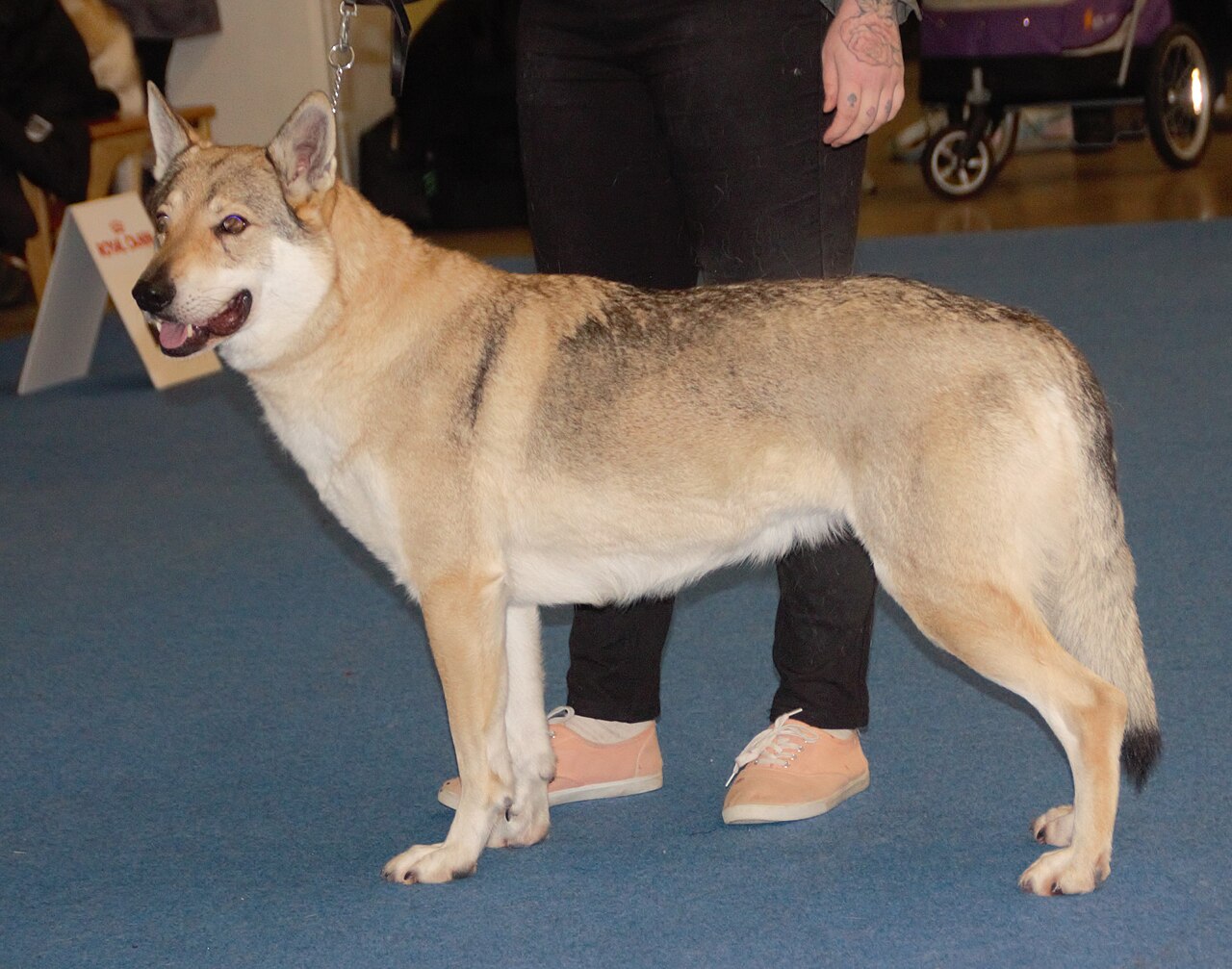
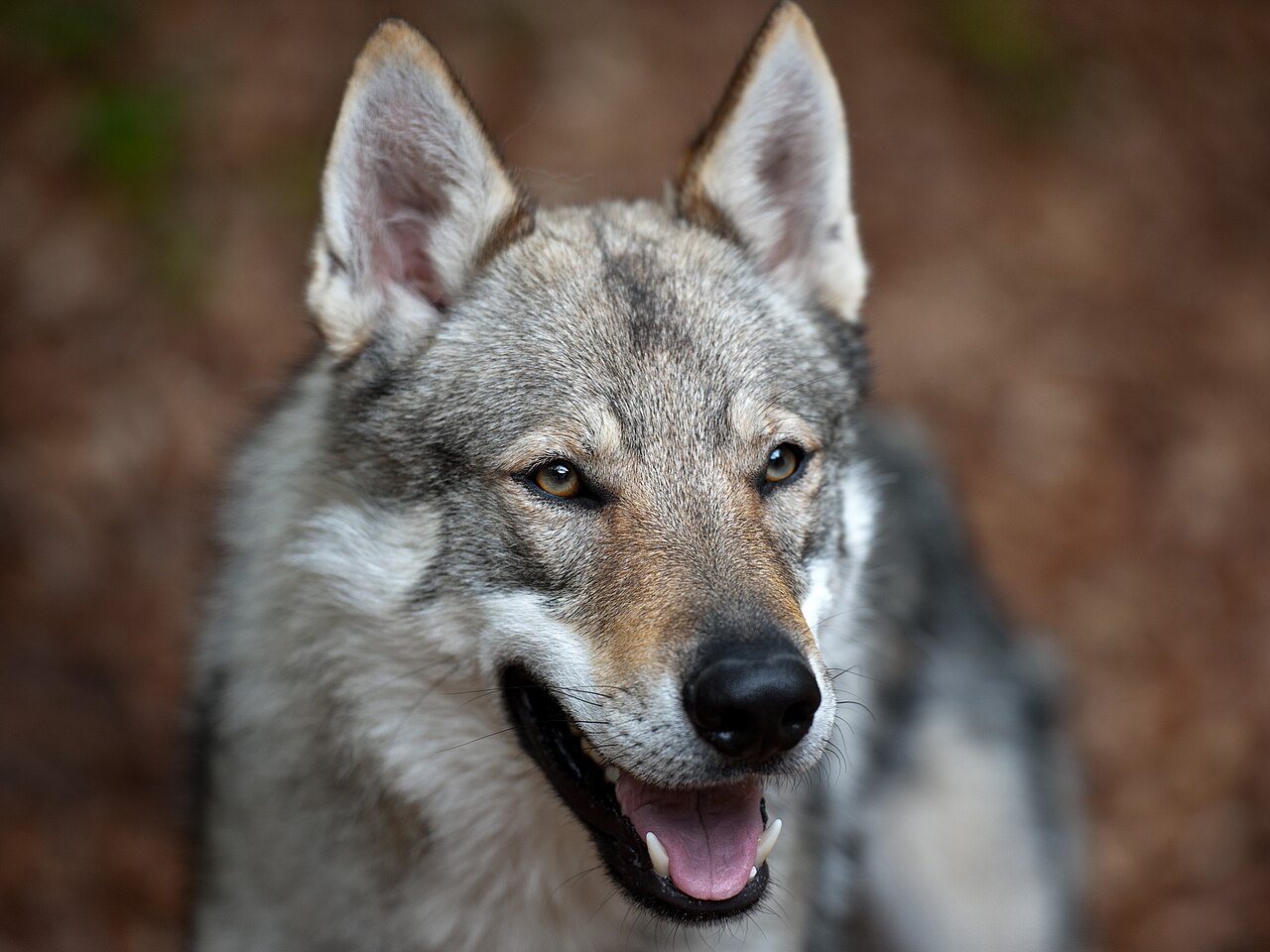
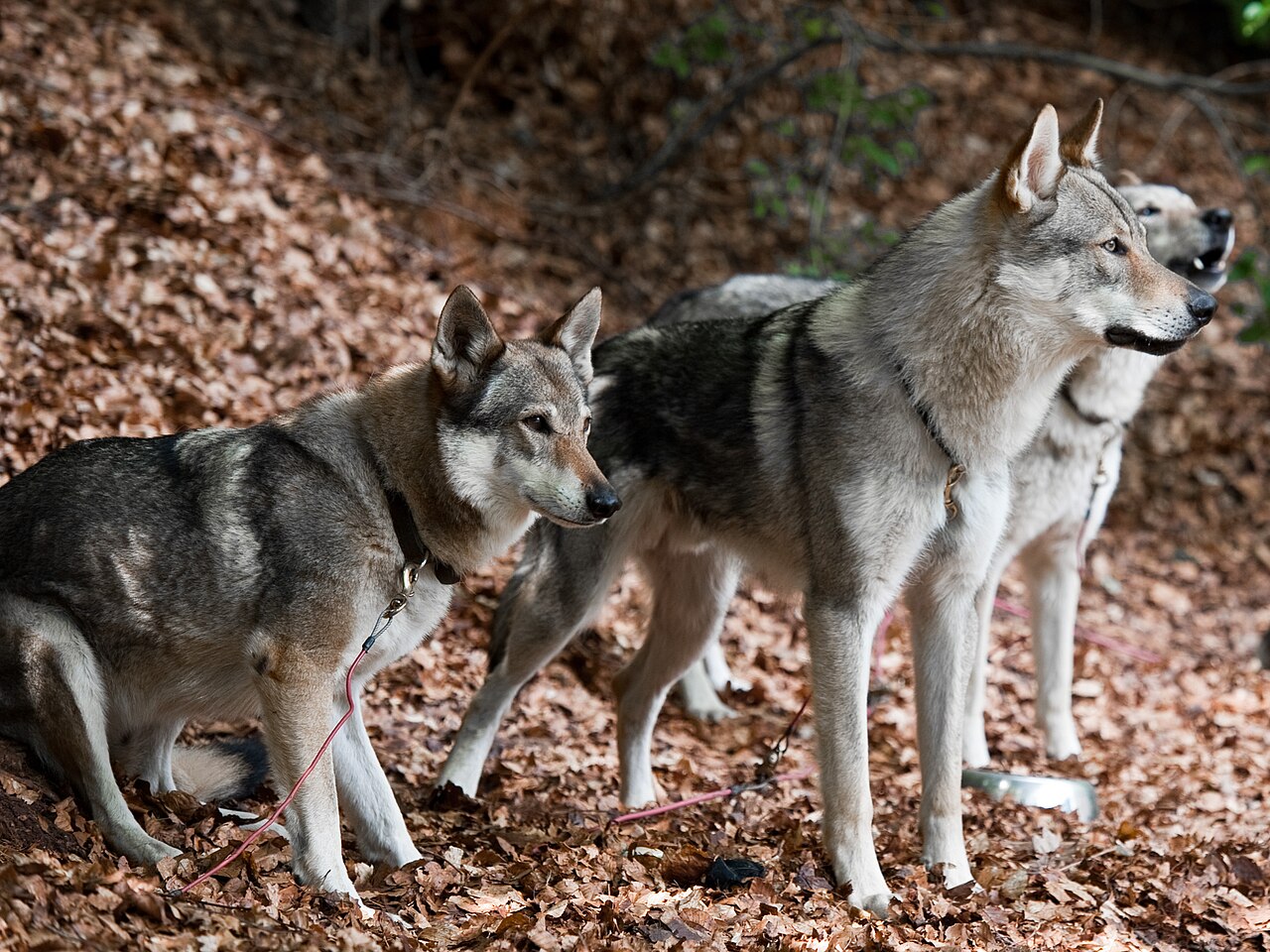
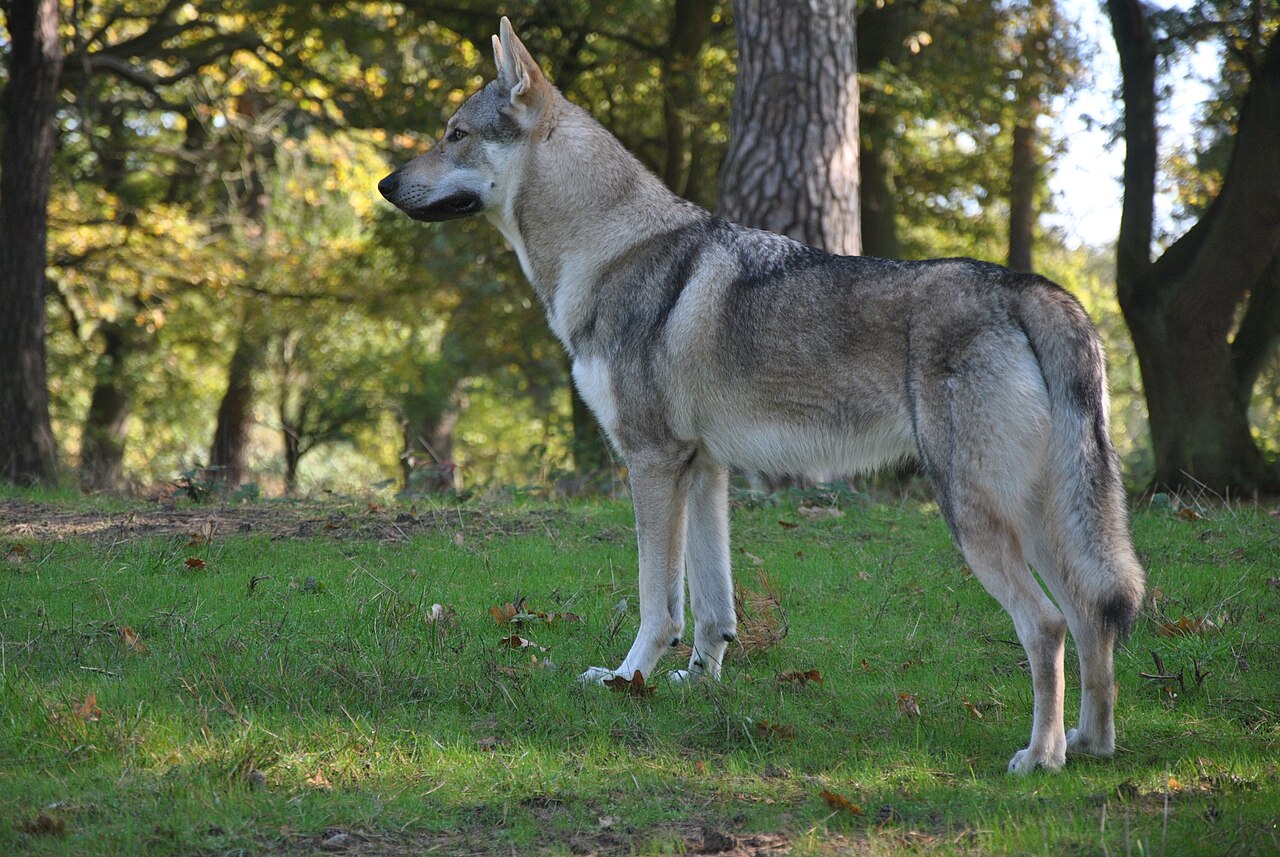
Bigger and leaner than it looks in photos: a tall, rectangular dog with a wolf's head, mask, coat and gait. The eyes are small, slanting and amber, the ears short, pricked and triangular. The coat is straight and close; the winter coat has a huge undercoat, the summer coat is much thinner. Color: yellowish gray to silver gray with a characteristic light mask, dark gray with light mask also allowed. The walk is often a pace, the trot light and ground-covering.
| Males | Females | |
|---|---|---|
| Height | at least 25.5 in (FCI 65 cm) | at least 23.5 in (FCI 60 cm) |
| Weight | at least 57 lbs (FCI 26 kg) | at least 44 lbs (FCI 20 kg) |
| Lifespan | 12-16 years | 12-16 years |
| Coat | Straight, close, heavy winter undercoat | Same |
The standard sets only minimums and no upper limit. Most adults are well above the minimum weight, and males typically stand around 26.5 to 27 inches (the Dutch kennel club gives 67 to 69 cm as a common height). The breed matures slowly, physically and mentally, until about three years.
Exercise and daily life
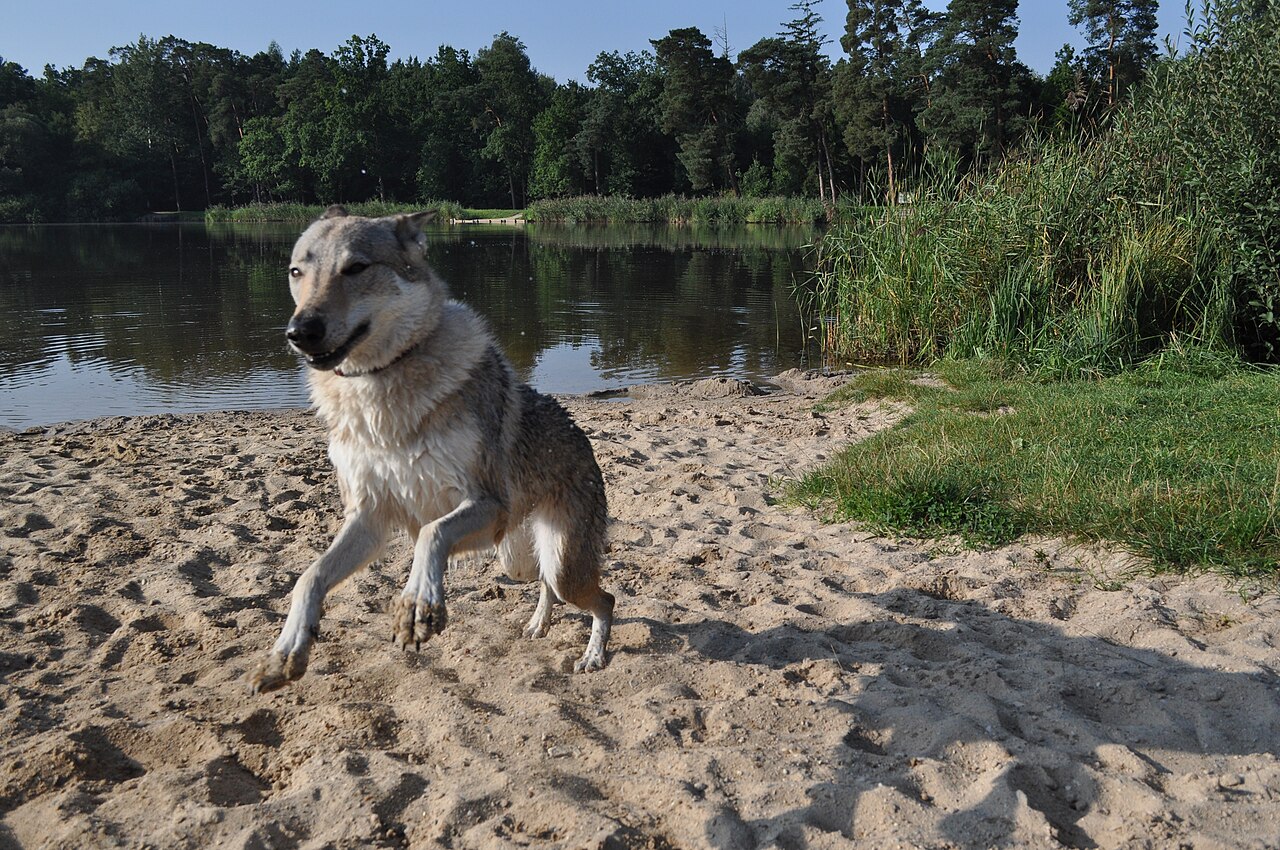
This is an endurance athlete. The AKC says it can easily run 25 miles, and it excels at tracking, hiking and canicross. Plan on two hours or more of real activity every day, much of it on a long line or in a securely fenced area: with its flight instinct and prey drive, off-leash freedom is a risk for most Vlciaks.
It does not belong in an apartment. You need a house with a high, dig-proof fence (6 feet is a common minimum; many owners go higher and add a dig guard) and a household where someone is home most of the day. A dog alone for eight hours often howls, destroys or tries to break out. Do not plan on a kennel run as a fix: a dog that protests loudly in a run will bring the neighbors, and possibly animal control, to your door.
Training
Training works, but not like with a German Shepherd. The Vlciak learns fast and gets bored by repetition; the CSVCA puts it bluntly: if you want a high-drive, easy-to-train dog, don't get a Vlciak. What works: early, calm, consistent and fair training, short sessions, real motivation, and a lot of socialization from the first weeks.
Typical difficulties:
- Being alone. Build it up in tiny steps from day one, and have a backup plan (family, sitter, daycare that accepts the breed) before the puppy arrives.
- Recall. A long line until adulthood, and for many dogs for life.
- Other dogs. Puppy class, then controlled contact. Dog parks are usually a bad idea with an adult.
- Mouthing and testing. Puppies argue hard and use their teeth. Clear limits without harshness: this breed does not forgive unfair handling.
Grooming
Easy most of the year, messy twice. The coat sheds dirt well and has little doggy odor. A brushing once or twice a week is enough. According to the AKC it sheds year-round, with heavy shedding in spring and fall: then you will find fur everywhere, and daily brushing or a blower helps. Bathe rarely, trim nails regularly.
Health
Overall a hardy breed, but not free of the problems of its German Shepherd side. The CSVCA lists for breeding dogs:
- Degenerative myelopathy (DM), a progressive spinal cord disease. DNA test required.
- Pituitary dwarfism, a hereditary growth hormone deficiency. DNA test required.
- Hip and elbow dysplasia, OFA X-rays required (hips at 2 years).
- Dentition exam, cardiac evaluation (basic exam annually) and a DNA sample in the OFA/CHIC repository, all required.
- Eye exam by an ACVO ophthalmologist, optional but recommended.
A dog that has completed this list gets a CHIC number. Ask for the CHIC numbers of both parents and check the results yourself in the OFA database, including the DM and dwarfism status. Ask also about the coefficient of inbreeding: the breed descends from a small founder group.
Cost
There are only a handful of CSVCA breeders, so expect a waiting list or an import from Europe. Breeders rarely publish prices; expect roughly $2,500 to $4,000 for a puppy from a health-testing breeder, plus transport if the puppy comes from far away. Since August 2024, CDC rules require dogs entering the US to be at least 6 months old, microchipped and covered by a CDC Dog Import Form, which makes importing a young puppy impractical. Cheap "wolfdog" puppies in ads are a red flag.
Running costs are those of a large, active dog: roughly $1,500 to $2,500 a year for food, vet care, preventives and insurance, plus a strong fence, training and possibly daycare.
Check the law before you buy. Wolf hybrid rules vary by state, county and city, and some are worded broadly: Alaska's regulation, for example, covers the offspring of a wolf or wolf hybrid mated with a dog and any animal represented as part wolf. In 2021 a Vlciak owner asked the Alaska Board of Game to treat the breed as a dog, and a CSVCA board member wrote that the club was working toward having the breed legal in all 50 states. She also warned that DNA breed tests often report a Vlciak as a wolf hybrid, so keep the registration papers at hand. Ask your state wildlife agency and city, and also your homeowner's insurer and landlord, whether a registered Czechoslovakian Vlciak is accepted.
Who it suits and who it does not
Good match for:
- Experienced owners who have handled a demanding working or primitive breed before
- Runners, hikers and tracking or canicross fans with time every day
- A house with a high, secure fence and someone home most of the day
- People who want a loyal, quiet-barking partner and enjoy a dog that thinks for itself
Not a match for:
- First-time owners and anyone who wants an easy, obedient dog
- Apartments and homes where the dog is alone for long hours
- Homes with cats, rabbits or other small pets, and owners who want dog park outings
- People drawn mainly by the wolf look. For a similar build with easier training, consider the German Shepherd or the Dutch Shepherd; for a northern endurance dog that loves people, the Siberian Husky or the Alaskan Malamute