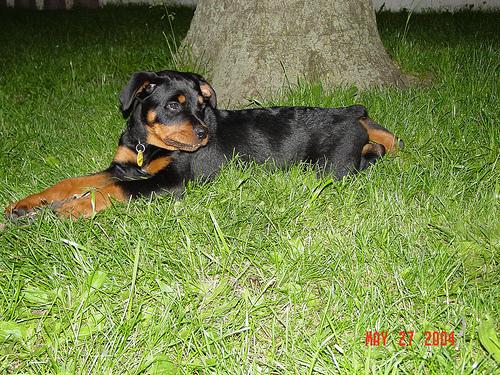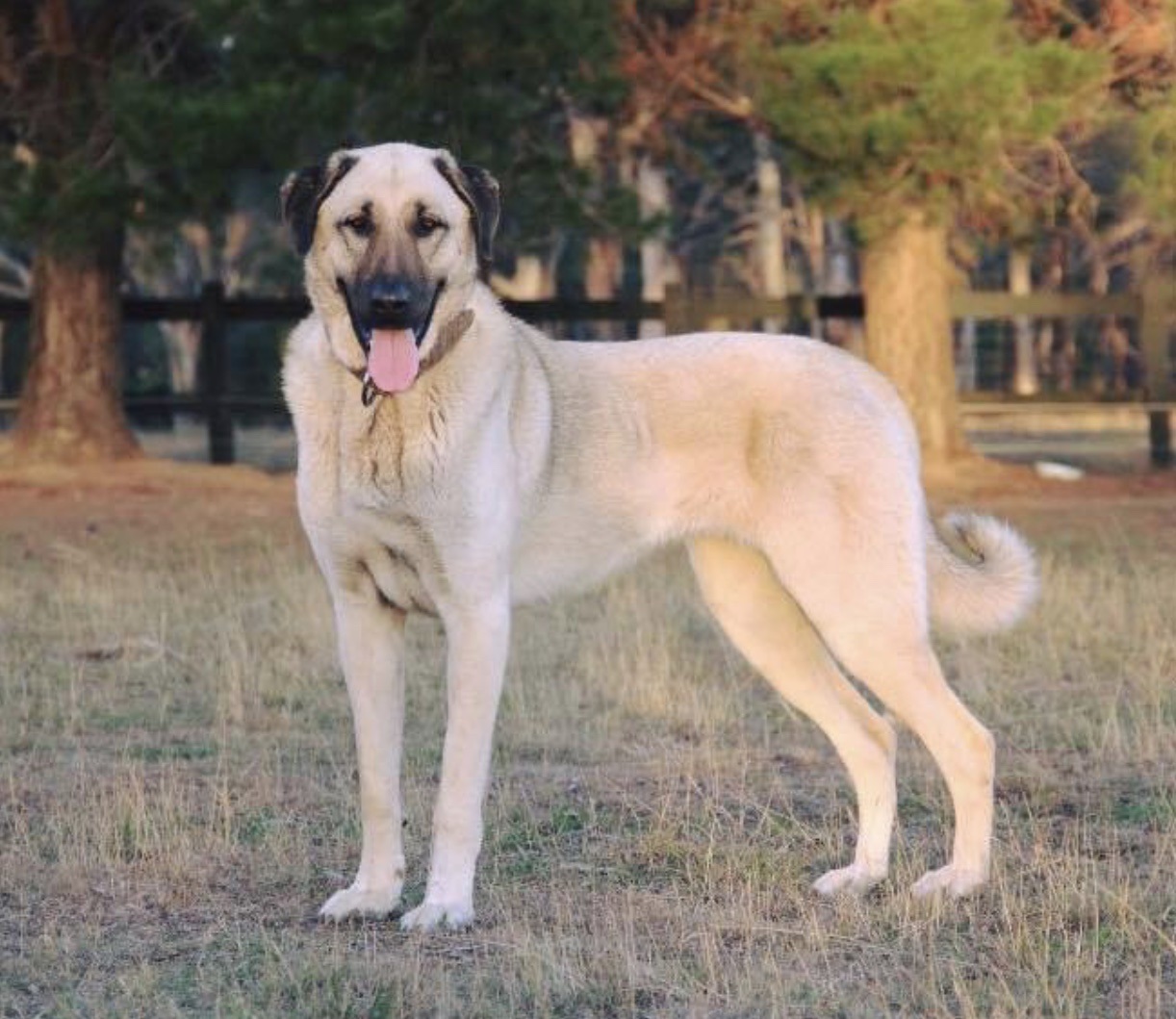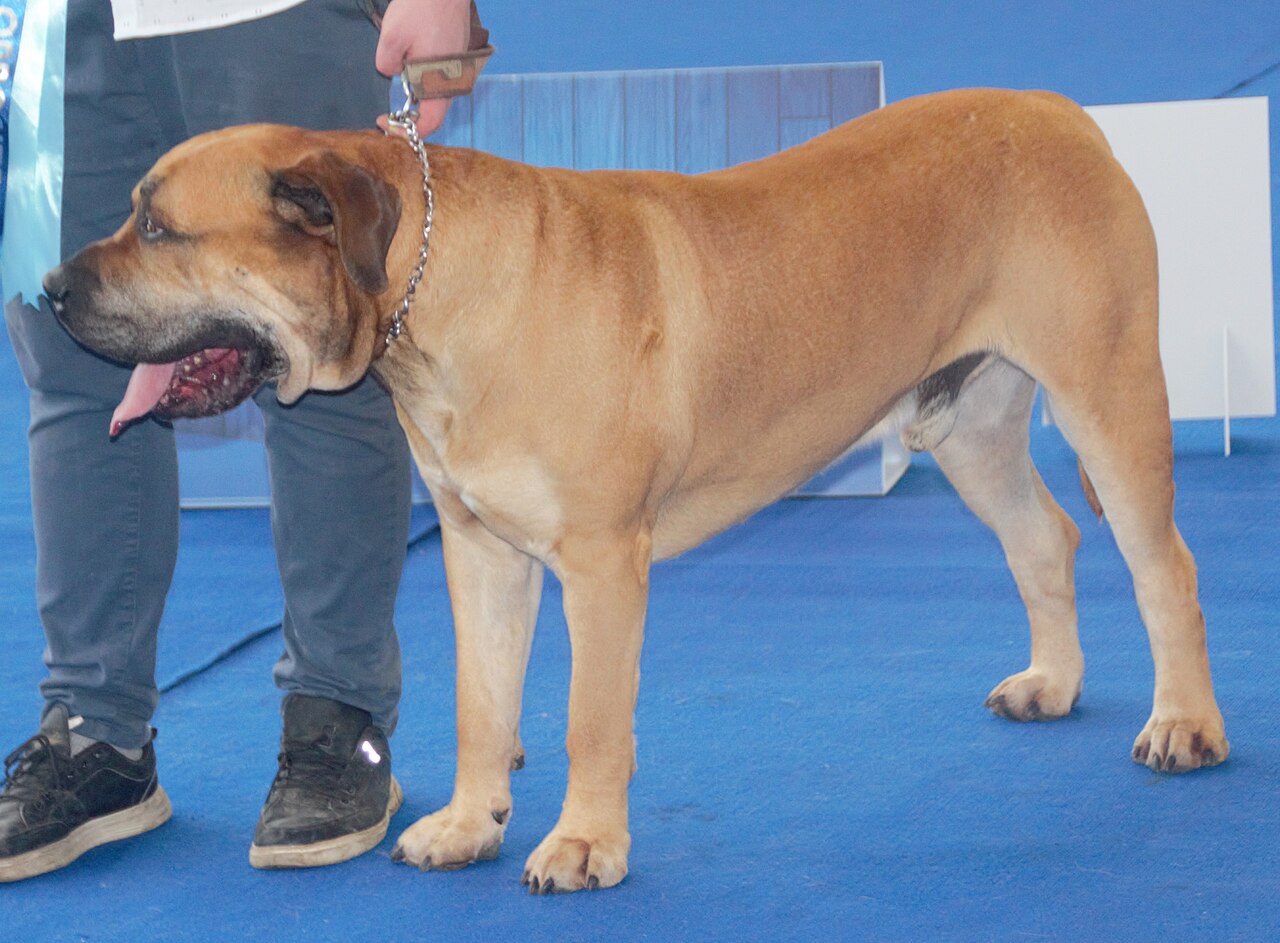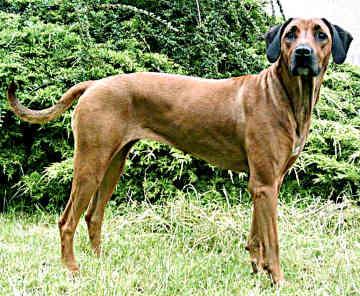
Origin and history
The Hovawart is a German working dog, and its name says what it was for: in Middle High German hova means farmyard and wart means watchman. By the early 20th century this old farm-guardian type had nearly vanished, as newer breeds such as the German Shepherd took over its jobs.
Around 1915 the zoologist Kurt Friedrich König began rebuilding it. He collected farm dogs that matched the old guardian type, mostly in the Black Forest, and crossed in German Shepherd, Newfoundland and Leonberger blood. The first litter was entered in the German registry in 1922, and the breed was officially recognized in 1937. The Second World War almost wiped it out again. Recovery started in 1947, when Otto Schramm founded the RZV breed club in Coburg, and in 1964 Germany recognized the Hovawart as a working breed. The current FCI standard is No. 190, group 2.
In the US the breed is rare: it sits in the AKC Foundation Stock Service, and American lines go back to German and French imports from the 1990s.
Temperament and character
The FCI standard sums the breed up as a versatile working dog with a protective drive, self-confidence, resilience, a medium temperament and an excellent nose. In daily life that looks like this:
- It guards on its own initiative. A Hovawart watches the gate, the car and the garden without being taught. It will bark at arrivals and place itself between you and a stranger.
- It is reserved with strangers and warm with its family. Expect polite distance toward visitors rather than the open friendliness of a Golden Retriever.
- It thinks before it obeys. Purina's breed profile notes that young Hovawarts can be clowns and ignore their owners if they are not motivated. A command that makes no sense to the dog gets a long look.
- It matures late. Pets4Homes describes playful, puppy-like behaviour lasting until around two years; many owners see real mental maturity even later. The adolescent phase, when guarding instincts switch on and the dog tests limits, is where many placements fail.
Purina does not recommend the breed for homes with young children because of its guarding instinct. Visiting kids running and shouting in the yard are a scenario to manage, not to leave to the dog.
Size and appearance
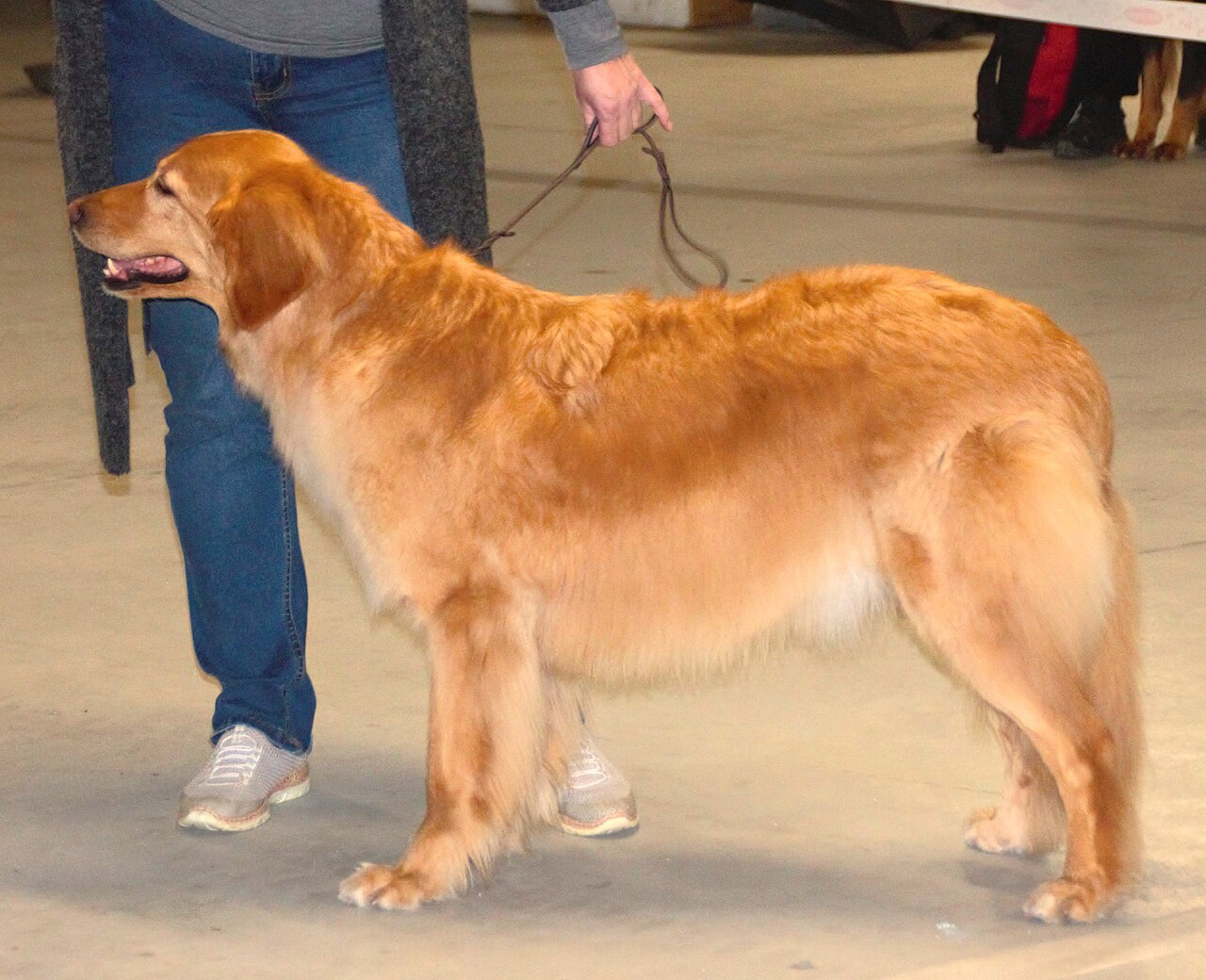
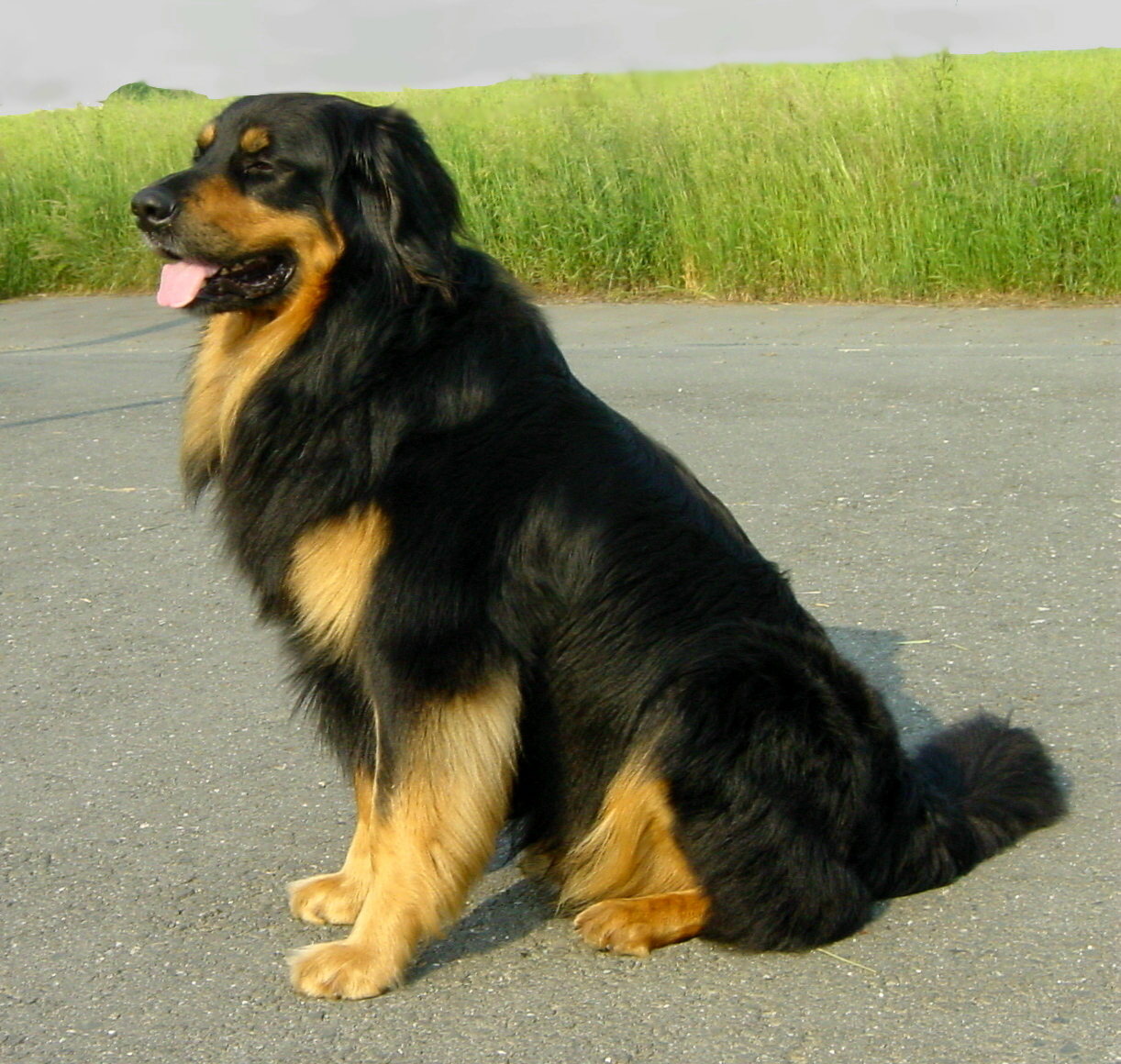
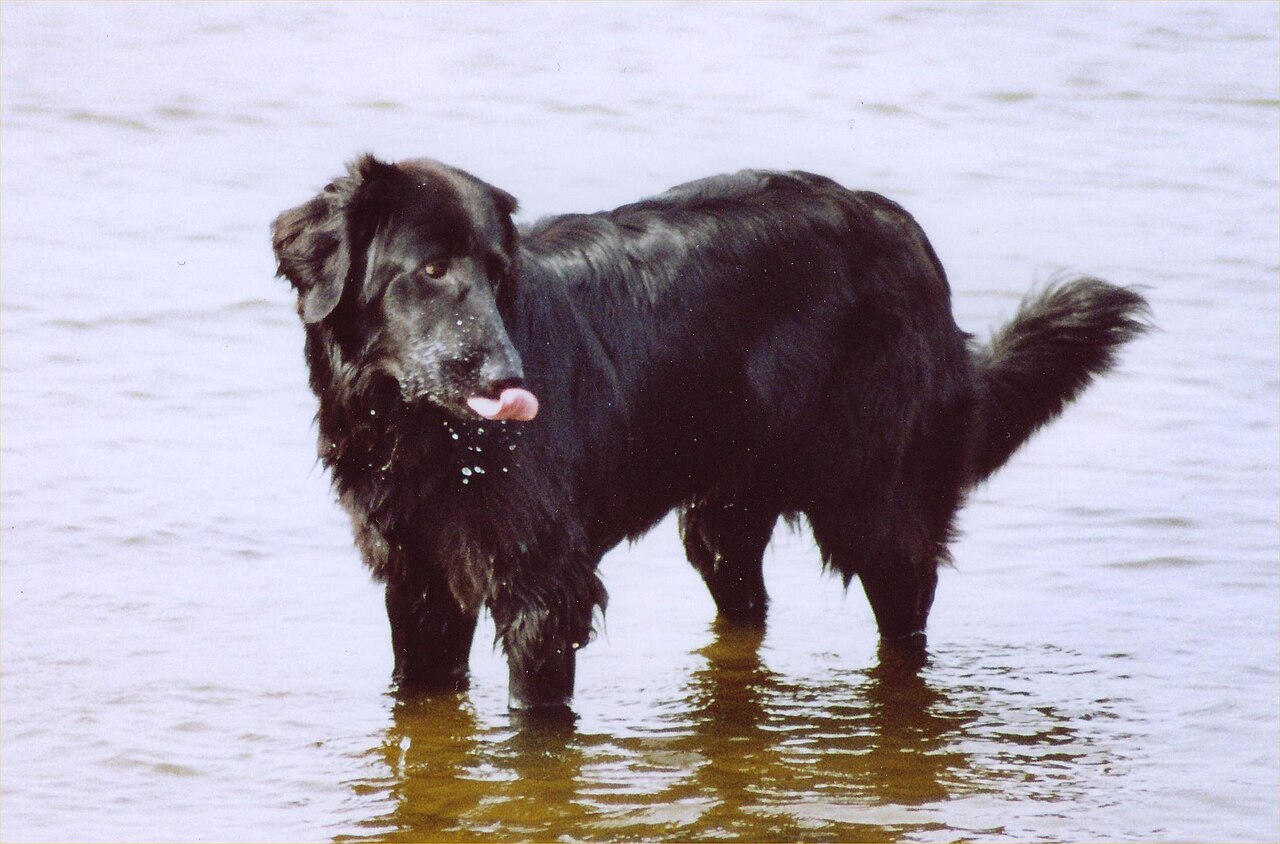
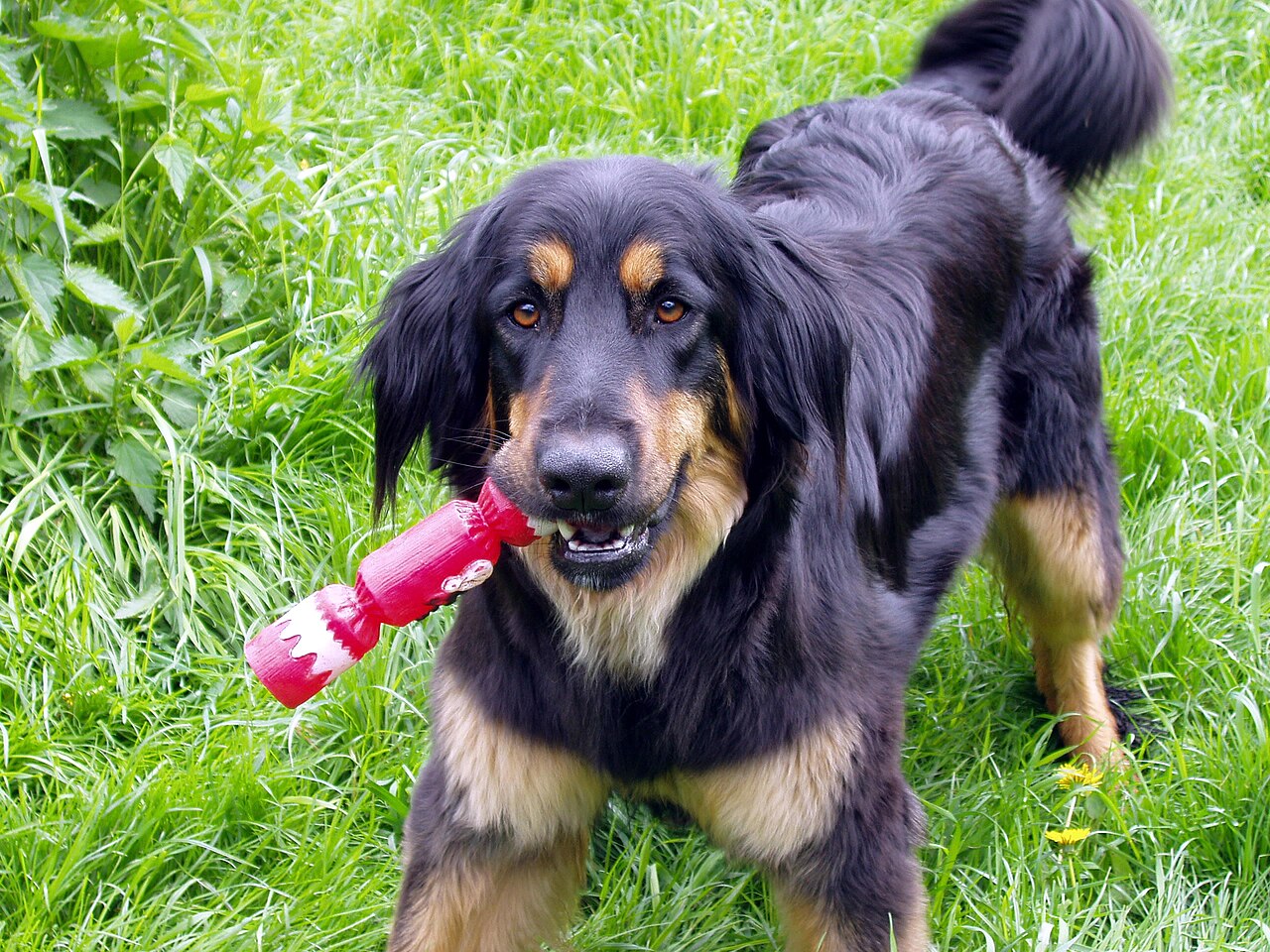
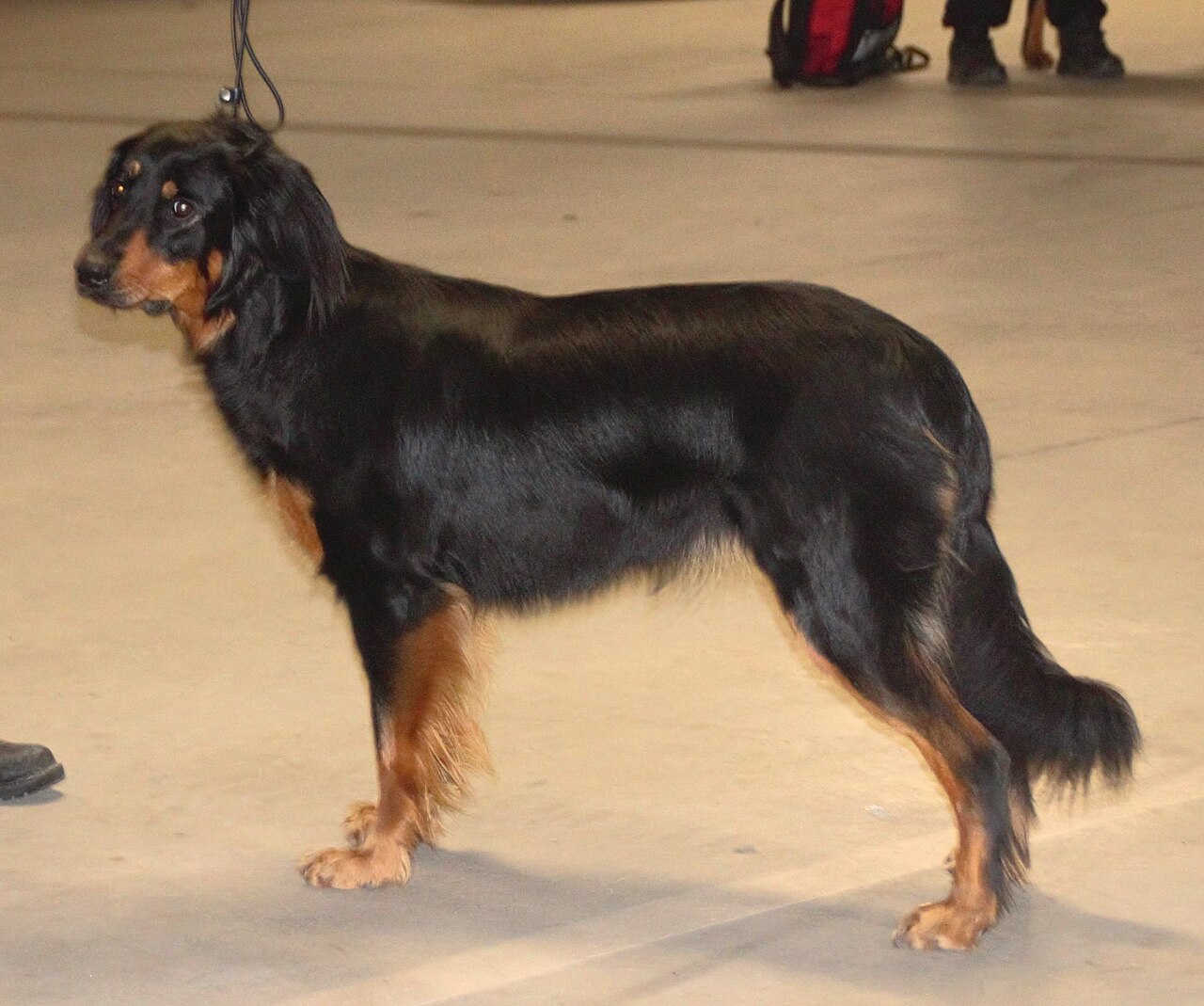
A powerful, slightly long-bodied dog with a long, lightly wavy coat that lies flat, with little undercoat. Three colours are recognized: black and gold (the most common), solid black and blond.
| Males | Females | |
|---|---|---|
| Height | 25-27.5 in (63-70 cm) | 23-25.5 in (58-65 cm) |
| Weight | 66-88 lbs (30-40 kg) | 55-77 lbs (25-35 kg) |
| Lifespan | 10-14 years | 10-14 years |
| Coat | Long, flat, little undercoat | Same |
Exercise and daily life
Plan on two hours or more of activity a day (Purina, Pets4Homes), and not only walking. The Hovawart has a good nose, so tracking, nosework, search work and obedience use what the breed was built for. Long hikes in cool weather suit it well.
This is not an apartment dog. It does best in a house with a securely fenced yard in a suburban or rural area, where its watchfulness has a territory to apply to. Being left alone for a normal workday is possible for an adult that has been taught it gradually, but a bored Hovawart patrolling a yard alone all day tends to turn into a fence-runner and a barker.
Training
What works: early and broad socialization (people, dogs, traffic, visitors at the door), calm consistency, short sessions that have a purpose, and a handler the dog respects. Harsh methods backfire with a self-confident dog that remembers.
Typical difficulties:
- Selective hearing during adolescence, which in this breed can last until about two years.
- Guarding that comes in too hard if nobody shapes it. Teach the dog early that you decide who comes in.
- Overprotectiveness on walks and at the door if the dog was never taught that you handle visitors.
Grooming
Easier than the coat suggests. Because there is little undercoat, brushing two or three times a week keeps it free of tangles (Purina). Check behind the ears, the feathering on the legs and the trousers, where knots form first. Shedding is moderate year round, heavier during seasonal coat changes. No clipping is needed.
Health
The US breed club describes the Hovawart as historically an exceptionally healthy breed for its size. Conditions to know by name:
- Hip dysplasia. German clubs have reduced it through strict X-ray rules: only dogs graded A or B may breed.
- Hypothyroidism. A Finnish study of 4,953 Hovawarts found 107 cases and a heritability of 0.47 to 0.62, so parents' thyroid results matter.
- Degenerative myelopathy (DM). A progressive spinal disease linked to the SOD1 gene mutation, which has been documented in the breed.
- Heart disease, including dilated cardiomyopathy.
- Less often: eye disease, liver shunt, sebaceous adenitis.
Ask to see these results for both parents: hip X-ray (OFA Good or Excellent), thyroid panel, DM DNA test, eye exam, and ideally a cardiac exam. The German RZV recommends a heart exam from 20 months of age.
Cost
Puppies from established breeders usually cost $1,000 to $2,500, and since there are few litters a year, waiting lists and imports from Europe are common (import adds transport and fees). Running costs are roughly $1,500 to $2,500 a year: food for a 55-90 lb dog, routine vet care, preventives, insurance and training classes. Lifelong thyroid medication, if needed, comes on top.
Who it suits and who it does not
Good match for:
- Experienced owners who have raised a large, independent breed before
- Homes with a fenced yard in a suburban or rural setting
- People who want a genuine watchdog and enjoy training, tracking or dog sports
- Active owners who hike or walk for hours in all weather
Not a match for:
- First-time owners or people who want an instantly biddable dog (look at a Golden Retriever)
- Apartments and busy urban living
- Homes with toddlers or constant streams of visitors