Origin and history
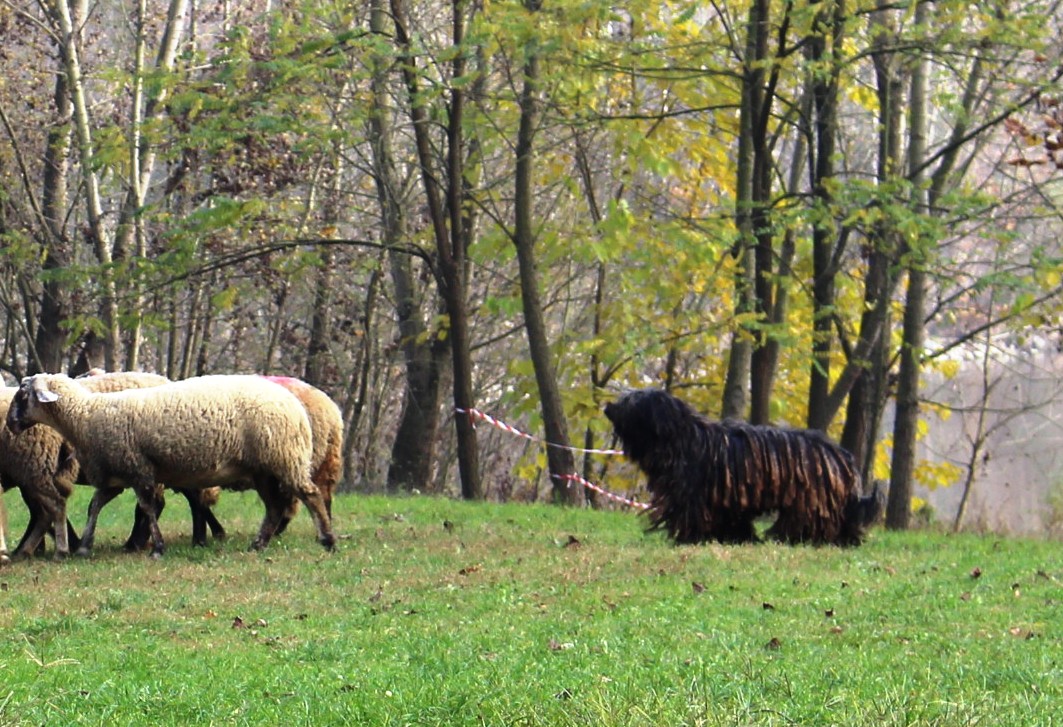
The Bergamasco Sheepdog (Italian: Cane da pastore Bergamasco, plural Bergamaschi) is an old herding breed from the Italian Alps. The FCI standard says it was widespread across the Alpine and pre-Alpine regions, with a particularly large number in the valleys around Bergamo, where sheep were bred on a large scale. Shepherds needed it to drive the flocks on the seasonal moves between the Alpine pastures and the plains of the Po Valley. A sixteenth-century painting by a famous artist already shows the breed, and the first dogs were entered in the Italian stud book in 1891.
The AKC tells the longer legend: dogs of this type were traded around the Mediterranean by the Phoenicians. French authorities have suggested that the Bergamasco descends from the Briard, while Italians insist the Bergamasco came first. According to the AKC, numbers dwindled in Italy after World War II before fanciers around the world rallied behind the breed.
Today the Bergamasco is FCI standard No. 194, group 1 (sheepdogs and cattle dogs), section 1 (sheepdogs), with working trial; the current version of the standard dates from 2020. In the US the Bergamasco Sheepdog Club of America (BSCA) became the AKC parent club in February 2014. The breed became eligible for AKC registration on December 1, 2014 and has competed in the Herding Group since January 1, 2015. It is one of the rarest AKC breeds: the AKC breed page ranks it 200 of 210 in popularity.
Temperament and character
The FCI standard describes a dog bred to drive and guard livestock, with "vigilance, concentration" and "moderation and patience". It adds that learning ability and determination make it "an excellent guard and companion", and that it must never be aggressive or fearful. The AKC sums it up as "patient but protective". In daily life:
- It is calm and patient. Most of the time it is a quiet, steady presence in the house. The AKC calls it "generally happy with kids and other animals".
- It watches over its people. It keeps an eye on the family and the property and announces visitors. With strangers it can be reserved at first; the standard accepts a slight natural diffidence.
- It thinks for itself. It was bred to work at a distance from the shepherd and make its own decisions. The AKC says it often sees itself "more as an equal partner than as a subordinate".
- It bonds with everyone. According to the AKC, a Bergamasco builds an individual relationship with each person in the household.
With children it is usually gentle and tolerant, and it likes to keep the family together. As with any large herding dog, supervise play with small kids.
Size and appearance
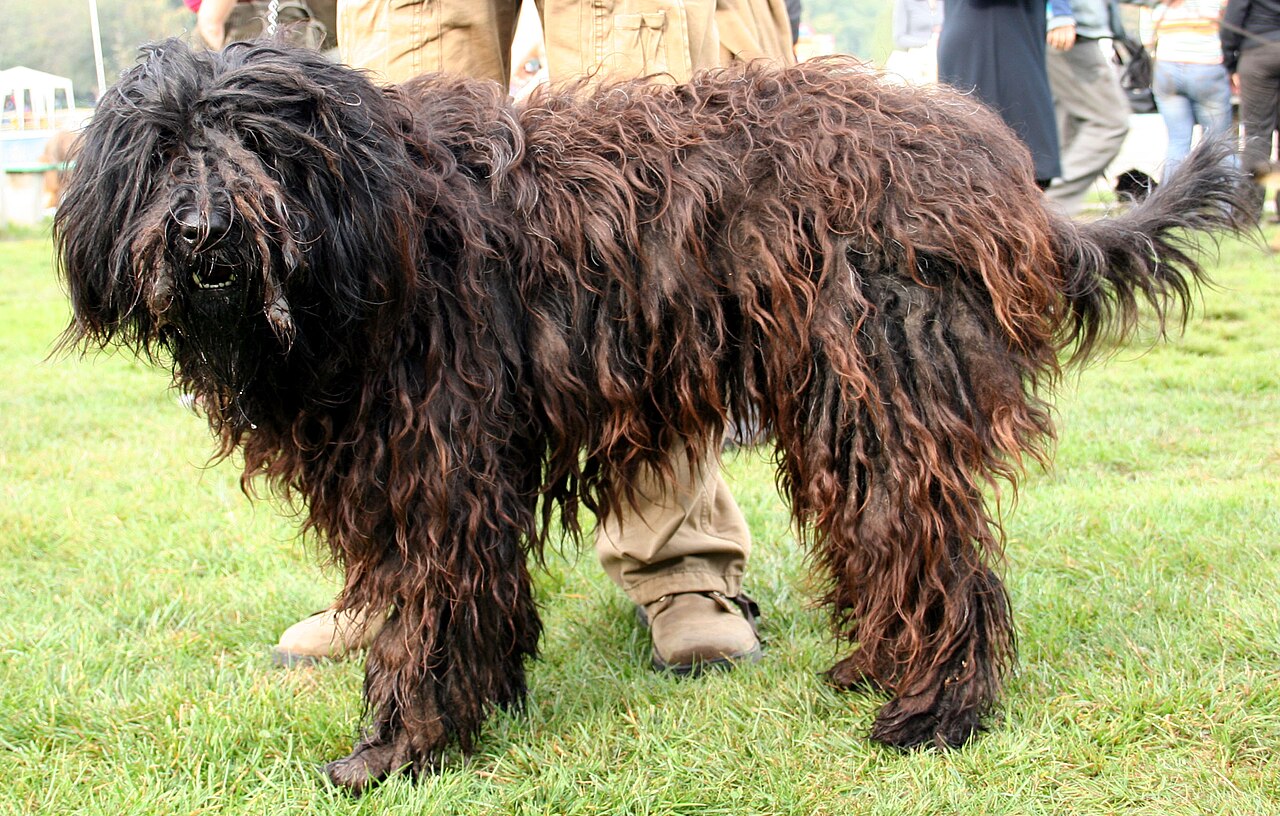
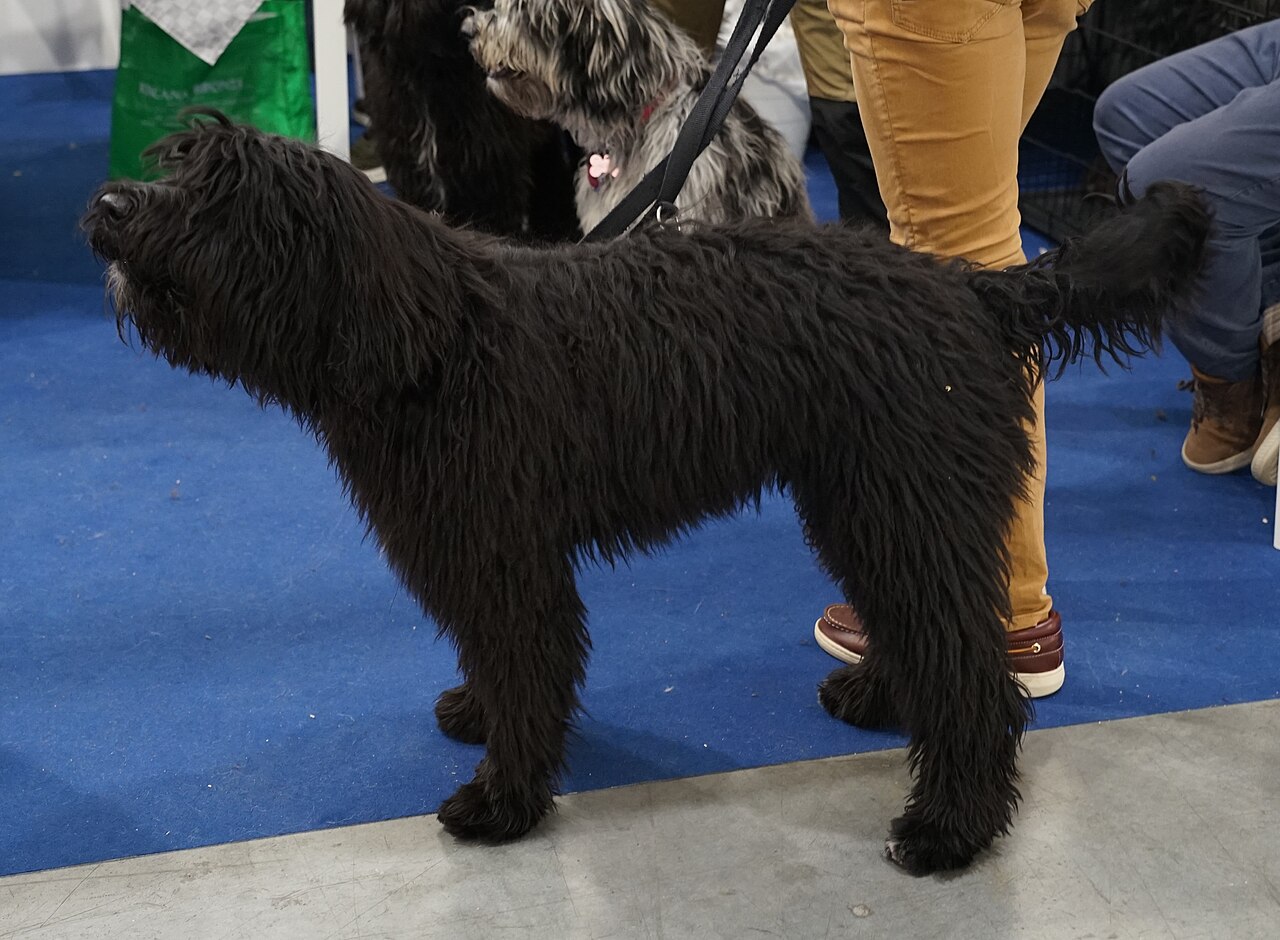
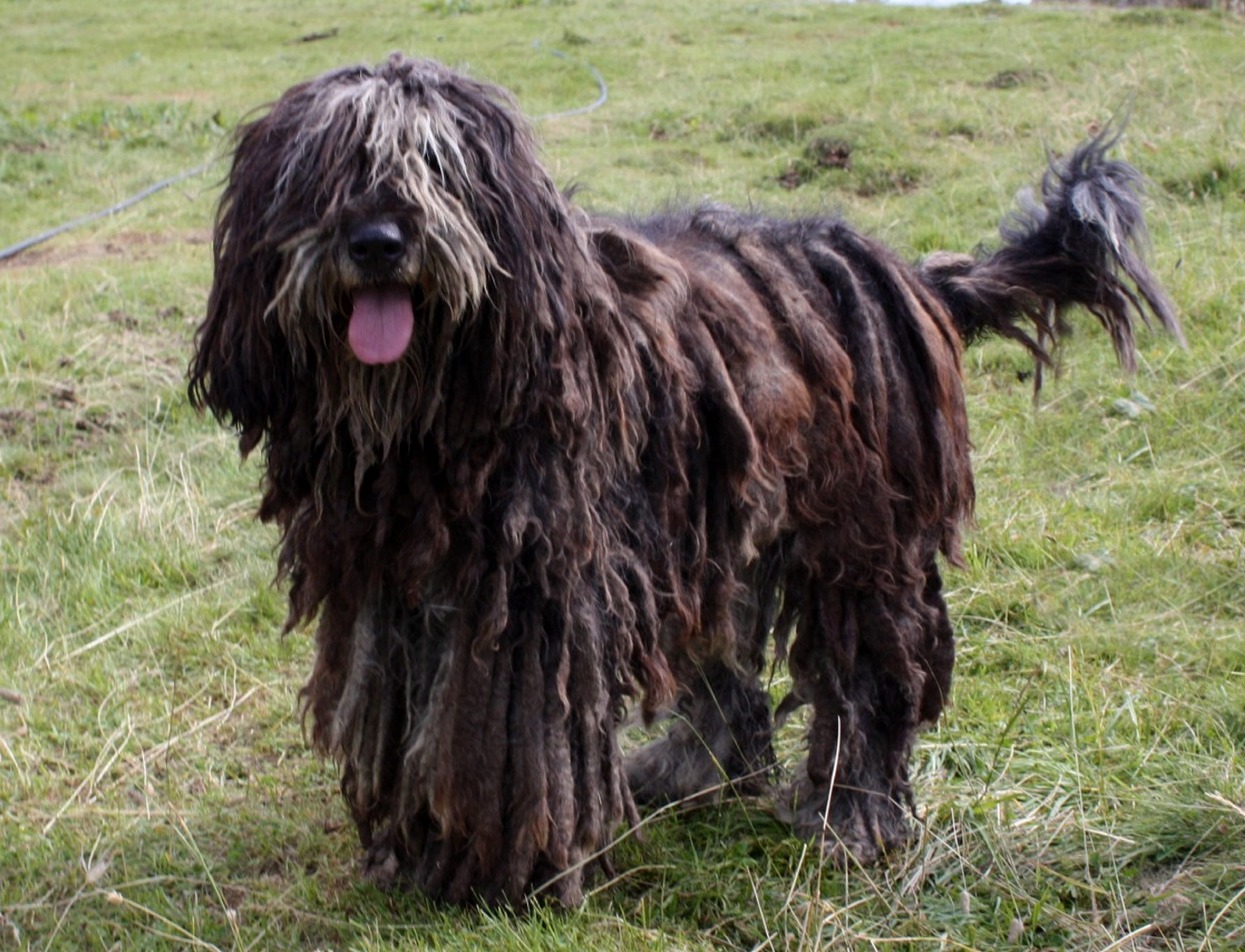
A sturdy, rustic dog of medium proportions, square in outline: body length equals height at the withers. Under the coat it is powerfully built, with a broad, deep chest and a strong back. The head looks large because of the hair falling over the face; long upper eyelashes help lift that curtain of hair out of the eyes.
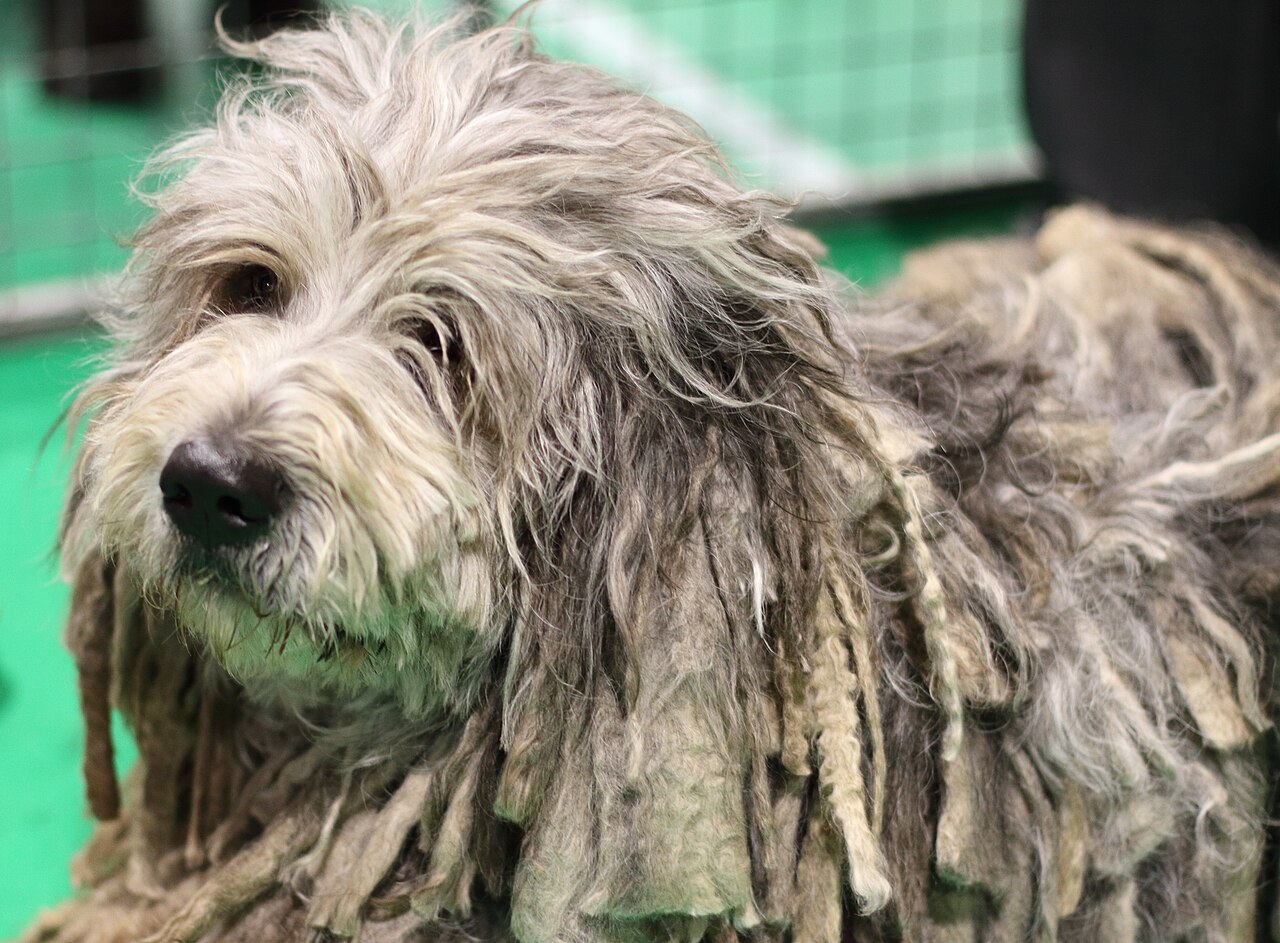
The coat is the point. The AKC says it is made of three types of hair, called dog, goat and wool. On the front of the body the hair is harsh and goat-like with wavy flocks; from the middle of the chest backwards it is woolly and forms broad, flat mats (flocks) that hang down the sides. The flocks begin to form at 12 to 15 months and keep growing for years. Colors: solid grey or grey patches in all shades up to black, tinges of isabella and light fawn allowed, all black only if the black is really opaque. White on more than a fifth of the body is a disqualification.
| Males | Females | |
|---|---|---|
| Height | 23.5 in (FCI 58-62 cm, ideal 60 cm) | 22 in (FCI 54-58 cm, ideal 56 cm) |
| Weight | 70-84 lbs (FCI 32-38 kg) | 57-71 lbs (FCI 26-32 kg) |
| Lifespan | 13-15 years | 13-15 years |
| Coat | Flocks: goat hair in front, woolly mats behind | Same |
Inches, pounds and lifespan are from the AKC breed profile; centimeters and kilograms from the FCI standard.
Exercise and daily life
The AKC says the Bergamasco needs "only a moderate amount of exercise every day", but it should be shared activity: walks, hikes, ball games, time together in an open field. Being left alone in the backyard does not count. Plan on an hour or more a day, split into two outings.
It does best in a house with a securely fenced yard and a family that is home a lot. A city apartment is possible, but a large, heavily coated dog that brings leaves and mud indoors is a lot of dog for a small space. The coat insulates against cold and also helps regulate body temperature in heat; in summer give it shade and water and keep hard exercise to the cool hours.
Good outlets: herding, obedience, rally, tracking, and hiking with the family.
Training
What works: early socialization, puppy classes and training that explains the task. The AKC puts it precisely: a Bergamasco "who can be made to understand what is wanted of him, and why he should do it, will happily comply, if in his own way". It is intelligent and wants to please, but blind drilling bores it and harshness damages the bond.
Typical difficulties:
- Independence. It may decide a command makes no sense and ignore it. Short, varied sessions with clear rewards help.
- Wariness with strangers. Introduce the puppy to many calm visitors, places and situations.
- Guarding. It will watch the house and yard; teach it early that you decide who is welcome.
- Herding behavior toward running children, bikes and other pets.
Grooming
The AKC calls the adult coat "basically maintenance-free", but there is one big job. The goat and wool hair appear around the first birthday, and then the coat must be "ripped" into mats: you separate the felting hair by hand into flat flocks of the right width. The AKC says this can take a few hours or a few evenings, and "once it's done, it's done". After that, a few checks a month keep new mats from joining into one large plate.
A Bergamasco does not shed, is not brushed once the flocks have formed, and according to the AKC needs a bath only two or three times a year. Full flocks take a long time to dry, so wash on a warm day and squeeze the water out with towels. Because the coat helps with thermoregulation, the AKC says a Bergamasco should never be shaved down. Trim the nails regularly and check ears and paws for burrs and grass seeds.
Health
The breed is generally healthy. The BSCA health statement says there are no known diseases or health problems that affect the breed as a whole. The parent club still recommends:
- Hip evaluation. PennHIP is the club's preferred hip test, ideally done after 2 years of age when skeletal growth is complete.
- Degenerative myelopathy (DM). A DNA test for offspring if the sire or dam is a carrier. The club says DM is not currently an issue in the breed and calls this a proactive step.
- Imported dogs. PennHIP and genetic testing for DM.
The club also advises buyers and new breeders to consult it: the population is small, and it keeps decades of records on bloodlines, temperament and inherited traits.
Cost
A puppy from a breeder who health-tests usually costs about $1,500 to $3,000. There are very few breeders in the US, so expect a waiting list, a long drive or an import. Start with the breeder list on the BSCA website.
Running costs come to roughly $1,500 to $2,500 a year for food for a 57-84 lb dog, routine vet care, preventives and insurance. Groomer costs are low because the coat is not clipped, but you will spend time on the first ripping and on drying after baths.
Who it suits and who it does not
Good match for:
- Families with older children who want a calm, devoted and watchful dog
- Owners with a house, a fenced yard and time to spend outdoors with the dog
- Experienced owners who respect an independent thinker and train by cooperation
- People who want a dog that does not shed and are fascinated by a unique coat
Not a match for:
- First-time owners who want an easy, obedient dog
- People in a small apartment or anyone who leaves the dog alone for long days
- Homes that cannot accept mud and leaves in the coat and a dog that takes ages to dry. For another big corded guardian, consider the Komondor; for a smaller corded herder, the Puli; for a long-coated sheepdog that is brushed instead, the Old English Sheepdog