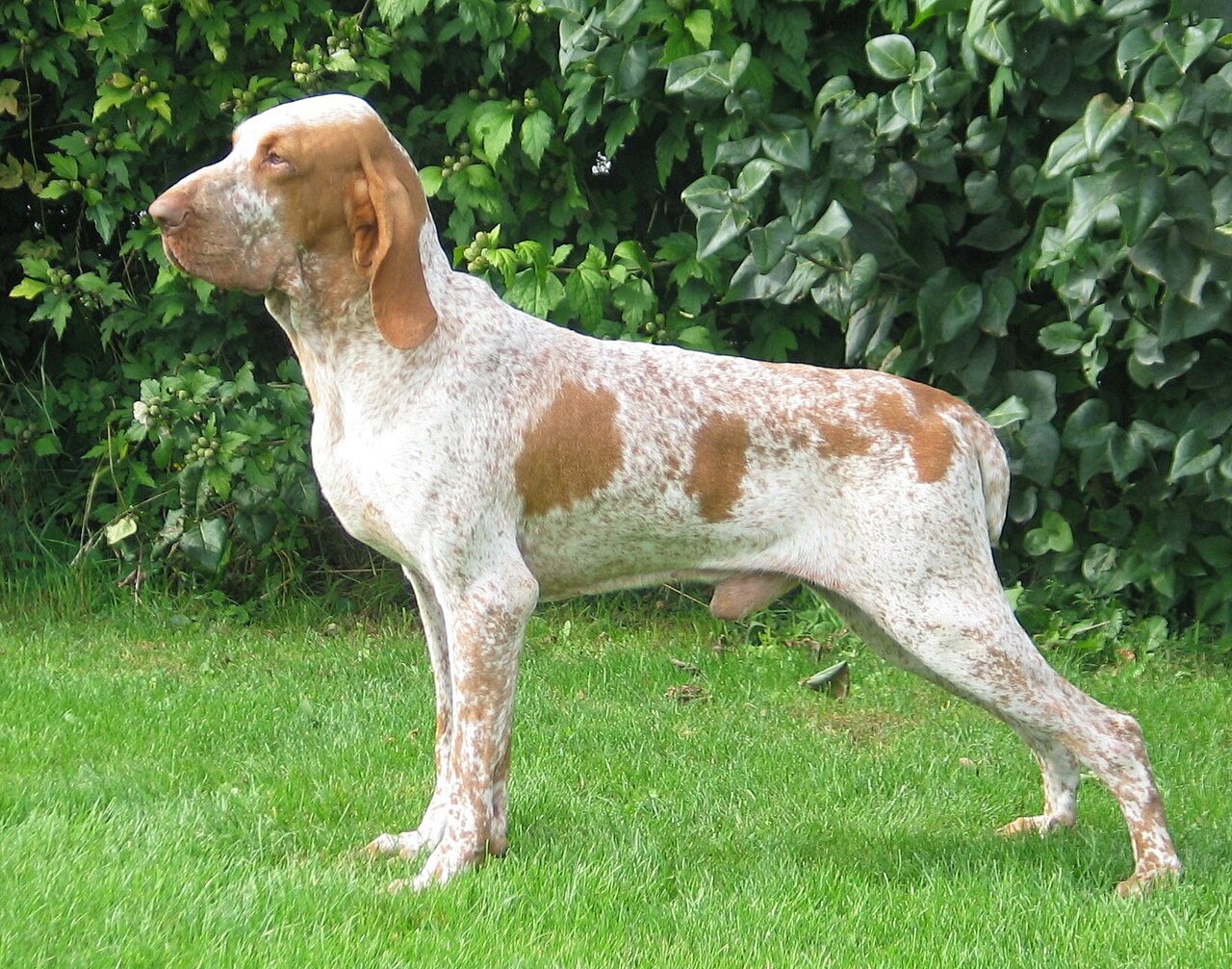
Origin and history
The Bracco Italiano is the traditional pointing dog of Italy and one of the oldest pointing breeds. The FCI standard points to 14th-century frescoes as proof that the breed's look and its work as a bird dog have changed little over the centuries. Italian noble families such as the Gonzaga and the Medici bred it, and when the Italian kennel club opened its stud book in 1882, the first dog entered was a Bracco.
By the late 19th century there were two types: a heavier, larger dog and a lighter, smaller one. Ferdinando Delor drew up a standard for the larger type in the 1890s. The modern breed rests on the Italian national kennel club (ENCI), which approved a standard in early 1949, and on the breed society Società Amatori Bracco Italiano (SABI), founded later that year. The FCI fully accepted the breed in 1956. Today it is FCI standard No. 202, Group 7, Section 1 (continental pointing dogs, braque type), with a working trial. Between 2010 and 2018 Italy registered roughly 700 puppies a year, most of them white and orange.
In the US the breed is a newcomer. It arrived around 1994, and the Bracco Italiano Club of America (BICA) was founded in 2007. In 2022 the AKC granted full recognition: the Bracco became the AKC's 200th breed and competes in the Sporting Group. It is still rare, and puppies are hard to find.
Temperament and character
The FCI standard describes a dog that is "tough and adapted to all types of hunting, reliable, endowed with an excellent ability to understand, docile and easy to train". Aggressive or overly shy dogs are disqualified. The AKC calls it gentle in the home and tireless in the field. In daily life that means:
- It is a bird dog first. One breeder quoted by the AKC calls it "a hunting dog first" and says it does best with a handler who hunts.
- It hunts at a trot. The standard asks for an extended, fast trot with the head held high, so the nose is above the topline when it quarters a field. It looks unhurried and covers a lot of ground.
- It is a velcro dog. A BICA member told PetMD that Bracchi "will want to be by your side". Indoors most are calm and affectionate, and generally good with children and other dogs.
- It is soft. The AKC notes that some dogs are softer than others and that too much pressure can make a Bracco shut down.
It is far too friendly to be a guard dog. The prey drive is real, so cats and small pets need careful introductions.
Size and appearance
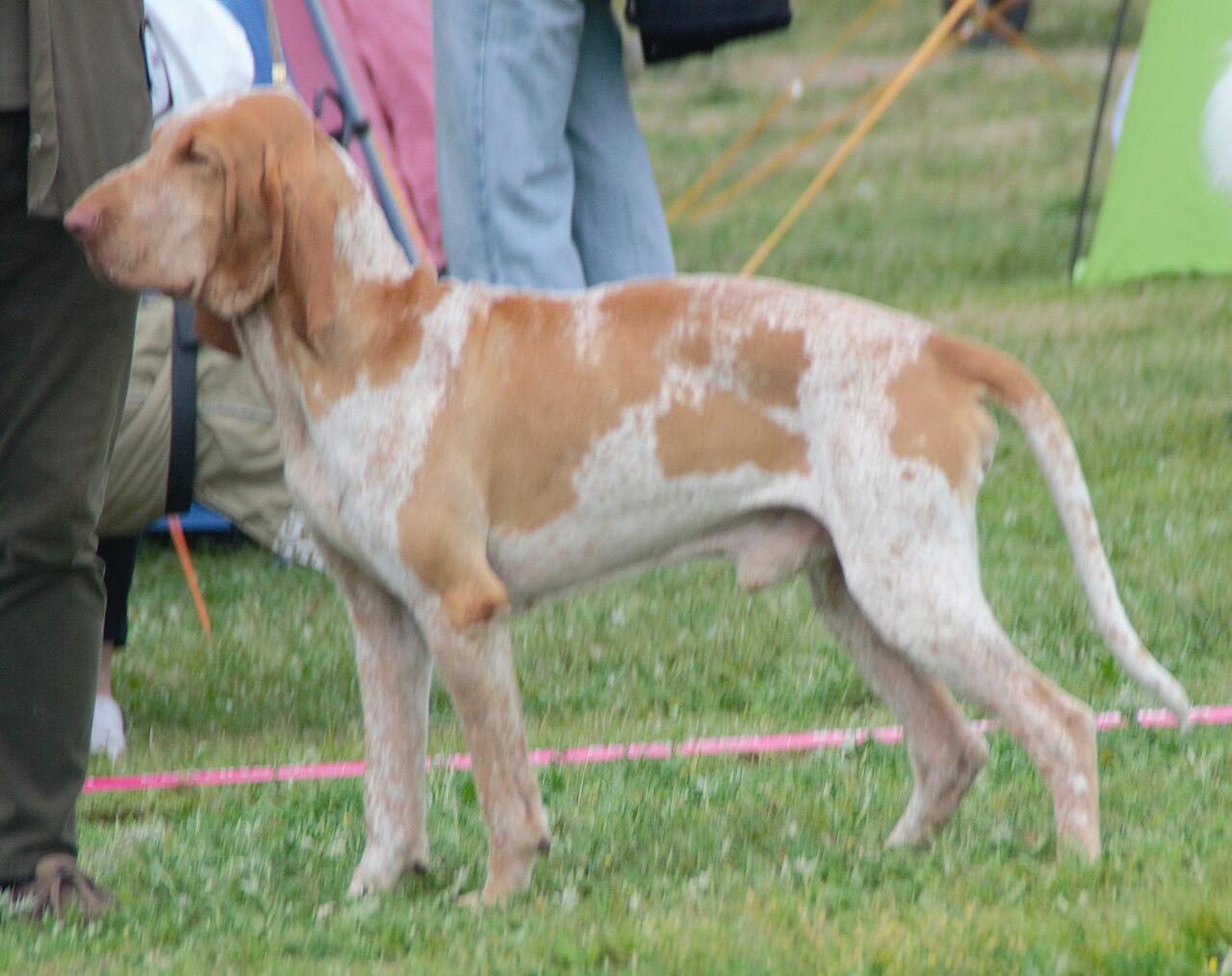
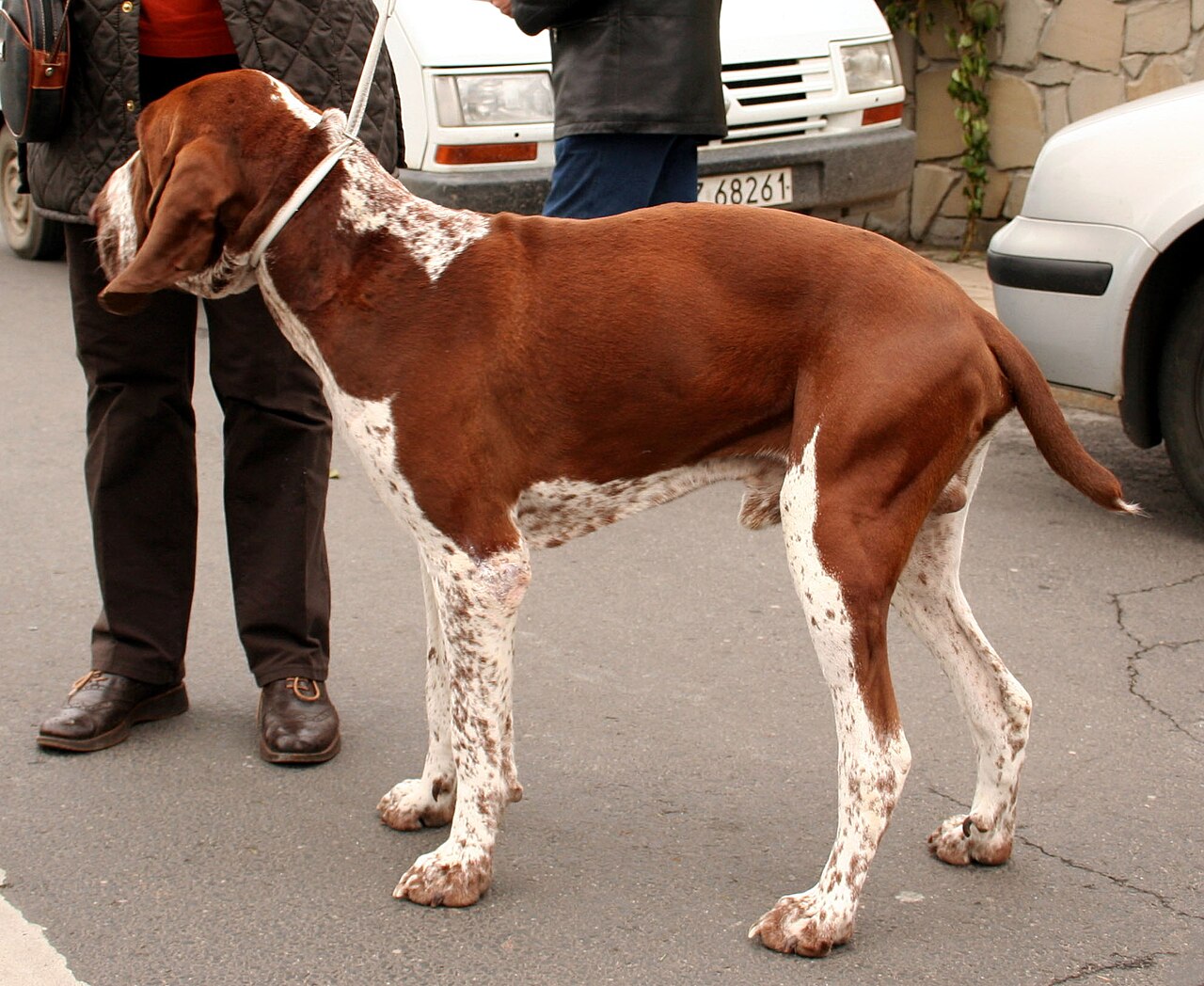
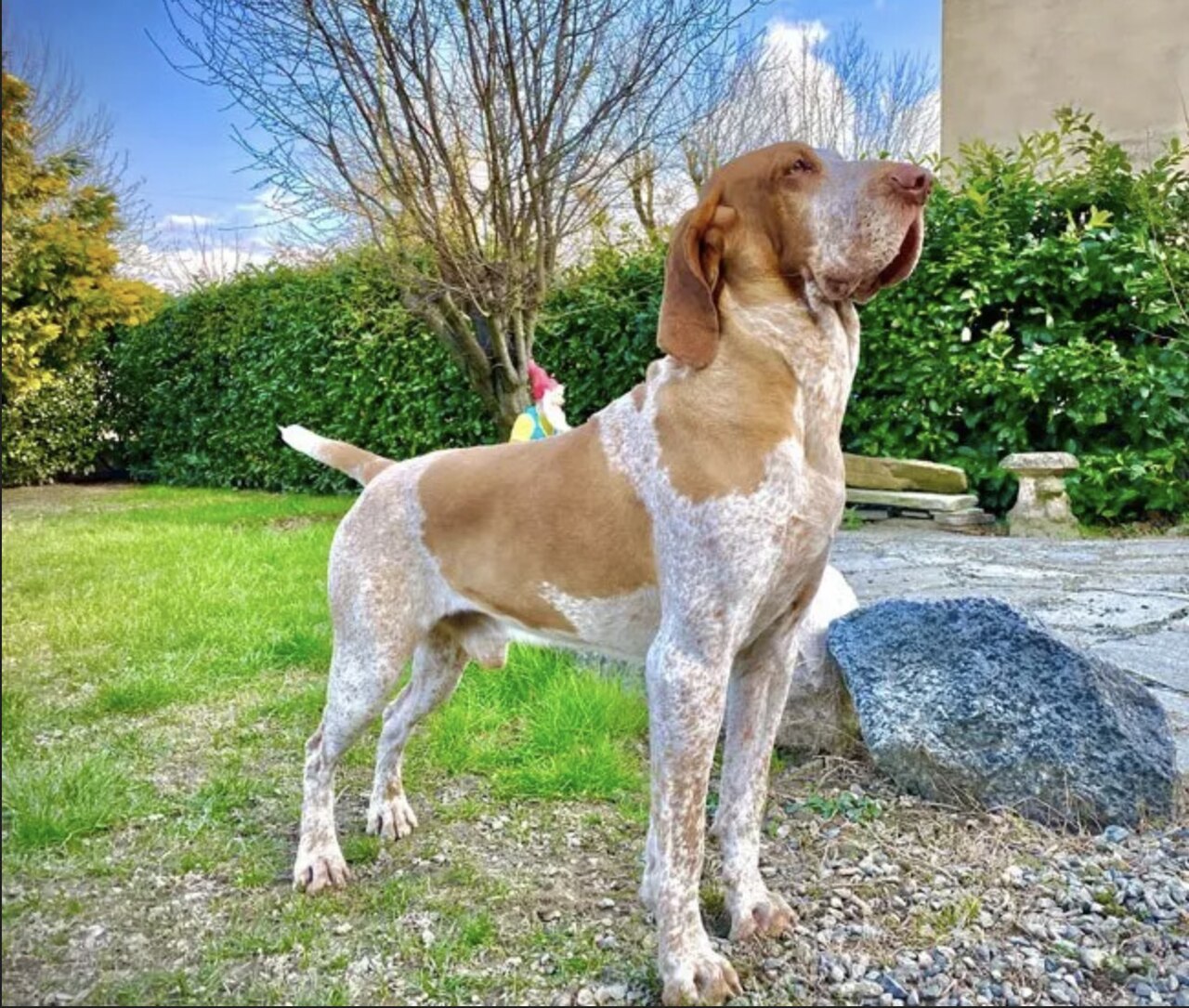
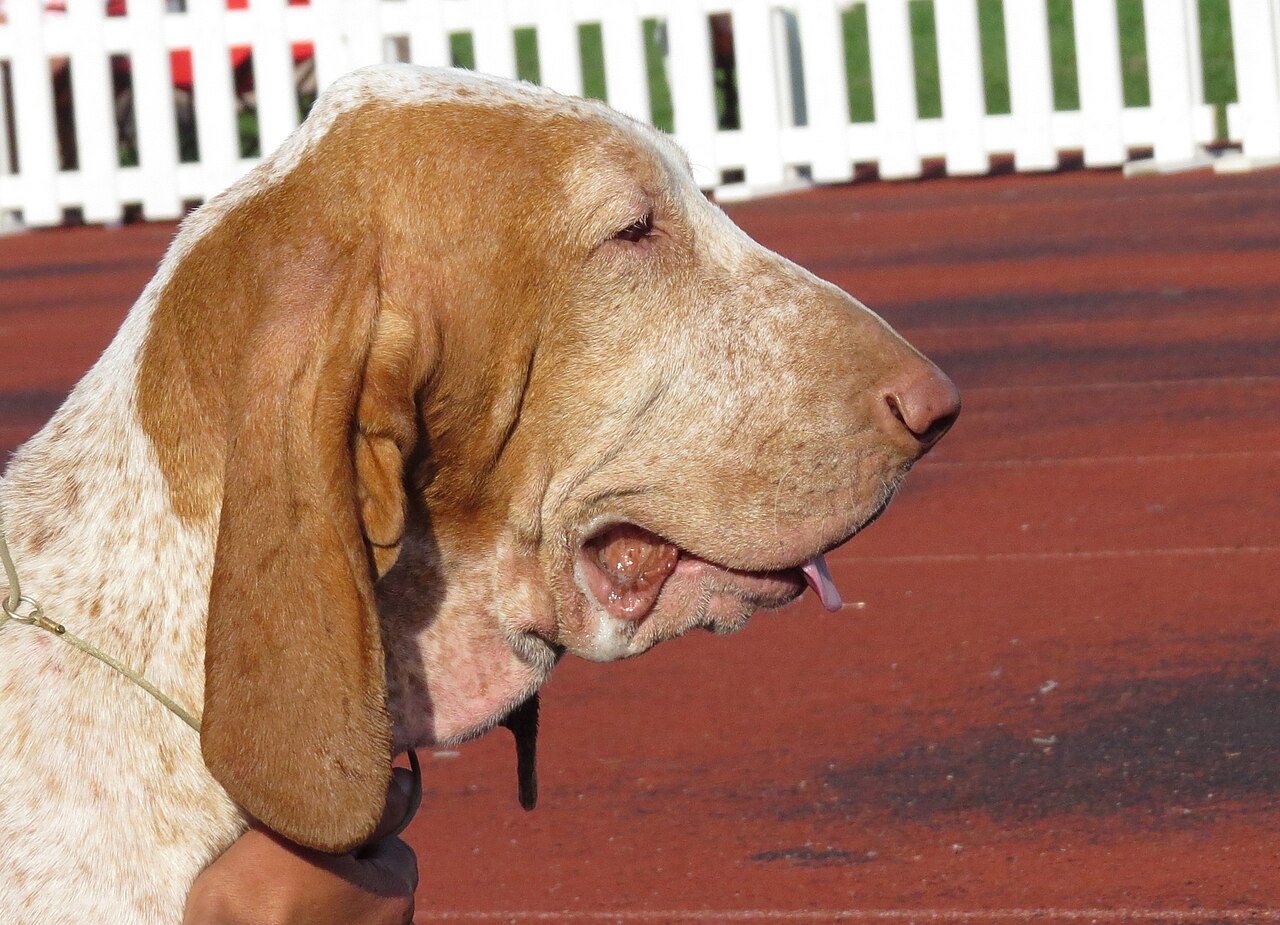
A strong, harmonious dog with lean limbs, a long head with a sculpted skull, long low-set ears that reach the tip of the nose and loose lips that form a soft dewlap at the throat. The coat is short, dense and glossy. Colors: white, white with orange or amber patches, white with brown patches, orange roan or brown roan. Black anywhere in coat or skin, and tricolor, are disqualifying. The tail may be docked for hunting.
| Males | Females | |
|---|---|---|
| Height | 23-26.5 in (58-67 cm) | 21.5-24.5 in (55-62 cm) |
| Weight | 55-88 lbs (25-40 kg), in proportion to height | 55-88 lbs (25-40 kg) |
| Lifespan | 10-12 years (median 11) | 10-12 years |
| Coat | short, dense, glossy | same |
The full FCI range is 55-67 cm (about 21.5-26.5 in). Being 2 cm above or below it is a severe fault.
Exercise and daily life
Plan on one to two hours of real exercise a day, ideally with off-leash running in open country where it is safe and legal. Hunting is the best outlet; without it, look at AKC hunt tests, NAVHDA testing, tracking, long hikes and swimming. PetMD warns that a Bracco without enough exercise may chew or bark excessively.
At home the breed is usually quiet once its needs are met. Expect drool and dog hair: the AKC mentions both, and the loose lips leave a trail after every drink. A house with a securely fenced yard is close to a requirement; a small apartment and long workdays alone do not work.
Training
The standard calls it docile and easy to train, and that is true when the method fits the dog. What works: rewards, short sessions, patience and early exposure to birds. BICA president Amanda Inman recommends "a firm, but gentle hand in training". PetMD adds that the breed has a sense of humor, which owners find endearing and occasionally exasperating.
Typical difficulties:
- Pressure. Harsh corrections make a soft Bracco shut down. Calm consistency gets far more.
- Recall around birds and deer. Use a long line until the recall is solid in the field.
- Boredom. The Dutch breed club notes that the breed gets bored quickly. Vary the exercises and stop while the dog is still keen.
Grooming
Easy. Brush weekly with a rubber mitt or hound glove; shedding is moderate year-round. The work is in the ears: long, hanging ears trap moisture and dirt, so check them weekly and after every swim and dry them well. Wipe the lips and dewlap after meals, and trim nails regularly.
Health
The breed is sound in structure, but it carries one serious inherited risk. BICA's 2025 health statement gives a median lifespan of 11 years and names the main causes of death: cancer (26.6% of dogs), old age (25.3%), kidney disease (14.6%) and gastric dilatation-volvulus (9.3%).
- Kidney disease (renal amyloidosis). Abnormal proteins are deposited in the kidneys. It can strike at any age but is diagnosed more often in young dogs, and untreated it is always fatal. Early signs are loss of appetite, increased thirst and urination, sometimes limping, swollen joints or unexplained fevers. BICA strongly encourages yearly blood work and a urine protein/creatinine ratio for every Bracco from one year of age, and testing within six months of every breeding.
- Bloat (GDV). A deep chest makes the stomach prone to twisting. BICA says a preventive gastropexy should be considered for all Bracchi, often done with the spay or neuter.
- Hip and elbow dysplasia. BICA recommends OFA or PennHIP hips and OFA elbows (at two years or older) for all breeding stock.
- Eyes. BICA recommends an OFA eye exam to rule out entropion, ectropion and cataracts; the FCI standard also asks for close-fitting eyelids.
- Ears and skin. Ear infections and allergies are common enough that BICA lists them.
Ask to see OFA hip, elbow and eye results for both parents (a CHIC number covers all three), recent kidney screening results and a record of how earlier litters have done.
Cost
Puppies are scarce and good breeders have waiting lists. In 2026 one Georgia breeder lists puppies at $4,000 to $4,500, earlier litters there sold for $3,000 to $3,500, a Pennsylvania listing asks $2,500, and price guides give $1,800 to $4,000. Budget $2,500 to $4,000 for a puppy from health-tested parents, more for show or breeding rights or an import from Italy. Start with the BICA breeder list.
Running costs are about $1,200 to $2,000 a year: food for a 55-88 lb active dog, routine vet care, preventives, insurance and training or test fees. Add the yearly kidney panel and, if you choose it, a preventive gastropexy.
Who it suits and who it does not
Good match for:
- Bird hunters who want a close-working, steady pointer and retriever
- Hunting families who want the dog in the house, not in a kennel
- Active owners with a fenced yard and access to open country
- People who can train with patience and a light hand
Not a match for:
- Apartments and long days alone
- Owners who mind drool and dog hair
- Anyone who wants a quick, eager-to-please dog that takes harsh corrections
- Non-hunters who want an easy family dog (a Golden Retriever or Labrador Retriever is the more honest choice)
The closest relative is the wire-coated Spinone Italiano, which is just as gentle but slower. For a faster, more popular short-coated pointer, look at the German Shorthaired Pointer, the Vizsla or the Weimaraner.