Origin and history
The Puli (plural Pulik) is a small Hungarian herding dog. The FCI standard says its ancestors most probably reached the Carpathian Basin with the migrating ancient Magyars, nomads who lived from their livestock. For centuries Hungarian shepherds used it to drive and gather large flocks of sheep on the plains, while bigger dogs such as the Komondor guarded the flock at night. The corded coat protected it from the region's harsh winters.
Organized breeding started in the early twentieth century. According to the AKC, the breed was nearly lost in the seventeenth century through crossbreeding, and its revival began in 1912 with Emil Raitsits, leading to the first Puli standard in 1915. Today the Puli is FCI standard No. 55, group 1 (sheepdogs and cattle dogs), section 1 (sheepdogs), without working trial.
In the US the AKC accepted the Puli in 1936, and the Puli Club of America (PCA) was founded in 1951; it is the breed's AKC parent club. The Puli competes in the Herding Group. It is a rare breed here, and most litters are planned well in advance.
Temperament and character
The FCI standard puts it in one line: "Of lively temperament, extremely able to learn. Loves children and is an excellent watchdog." The AKC calls Pulik "agile and faithful little dynamos". In daily life:
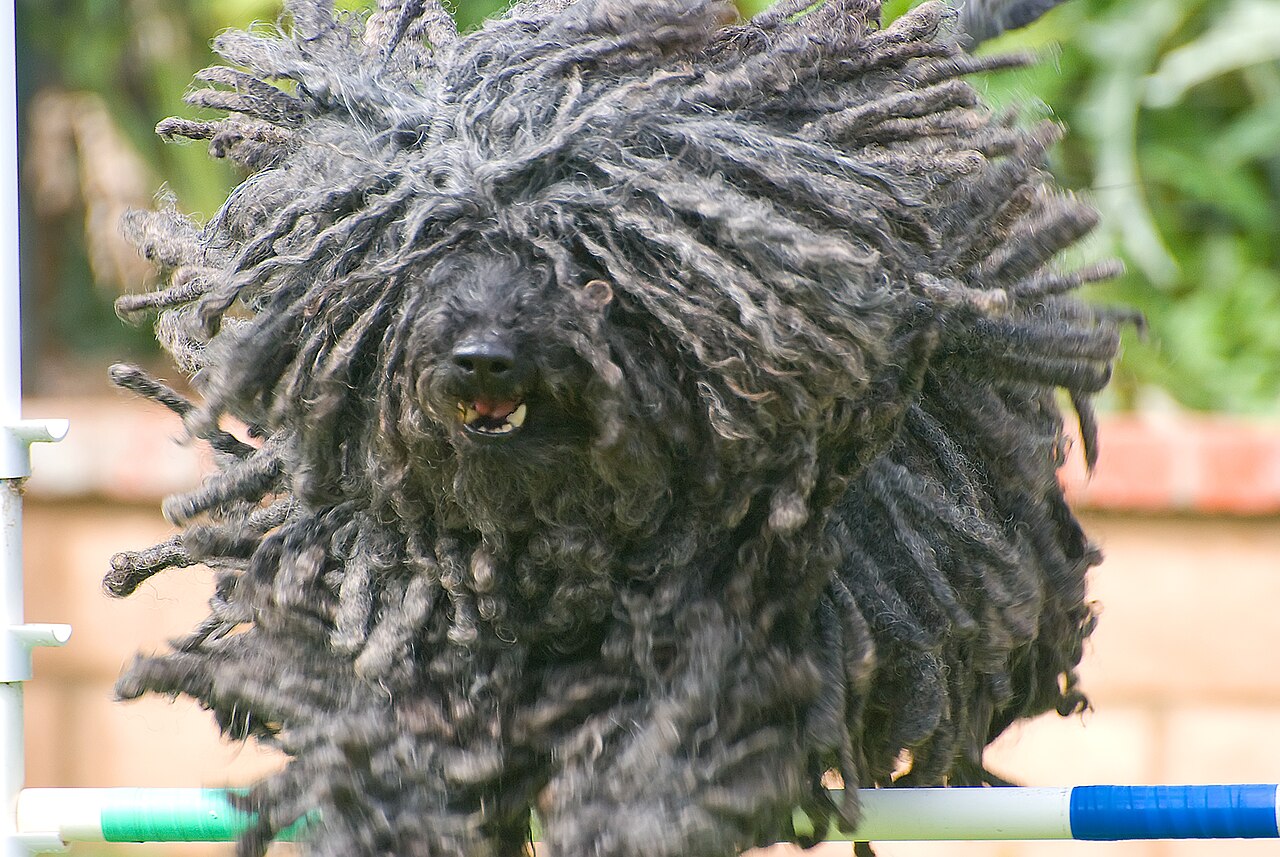
- It is quick and bouncy. The standard describes a spirited, mincing, jumping gait and a tendency to spin round. The AKC calls it "the acrobat of the dog world".
- It is a watchdog. A Puli announces every visitor and is often reserved with strangers. It is close to its own family and tends to stay near you around the house.
- It thinks for itself. It was bred to move sheep without waiting for every command. It learns fast, gets bored with drills, and likes to do things its own way.
- It herds. The AKC notes that Pulik will try to herd anything: birds, other dogs, even toddlers.
With children it is usually affectionate and playful, but it will try to round up running kids. Teach it early that people are not sheep.
Size and appearance
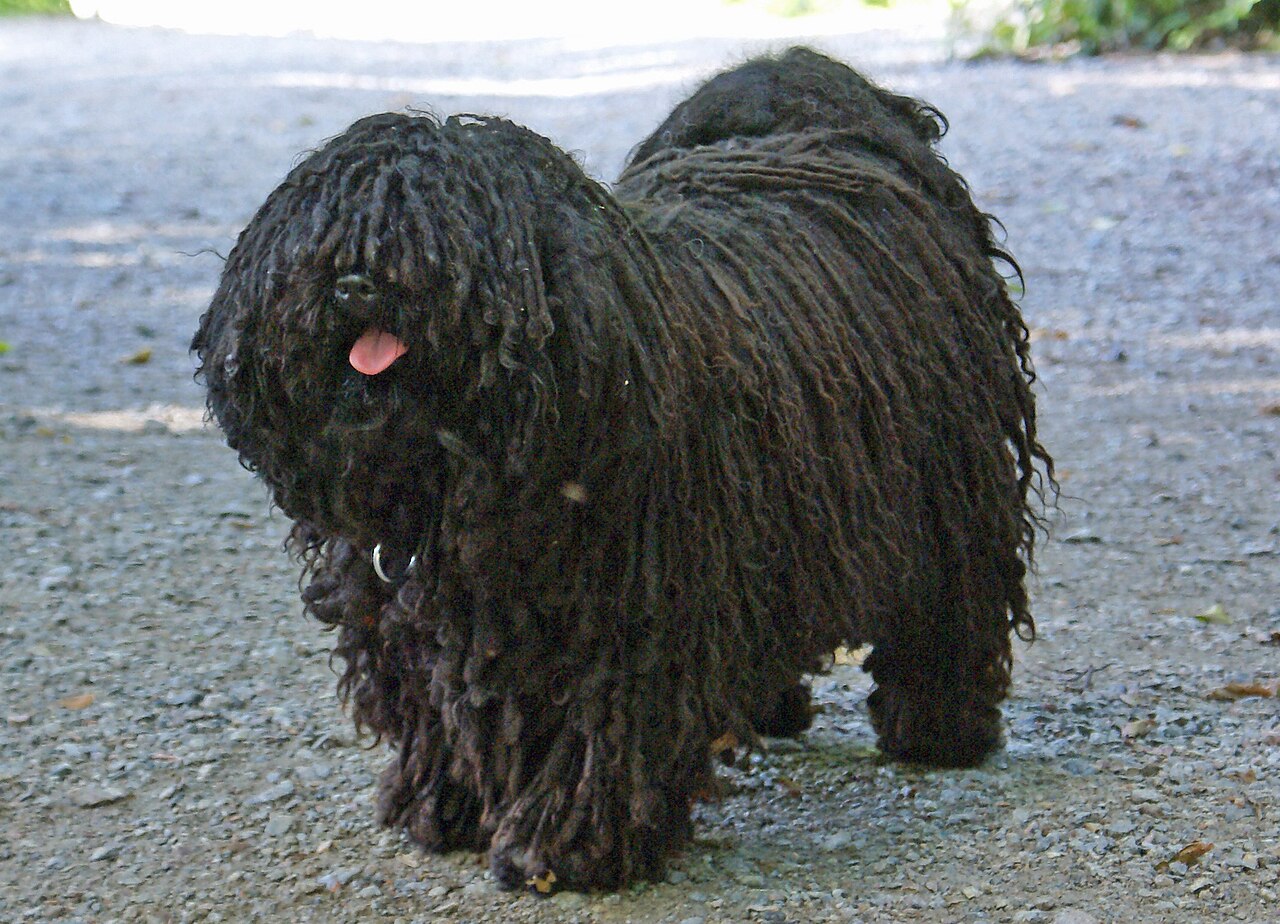
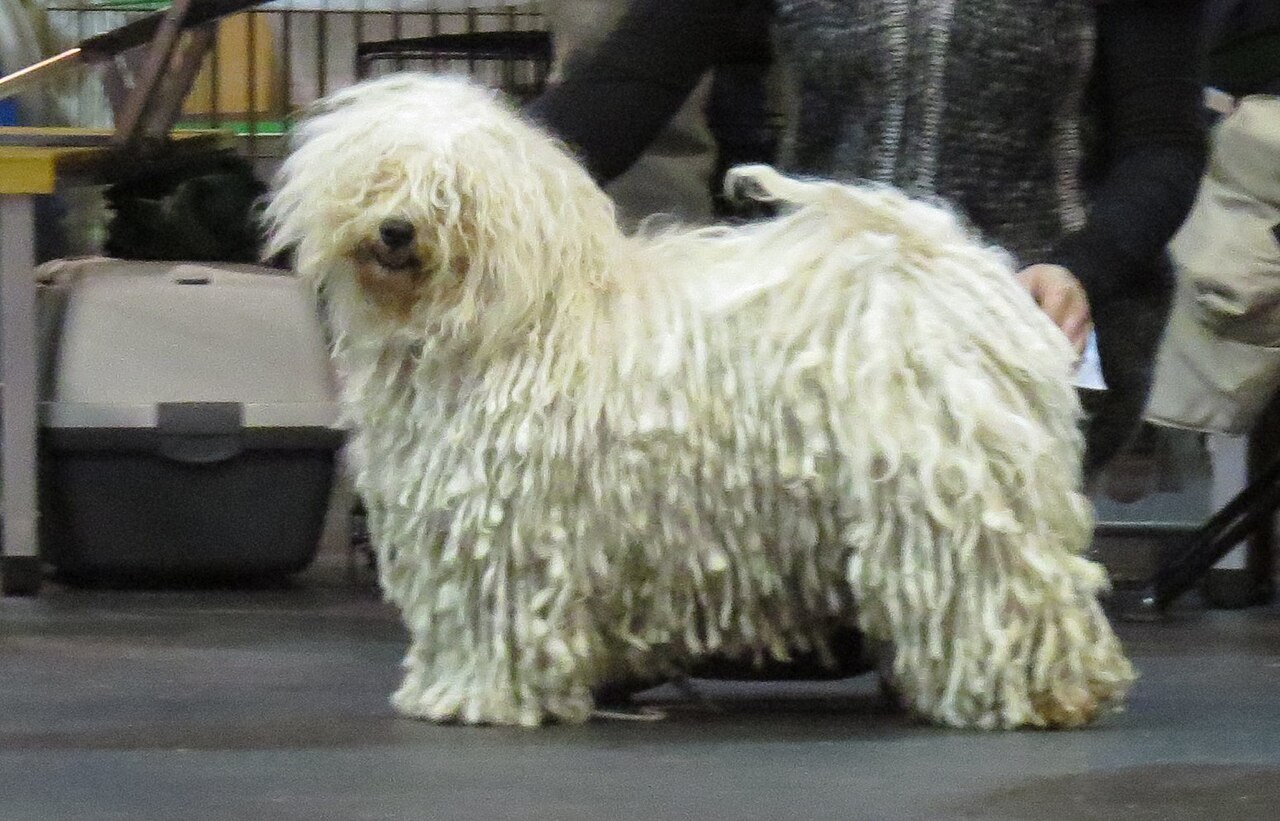
A medium-sized, square dog: body length equals height at the withers. Under the coat it is lean and well muscled, with fine but not light bones. The tail curls forward over the back, which makes the topline look as if it rises toward the rear.
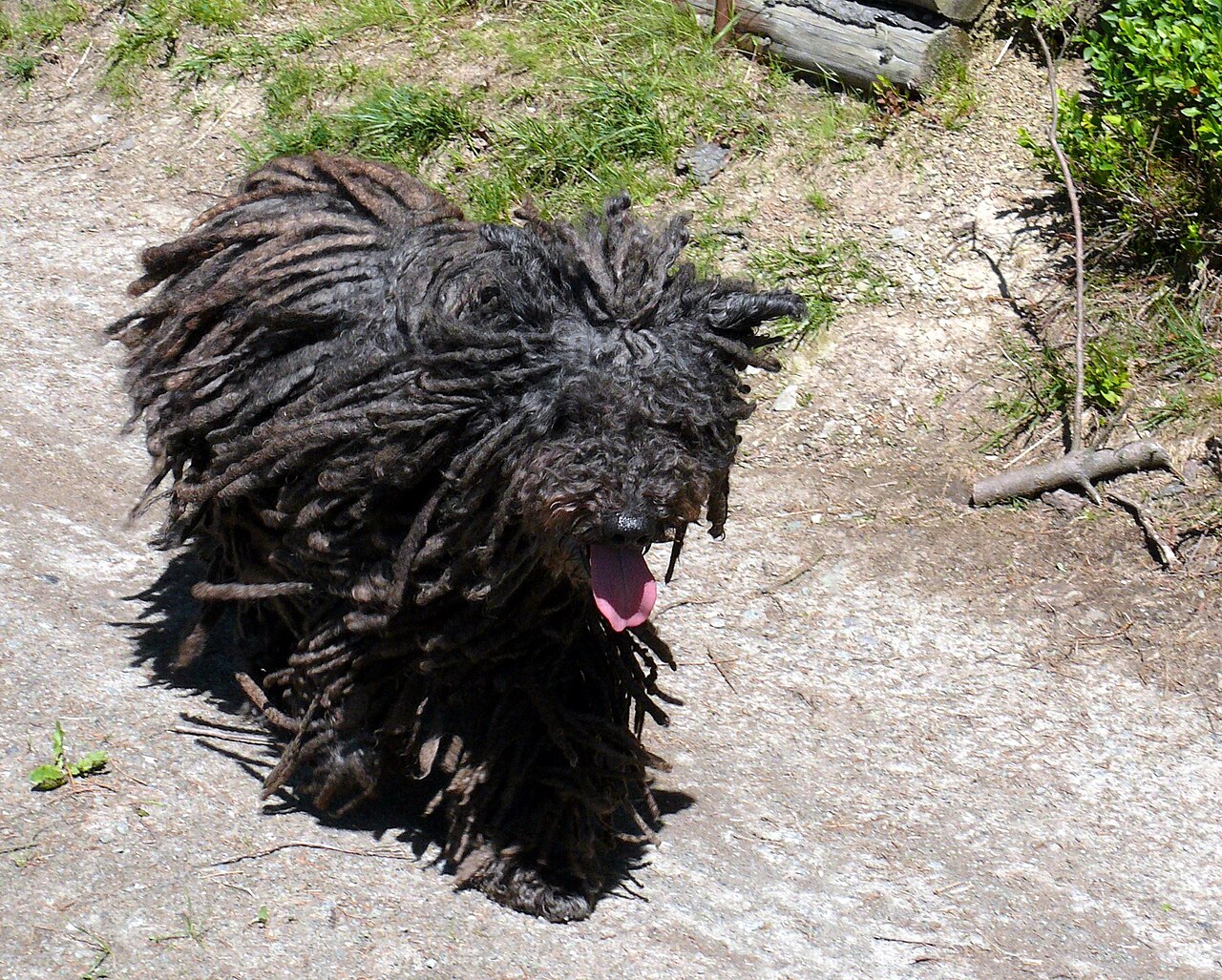
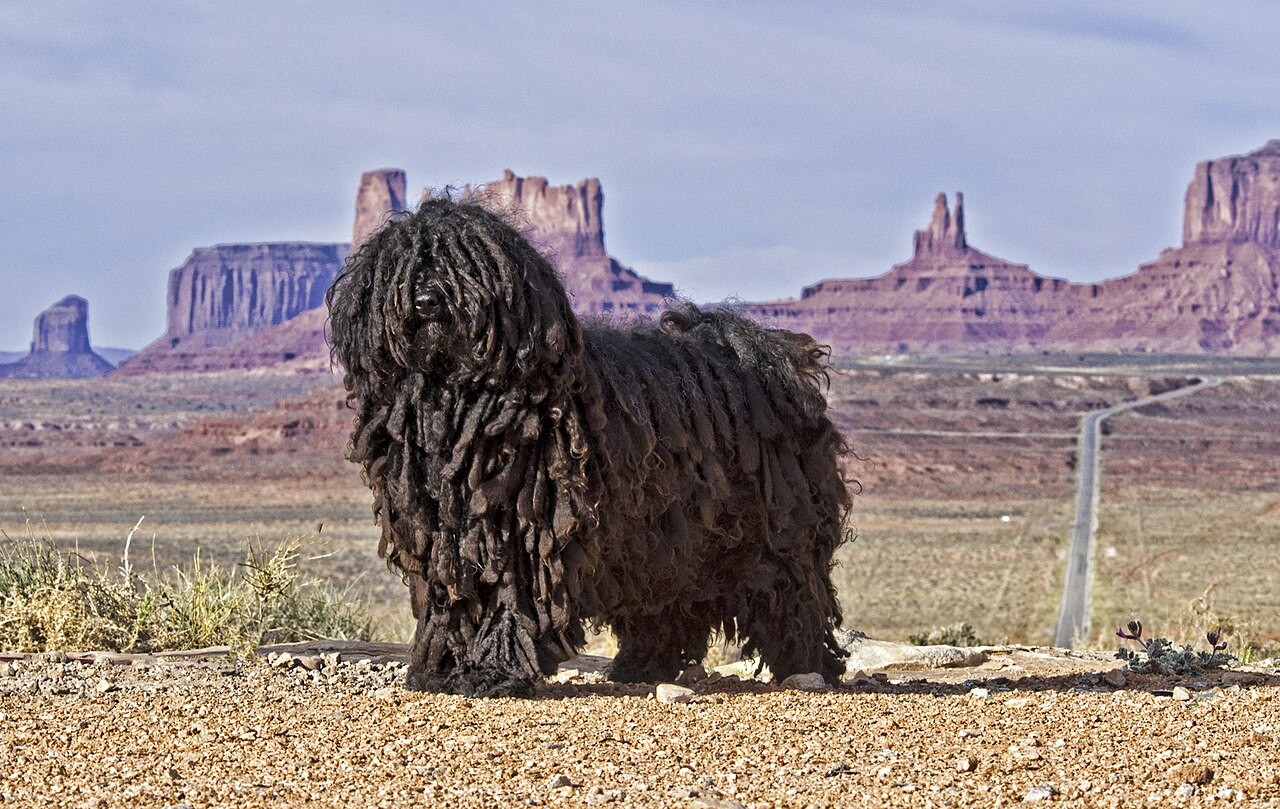
The coat is the point. The puppy coat is wavy or curly; later the coarser outer coat and finer undercoat twist together into tassels and cords. On the loin, croup and back of the thighs the cords reach 20-30 cm (8-12 in), on the head and legs 10-12 cm. Colours: black, black with rusty or grey shading, fawn with a black mask, any shade of grey, and pearl white.
| Males | Females | |
|---|---|---|
| Height | 17 in (FCI 39-45 cm, ideal 41-43 cm) | 16 in (FCI 36-42 cm, ideal 38-40 cm) |
| Weight | 25-35 lbs (FCI 13-15 kg) | 25-35 lbs (FCI 10-13 kg) |
| Lifespan | 10-15 years | 10-15 years |
| Coat | Corded, coarse outer coat, fine undercoat | Same |
Heights, weight and lifespan in inches and pounds are from the AKC breed profile; centimetres and kilograms from the FCI standard.
Exercise and daily life
The AKC calls the Puli a "high-drive dog" and says mental exercise is as important as physical exercise. Plan on at least an hour and a half of walks a day, split into two or three outings, plus games, training or a dog sport. The German breed club recommends about 1.5 hours of walking on average and adds that a Puli is also happy to doze under the table once it has had its outing.
Because it is small, a Puli can live in a city apartment if it gets out enough and is taught not to bark at every sound in the hallway. A fenced yard helps. The AKC asks owners not to overdo hard exercise while the puppy is still growing.
Good outlets: herding, agility, obedience, rally and tracking. For agility many owners shorten the cords a little.
Training
What works: early socialization, short sessions, variety and clear, fair rules. The AKC is blunt: Pulik "require a firm but fair hand", "do not care for repetition", and this is "a headstrong breed who has no problem humiliating you in public". Harshness does not help; consistency does.
Typical difficulties:
- Barking. Herding Pulik drive livestock with voice and nips. The German breed club admits the Puli likes to bark, but says consistent training from puppyhood keeps it fully under control.
- Wariness with strangers. Socialize the puppy with many calm visitors.
- Herding children, bikes and other pets.
- Recall when something interesting moves.
Grooming
The Puli coat does not shed much, but it is work of a different kind. According to the AKC, until about 8 to 10 months there is nothing to do except bathing, ears and nails. Then the undercoat comes in and the coat starts to clump close to the skin. You pull these clumps apart with your fingers into separate cords, again and again, for about six to nine months. Once the cords have formed, you mainly keep separating them down to the skin so they do not mat into plates.
A natural, lanolin-like grease in the coat makes light rain run off, so baths are rare; the German breed club says about twice a year is usually enough. But once tight cords are soaked, it says, a Puli can need up to 24 hours to dry: squeeze the cords out in a towel and wash on a sunny, windy day. Burrs, leaves and sand come home in the coat. Trim the hair between the pads and check the ears.
Not into cords? The AKC says the coat can also be kept brushed or clipped short. Many pet owners clip; it removes most of the work, and the coat will cord again over the following years if you let it grow.
Health
The Puli is generally a sound, hardy breed, but some problems are documented. For a CHIC number, the OFA lists the screenings recommended by the Puli Club of America:
- Hip dysplasia. An OFA hip X-ray evaluation is required.
- Patellar luxation. OFA patella evaluation is required.
- Degenerative myelopathy (DM). A progressive spinal cord disease of older dogs; a DNA test for the common variant is required.
- Eye disease. An eye exam by a board-certified veterinary ophthalmologist (ACVO) is required.
Optional tests on the list: a BAER hearing test, a cardiac exam and elbows. Ask for results for both parents and look them up in the OFA database.
Cost
A puppy from a breeder who health-tests usually costs about $1,000 to $2,500. There are few litters each year, so expect a waiting list and possibly a long drive.
Running costs come to roughly $1,000 to $1,800 a year for food, routine vet care, preventives and insurance. If you keep the coat clipped, add a groomer several times a year; if you keep it corded, add your own time and patience.
Who it suits and who it does not
Good match for:
- Active families and singles who want a small, sturdy dog with a big personality
- Owners who enjoy training and dog sports, especially agility and herding
- People who want a watchful dog that tells them who is at the door
- Homes that accept a bit of dirt and a dog that takes a long time to dry
Not a match for:
- People who want a quiet dog or live with thin walls and strict neighbours
- Anyone hoping for a "low-grooming" dog because it barely sheds
- First-time owners who want an easy, eager-to-please dog. For a gentler shaggy dog, consider the Tibetan Terrier; for a curly coat without cords, the Spanish Water Dog; for the big corded cousin, the Komondor