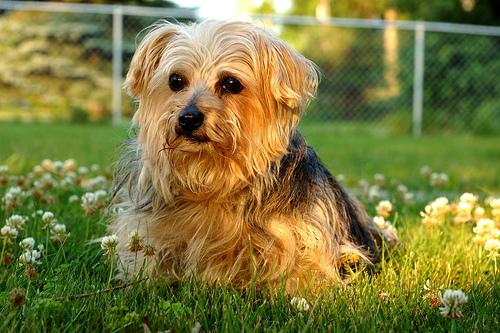

The one sure difference is the ears: the Norwich's stand up, the Norfolk's fold down. Until 1964 these were one breed, the Norwich Terrier, a small, usually red ratter from East Anglia in eastern England, shown with either prick or drop ears. That year the UK Kennel Club made the drop-eared dogs a breed of their own and named it the Norfolk Terrier, after the county around the city of Norwich; the AKC followed in 1979. They still share the hard wiry coat, the colors, the terrier nerve and every one of our ratings. How to tell them apart:
- Ears. Norwich ears stand erect, with pointed tips, like a witch's hat: Norwich, witch. Norfolk ears fold and drop forward close to the cheek: V-shaped, slightly rounded at the tip.
- Outline. The AKC standard asks for a square Norwich, as long from withers to tail as it is tall at the withers, and a Norfolk slightly longer than tall.
- Size. Practically the same: per AKC the Norfolk stands 9-10 in and weighs 11-12 lbs, the Norwich no more than 10 in and about 12 lbs. The FCI standards, used across continental Europe, give both the same ideal height, 25 cm (10 in).
- Colors and coat. Identical: all shades of red, wheaten, black and tan or grizzle; white marks are unwanted in both. Both shed little, neither is on the AKC list of hypoallergenic breeds, and the coat is hand-stripped rather than clipped.
- Character. The same on paper too. Both AKC standards call the dog fearless and loyal; the Norfolk's adds gregarious and never aggressive, the Norwich's affectionate and adaptable. Any real difference comes from the bloodline and the individual dog, not the ears. With either you get a real terrier that digs, chases small animals and will bark, the Norwich more readily, so keep it on a leash outside a fenced yard.
- Rarity. Both are rare. In the US the Norwich is the more common of the two (No. 109 in the AKC popularity ranking for 2025, the Norfolk No. 126), and its puppies cost a little less.
Both are sturdy small dogs, but their main health concerns differ. In the Norwich it is upper airway syndrome: a narrowed airway that makes breathing noisy and can limit exercise, even though the breed is not flat-faced; a 2019 study linked it to a variant of the ADAMTS3 gene. In the Norfolk it is mitral valve disease, a condition in which a heart valve wears out with age. The breed clubs recommend these health tests for breeding dogs (the AKC publishes the list): a cardiac exam for the Norfolk, hips for the Norwich, kneecaps and eyes for both. Norwich mothers often need a caesarean (in over a third of litters in a UK survey), so expect a waiting list for a puppy, longer still for the rarer Norfolk.
Pick the breed by the ears you love, and the breeder by the health results: ask a Norwich breeder how the parents breathe after exercise, a Norfolk breeder for the parents' heart exams. If the wait is too long, the Border Terrier and the Cairn Terrier are similar small working terriers that are easier to find.