Origin and history
The Bearded Collie, or Beardie, is a sheep and cattle dog from Scotland and northern England. The FCI standard says Scottish records mention a breed resembling it from around the sixteenth century. Farmers used it to herd sheep and cattle, often working out of sight of the shepherd. The shaggy coat was weather protection, not decoration.
By the 1940s the breed was close to disappearing. The modern Beardie goes back to Mrs G. Olive Willison of the Bothkennar kennel: she asked for a Shetland Sheepdog puppy and was sent a Bearded Collie bitch, Jeannie, by mistake. She later found a dog called Bailey as a mate, and their offspring shaped today's breed. A new Bearded Collie Club was formed in the UK in 1955, and The Kennel Club recognised the breed in 1959. The FCI recognised it definitively in 1967; it is standard No. 271, group 1, without working trial.
In the US the first litter was born in 1967 and the Bearded Collie Club of America was founded in 1969. The AKC opened its stud book to the breed on October 1, 1976, it competed in the Working Group from February 1, 1977, and it moved to the Herding Group when that group was created in January 1983.
Temperament and character
The FCI standard describes the Beardie as "Alert, lively, self-confident and active" and a "Steady, intelligent working dog, with no signs of nervousness or aggression". The AKC adds that Beardies "can be willful but are always friendly". In daily life:
- It is bouncy and loud. A Beardie greets people with its whole body, and many bark when excited or playing. Expect a clown, not a calm shadow.
- It thinks for itself. It was bred to work sheep without constant direction, so it learns fast but wants a reason, and it will test whether you really mean "come".
- It loves people. Usually friendly with strangers and gentle with children. This is not a guard dog; it might bark at the door, then welcome the visitor.
- It needs company. It does badly when left alone for long days or kept in a yard away from the family.
With kids it is often excellent, but like any herding dog it may circle, bump or nip at the heels of running children if nobody teaches it otherwise.
Size and appearance
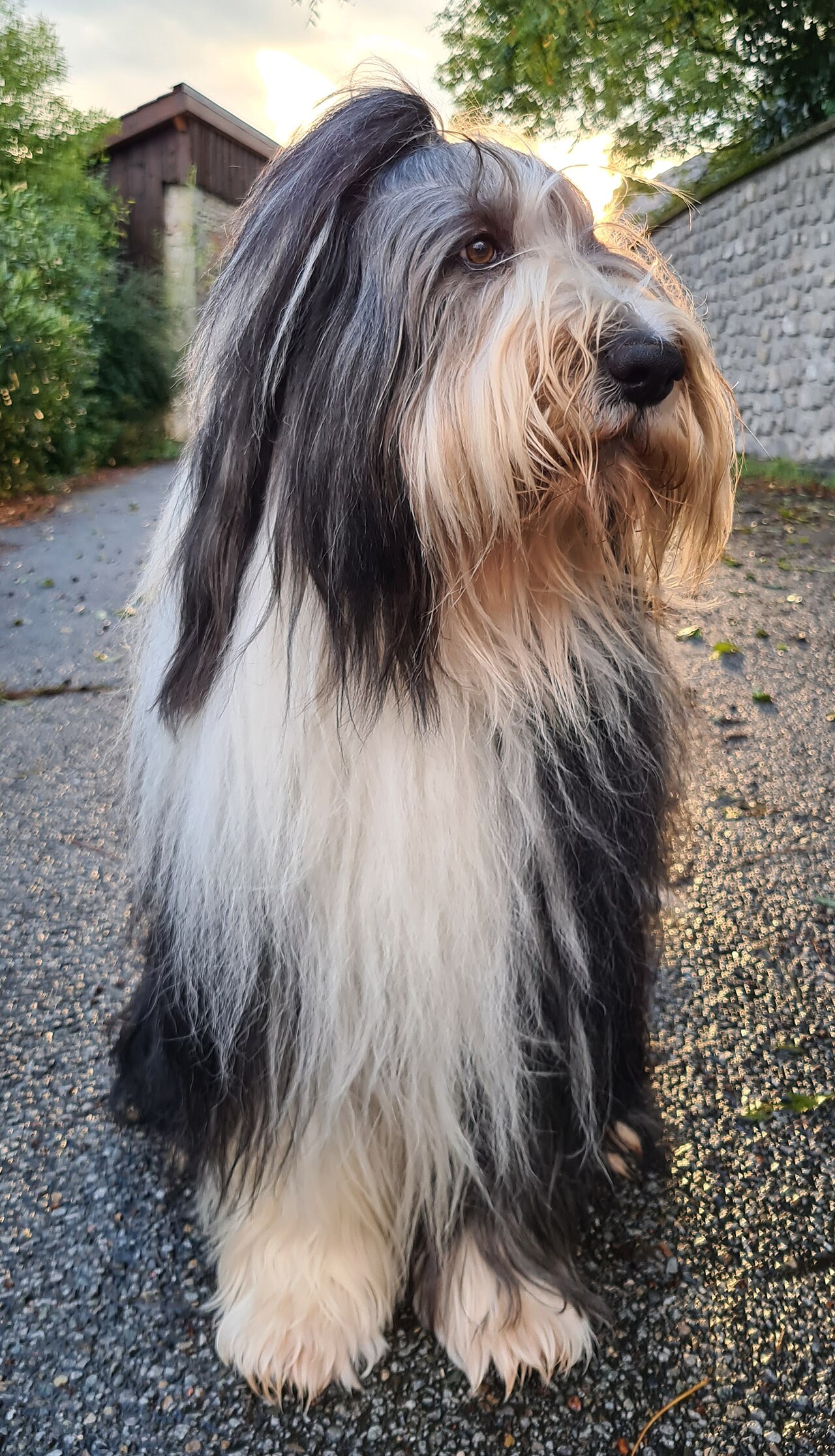
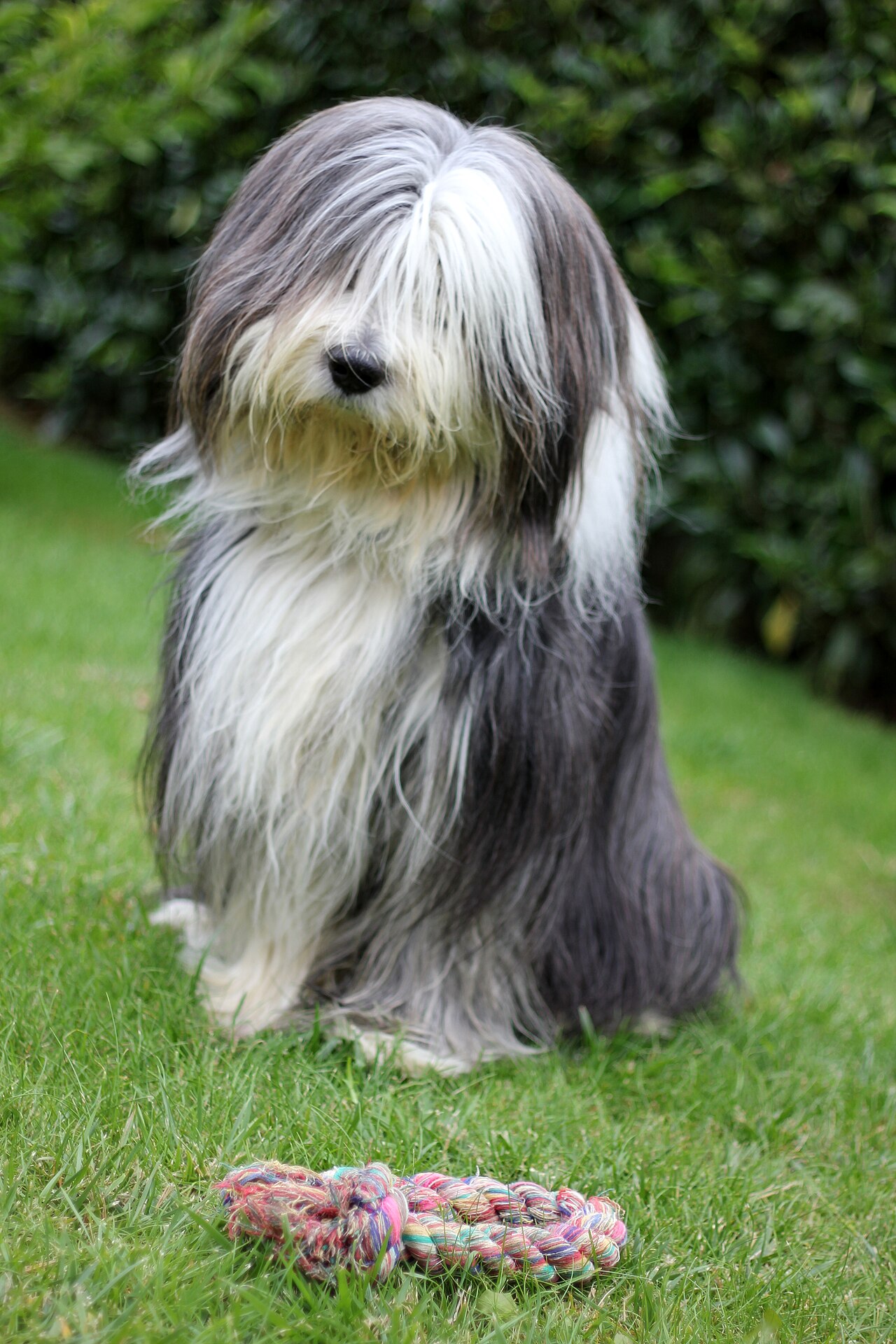
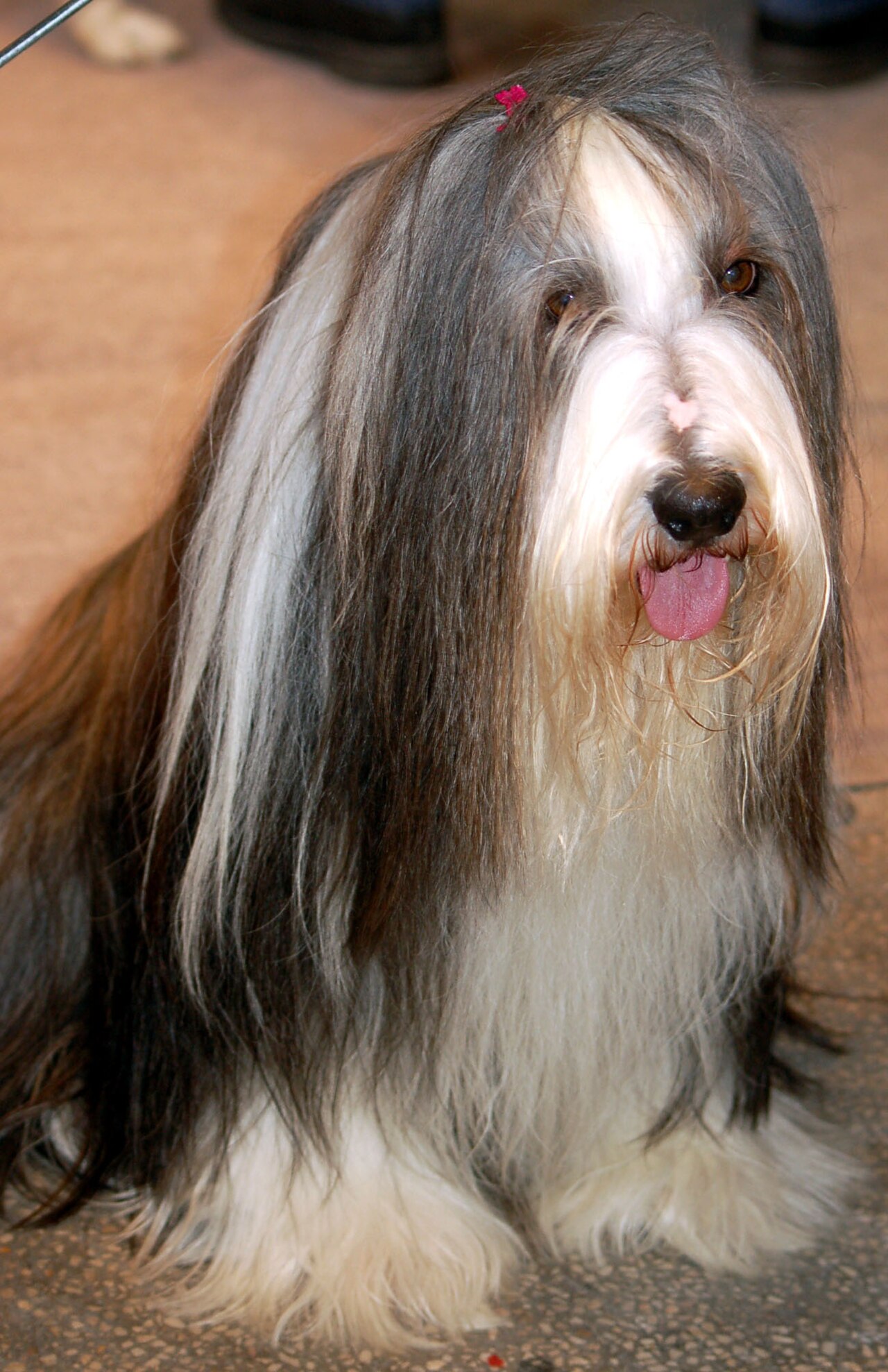
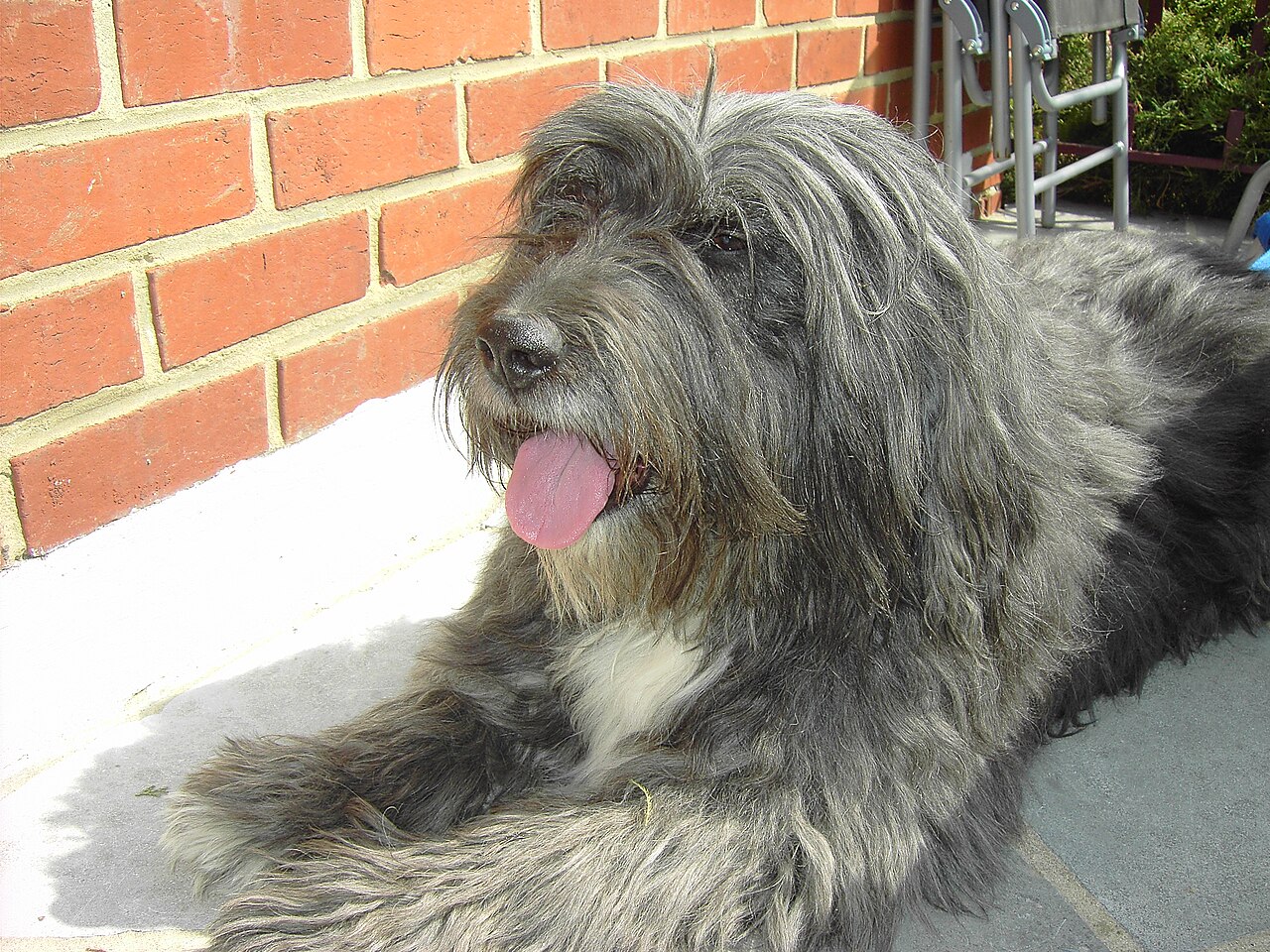
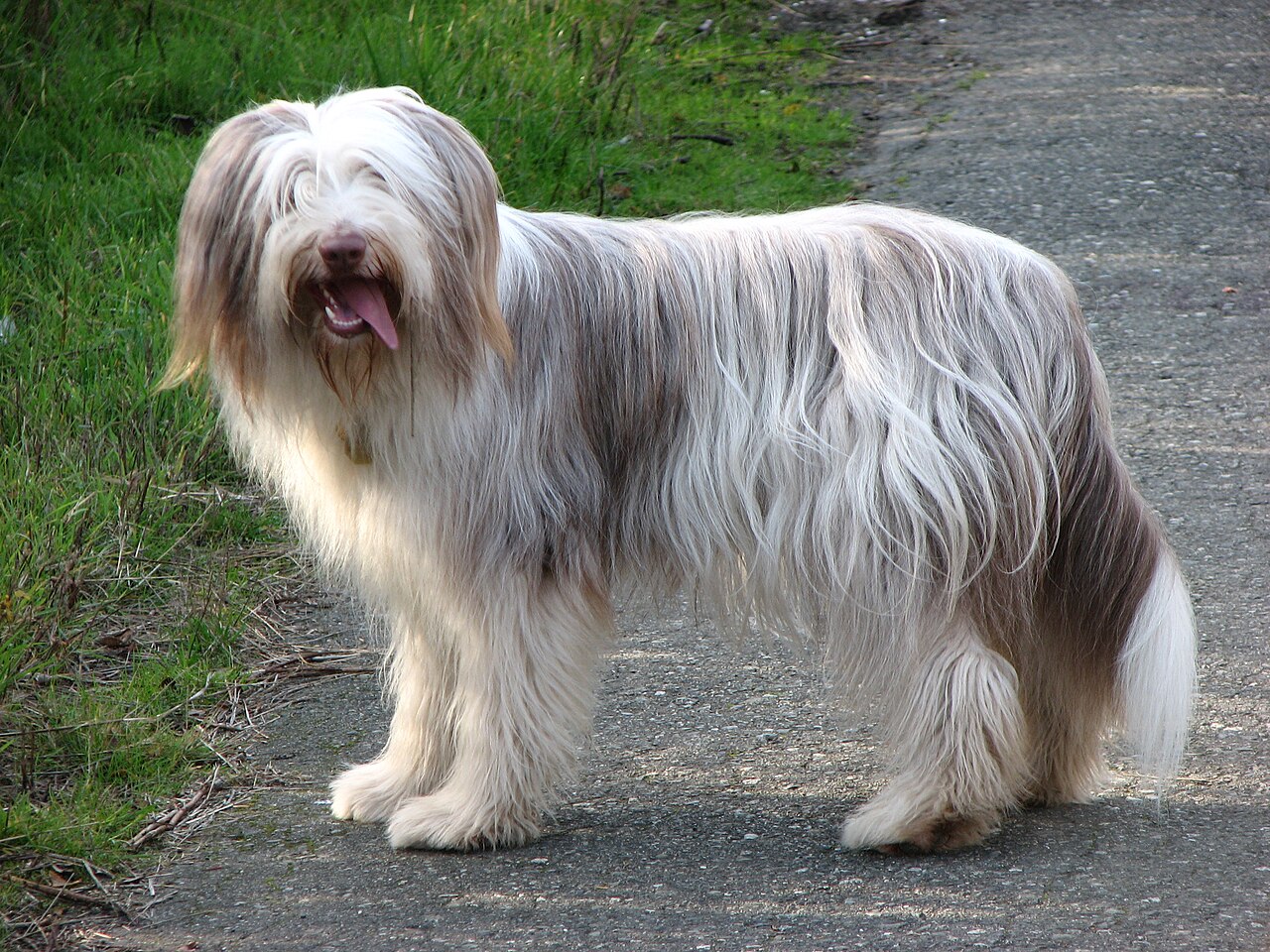
A lean, active, medium-sized dog, longer than tall (about 5 to 4), under a long double coat: a soft, close undercoat and a flat, harsh, shaggy outer coat. The beard forms from the cheeks, lips and chin. The standard says the coat "must not be trimmed in any way". Colours: slate grey, reddish-fawn, black, blue, all shades of grey, brown and sandy, with or without white markings; the FCI standard states "Never merle/dapple". Most puppies are born dark and lighten a lot during adolescence, then partly darken again.
| Males | Females | |
|---|---|---|
| Height | 21-22 in (FCI 53-56 cm) | 20-21 in (FCI 51-53 cm) |
| Weight | 45-55 lbs | 45-55 lbs |
| Lifespan | 12-14 years | 12-14 years |
| Coat | Long, harsh outer coat, soft undercoat | Same |
Heights and weight are from the AKC breed profile; the FCI standard gives no weight.
Exercise and daily life
An energetic, boisterous herding dog. Plan on at least an hour of real exercise every day, better two: long walks, running off leash in a safe place, fetch, hiking. The German breed club tells future owners to budget two hours of walks a day. Beardies love weather that keeps other dogs home, and they bring all of it inside: mud, burrs, snowballs in the coat, wet beard at the water bowl.
It is not an apartment dog. A house with a fenced yard suits it far better, and a bored Beardie becomes noisy and inventive. Dog sports are a great outlet: herding, agility, rally and obedience.
Training
What works: early socialization, short sessions, positive reinforcement and a lot of patience. The AKC notes its independent, "some would say stubborn" streak; harsh corrections backfire with a sensitive dog.
Typical difficulties:
- A long adolescence with selective hearing, often coinciding with the coat change.
- Barking when excited, at play or at the door. Teach a quiet cue early.
- Herding behaviour toward kids, bikes and other pets.
- Recall around exciting things. Train it from day one.
Grooming
This is the deal-breaker for many owners. The AKC describes a daily five-to-ten-minute brush-out to remove tangles and debris, plus a weekly session of 30-60 minutes with a pin rake, brush, comb and anti-tangle spray, working down to the skin layer by layer. Mats form fast behind the ears, in the armpits, on the belly and on the legs.
The hardest phase is the coat change, usually between 9 and 18 months, when the puppy coat comes out and the adult coat comes in. The BCCA says it lasts about two to three months; mats can form daily, so brush more often. The standard wants an untrimmed coat; pet owners often still trim the hair between the pads for hygiene. Budget for a professional groomer if you will not brush yourself.
Health
The Beardie is a sturdy breed, but some problems are documented:
- Hypothyroidism (autoimmune thyroiditis). The Bearded Collie Club of America (BCCA) recommends thyroid testing of breeding dogs each year until age 5, then every 2 years.
- Addison's disease (hypoadrenocorticism). The Beardie is a predisposed breed. In a 2019 health survey of 3,072 Bearded Collies, 3.1% had been diagnosed. There is no DNA test; warning signs are vague: weakness, vomiting, weight loss, a dog that is "off" for no reason.
- Other autoimmune disease. In the same survey 11.1% of dogs had some autoimmune condition. A nail disease called symmetric lupoid onychodystrophy (SLO) also occurs.
- Hip dysplasia, and less often elbow dysplasia.
- Eye disease, checked by a yearly exam with a veterinary ophthalmologist.
The BCCA health statement asks for hip evaluation (OFA, PennHIP or equivalent), a yearly eye exam and thyroid testing; elbows are optional. Ask for all of it for both parents and check results in the OFA database.
Cost
Puppies from AKC breeders usually cost $1,500 to $3,000. Litters are few, so waiting lists are normal. Be wary of "Beardie" puppies at bargain prices: the breed is rare, and crossbreeds and doodle mixes are often sold under its name.
Running costs come to roughly $1,200 to $2,000 a year for food, routine vet care, preventives and insurance. Professional grooming adds on top if you use it, often several visits a year. Lifelong medication for Addison's or hypothyroidism is another reason to insure the puppy early.
Who it suits and who it does not
Good match for:
- Active families with children, ideally with a fenced yard
- People who enjoy grooming or are happy to pay for it
- Owners who want a cheerful, friendly dog for hiking and dog sports
- Cool or variable climates; the coat copes poorly with long hot summers
Not a match for:
- Neat homes where mud and hair on the floor are a problem
- People who want a quiet or guarding dog
- Small apartments and owners away all day. For a similar look with less exercise need, consider the Tibetan Terrier; for a bigger shaggy herder, the Old English Sheepdog; for more drive, the Border Collie