Origin and history
The Icelandic Sheepdog is Iceland's only native dog breed. The FCI standard traces it to the dogs brought by the first Viking settlers between AD 870 and 930. On farms with no fences and rough terrain, these spitz dogs gathered sheep, cattle and horses, found lost sheep in the snow and barked to announce anyone coming up the valley. Barking was part of the job: the dog moved stock with its voice rather than by gripping.
The breed came close to disappearing. According to the history page of the Icelandic Sheepdog Association of America (ISAA), Iceland had an estimated 24,000 dogs in 1869, but a heavy dog tax introduced that year to fight a tapeworm that also infected people cut the number to about 10,000 by the 1880s. Distemper outbreaks hit the remaining dogs, and in 1901 Iceland banned the import of dogs. The Englishman Mark Watson, who toured Iceland around 1930 and again around 1950, found true Icelandic dogs almost only in remote valleys and exported a few to California to save them. In 1967 Sigríður Pétursdóttir started a breeding program at the farm Ólafsvellir, and the Icelandic Kennel Club (HRFÍ) was founded in 1969 partly to protect the breed.
Today the breed is managed internationally. The Icelandic Sheepdog International Cooperation (ISIC), started in Sweden in 1996, links the national clubs to protect a small gene pool. The FCI recognised the breed definitively in 1972; it is standard No. 289, group 5 (spitz and primitive types), section 3, Nordic watchdogs and herders, without working trial.
In the US the parent club is the Icelandic Sheepdog Association of America (ISAA). The AKC accepted it into the Miscellaneous Class in 2008, and on June 30, 2010 the Icelandic became fully recognised as the AKC's 166th breed, in the Herding Group. It is still rare: 138th in the AKC's 2025 registration ranking.
Temperament and character
The FCI standard calls the breed "cheerful, friendly, inquisitive, playful and confident with a gentle temperament", and says it "will announce the arrival of visitors without being aggressive". In daily life:
- It barks. This is the point to take seriously. The breed was selected to work stock with its voice, and the ISAA itself lists barking, separation barking, car chasing and pulling on the leash among the common complaints of owners.
- It is a people dog. An Icelandic wants to be wherever you are, inside and out. Breeders describe it as your shadow. It does badly in a kennel or alone all day.
- It is soft. Harsh handling makes it stressed and noisy, not obedient. Calm, positive training works far better.
- It is friendly with everyone. Most greet strangers and other dogs as old friends. It is an alarm bell, not a guard dog.
With children it is typically patient and gentle; the AKC gives it top marks for living with young kids. As with any herder, teach it early not to chase or circle running children.
Size and appearance
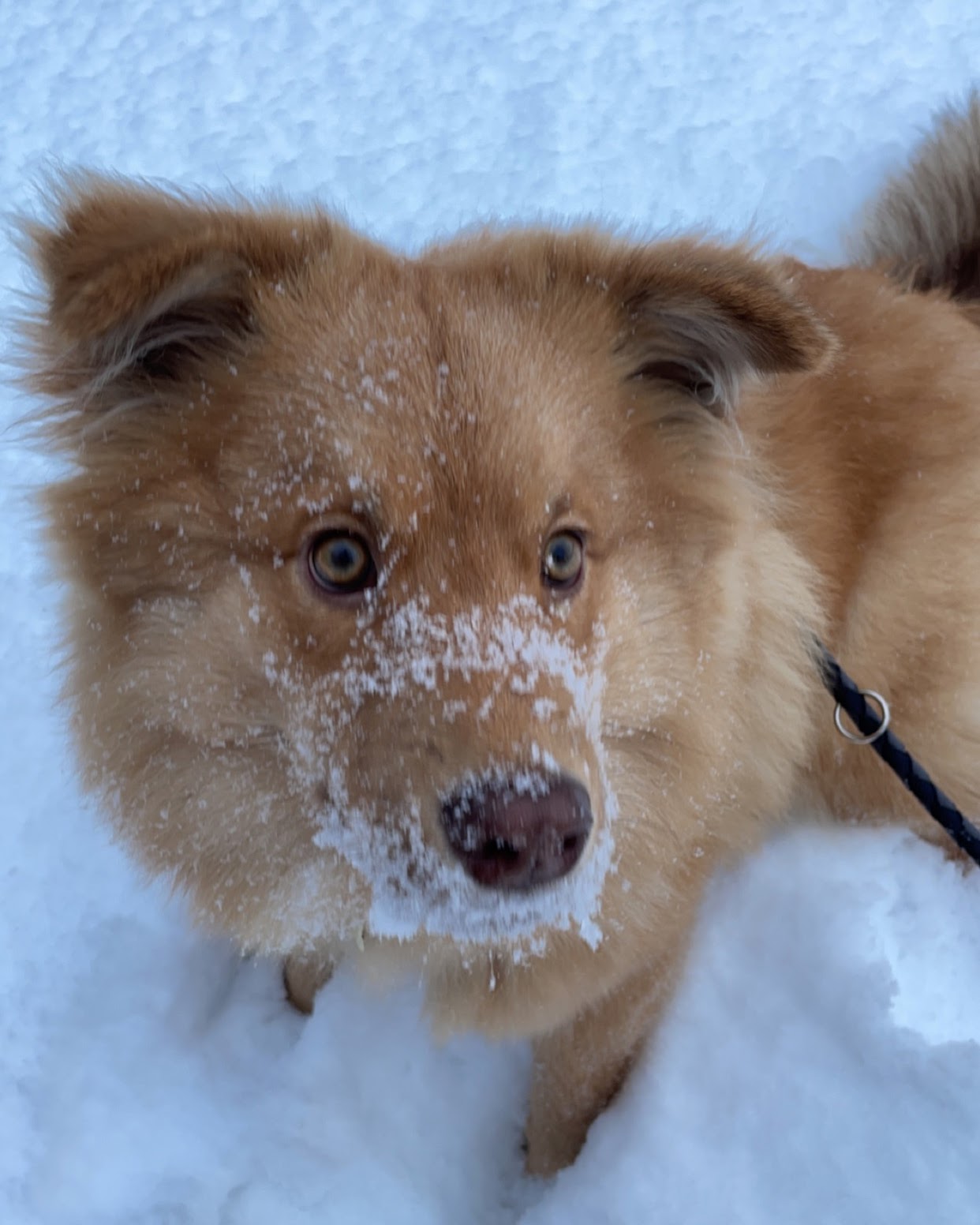
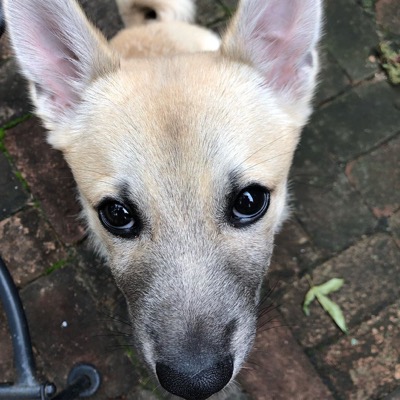
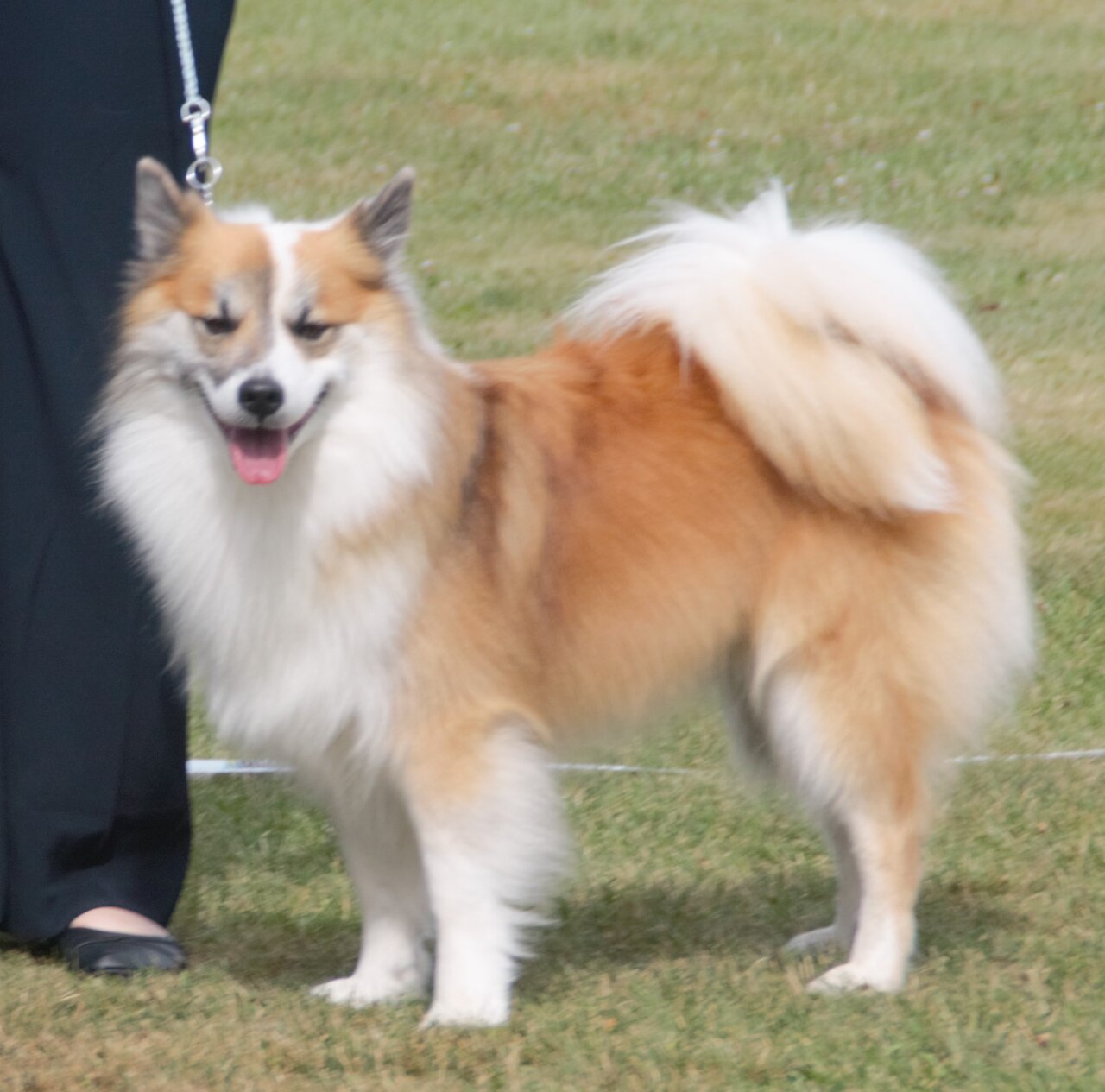
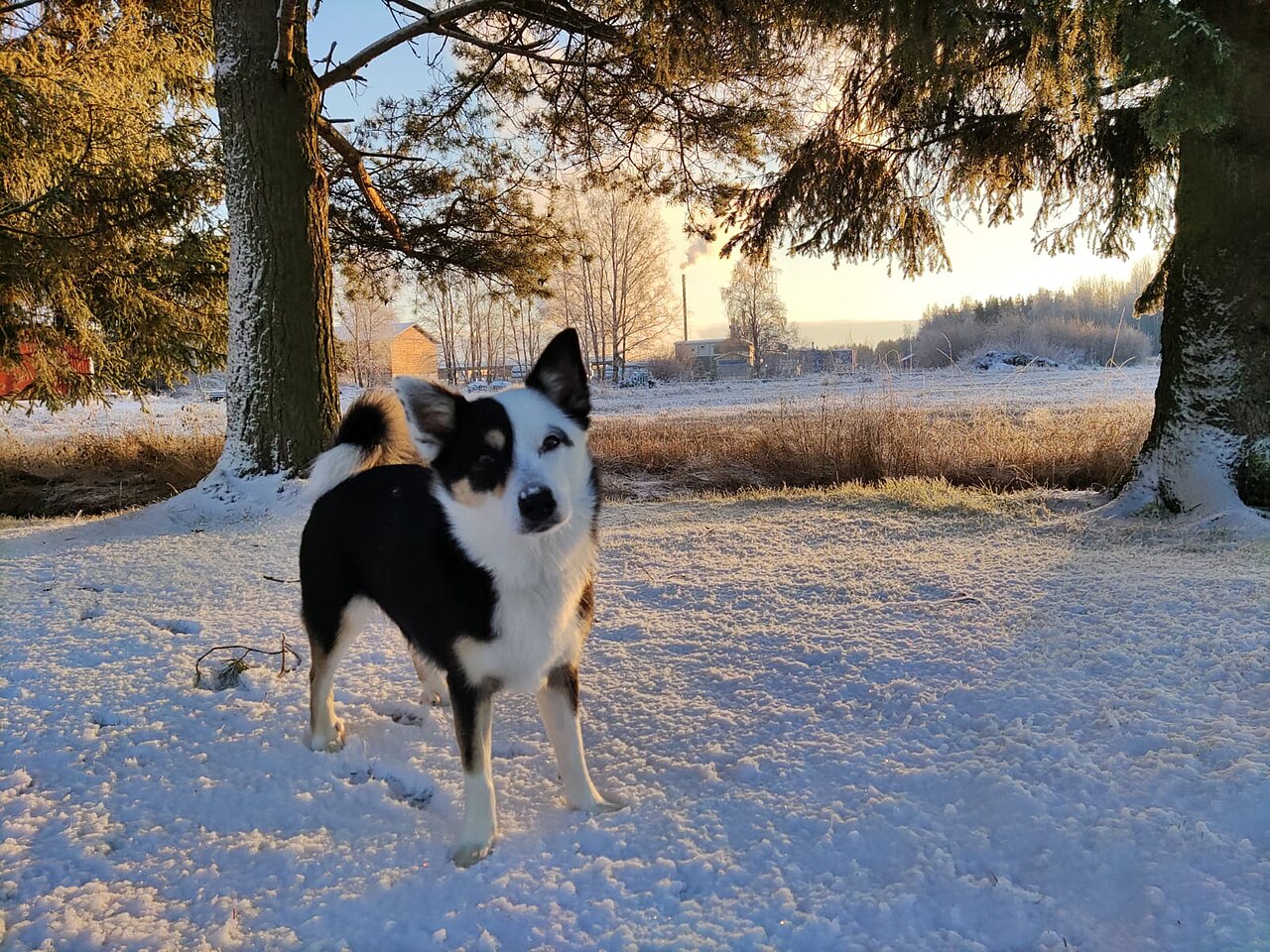
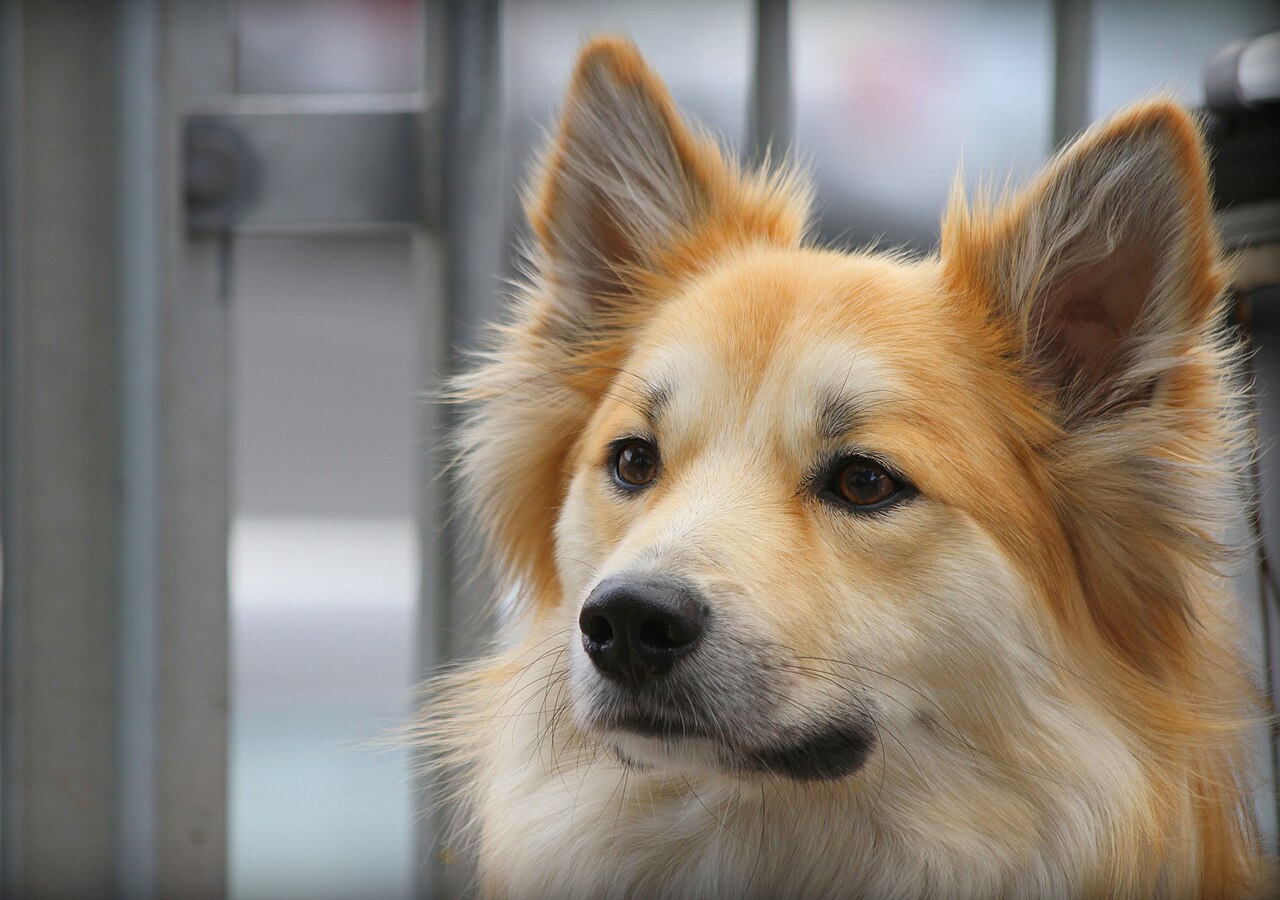
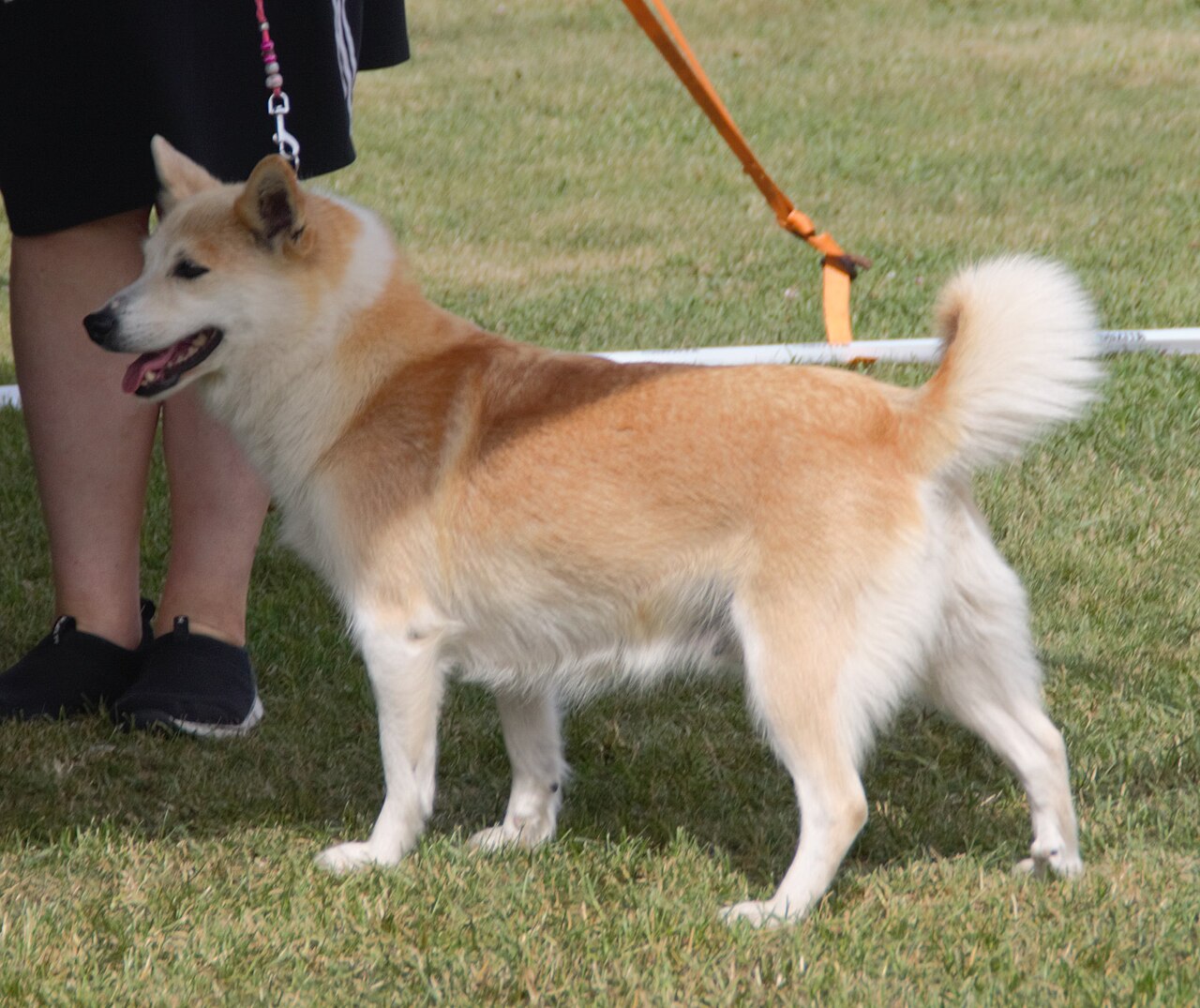
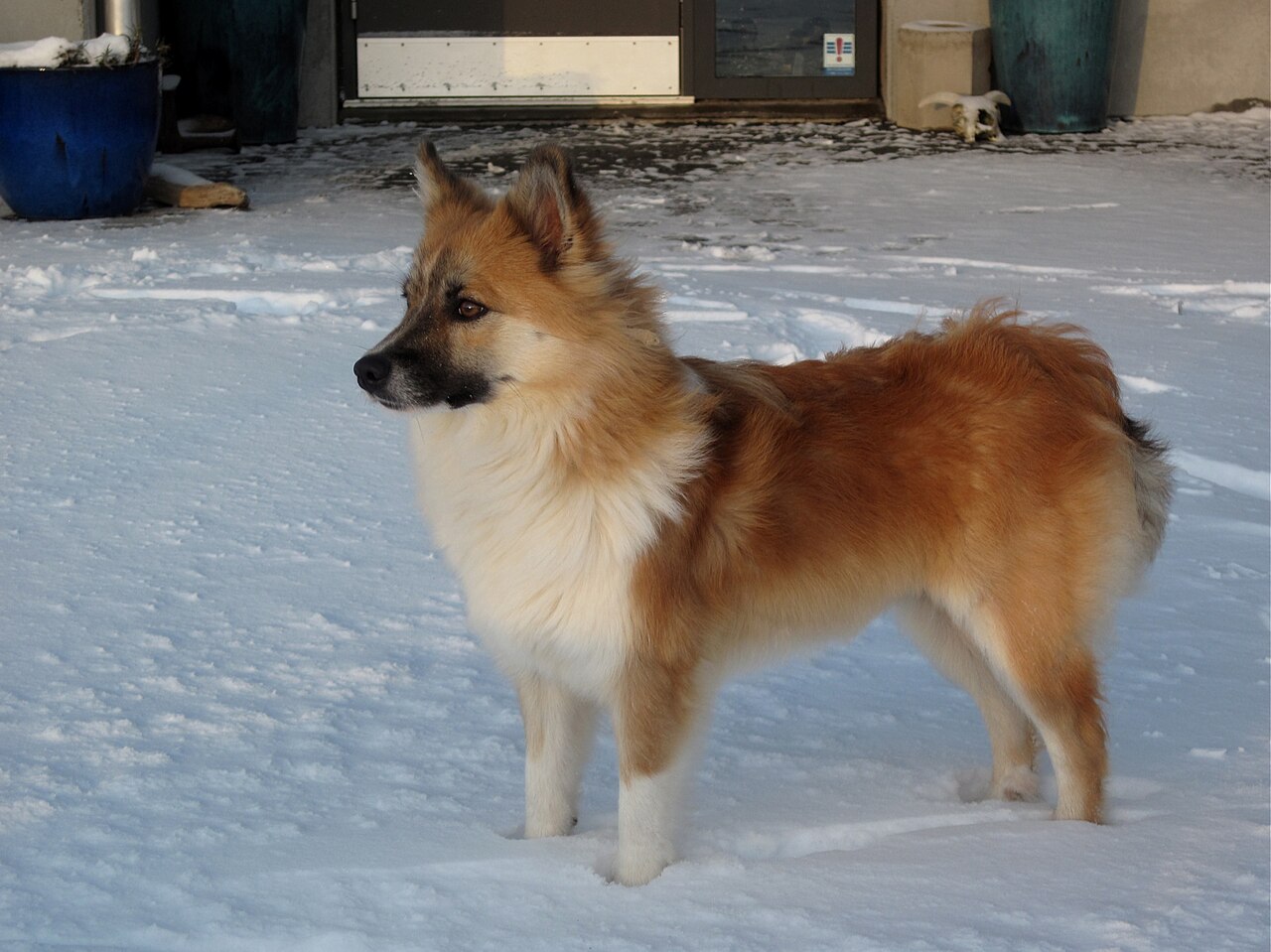
A Nordic herding spitz slightly under medium size, sturdy and a little longer than tall, with prick ears and a tail curled over the back. Males and females look clearly different. There are two coat types, short and long, both double and very weather-resistant. Colours: fawn to reddish brown, grey shaded, chocolate brown and black, always with white markings; black and chocolate dogs often carry tan points. Well-developed double dewclaws on the hind legs are desirable, and lacking them entirely is a fault in the FCI standard.
| Males | Females | |
|---|---|---|
| Height | about 18 in (FCI ideal 46 cm) | about 16.5 in (FCI ideal 42 cm) |
| Weight | about 30 lbs | about 25 lbs |
| Lifespan | 12-14 years | 12-14 years |
| Coat | Short or long, double, thick | Same |
Heights and weights are from the AKC breed profile; the FCI standard gives ideal heights and no weight.
Exercise and daily life
The Icelandic is energetic but not a frantic working dog. The AKC speaks of moderate daily exercise, and the breed loves long walks, hikes and play. Plan on an hour or more a day, plus something for the brain: herding, agility, tracking, rally and obedience all suit it.
Its weak spot is not energy but noise and solitude. In an apartment with thin walls, a dog that barks at every sound in the hallway quickly becomes a problem with the neighbours. A house with a securely fenced yard is easier; check the fence, because owners report that some Icelandics climb or jump fences and dig under gates. The thick coat makes it happiest in cool weather; in a hot summer, walk early and late.
Training
The AKC describes Icelandics as lively, intelligent and eager to please, so "generally easy to train", and warns that they "don't respond well to harsh corrections". What works: short sessions, food and play rewards, and a lot of early socialization.
Typical difficulties:
- Barking. Reward quiet from the first week, teach a "thank you, enough" cue, and do not shout back: a barking owner is joining in.
- Being left alone. Build it up in tiny steps while the puppy is young. Separation barking is one of the complaints owners mention.
- Chasing. Cars, bikes and joggers trigger the herding instinct. Keep it on a leash near roads until you have a reliable recall.
- Pulling on the leash. A light, keen dog that wants to go everywhere needs loose-leash walking practice.
Grooming
Easier than it looks. The AKC recommends weekly brushing, and daily brushing during the two heavy sheds a year, when the undercoat comes out in handfuls. A slicker brush and a metal comb deal with tangles, mainly behind the ears and on the trousers of long-coated dogs. A bath is seldom needed. No trimming, but check the double dewclaws on the hind legs: they do not wear down and need regular clipping.
Health
The ISAA lists the conditions found in the breed:
- Hip dysplasia. The main orthopaedic issue; the AKC also names elbow dysplasia.
- Cataracts, which the ISAA says are appearing at an abnormally young age in some lines.
- Distichiasis, extra eyelashes that irritate the eye.
- Patellar luxation, a slipping kneecap.
- Cryptorchidism, retained testicles; such males should not be bred.
- Low genetic diversity. The ISAA cites a study showing the breed descends from very few founders. ISIC therefore recommends limiting the number of offspring per stud dog and keeping inbreeding low.
The ISAA breeders' code requires an OFA or PennHIP hip evaluation and an OFA/CAER eye exam before breeding, and the results must be current: for dogs under 3 a test is valid for one year, from age 3 for 24 months. Ask the breeder for both parents' results in the OFA database and for the inbreeding coefficient of the planned litter.
Cost
Puppies from health-testing US breeders currently cost about $2,500 to $3,500; one breeder lists a base price of $2,500 (the deposit counts towards it), another $3,000 to $3,500. Litters are few, so waiting lists of months are normal, and some buyers import from Canada or Europe. The ISAA keeps a breeder directory.
Running costs come to roughly $1,000 to $1,600 a year for food, routine vet care, preventives and insurance. This is a small dog to feed and seldom needs a groomer, so the main extras are training classes and dog sports.
Who it suits and who it does not
Good match for:
- Families with children who want a friendly, sturdy, medium-small dog
- Active owners who hike, walk a lot or want to try dog sports
- Homes where someone is around most of the day
- Cool climates and people who do not mind a bit of shedding twice a year
Not a match for:
- Apartments with neighbours who complain about noise
- People who want a quiet dog or a real guard dog
- Owners away all day. For a similar Nordic farm dog, compare the Norwegian Buhund and the Finnish Lapphund; for a calmer spitz that barks less, the Eurasier; for a smaller, low-set herder, the Swedish Vallhund