Origin and history
The Standard Schnauzer is the original Schnauzer: the Miniature and the Giant were developed from it later. It comes from southern Germany, where, according to the FCI standard, it worked as a stable dog. It liked the company of horses and killed rats and other rodents so quickly that it was nicknamed the "Rattler".
At German shows the breed first appeared as the wire-haired Pinscher. When the Pinscher-Schnauzer-Klub was founded in 1895, it was entered under that name, and only in 1917 was the name officially changed to Schnauzer. A separate Schnauzer club formed in Munich in 1907 and later merged with the Pinscher club. Today's German club, the Pinscher-Schnauzer-Klub 1895, still keeps the stud book for all three Schnauzer sizes. The FCI standard is No. 182, Group 2, Section 1 (Pinscher and Schnauzer type), without a working trial.
The first recorded Standard Schnauzer in the US, a dog named Fingal, arrived in Rochester, New York, in 1905. The American club that covered both Standards and Miniatures split in 1933, and one of the two new clubs was the Standard Schnauzer Club of America, today the AKC parent club. The AKC showed the breed as a terrier for years and moved it to the Working Group on July 10, 1945. In 1997 a Standard Schnauzer won Best in Show at Westminster. The breed is still uncommon: in the AKC's 2025 popularity ranking it sits at 93 of 202.
Temperament and character
The FCI standard describes a lively dog with "placid composure", good-natured, playful and known for its devotion to its owner. It "loves children", is incorruptible and alert "yet not noisy". In daily life that means:
- It is a watchdog by nature. It notices everything and announces visitors, but it is not a nonstop barker. Strangers are inspected, not welcomed.
- It is clever and has opinions. The AKC calls the breed "sometimes-willful but ever reliable". It learns fast and then checks whether the rules still apply.
- It is a family dog. It bonds closely with its people and does not do well as a backyard dog.
- It is still a ratter. Hamsters, rats and often cats outside its own household are prey. Chickens need a fence.
With children it is usually patient and playful, provided it has enough to do. A bored Standard Schnauzer makes its own work.
Size and appearance
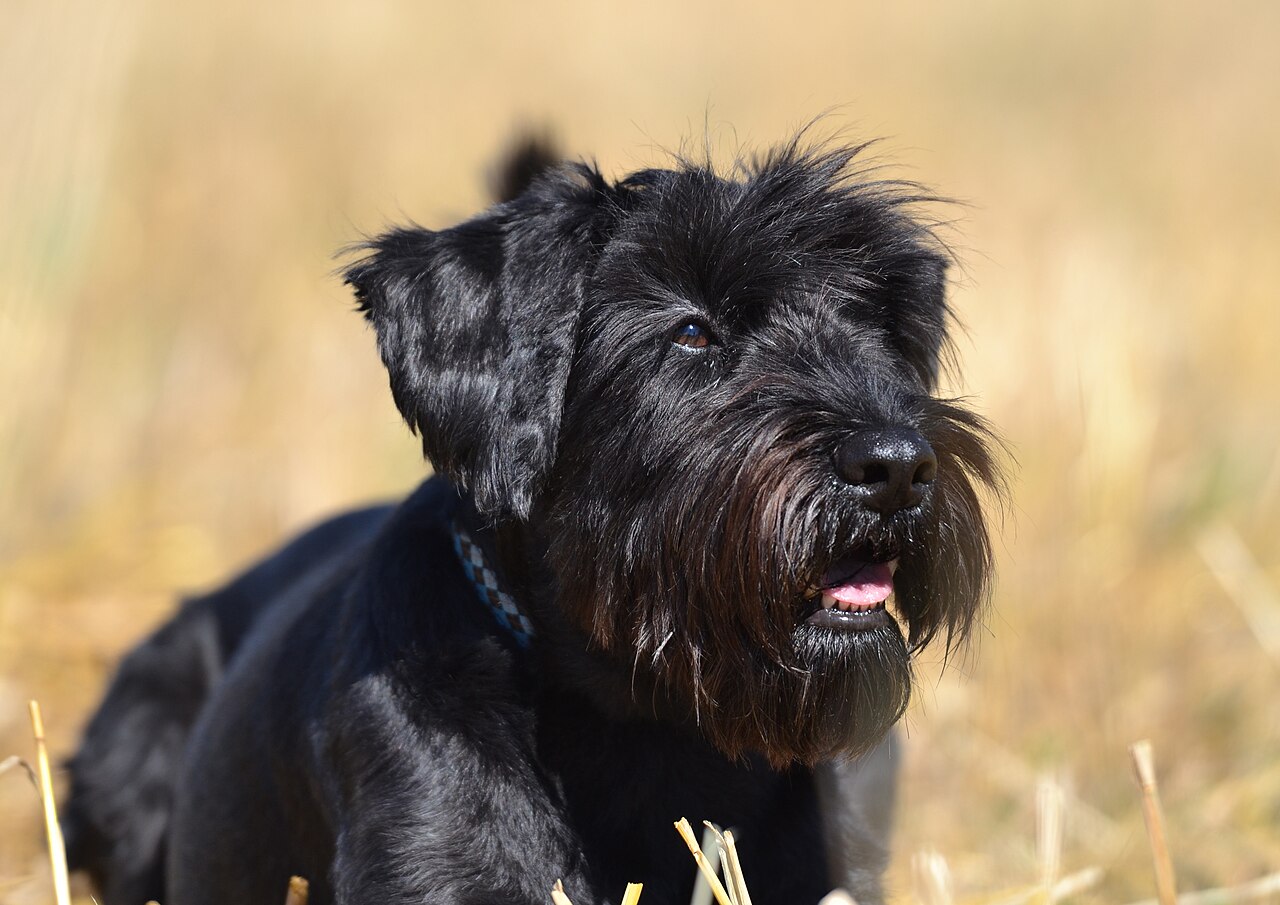
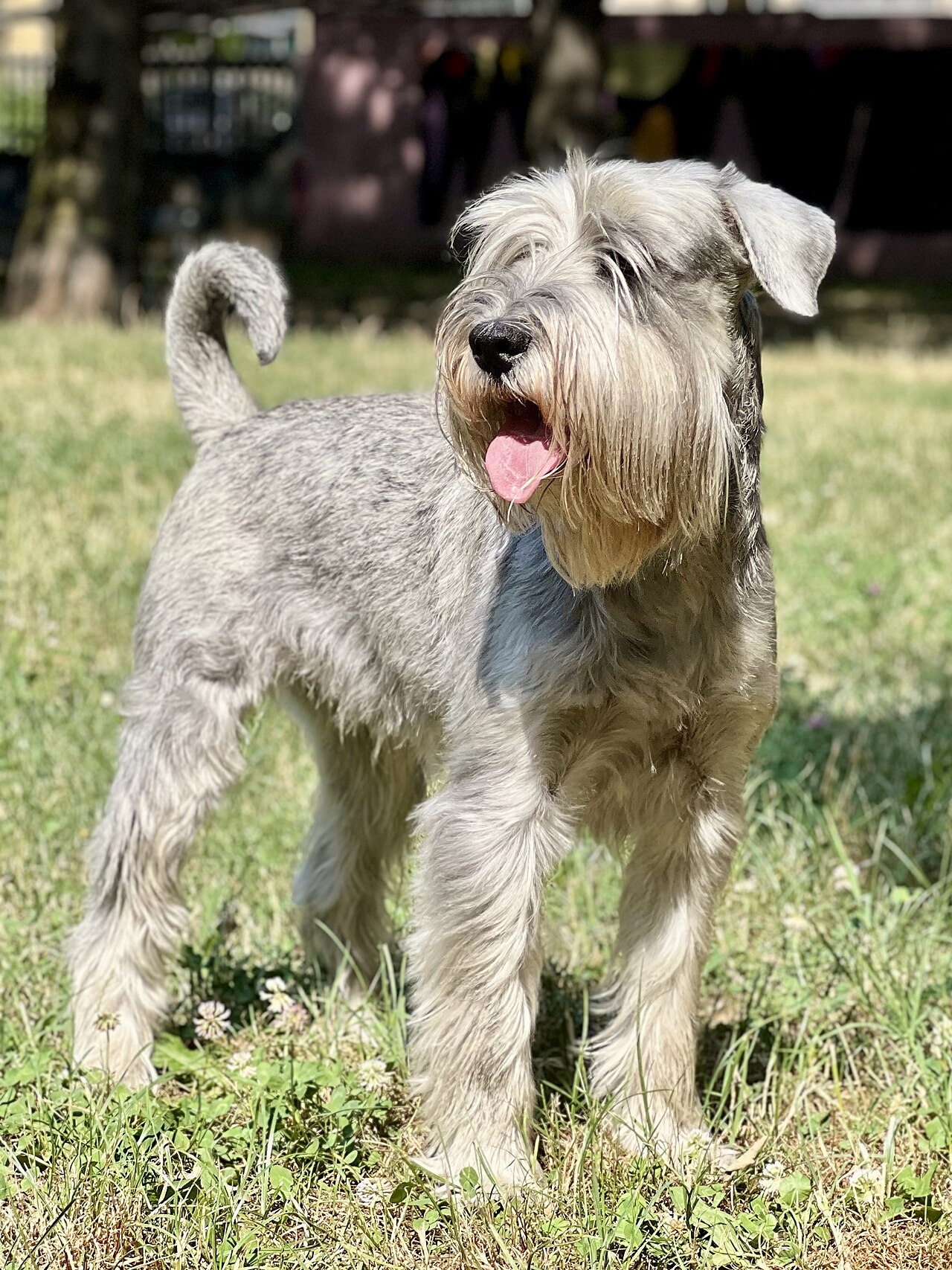
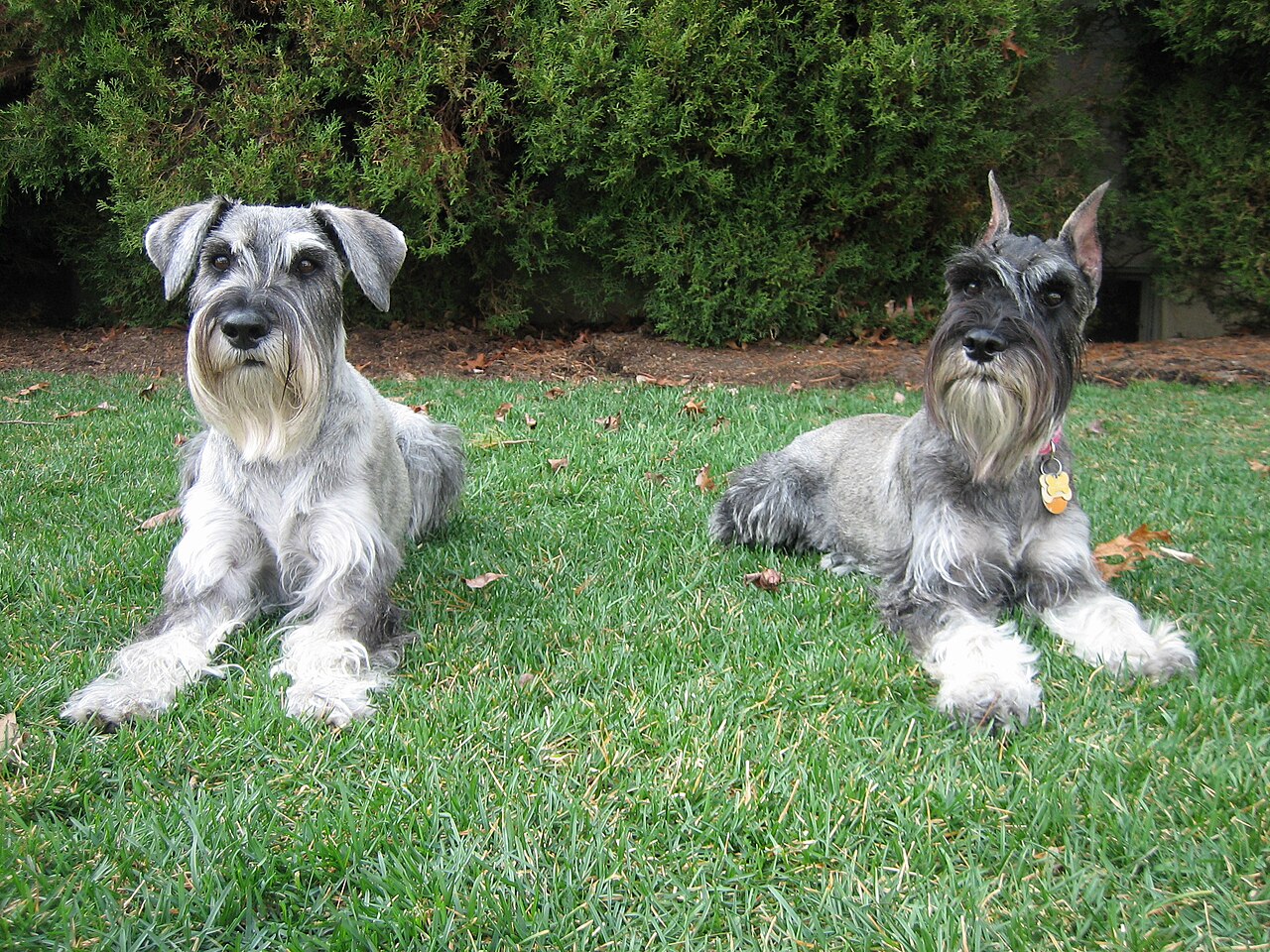
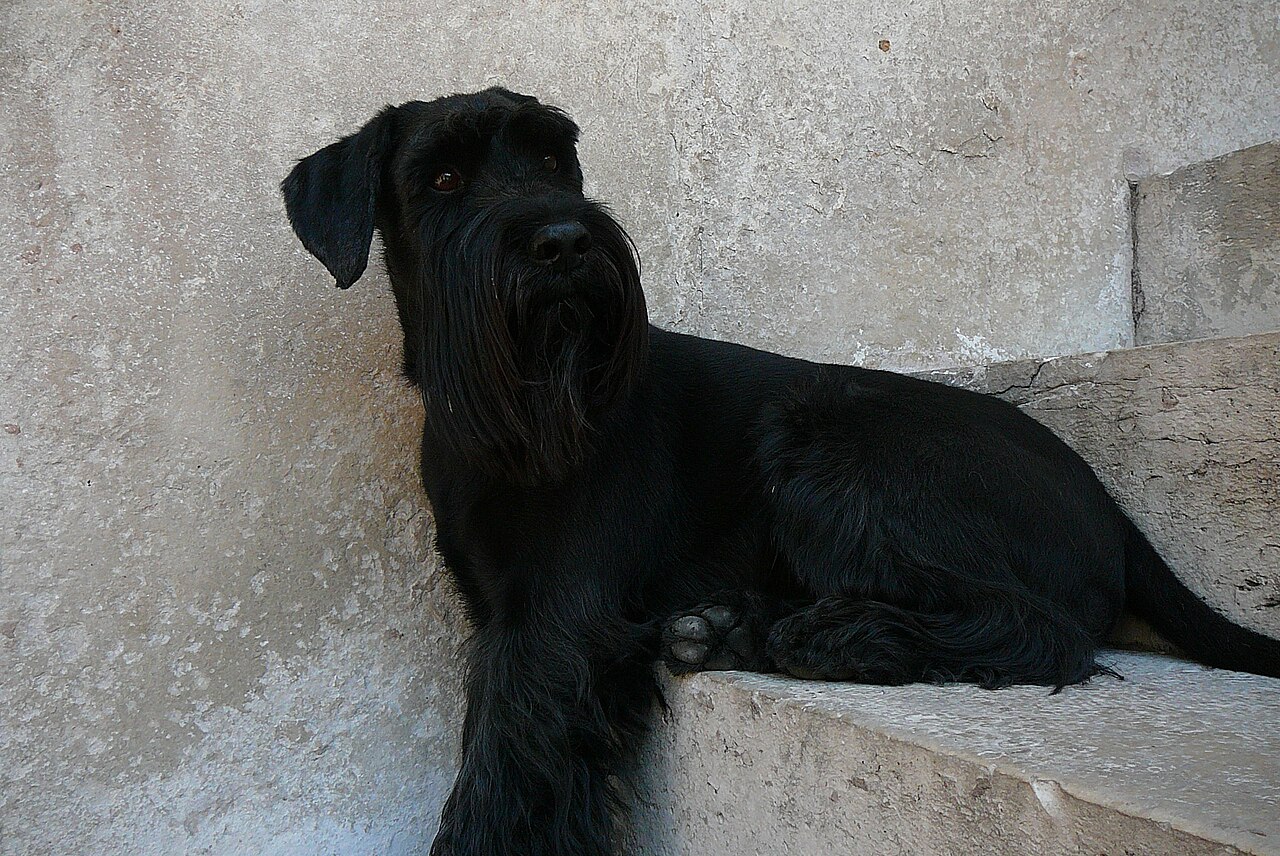
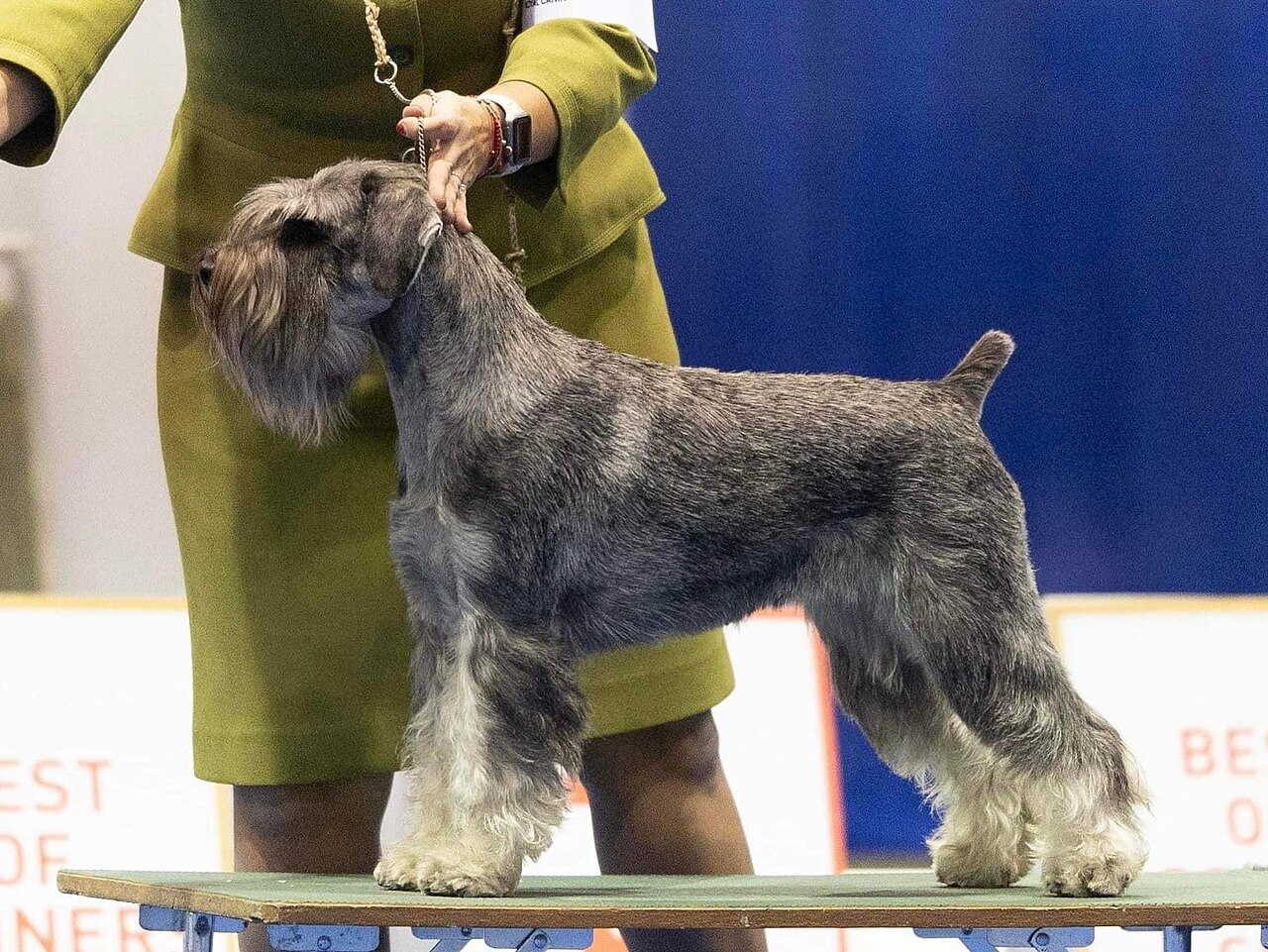
Medium-sized, strong and square: height at the withers almost equals body length. The coat is wiry, harsh and dense with a soft undercoat. The bushy eyebrows and the beard give the breed its name: Schnauze is German for muzzle. There are only two colors: pure black, and pepper and salt in shades from dark iron grey to silver grey, always with a dark mask.
| Males | Females | |
|---|---|---|
| Height (AKC) | 18.5-19.5 in | 17.5-18.5 in |
| Weight (AKC) | 35-50 lbs | 30-45 lbs |
| Lifespan | 13-16 years | 13-16 years |
| Coat | wiry, dense, with undercoat | same |
The FCI standard allows 45-50 cm (about 17.7-19.7 in) and 14-20 kg (about 31-44 lbs) for both sexes. In the US, ears are often cropped and tails docked; the FCI standard asks for natural drop ears and a natural tail, and both are banned in Germany.
Exercise and daily life
This is a working dog in a medium-sized body. VCA describes its exercise needs as high: a daily walk plus running and play. Plan on an hour or more of real activity every day, not just a stroll around the block, and some mental work on top.
Good outlets: hiking, jogging once it is fully grown, agility, obedience, rally, nose work, barn hunt.
An apartment can work if the dog gets out properly every day, but a house with a fenced yard is easier. Watch the fence: a dog bred to chase rodents will dig after them.
Training
The Standard Schnauzer learns fast and gets bored fast. What works: short, varied sessions, rewards, clear rules that hold every day, and a job to do. What does not: endless repetition and harsh handling, which make it stubborn rather than obedient.
Typical difficulties:
- Testing boundaries. In adolescence it checks whether "no" still means no. Consistency from every family member is the whole trick.
- Guarding. It decides on its own who belongs and who does not. Socialize early with many people, places and visitors.
- Prey drive. Small animals, squirrels and the neighbor's cat. Train recall on a long line before you trust it off leash.
Grooming
The wire coat sheds very little, which is why the breed is often suggested for people with allergies. No dog is truly hypoallergenic, so spend time with the breed before you commit.
Low shedding does not mean low maintenance. Brush and comb once or twice a week, and comb the beard and leg furnishings more often: the beard collects water and food. To keep the harsh texture and the pepper and salt color, the coat is hand-stripped, by plucking out dead hair, a few times a year. Many pet owners clip instead; that is easier and cheaper, but the coat turns softer and lighter in color. Either way, budget for a groomer unless you learn to do it yourself.
Health
The Standard Schnauzer is considered a robust breed, but a few conditions matter:
- Hip dysplasia. The breed is large enough for it to show up, and the German club requires hip X-rays before a dog may be used for breeding.
- Dilated cardiomyopathy (DCM). An inherited heart disease; the DNA test for the Schnauzer form exists only for Standard and Giant Schnauzers. According to the OFA, affected dogs usually show signs at about 10 months to 2.5 years, and most do not live long after that. A DNA test is available and sorts dogs into normal, carrier and affected.
- Eye diseases such as progressive retinal atrophy and cataracts. Clubs ask for regular exams by an eye specialist.
The Standard Schnauzer Club of America recommends three tests for breeding dogs, according to the AKC: a hip evaluation, an eye exam by an ophthalmologist and the DCM DNA test. Ask to see the parents' results in the OFA database, not just a breeder's word.
Cost
Puppies from health-tested, AKC-registered parents usually cost $1,000 to $2,500, with show lines and established Standard Schnauzer Club of America breeders at the top of that range. Litters are few, so waiting lists are normal.
Annual costs are roughly $1,200 to $2,000: food for a 30-50 lb dog, routine vet care, preventives, insurance, and regular professional grooming if you do not strip or clip the coat yourself.
Who it suits and who it does not
Good match for:
- Active families who want a medium-sized dog with a big-dog attitude
- Owners who enjoy training and dog sports
- People with mild allergies who want a low-shedding coat
- Homes that want an alert watchdog without a guard-dog breed
Not a match for:
- Households with hamsters, rats or free-roaming small pets
- Owners who want a dog that obeys without questions
- People who want a low-energy companion or have no time for coat care
For apartment life with the same look in a smaller size, see the Miniature Schnauzer; for a true working and protection dog, the Giant Schnauzer; for a bigger wire-coated all-rounder, the Airedale Terrier.