Origin and history
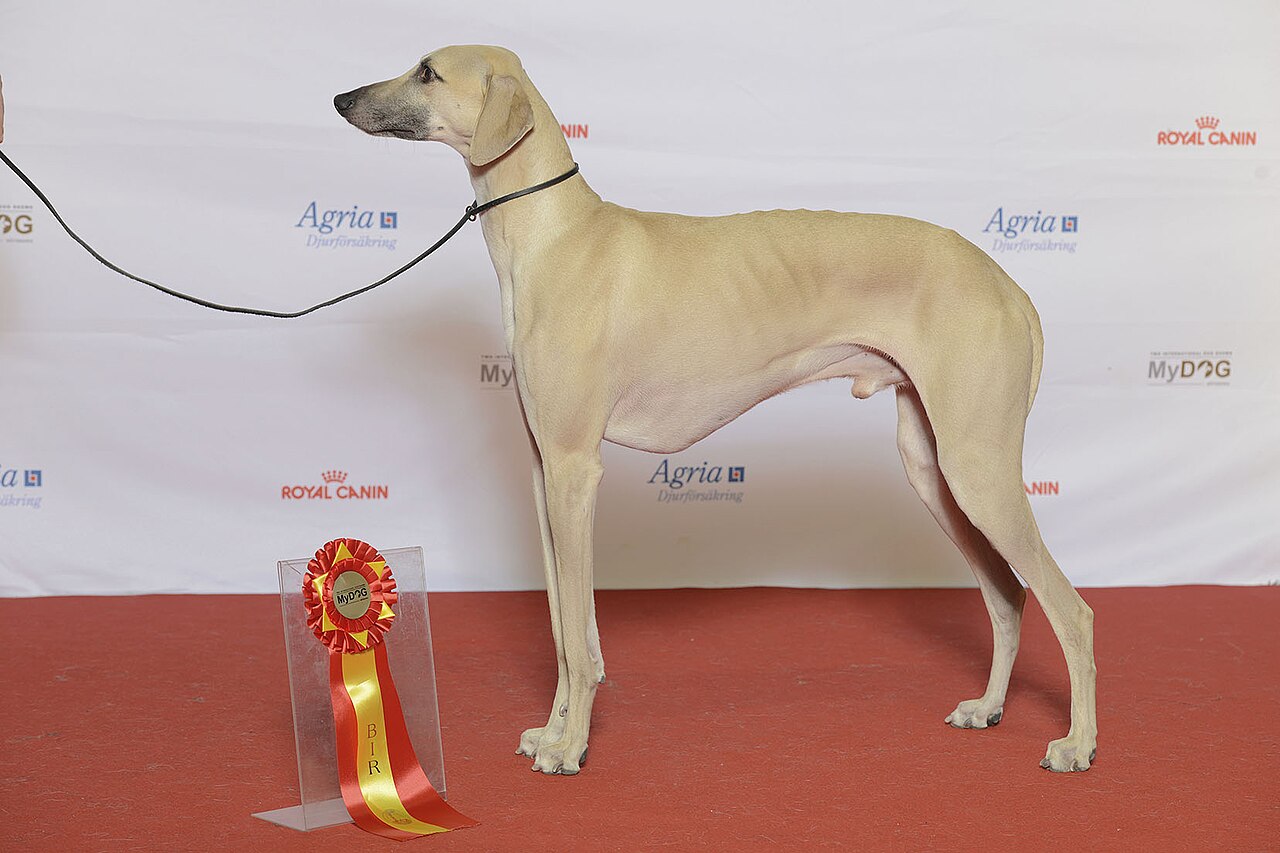
The Sloughi, also called the Arabian Greyhound or Berber Greyhound, is the short-haired sighthound of North Africa. It has been kept for centuries in Morocco, Algeria, Tunisia and Libya by Berber and Bedouin hunters, who coursed hare, fox, jackal and gazelle with it across desert and steppe. The AKC notes that Sloughi-type hounds were favored by Egyptian nobles, Berber kings and nomadic chieftains. In North Africa the Sloughi was set apart from the ordinary village dog: it slept in the tent, was fed well and was mourned when it died.
Its name and the Saluki's come from the same Arabic word for sighthound, and the two breeds look alike, but they are separate breeds: the Saluki comes from the Middle East and often has feathered ears and tail, while the Sloughi is always smooth-coated. The FCI standard says it plainly: "The Sloughi exists only in a single short-haired variety." The Azawakh, from further south in the Sahel, was first shown in Europe as a variety of the Sloughi before it was split off as a breed of its own.
The FCI accepted the breed on a definitive basis in November 1934. Morocco, where most Sloughis live today, holds the standard: FCI No. 188, Group 10 (Sighthounds), Section 3 (Short-haired Sighthounds), without working trial. The valid standard was published in 1998.
In the US, the American Sloughi Association (ASLA) is the AKC parent club. The Sloughi became eligible to compete in the AKC Hound Group on January 1, 2016. It is one of the rarest AKC breeds: the ASLA estimated fewer than 150 Sloughis in the US as of 2023.
Temperament and character
The AKC describes the Sloughi as "regally aloof with strangers and gentle with loved ones". The FCI standard adds that, although noble and haughty, "he is very attached to his master and defends him in case of need". In daily life:
- It is a family dog. It bonds closely with its own people and is calm and quiet indoors. The AKC calls it "a mannerly housedog".
- It is reserved with strangers. It takes its time with new people and does not like being handled by visitors. Some Sloughis are shy; the AKC says most are "simply very careful and cautious about their personal space".
- It is a sighthound. Prey drive is high. Cats it grows up with can be accepted, but a rabbit or a strange cat outside is something to chase.
- It is alert. In North Africa it also guarded the nomads' tents, and it will still bark at something unusual, but it is not a guard dog.
- It is sensitive. Harsh words or rough handling damage its trust quickly.
The ASLA says Sloughis are typically extremely tolerant and excellent with children, as long as kids are taught to respect the dog. A large, fast young Sloughi can still knock over a toddler in play.
Size and appearance
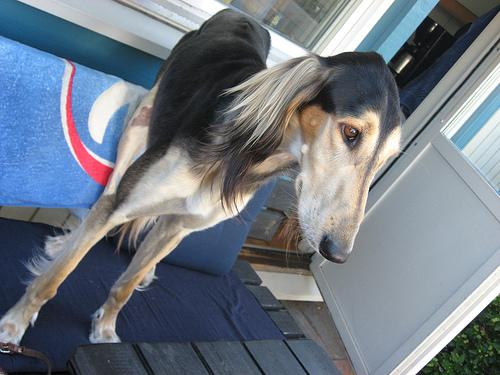
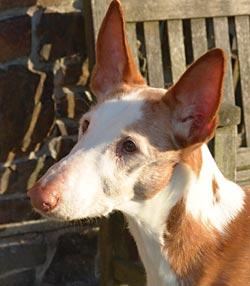
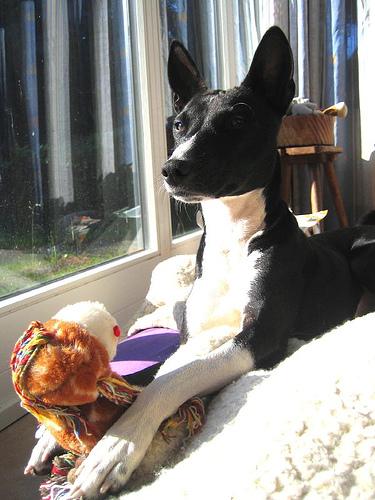
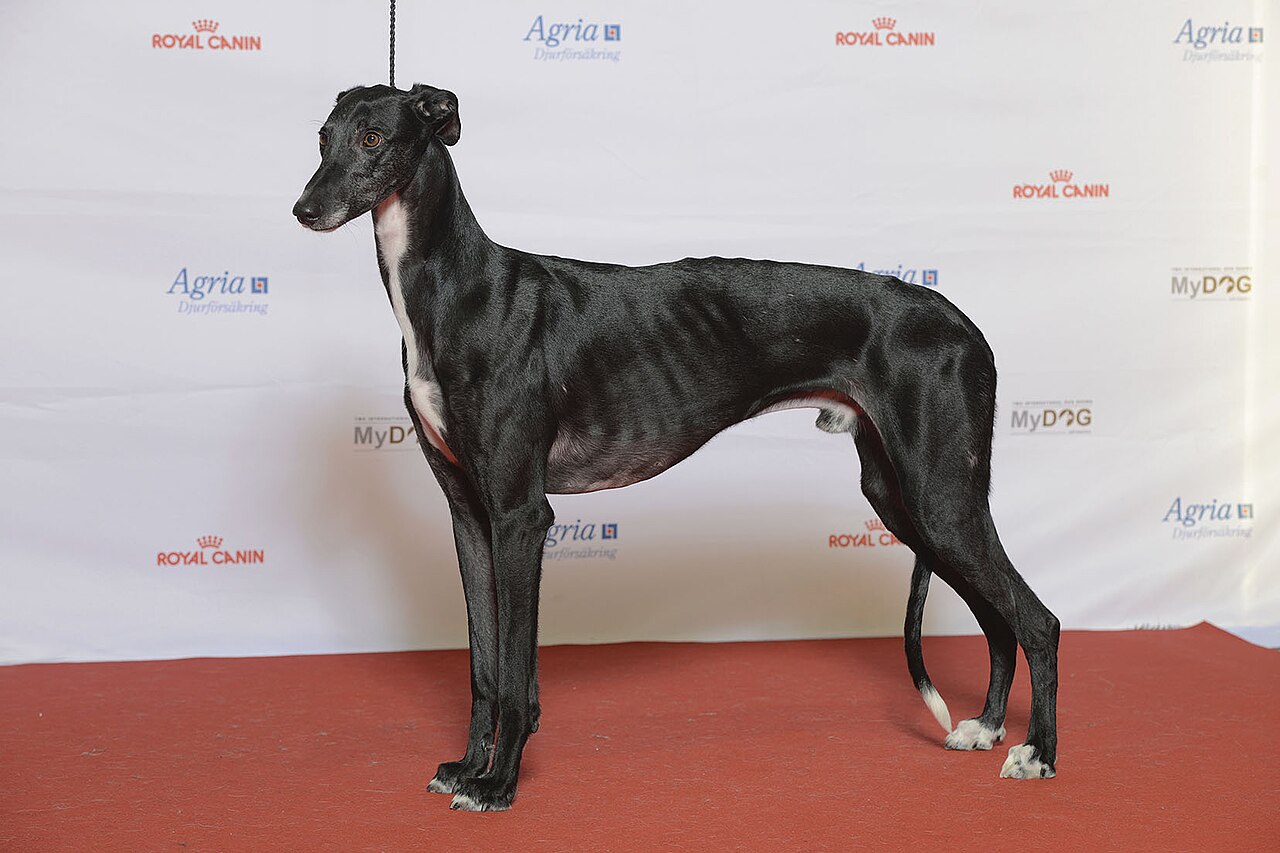
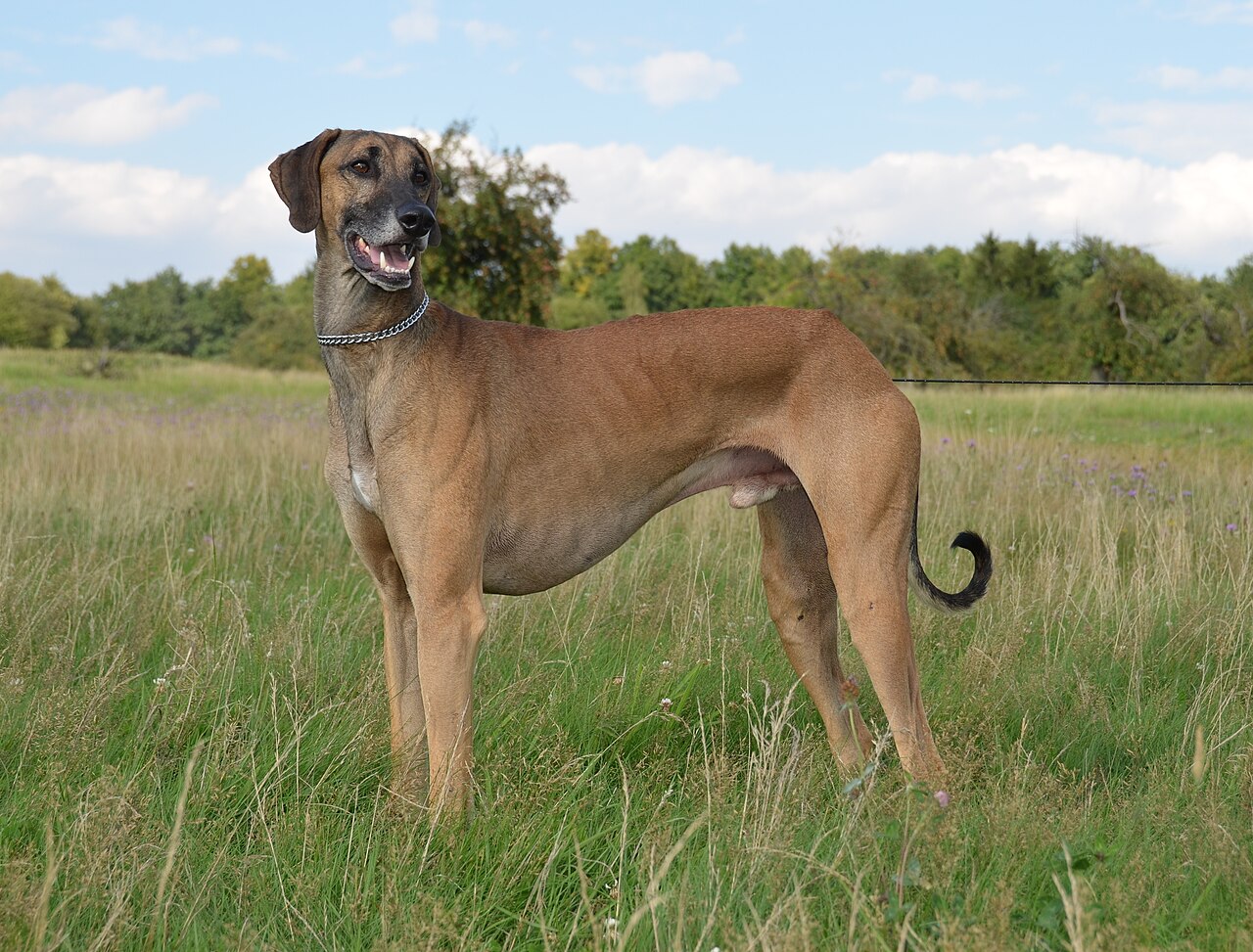
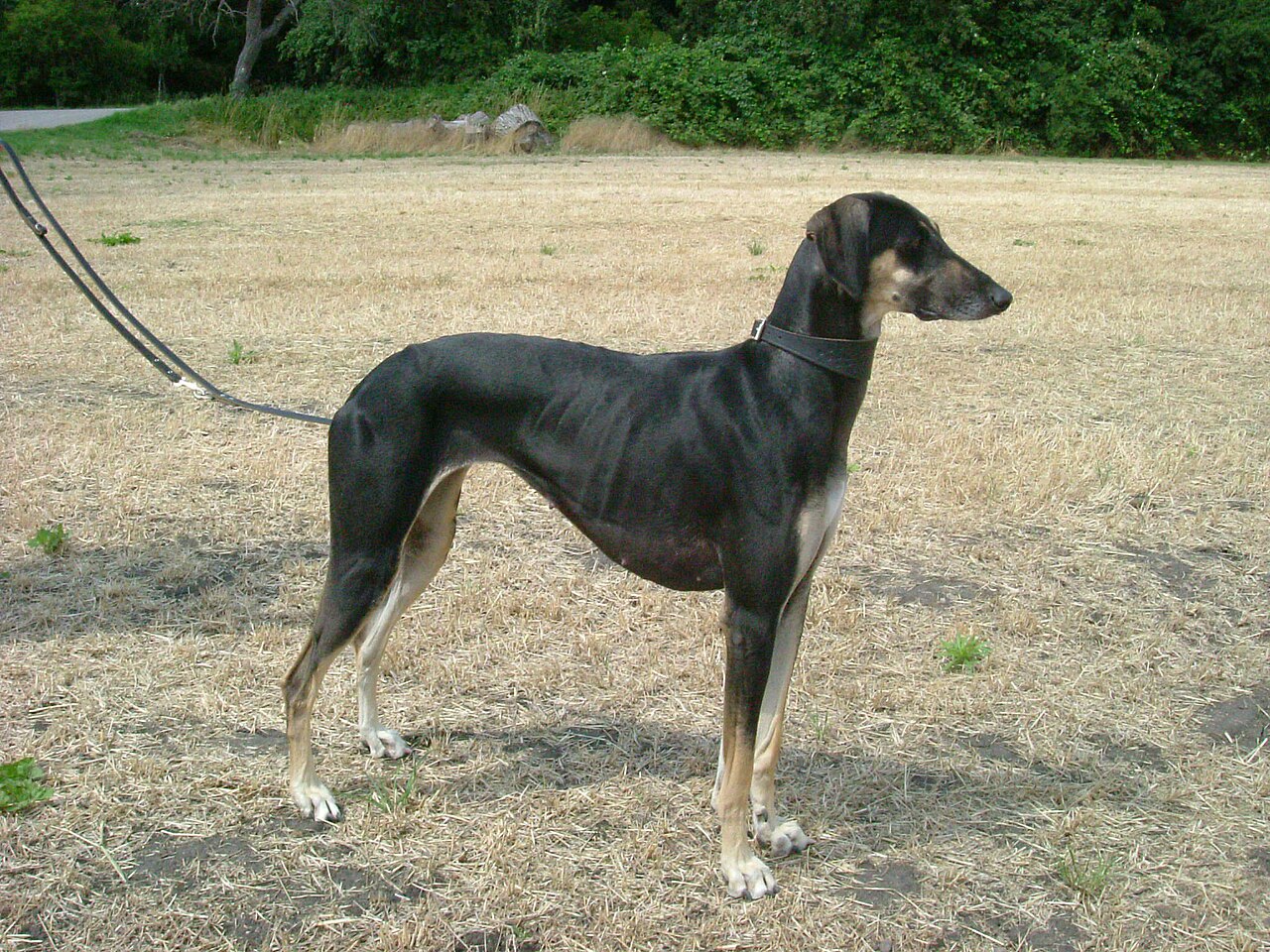
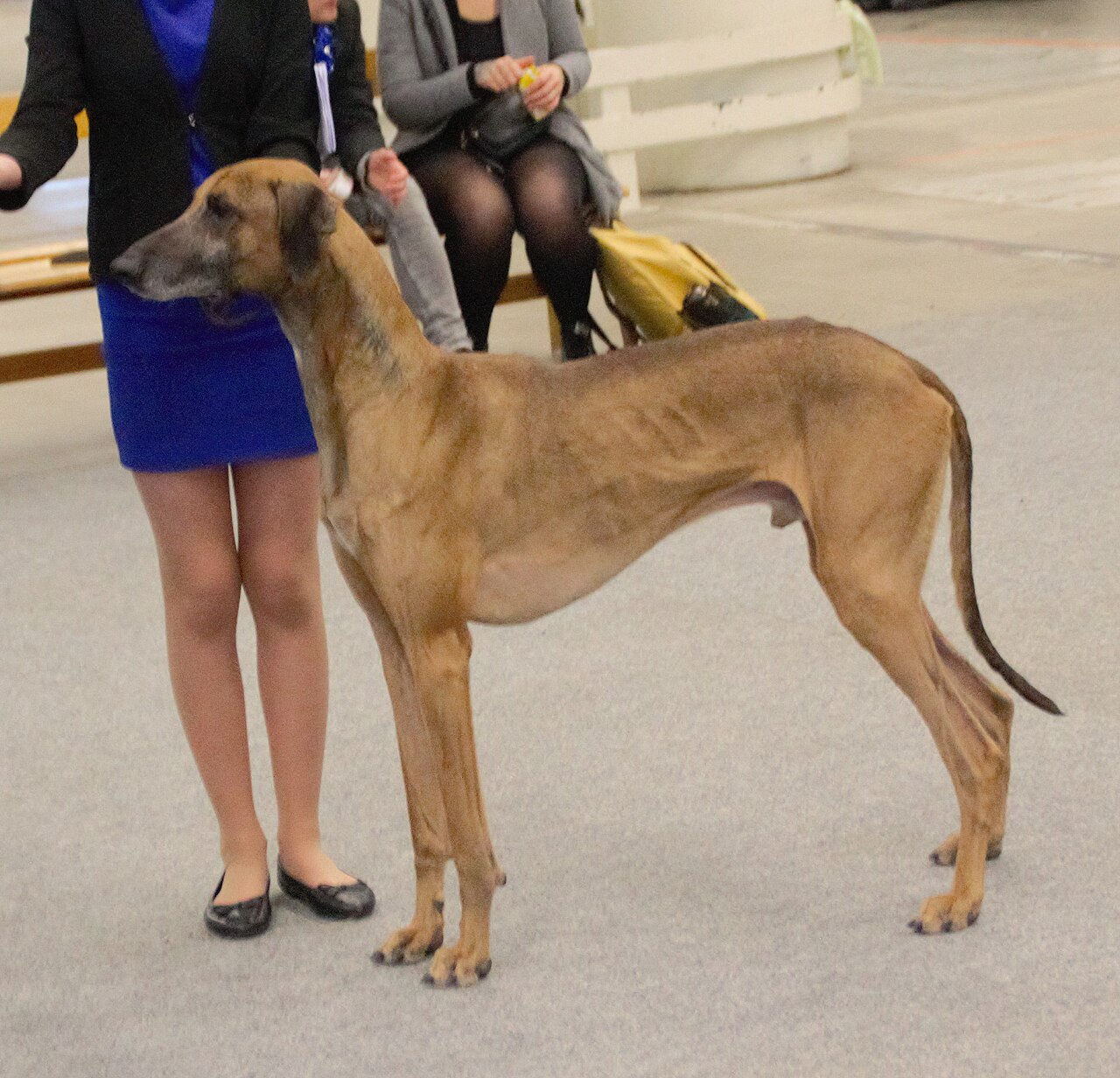
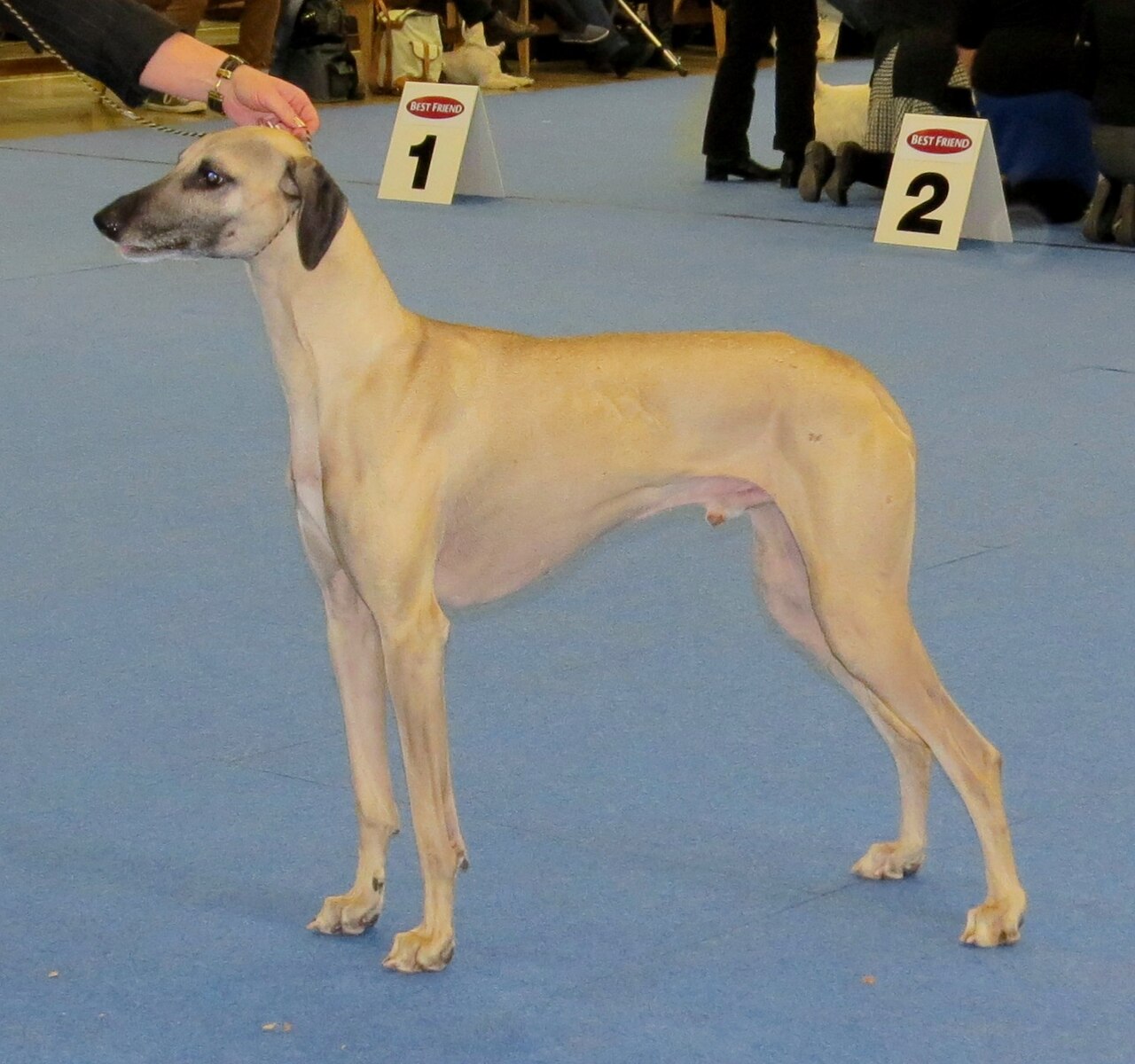
A lean, elegant sighthound, built nearly square: the body is very slightly shorter than the height at the withers, with long legs, a chest that almost reaches the elbow, a well tucked-up belly and hip bones at or slightly above the height of the withers. Bone and long, flat muscles show under thin skin. The head is long and wedge-shaped, the ears drop close to the head, and the large dark eyes give the breed its "melancholy" expression. The tail is thin, carried low and curls up at the tip.
| Males | Females | |
|---|---|---|
| Height | 26-29 in (FCI 66-72 cm) | 24-27 in (FCI 61-68 cm) |
| Weight | 40-65 lbs | 40-65 lbs |
| Lifespan | 10-15 years | 10-15 years |
| Coat | Very short, dense, fine | Same |
Heights, weight and lifespan are from the AKC; the FCI standard gives no weight. The ASLA says most Sloughis live 12-14 years and many pass 15. Colors run from light sand (cream) to mahogany red fawn, with or without brindling, black mask, black ears, black overlay or a black mantle. A small white mark on the chest or toes is a fault; larger white markings disqualify.
Exercise and daily life
The ASLA is clear: this breed needs a chance to gallop in a safely enclosed area nearly every day to stay happy and well adjusted, physically and mentally. Leashed walks alone are not enough. Plan on an hour or more a day, including a real run in a securely fenced field or with a sighthound club.
Off-leash in open country is a gamble. A Sloughi that spots a rabbit or deer can be out of sight in seconds, and roads make that dangerous. Lure coursing, racing and Fast CAT are the best outlets; the AKC suggests lure coursing for this breed.
Indoors it is calm and clean and will happily spend hours on the sofa. That makes a house with a fenced yard ideal, but an apartment can work if the dog gets its daily run. Thin skin and little body fat mean a coat on cold, wet days and soft bedding are sensible.
Training
The Sloughi is intelligent and loyal, but independent and somewhat aloof. The AKC notes that it does best with "caring and sensitive owners" and does not respond well to harsh training methods. The ASLA recommends positive reinforcement and consistent conditioning.
Typical difficulties:
- Recall. Train it for months on a long line and never trust it near roads or wildlife. Prey drive usually wins.
- Caution with strangers. Introduce the puppy to many calm, friendly people, places and dogs, and keep going through adolescence. Never force a shy puppy into strangers' hands.
- Other dogs. A poorly socialized Sloughi can become shy or snappy with dogs, so plan regular, positive contact with well-mannered dogs early on.
- Handling. Practice nail trims, ear checks and the vet table from puppyhood.
Grooming
Very easy. The AKC recommends weekly brushing with a soft bristle brush or a hound glove; an occasional bath keeps the dog clean-smelling. The ASLA calls Sloughis naturally clean dogs that shed very little. Check and clean the ears regularly, brush the teeth often and keep the nails short, because long nails cause discomfort.
Health
The Sloughi is generally a healthy breed. The ASLA names these concerns:
- Progressive retinal atrophy (PRA). An inherited, recessive form (rcd1a) that leads to blindness; vision usually starts to fail at about 2 years. A DNA test exists, so no puppy should be affected if both parents were tested.
- Cancer.
- Autoimmune disorders, more rarely, such as Addison's disease and SLO, a painful loss of the toenails.
- Wobbler syndrome, more rarely, a disease of the neck vertebrae.
The ASLA Code of Ethics requires every US breeding dog to have an OFA eye exam (CAER) within 12 months before mating and a DNA test for PRA. The AKC lists the same two tests. Like other sighthounds, the Sloughi has little body fat and can be sensitive to anesthesia, so tell any new vet before surgery.
Cost
With fewer than 150 dogs in the US, breeders are few and litters rare. Expect a waiting list or an import from Europe. US breeders do not publish fixed prices, and price guides put a well-bred puppy at around $2,500; plan on roughly $2,000 to $3,500, plus travel or import costs. Start with the American Sloughi Association and the AKC Marketplace.
Running costs are moderate: roughly $1,000 to $1,800 a year for food, routine vet care, preventives and insurance. Grooming costs almost nothing, but budget for a secure fence, a winter coat and coursing entry fees.
Who it suits and who it does not
Good match for:
- Experienced owners who know sighthounds and their independent streak
- Runners and active people with a safely fenced place where the dog can gallop
- Calm households that want a quiet, clean and devoted companion indoors
- People who like a low-maintenance coat
Not a match for:
- First-time owners or anyone who wants an obedient, eager-to-please dog
- Homes with rabbits, guinea pigs or other small pets
- Owners who dream of off-leash walks in open country
- People who are away all day and would leave the dog alone for long hours. For a smaller, easier sighthound, look at the Whippet; for a calmer big one, the Greyhound; for a close relative with feathered ears, the Saluki