Origin and history
The Galgo Español, or Spanish Greyhound, is Spain's traditional sighthound. Its name probably comes from the Latin "canis gallicus", the dog from Gaul, and in Spain "galgo" simply means sighthound. The FCI standard says the breed was known to the Romans and was exported in large numbers to Ireland and England between the 16th and 18th centuries, and counts it among the ancestors of the English Greyhound. To sum up its job, the standard quotes the medieval Archpriest of Hita, who wrote that a hare that runs is soon caught by the galgo.
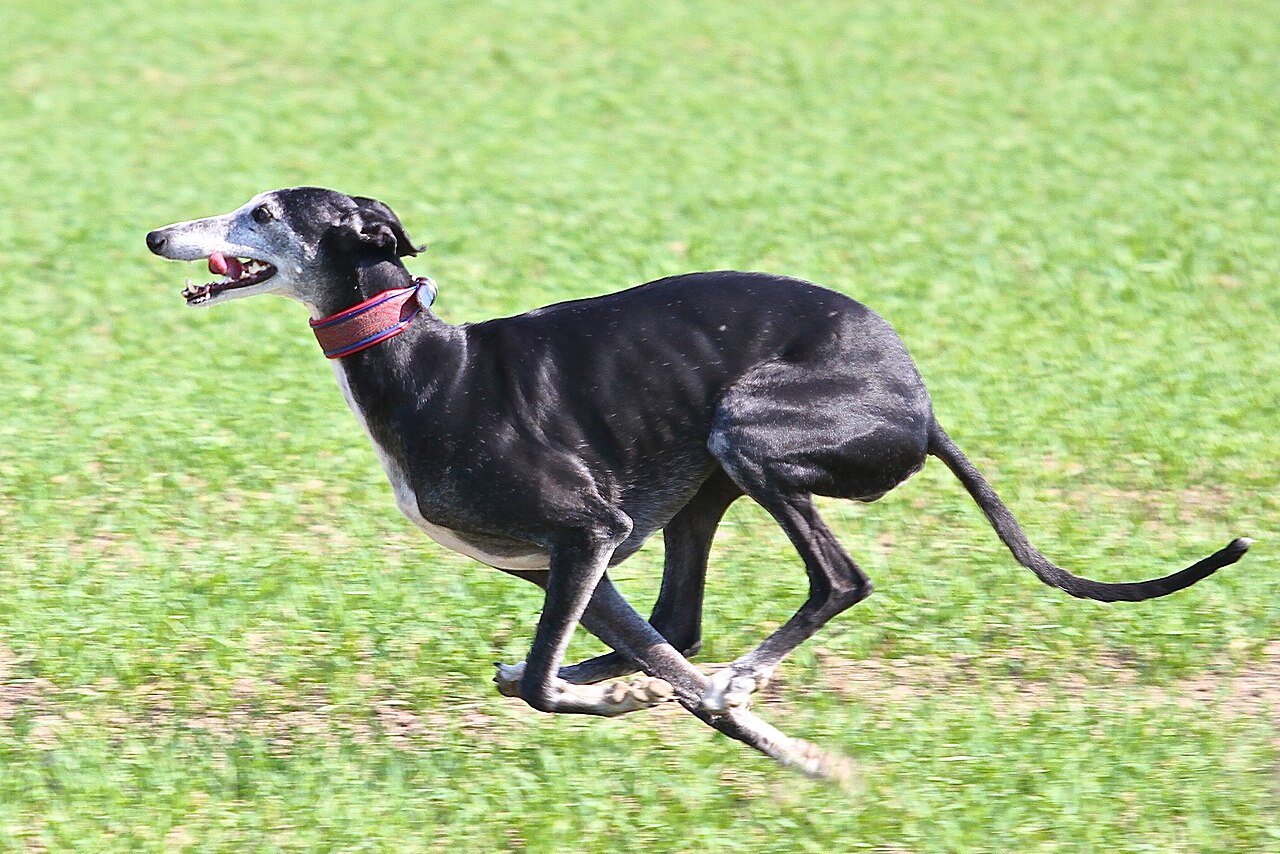
For centuries it has been bred for one thing: coursing hares across open, rough country, often over long distances. In the early 20th century some owners crossed in English Greyhounds for track racing, which made pure Galgos rare; breeders later went back to the old type. The FCI accepted the breed definitively in 1971. The standard is FCI No. 285, Group 10 (Sighthounds), Section 3 (Short-haired Sighthounds), without working trial, originally published in 1982, with the current English text from 2002. The Spanish kennel club, the RSCE, lists the Galgo among the 16 Spanish breeds it considered vulnerable for May 2025 to April 2026.
The breed has a darker side. In rural Spain thousands of galgos are kept by hunters (galgueros), and many are dumped or killed when the hare season ends or when they run too slowly. An estimate quoted by Wikipedia, from a 2007 press report, puts galgos and podencos killed each year at 50,000 to 100,000; there are no official statistics, and the figure cannot be verified. Spain's 2023 animal welfare law (Ley 7/2023) expressly excludes hunting dogs from its scope. That is why most Galgos outside Spain are adopted from rescues, not bought from breeders.
The Galgo is not recognized by the AKC and is not in its Foundation Stock Service. The United Kennel Club has recognized it since 2006 as the Spanish Greyhound, in the Sighthound and Pariah Group.
Temperament and character
The FCI standard calls it "serious" and "reserved on occasion", but "an energetic and lively hunter" in the field. At home most Galgos are quiet and gentle:
- It is a couch dog indoors. Adult Galgos sleep much of the day and like soft, raised places to lie on.
- It is reserved, not aggressive. With strangers it is usually cautious at first and likes to decide for itself who may touch it. It is no watchdog, and a frightened Galgo tends to back away rather than bite.
- It is a sighthound. Anything small that runs can trigger a chase, cats and rabbits included. Some live with cats, many do not.
- It is sensitive. Harsh handling makes it shut down. Many rescues have had little kindness before, so give a new dog time.
Galgos usually get on well with other dogs, and many enjoy living with a second sighthound. With calm children a Galgo can do well, but it needs a place to retreat and does not like rough play. A rescue's foster home can tell you how a particular dog reacts to kids, cats and being alone.
Size and appearance
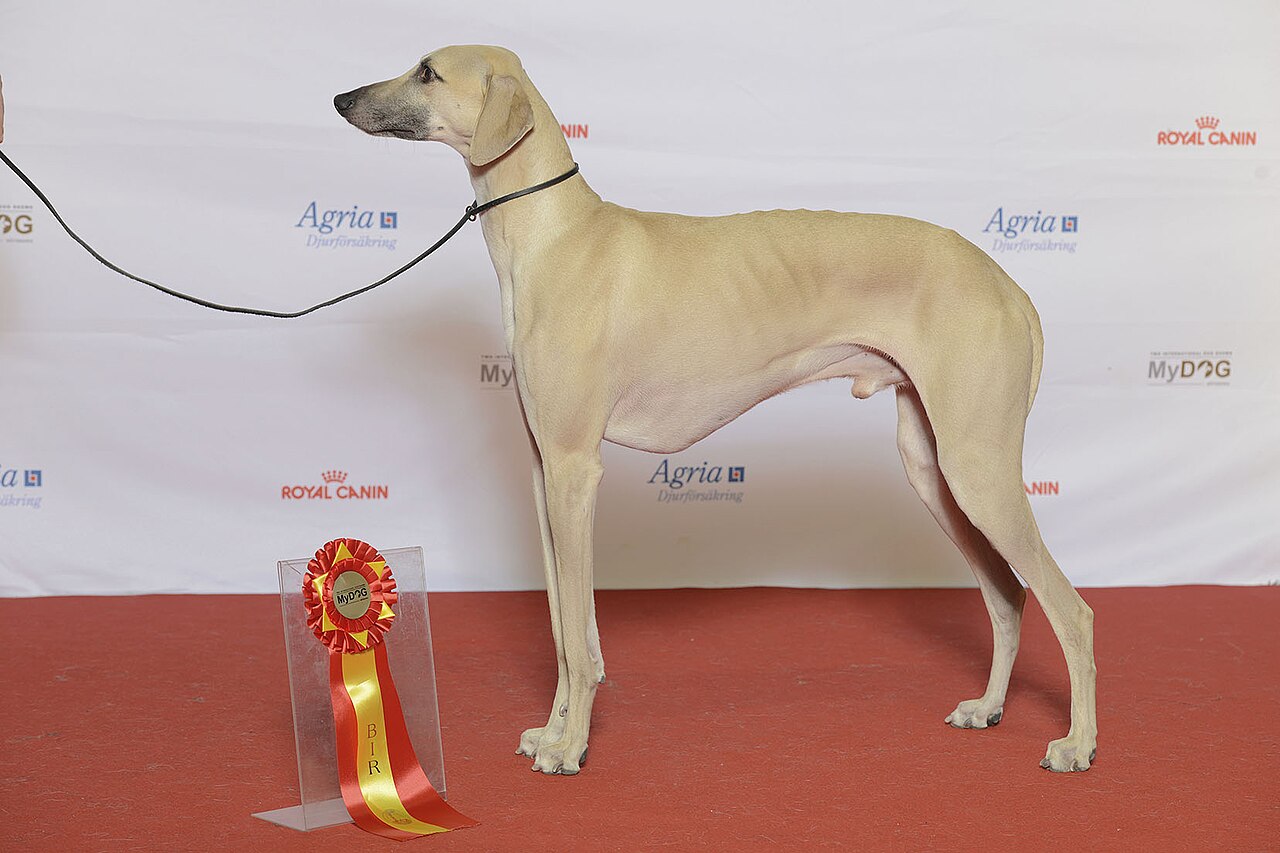
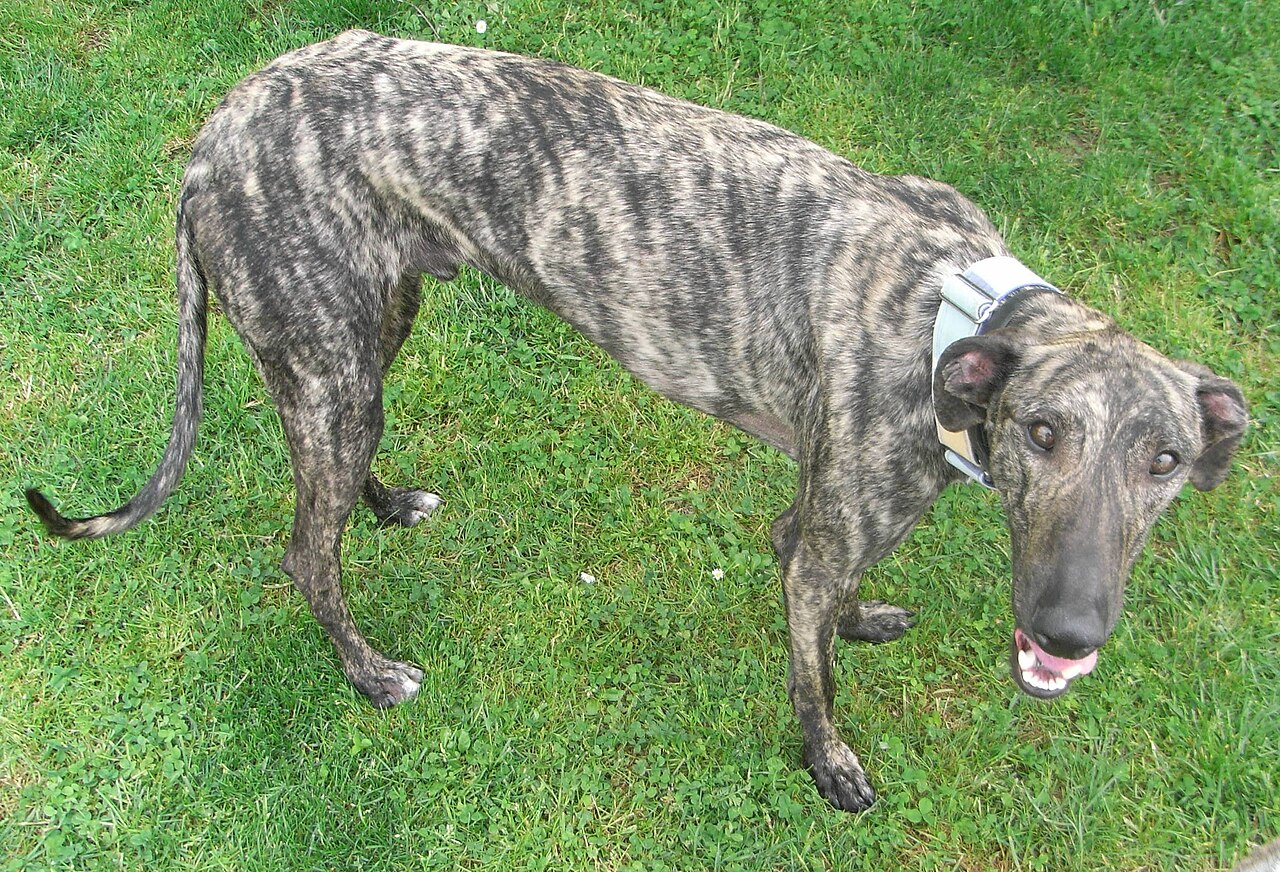
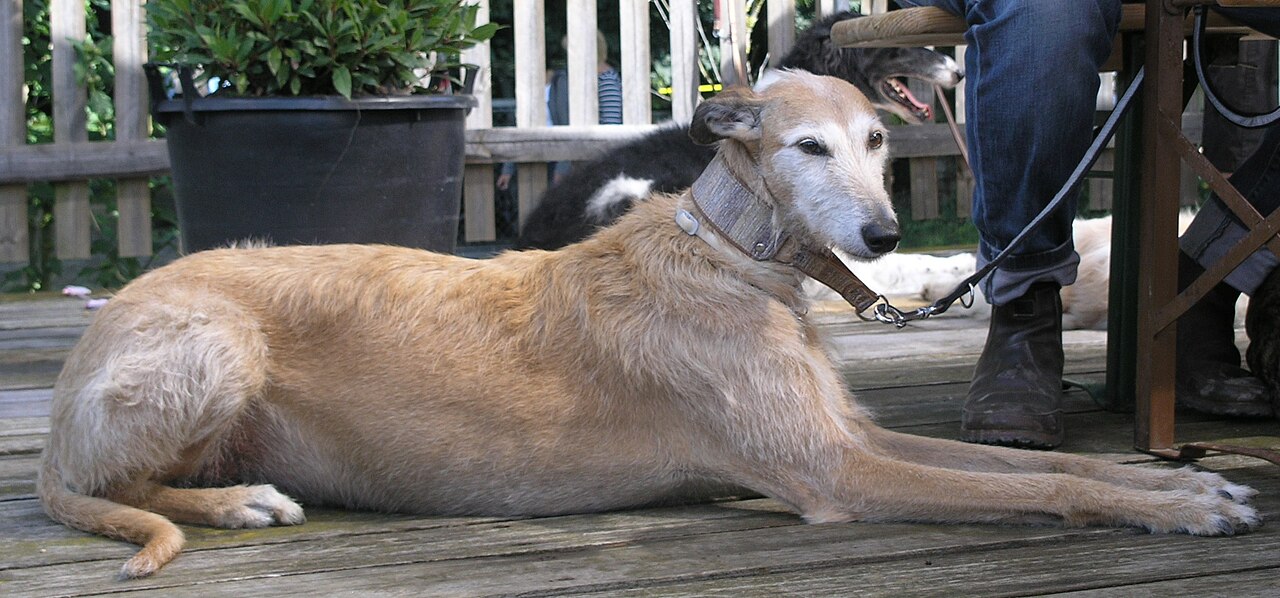
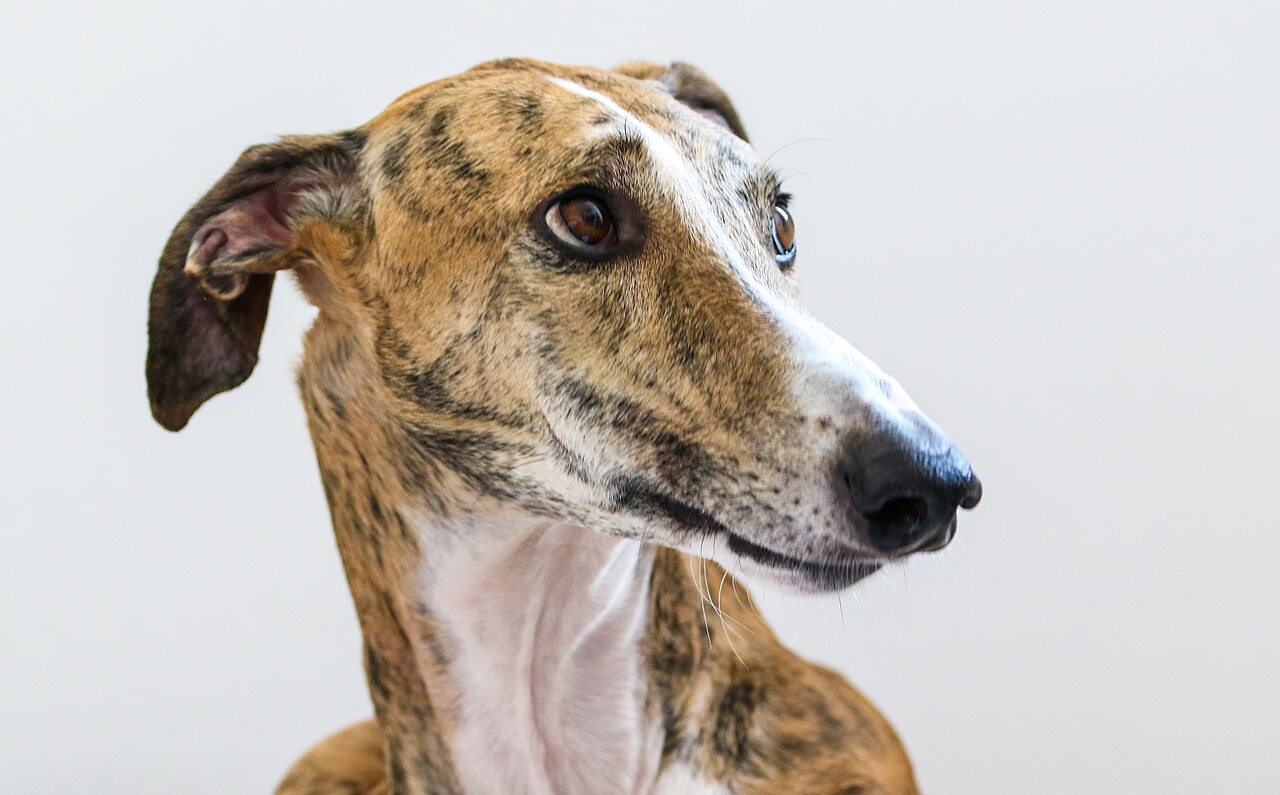
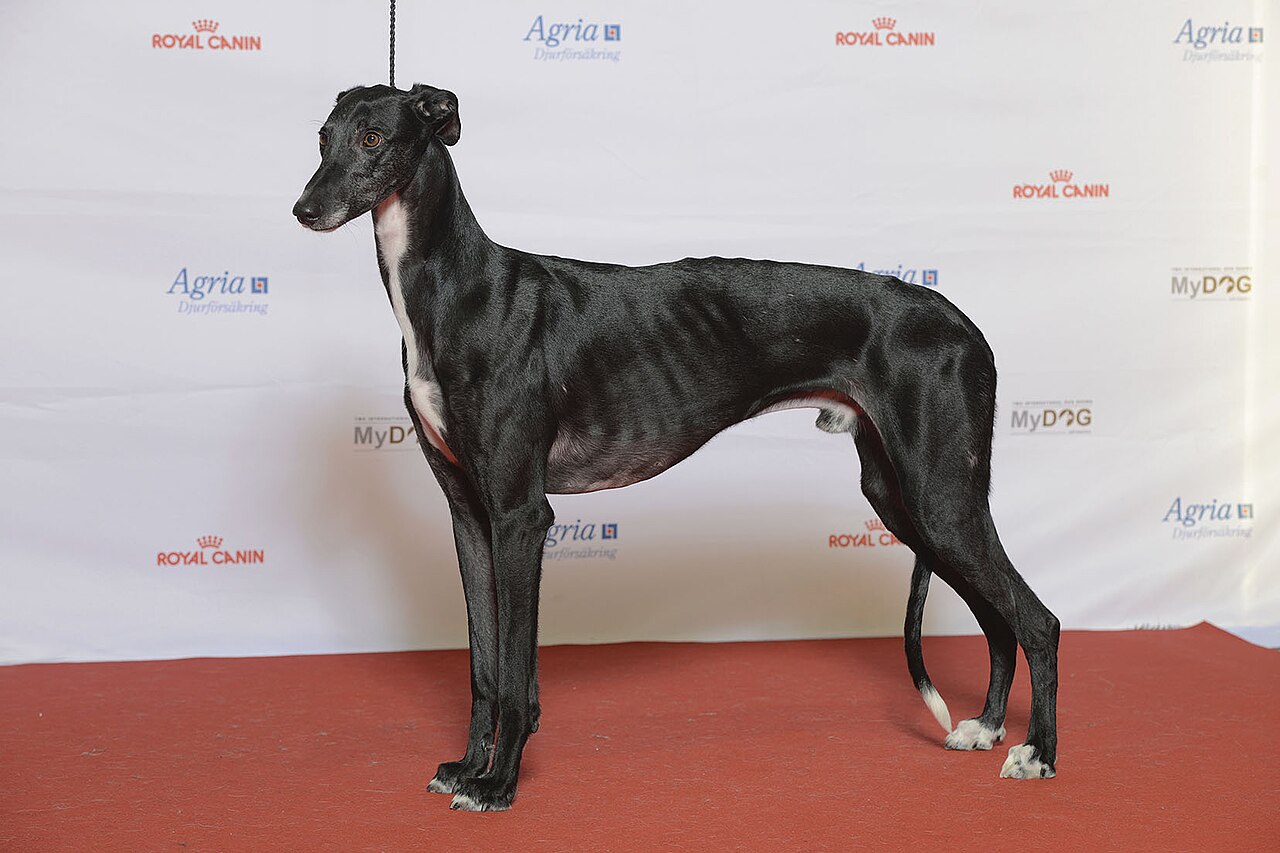
A lean, rectangular sighthound, slightly longer than tall, lighter and finer than the English Greyhound, with flatter muscles built for endurance. The head is long and narrow with hardly any stop, the ears are folded rose ears, and the very long tail reaches well past the hock and ends in a hook. The loin may be higher than the withers.
| Males | Females | |
|---|---|---|
| Height | 24.5-27.5 in (FCI 62-70 cm) | 23.5-26.5 in (FCI 60-68 cm) |
| Weight | about 45-65 lbs | about 45-65 lbs |
| Lifespan | 12-15 years | 12-15 years |
| Coat | Short and smooth, or semi-long and rough | Same |
Heights are from the UKC and FCI standards; the FCI allows 2 cm more in well-proportioned dogs. Neither standard gives a weight, so the range is from breed guides (about 20-30 kg). All colors are allowed. As most typical, the standard lists fawn and brindle, black, flecked, burnt chestnut, cinnamon, yellow, red and white, also with white markings or pied. The rough-coated variety has harder, longer hair with a beard, moustache and eyebrows.
Exercise and daily life
A Galgo needs daily walks on leash plus, several times a week, a real sprint in a securely fenced area; leash walks alone do not tire it out. Warm up first, and build up a newly adopted dog's fitness slowly, because a sudden hard run can cause muscle damage in an unfit sighthound.
Off-leash time belongs behind a high fence. US galgo rescues ask for a fence of about 6 feet, and outside it the dog stays on leash. A Galgo can reach a hare's speed in seconds, and a missed recall near a road can be fatal. Fast CAT at AKC events is open to non-AKC breeds through the AKC Canine Partners listing, and it is a safe way to let a Galgo run.
Thin skin and almost no body fat mean it gets cold fast: a coat for cold or wet walks, soft bedding and a warm house are basics. An apartment works well for most adult Galgos, as long as they get their walks.
Training
Galgos are smart and, for sighthounds, fairly trainable, but they were bred to hunt on their own, not for obedience, and they soon get bored repeating the same command. What works: short sessions, food rewards, a calm voice and lots of patience. Many adopted Galgos have never lived in a house, so stairs, glass doors and being alone may all be new.
Typical difficulties:
- Recall. Practice on a long line, and accept that a running hare will usually win.
- Being alone. Galgos often lived in kennels with other dogs. Build up time alone in small steps.
- Fear. Some rescues are shy of men, sudden movements or traffic. Let the dog set the pace.
- House training. An adult kennel dog may need a few weeks of puppy-style routines.
Grooming
Very easy. A weekly rub with a rubber mitt is enough for the smooth coat; the rough coat needs a brush now and then. Galgos are too light to wear down their nails, so trim them regularly. Brush the teeth, because tartar builds up easily, and check the thin skin for scrapes after running.
Health
The Galgo is generally a robust breed. Points to know:
- Mediterranean diseases. Dogs from Spain can carry leishmaniasis, ehrlichiosis, babesiosis or heartworm. Rescues test before travel, but leishmaniasis can stay hidden for months or years, so ask your vet about a retest about six months after arrival.
- Anesthesia. Like other sighthounds, Galgos have little body fat and react strongly to some drugs. Use a vet who knows sighthounds.
- Different lab values. Sighthound blood values and thyroid levels often differ from other breeds, and the athletic heart looks large on X-rays. A vet who does not know sighthounds can misread this as disease.
- Exertional rhabdomyolysis. A sudden hard run in an unfit dog can damage muscles and, in bad cases, the kidneys.
Cost
Most US Galgos come through rescue groups that fly dogs from Spanish shelters. Published adoption fees run about $650 to $850: SAGE charges $850 and Love, Hope, Believe Galgo Adoption $800, and the information site Galgopod says fees typically run $650 to $800. The fee usually covers spay/neuter, microchip, vaccinations, blood tests for Leishmania, Ehrlichia and heartworm, an EU pet passport and the flight. Most groups place dogs only within a few hours' drive of their base. Since August 2024, the CDC requires every imported dog to be at least 6 months old, microchipped and to have a CDC Dog Import Form receipt; the rescue handles this.
Puppies from breeders are rare in the US. Pedigreed dogs come from FCI breeders in Spain or elsewhere in Europe and can be registered with the UKC.
Running costs: roughly $1,000 to $1,800 a year for food, routine vet care, preventives and insurance, plus coats, a martingale collar and a harness.
Who it suits and who it does not
Good match for:
- Calm households that want a quiet, gentle house dog
- Apartment dwellers who will walk the dog daily
- People willing to give a rescue dog time to settle
- Homes that already have a friendly dog, especially another sighthound
Not a match for:
- Homes with cats, rabbits or other small pets, unless the dog has been cat-tested
- Owners who want off-leash walks in open country
- Anyone who wants a guard dog or a dog for outdoor living
- Cold-climate homes where the dog would spend time outside. For a smaller sighthound, look at the Whippet; for the racing cousin, also widely adopted, the Greyhound; for another lean, short-haired sighthound, the Azawakh