Origin and history
The Azawakh is a tall, very lean sighthound from the southern Sahara and the Sahel. It is named after the Azawakh valley, a long dry river valley on the border of Mali and Niger, where its traditional owners, Tuareg, Dahoussahaq and Peul nomads, kept it to hunt gazelle and hare and to guard the camp against jackals and hyenas. In the Tuareg language it is called "Oska", and the dogs lived in the tents as part of the family rather than in a kennel.
Europeans first took notice around 1968, when the first dogs were exported to France and to what was then Yugoslavia. At first they were shown as a variety of the Sloughi, the North African sighthound, but breeders of both dogs pushed for a split, and the Azawakh became a breed of its own. Because neither Mali nor Niger has an FCI kennel club, France holds the patronage: the breed standard is FCI No. 307, Group 10 (Sighthounds), Section 3 (Short-haired Sighthounds), without working trial. The current version was published in 2019.
In the US, the American Azawakh Association, founded in 1988, is the AKC parent club. The breed moved through the Foundation Stock Service and the Miscellaneous Class and became eligible to compete in the AKC Hound Group on January 1, 2019. It is still one of the rarest AKC breeds: 195th in the AKC's 2025 popularity ranking.
Temperament and character
The FCI standard calls it "quick, attentive, distant, can be very reserved with strangers, but it can be gentle and affectionate with its family, and people whom it is willing to accept". In daily life:
- It is a one-family dog. It bonds intensely with its own people and wants to be near them, often touching. It is not a dog that greets every visitor.
- It is a watchdog. Bred to guard a nomad camp, it notices everything and will alarm-bark or put itself between you and a stranger. Early, calm socialization keeps this protective streak from turning into suspicion.
- It is a sighthound. Anything small that runs, from rabbits to cats, triggers a chase at speeds of up to about 35 mph.
- It is sensitive. The AKC notes "an amazing amount of dignity". Harsh handling produces a dog that is either shut down or defensive.
With other dogs it usually does best with its own kind or other sighthounds it grew up with. Kids raised with a well-socialized Azawakh can do fine, but it does not like rough play or strangers' children grabbing at it.
Size and appearance
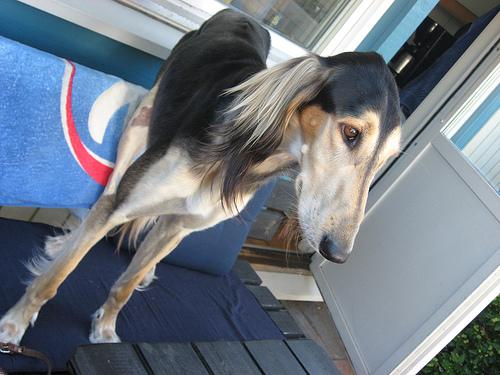
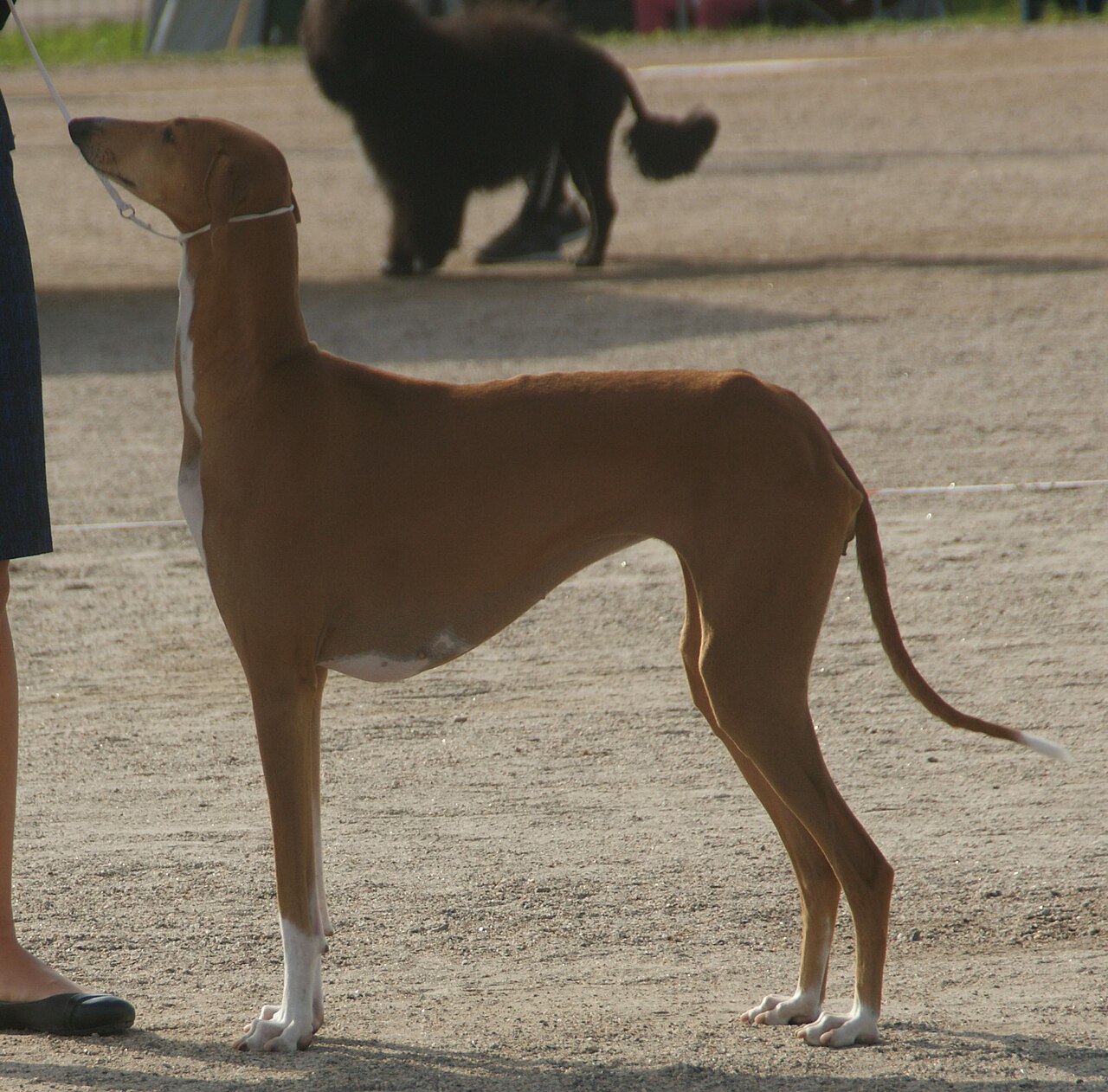
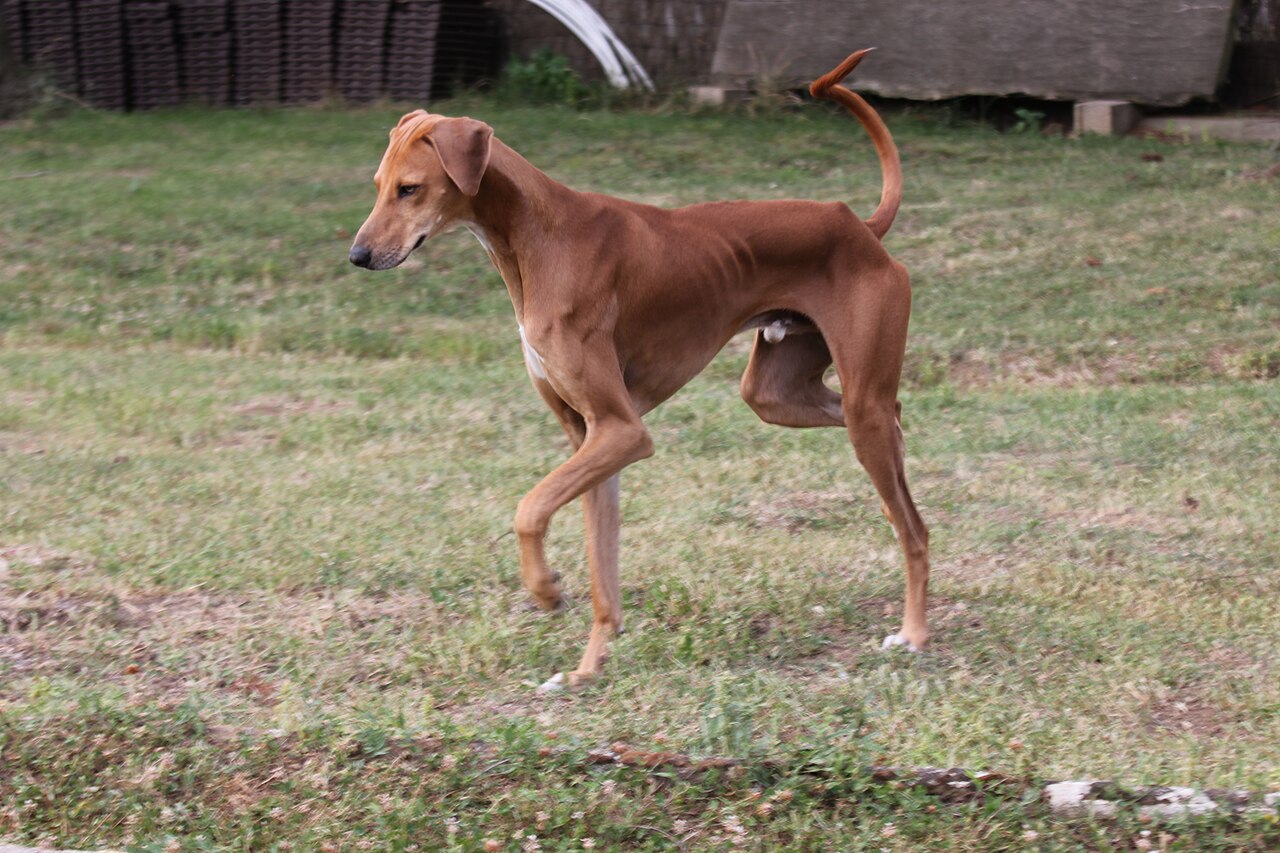
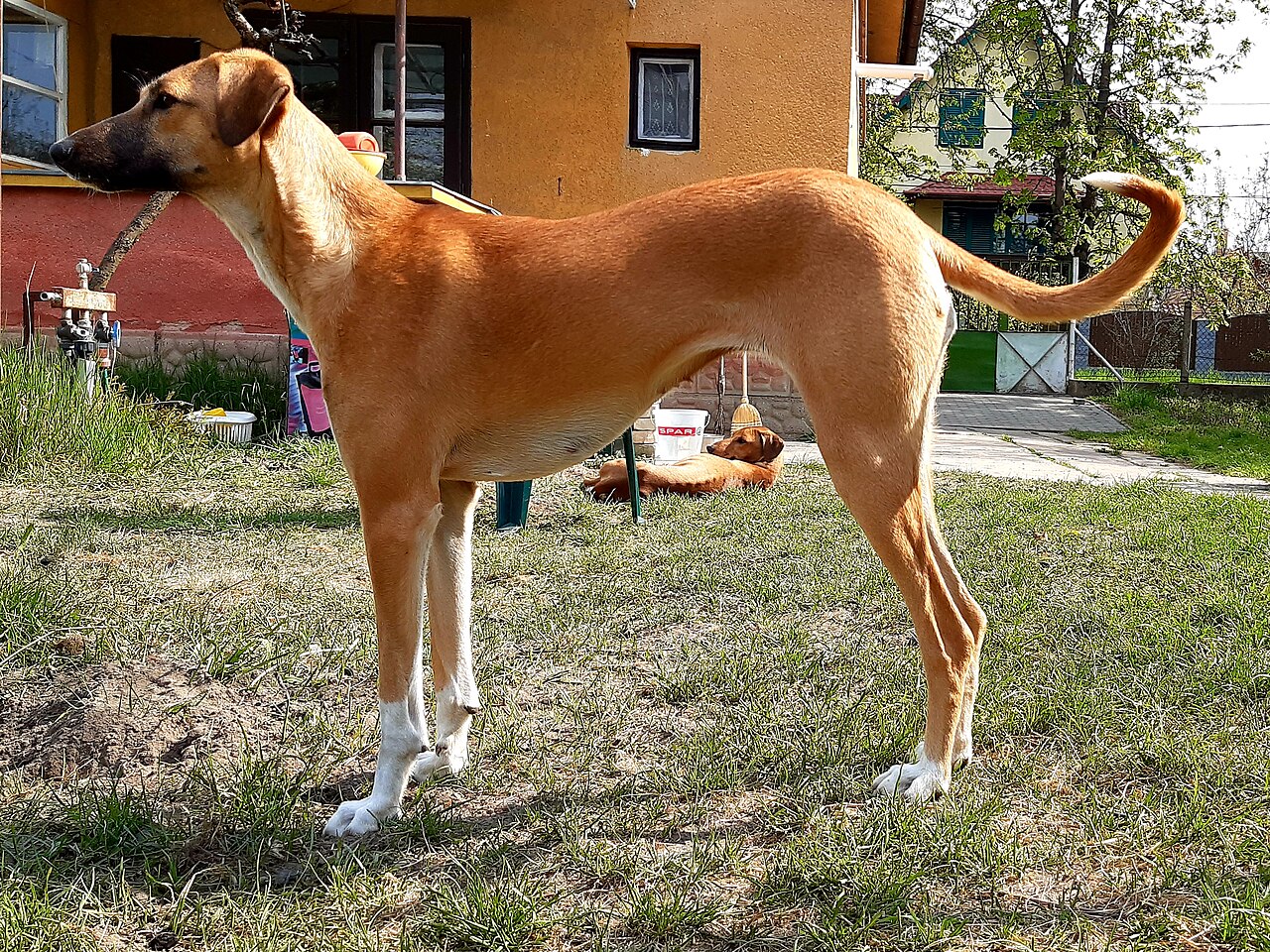
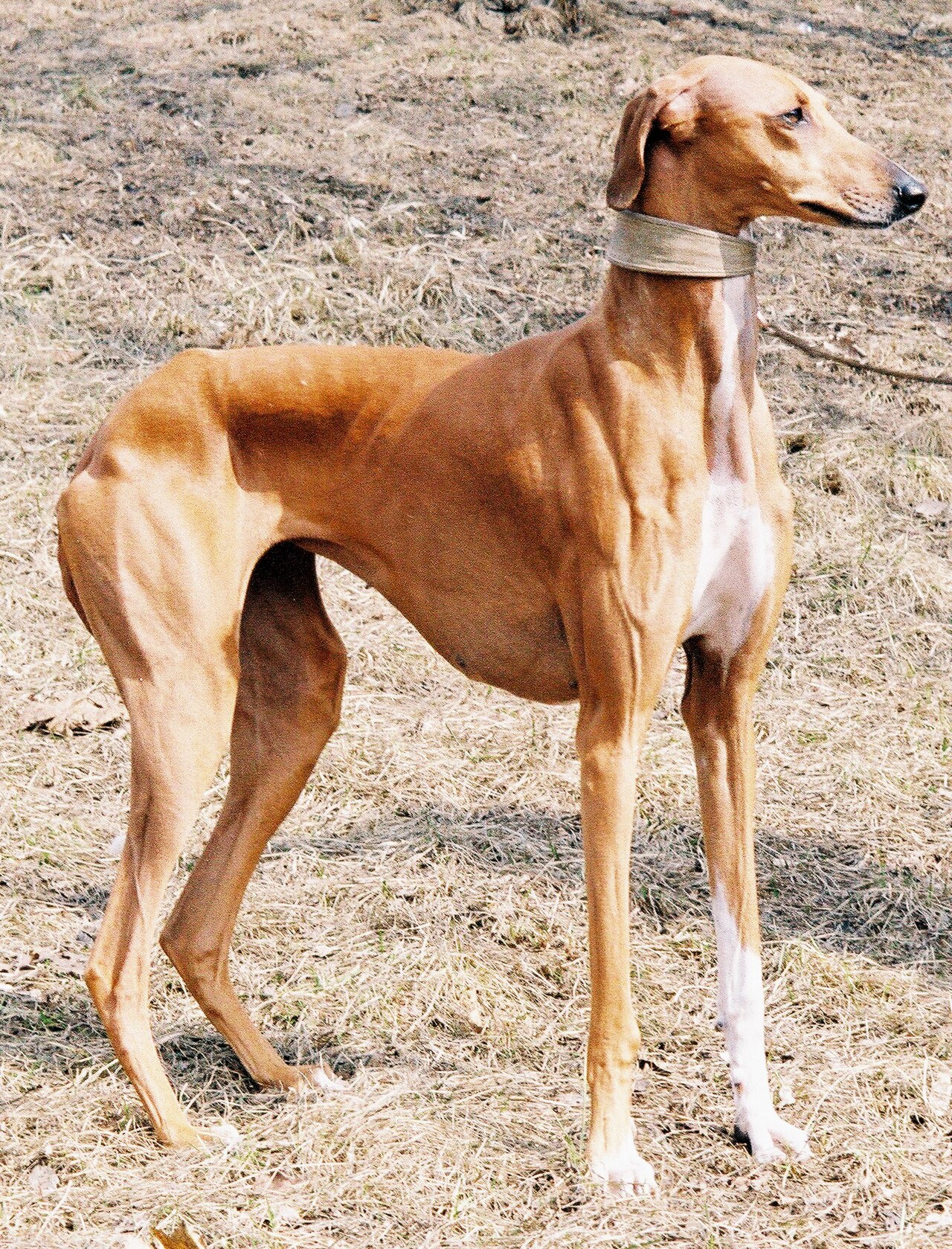
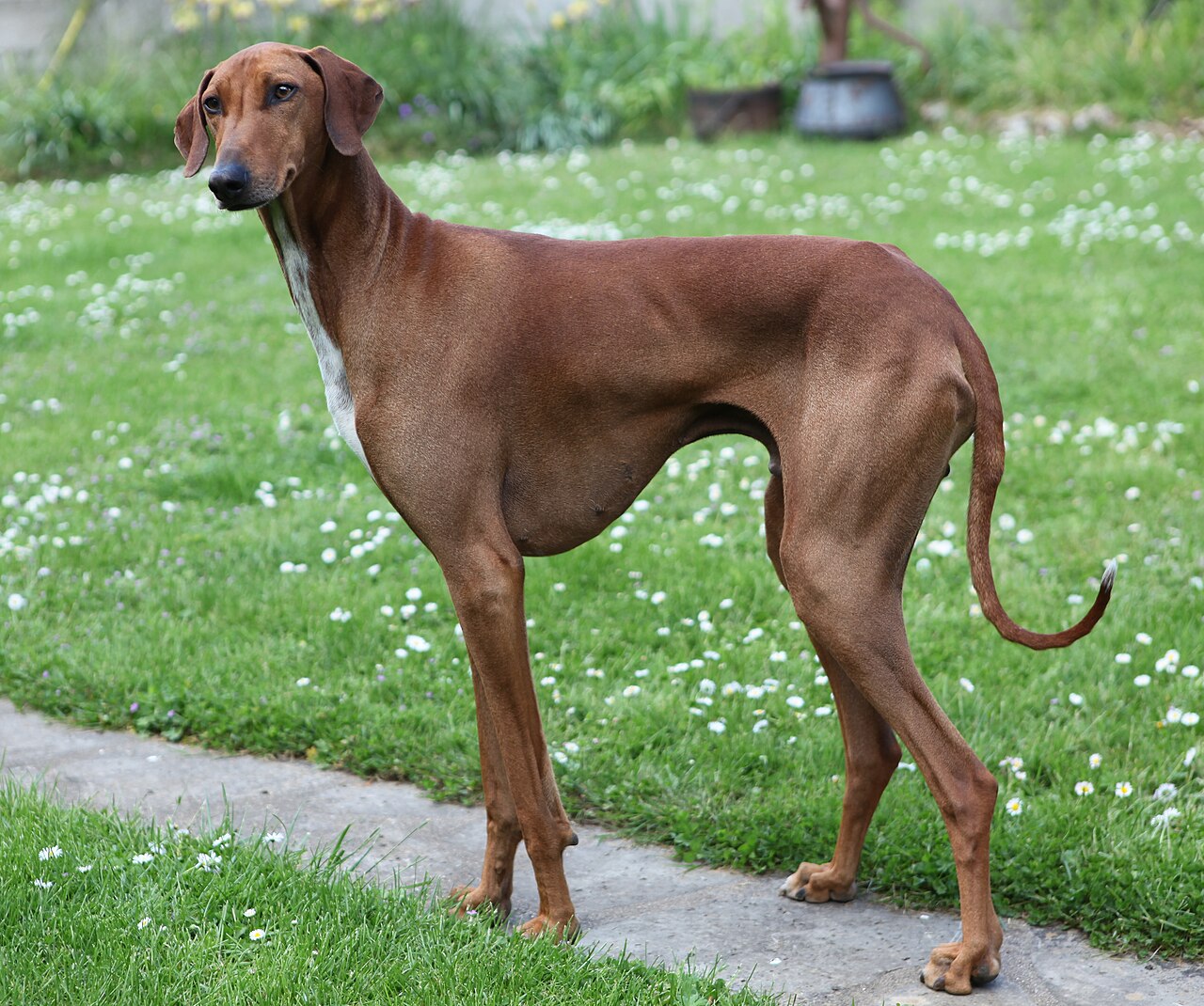
Strikingly tall and thin, built in a rectangle that stands on end: taller than long, with long legs, a deep chest, a very high tuck-up and hips at least as high as the withers. Bones and muscles show through the thin skin; a fit Azawakh looks skinny to most people, and that is correct. The coat is short and fine, almost absent on the belly. The ears are thin and drop flat against the head, and the gait is light and springy.
| Males | Females | |
|---|---|---|
| Height | 25-29 in (FCI 64-74 cm) | 23.5-27.5 in (FCI 60-70 cm) |
| Weight | 44-55 lbs | 33-44 lbs |
| Lifespan | 12-15 years | 12-15 years |
| Coat | Short, fine, nearly bare belly | Same |
Heights and weights are from the AKC and match the FCI standard. Colors differ by registry: the AKC accepts any color or combination, including brindle, parti-color, black, blue and brown. The FCI standard, revised in 2019, allows only fawn from light sand to mahogany, with or without black brindle, and white limited to the feet, legs and chest.
Exercise and daily life
The AKC calls it an active breed that makes a great running partner once grown. Plan on at least an hour a day: brisk leashed walks plus a real sprint in a safely fenced field. An Azawakh left alone in a yard will not exercise itself; it runs with you or with another dog.
Off-leash running belongs in a securely fenced area. With this chase drive and speed, a missed recall near a road can be fatal. AKC lure coursing and Fast CAT are ideal outlets, and the Azawakh has been eligible for AKC events since 2019.
It is built for the desert, not for winter. With thin skin and almost no body fat, it gets cold fast: a coat for cold or wet walks, soft bedding and a warm house are basics, not luxuries. An apartment can work for an adult dog that gets a daily run, but a house with a high, secure fence is easier.
Training
The Azawakh is intelligent and learns quickly, but it is independent and decides for itself whether something is worth doing. What works: short sessions, food rewards, a calm voice, early puppy classes with a positive trainer and a lot of socialization in the first year.
Typical difficulties:
- Recall. Practice on a long line for months, and accept that the recall may never beat a running rabbit.
- Wariness of strangers. Many calm, friendly people and places before 16 weeks, and keep going through adolescence. Never force a shy puppy into strangers' hands.
- Guarding. Reward calm watching and interrupt barking early, before it becomes a habit.
- Handling. Get the puppy used to the vet table, nail trims and being touched all over.
Grooming
About as easy as it gets. A weekly once-over with a hound glove or rubber mitt is enough. Azawakhs have little doggy odor and rarely need a bath; dried mud often just brushes off. Trim nails regularly, because long nails spoil the springy gait. The thin skin nicks easily, so check for scrapes after running.
Health
The Azawakh is generally a healthy, hardy breed, but the gene pool outside Africa is small. In a 2015 letter to the AKC, the American Azawakh Association listed these known issues:
- Seizures and epilepsy. Seen in some lines. There is no screening test, so ask openly about seizures in the pedigree.
- Hypothyroidism. Often autoimmune. Sighthounds normally have lower thyroid values than other breeds, so a vet who knows sighthounds should read the results.
- Masticatory myositis. An autoimmune inflammation of the chewing muscles. Early treatment matters.
- Spinal stenosis. A narrowing of the spinal canal that can cause pain or weakness.
- Other autoimmune problems.
The AKC also names heart problems among the issues responsible breeders screen for. Like other sighthounds, the Azawakh has little body fat, so tell any new vet before anesthesia. The AKC lists no required health tests for the breed; ask what the breeder did anyway, such as a thyroid panel or a cardiac exam of the parents.
Cost
There are only a few breeders in the US, so expect a waiting list or an import from Europe. Price guides put a puppy at about $2,000 to $3,250; plan on roughly $2,000 to $3,500, plus travel or import costs. Start with the American Azawakh Association and the AKC Marketplace. Be wary of cheap "Azawakh" puppies without AKC or FCI papers.
Running costs are moderate: roughly $1,000 to $1,800 a year for food, routine vet care, preventives and insurance. Grooming costs almost nothing, but budget for a cold-weather coat, a fence that really holds and coursing entry fees.
Who it suits and who it does not
Good match for:
- Experienced owners who know sighthounds or primitive breeds
- Runners and active people with a safely fenced place to sprint
- Quiet adult households that want a devoted, watchful companion
- People who like a low-maintenance coat and a clean, odorless dog
Not a match for:
- First-time owners or anyone who wants an easy, biddable dog
- Homes with cats, rabbits or other small pets
- Owners who dream of off-leash walks in open country
- Cold-climate homes where the dog would spend time outdoors. For a friendlier, smaller sighthound, look at the Whippet; for a calmer big one, the Greyhound; for a similar desert hound with a softer coat, the Saluki