Origin and history
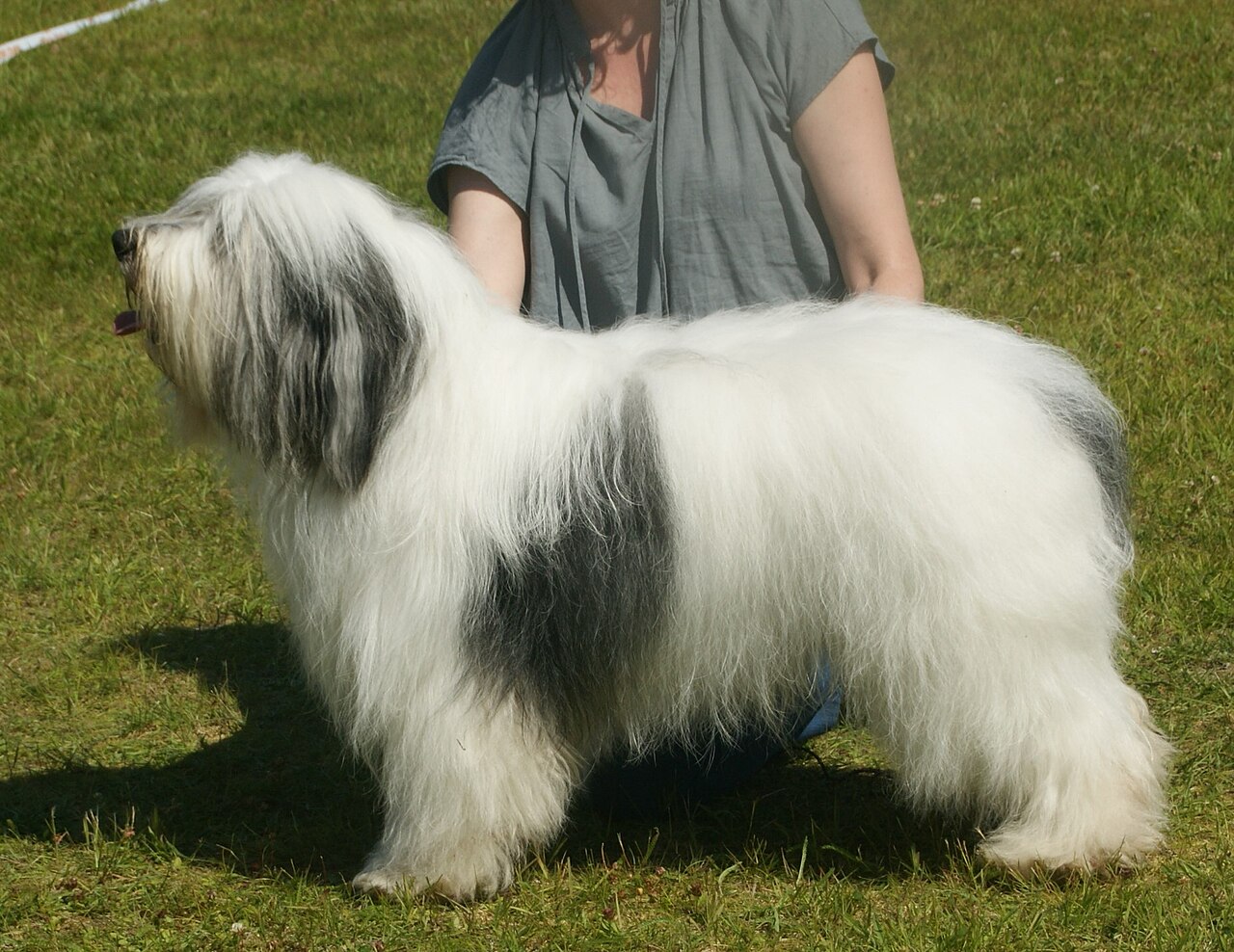
The Polish Lowland Sheepdog, in Polish Polski Owczarek Nizinny and almost always just PON, is a medium-sized, shaggy herding dog from the plains of Poland. Shepherds kept it to move and gather flocks by day and to guard the farm at night. The AKC describes the old type as "levelheaded flock dogs by day and fearless guard dogs by night." A popular story says Polish traders brought PONs to Scotland in the 1500s, where they may have contributed to the Bearded Collie; it is plausible, but it is tradition, not documented fact.
World War II nearly ended the breed. The rebuild after the war is tied to one veterinarian, Dr. Danuta Hryniewicz, and her dog Smok ("dragon"); the AKC notes that many call him the "father of the breed." Breeders bred to his type. The Polish Kennel Club accepted the first official standard in 1959, and the FCI recognized the breed definitively in 1963. Today it is FCI standard No. 251, group 1 (sheepdogs), section 1, without working trial, with Poland as the country of origin.
In the US the parent club is the American Polski Owczarek Nizinny Club (APONC), formed in 1987 with eight founding members. The AKC recognized the breed in 2001 and placed it in the Herding Group. It is still rare: the AKC currently ranks it 181 of 210 breeds.
Temperament and character
The FCI standard calls the PON "of a lively but tempered disposition, vigilant, agile, intelligent, perceptive and gifted with a good memory". The AKC sums it up as "clever, confident, and a bit stubborn" and warns that the breed "can also be dominating, stubborn, and suspicious of strangers". In daily life:
- It is a real watchdog. A PON notices everything and announces it. It is usually reserved with strangers and protective of its house, though it should never be aggressive: the FCI standard disqualifies dogs that are aggressive or overly shy.
- It remembers. That good memory works both ways. It learns routines in a few repetitions and does not forget unfair treatment either.
- It is a family dog. The AKC calls PONs "gentle and tireless playmates for kids" and accepting of other animals. Like any herder it may circle and nudge running children.
- It has opinions. A confident, territorial herding dog needs an owner who sets clear, calm rules, not one who repeats every command five times.
Size and appearance
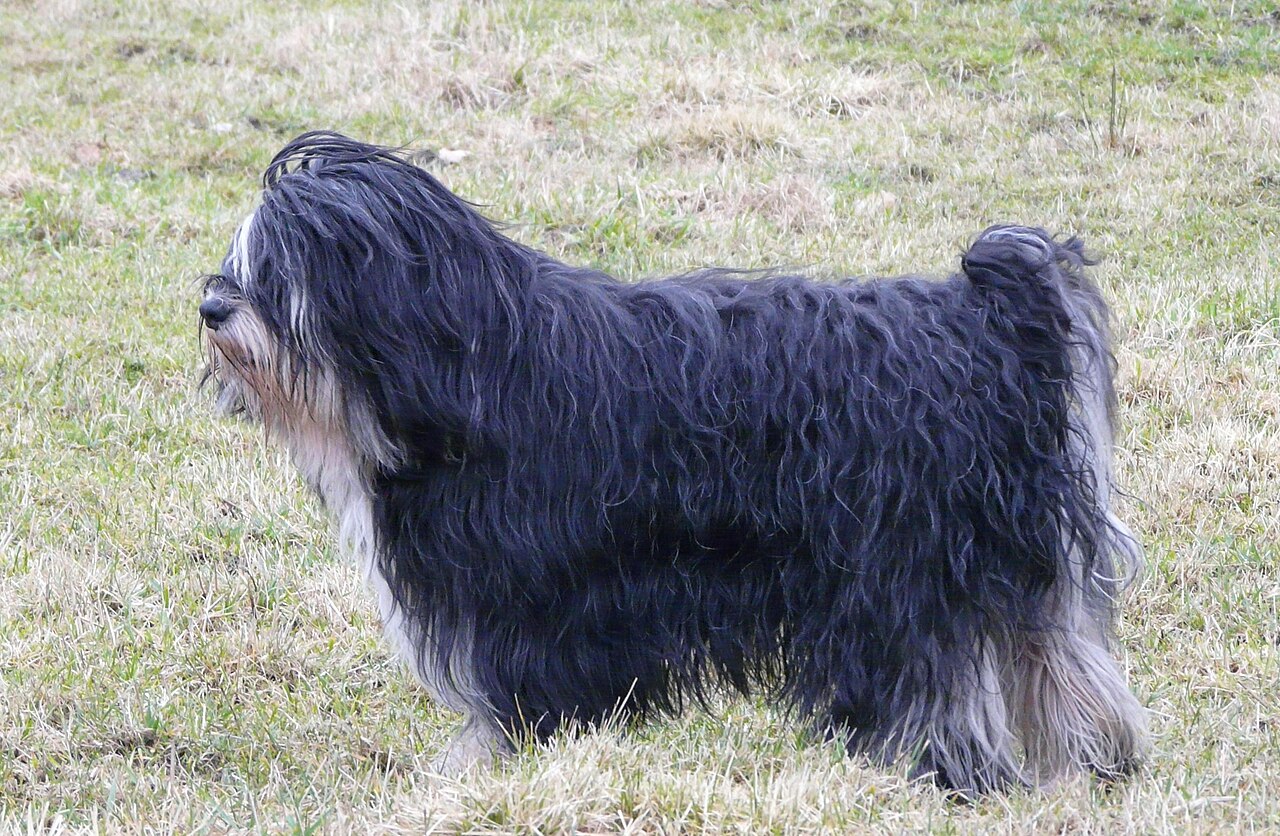
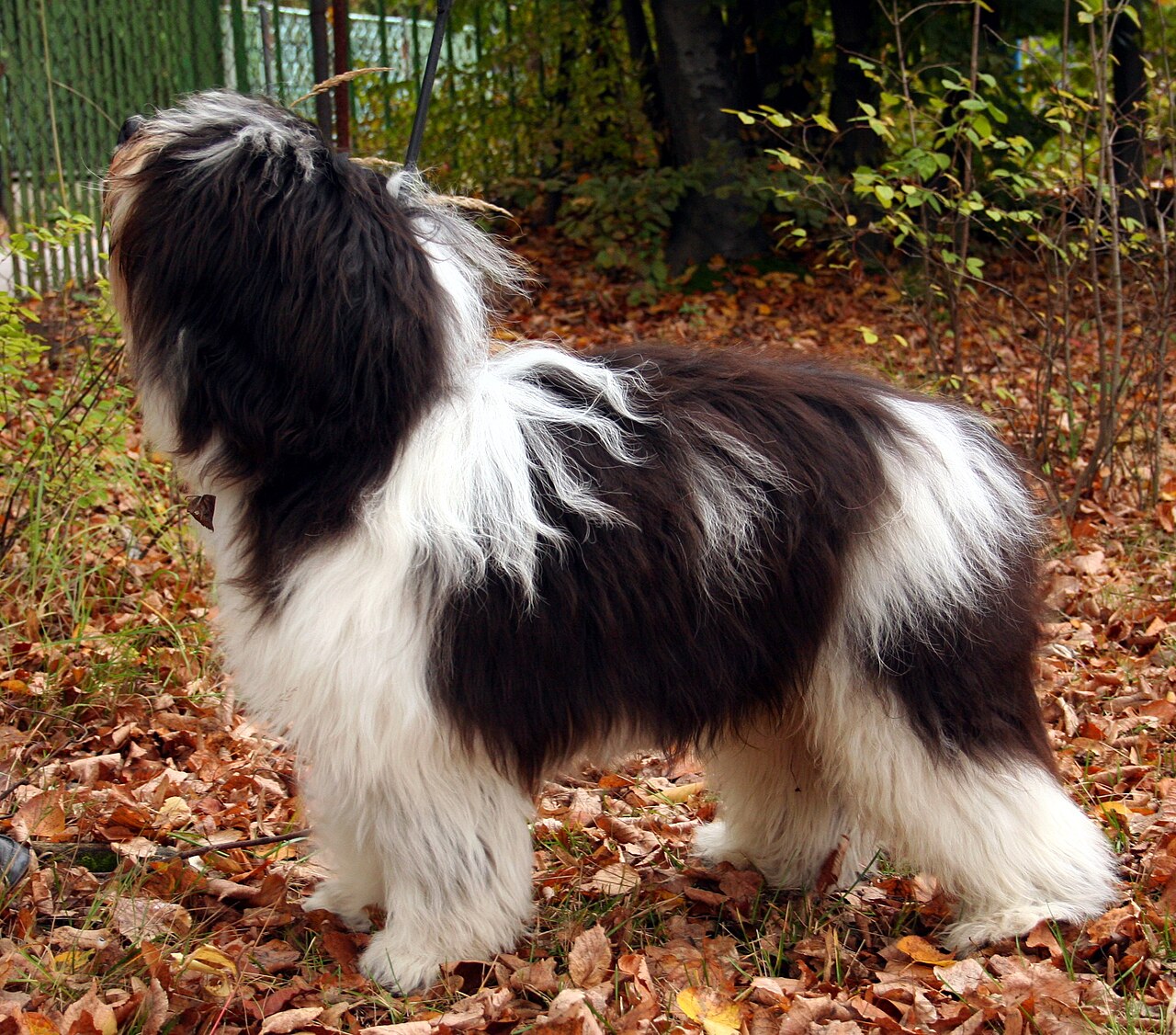
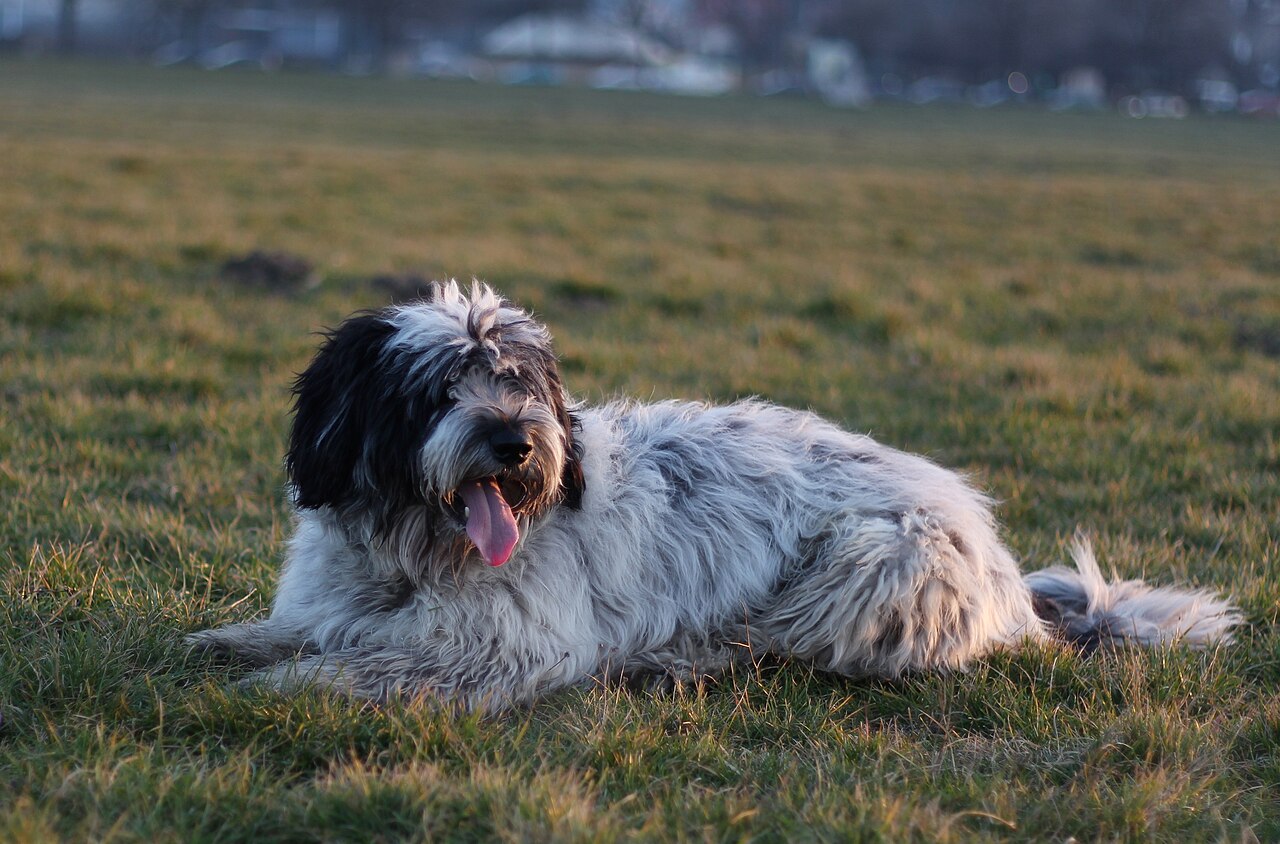
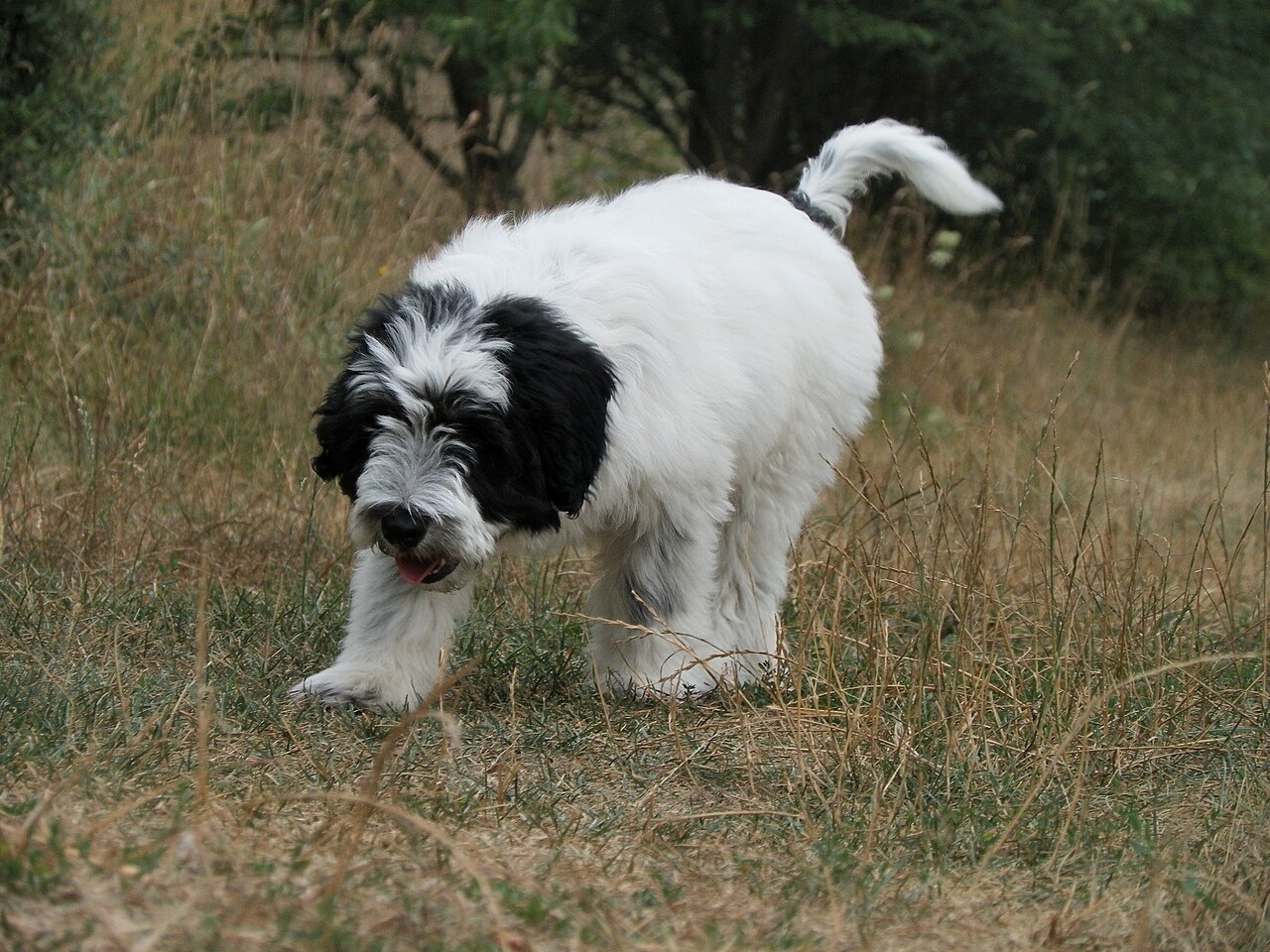
A compact, strong, muscular dog, a little longer than tall (height to length 9 to 10), covered head to toe in a long, thick double coat: a coarse, dense outer coat, straight or slightly wavy, over a soft undercoat. The hair from the forehead falls over the eyes, which gives the head its typical look and makes it seem heavier than it is. The FCI standard accepts all colors and patches; white with gray or black patches is the most familiar look. Some PONs are born with a short tail.
| Males | Females | |
|---|---|---|
| Height | 18-20 in (FCI 45-50 cm) | 17-19 in (FCI 42-47 cm) |
| Weight | 30-50 lbs | 30-50 lbs |
| Lifespan | 12-14 years | 12-14 years |
| Coat | Long, coarse outer coat, soft undercoat | Same |
Height in inches, weight and lifespan are from the AKC breed profile; the FCI standard gives no weight.
Exercise and daily life
The AKC is blunt: the PON is "a high-energy, athletic dog" that needs ample exercise every day; at minimum, a large, fenced-in yard to run in "for at least an hour or two daily." Long walks and hikes, fetch, and dog sports all work; the AKC lists obedience, herding, agility and dock diving. Mental work matters as much as miles. A bored PON invents its own jobs, usually barking at the window or reorganizing the garden.
The FCI standard notes that, moved to city life, it makes a very good companion, and the AKC calls PONs beloved watchdogs of Polish city dwellers. So a townhouse or a larger apartment can work for an owner who really delivers the exercise. Noise is the bigger issue: an alert watchdog in a thin-walled building tests the neighbors' patience. The coat copes with cold and rain far better than with heat.
Training
What works: early socialization, puppy classes, short sessions, food rewards and consistency. For this breed, the AKC says early socialization and puppy training classes "are highly recommended." Harsh methods make a confident dog dig in, and a sensitive one lose trust.
Typical difficulties:
- Barking at every sound and every passer-by. Teach a quiet cue early and reward calm watching.
- Suspicion of visitors. Many friendly people, places and dogs in the first months, and keep it going through adolescence.
- Testing the rules, especially in males during adolescence.
- Herding the family: heel nipping and body blocking of kids and bikes.
Grooming
The AKC calls the coat high-maintenance: a PON "kept in full coat will need to be thoroughly brushed at least once a week". The Dutch breed club puts that weekly session at about an hour to an hour and a half, and advises daily brushing while the puppy coat is growing. Brush down to the skin, layer by layer; one thorough session beats several quick ones. Mats form first behind the ears, under the chin, in the armpits, on the belly and on the inner thighs. A wet PON mats faster, so dry it after rain.
Many pet owners keep their dog in a shorter "puppy" or "summer" clip. The AKC notes that it still needs routine brushing to keep out mats and debris such as grass and weeds. Check the ears weekly and trim the nails. A dog that sheds little in the house still needs all of this, because the loose hair stays in the coat until you brush it out.
Health
The AKC calls PONs generally healthy. The issues breeders screen for:
- Hip dysplasia. The APONC health statement asks for an OFA or PennHIP hip report at 24 months of age or older.
- Inherited eye disease, including a form of progressive retinal atrophy (PRA, rcd4). The club asks for an eye examination by a board-certified veterinary ophthalmologist before breeding; a DNA test for rcd4 is available, and the Dutch breed club makes it mandatory.
- Hypothyroidism. The Dutch club recommends thyroid blood tests (T4 and TSH) for breeding dogs.
APONC asks that all results be recorded with OFA and the CHIC database before a litter is listed on its website. Ask the breeder for the hip and eye results of both parents, and look them up yourself in the OFA database.
Cost
Puppies from AKC breeders usually cost $1,500 to $3,000. There are few breeders and litters, so expect a waiting list, possibly a flight or a long drive. A "PON" offered cheaply and immediately is almost certainly a mix or a puppy mill dog.
Running costs come to roughly $1,200 to $2,000 a year for food, routine vet care, preventives and insurance. Professional grooming, if you use it, adds to that, especially for dogs kept in a clip that needs regular trims.
Who it suits and who it does not
Good match for:
- Active families who want a sturdy, medium-sized dog that is great with kids
- Owners who like a watchdog that announces visitors
- People who enjoy training and dog sports with a smart, independent dog
- Anyone who accepts a weekly hour of brushing or a groomer's bill
Not a match for:
- Apartments with thin walls and neighbours sensitive to barking
- First-time owners who want an easy, eager-to-please dog
- People who want a low-maintenance coat or a dog that ignores strangers
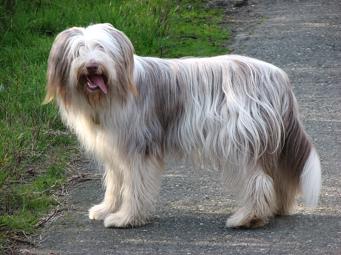
- Hot climates without air conditioning. For a bigger, more outgoing shaggy herder, consider the Bearded Collie; for a smaller, corded Hungarian herder, the Puli; for a softer companion with a similar look, the Tibetan Terrier