Origin and history
The Jindo, officially the Korea Jindo Dog, is a medium-sized hunting spitz from Jindo Island at the south-western tip of the Korean peninsula. There is no written record of its origin. The FCI standard says many authorities agree the breed has lived on the island for thousands of years and stayed pure because the island was hard to reach. In Korea it is called Jindo-kae or Jindo-kyon, "kae" and "kyon" both meaning dog. On the island it hunted water deer and wild boar and guarded the house.
In 1938, after a 1937 study by Tamezo Mori, a Japanese professor at Keijo Imperial University in Seoul, the breed was registered as a natural treasure. In 1962 South Korea designated it Natural Monument No. 53 and placed it under the Cultural Heritage Protection Act. Dogs born on Jindo Island can be officially registered there only after an inspection, and exporting dogs from the protected island population is very difficult. Jindos marched in the opening ceremony of the 1988 Seoul Olympics. The FCI accepted the breed provisionally in 1995 and definitively in 2005: standard No. 334, Group 5 (Spitz and primitive types), Section 5 (Asian Spitz), without working trial.
In the US the Jindo has been in the AKC Foundation Stock Service since January 2008; since 2024 it is listed there as the Korean Jindo Dog. FSS is a record-keeping service, not full recognition: the breed cannot yet earn AKC conformation championships, although the AKC has already assigned it to the Non-Sporting Group. The United Kennel Club has recognized it since January 1, 1998, in its Northern Breed Group. The US breed club is the Korean Jindo Association of America (KJAA), at whose request the AKC adopted that name. Many Jindos in North America and Europe, however, are not show dogs from breeders but rescue dogs from Korea (see Cost).
Temperament and character
The FCI standard describes a dog with "a very strong instinct for hunting", bold, brave, alert and careful, and "extremely faithful to his master". It also says plainly that he is "not fond of other animals, especially males". The AKC adds that he is calm and polite in the house, follows his person from room to room and is not destructive when he gets enough activity. What that means at home:
- It is a one-person dog. The standard calls it "a one-man dog" that accepts a new owner but never forgets the one who raised it. Korea's most famous Jindo, the female Baekgu, was sold in 1993 to a new owner in Daejeon, about 300 km away, escaped and was back with her former owner on the island seven months later. Expect a dog that is loving with its family and cool with everyone else.
- It is reserved with strangers. The AKC notes that being forcibly restrained by a stranger makes a Jindo extremely uncomfortable. Tell your vet and groomer.
- It hunts. High prey drive is the norm. Cats, rabbits and squirrels are prey unless the dog grew up with that particular cat, and even then outdoor cats are at risk.
- It picks its dog friends. The AKC says the Jindo has little patience with rude dogs, is not interested in strange dogs, and that same-sex aggression within the home is "often the norm". If you want two dogs, choose a male and a female.
With children it can do well if it grows up with them and they respect its space. It is a dog for adults who lead it, not a playmate for unsupervised kids.
Size and appearance
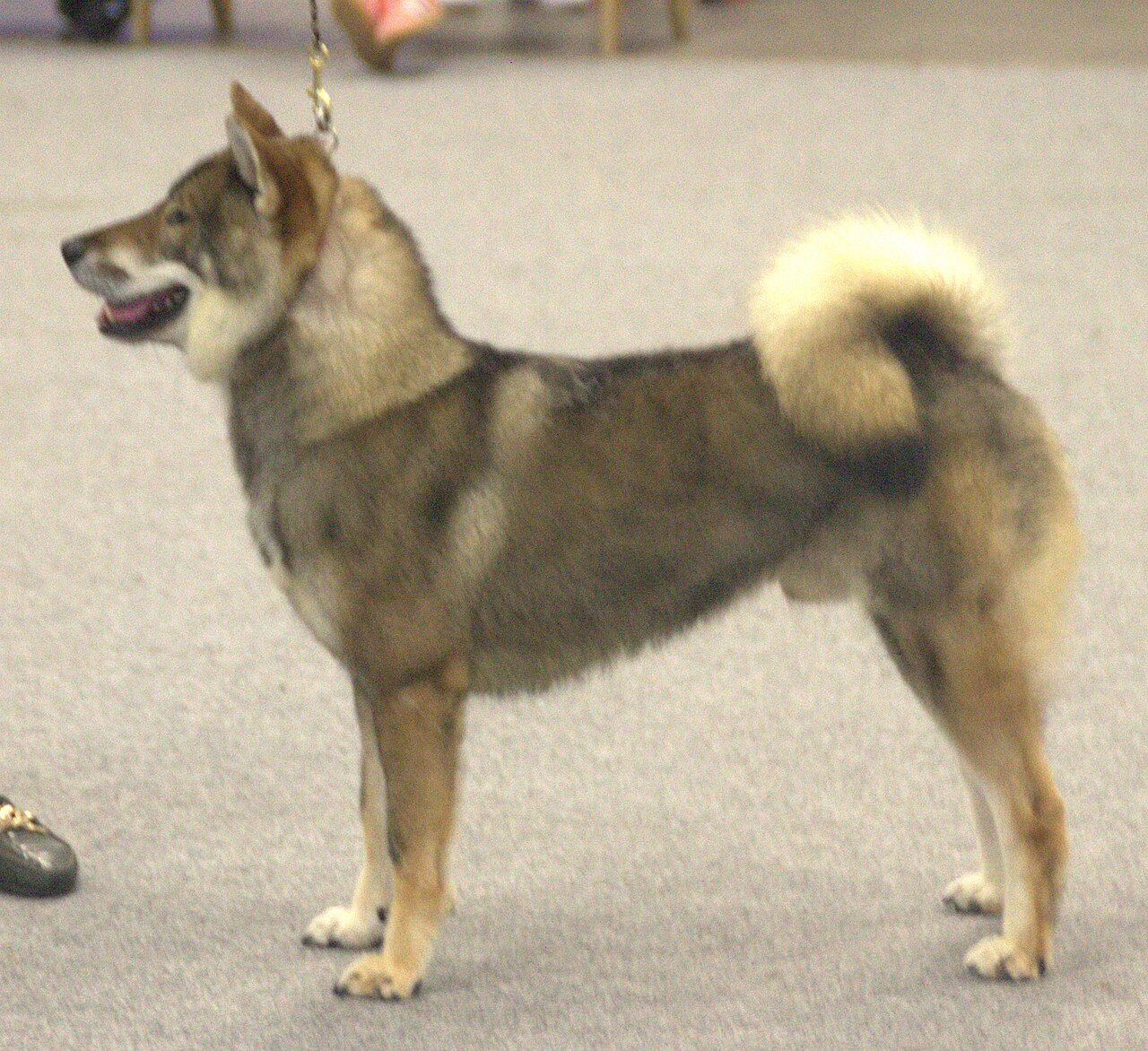
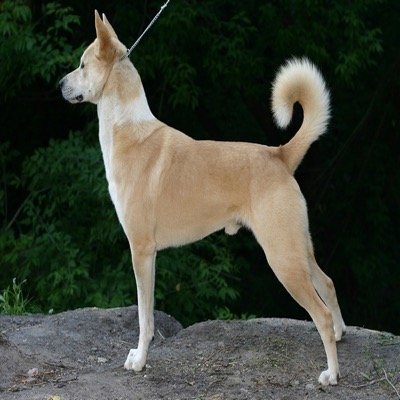
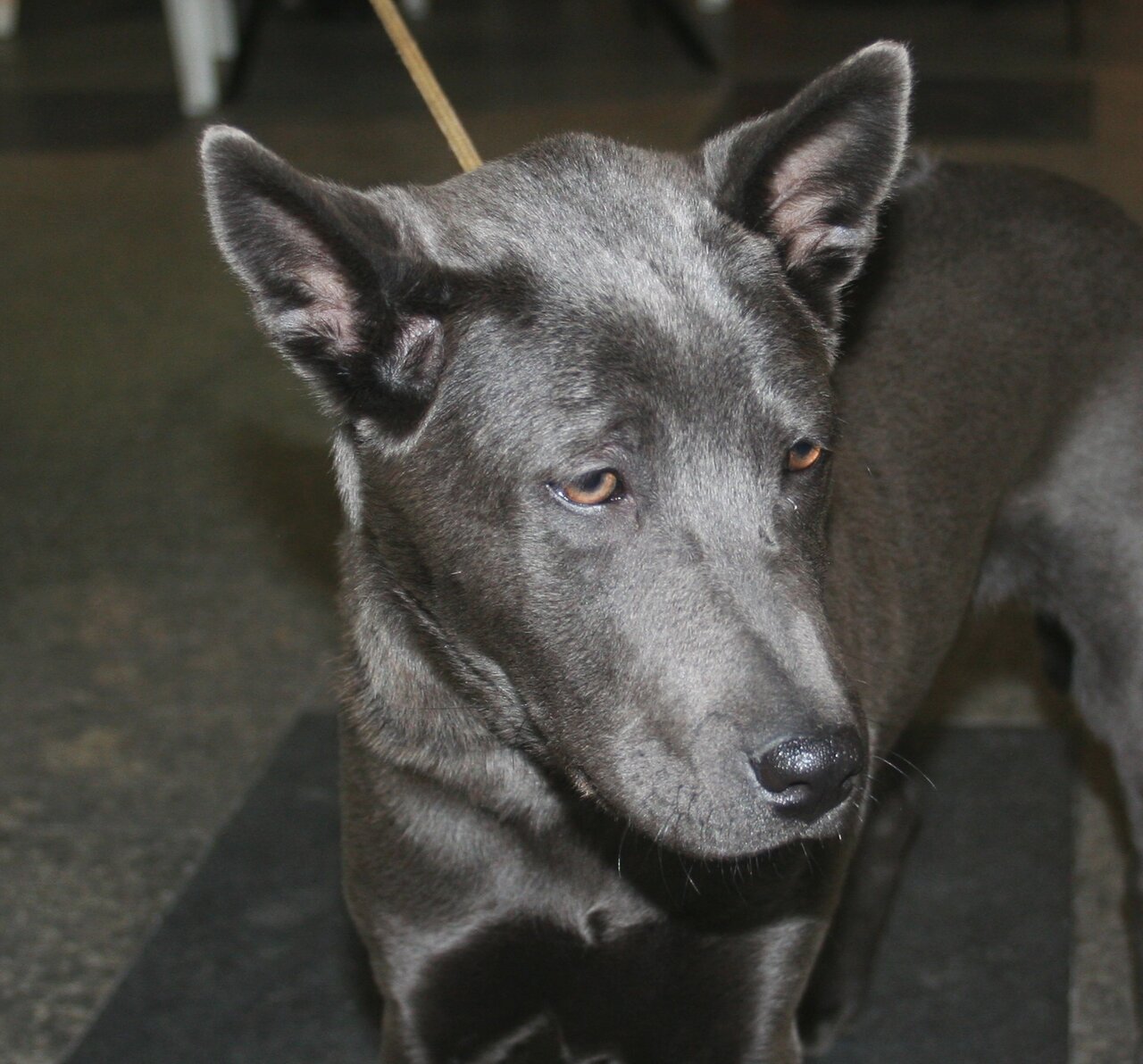
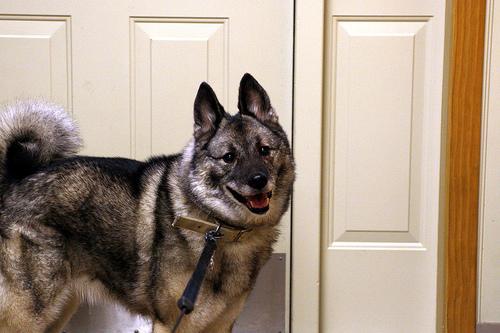
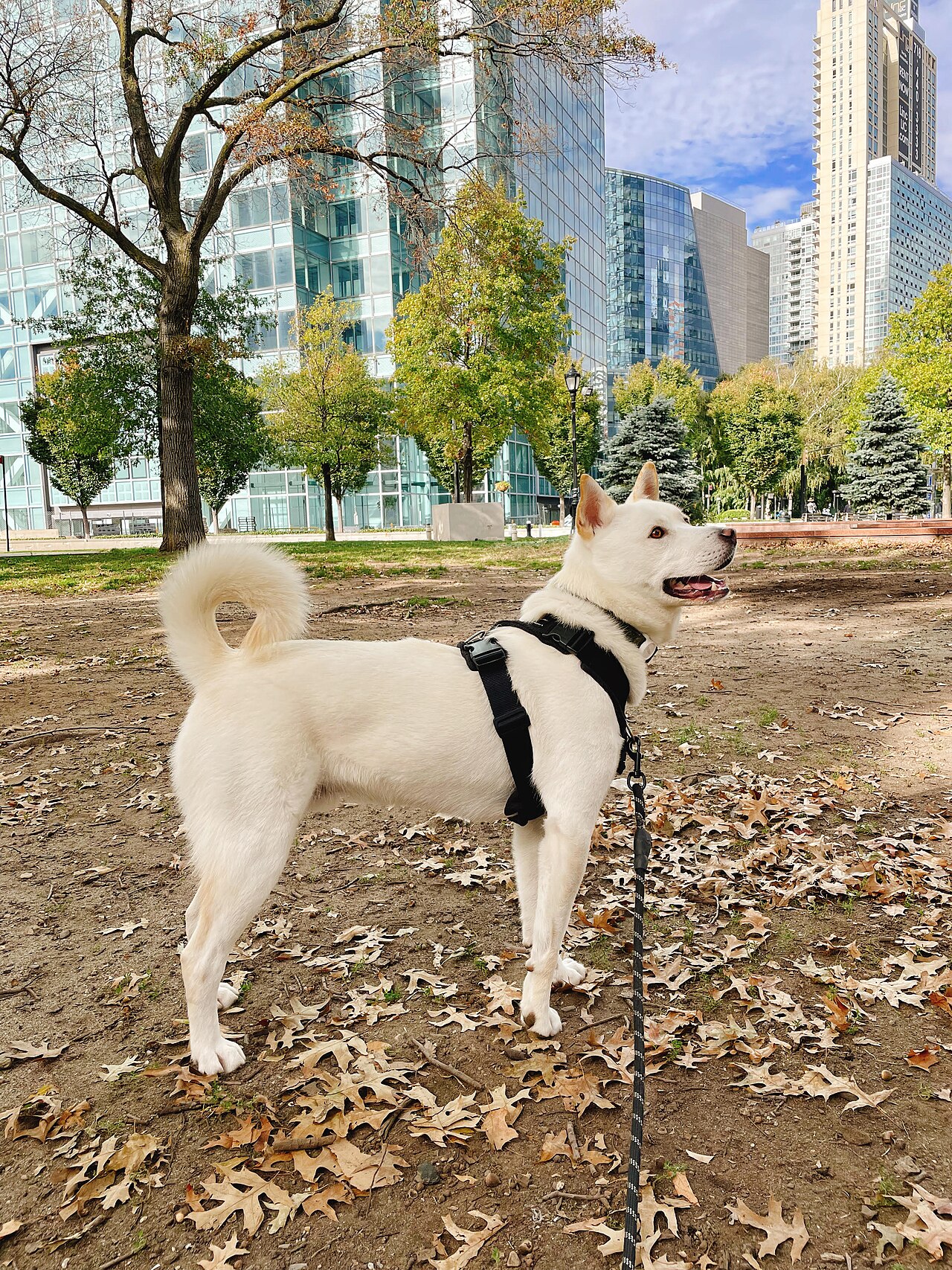
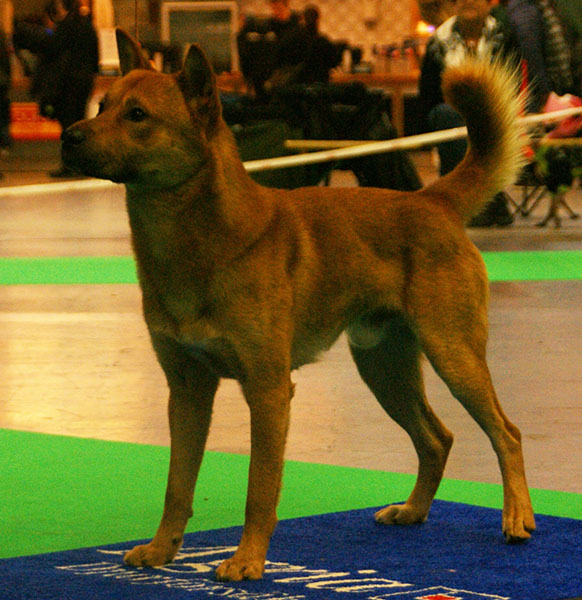
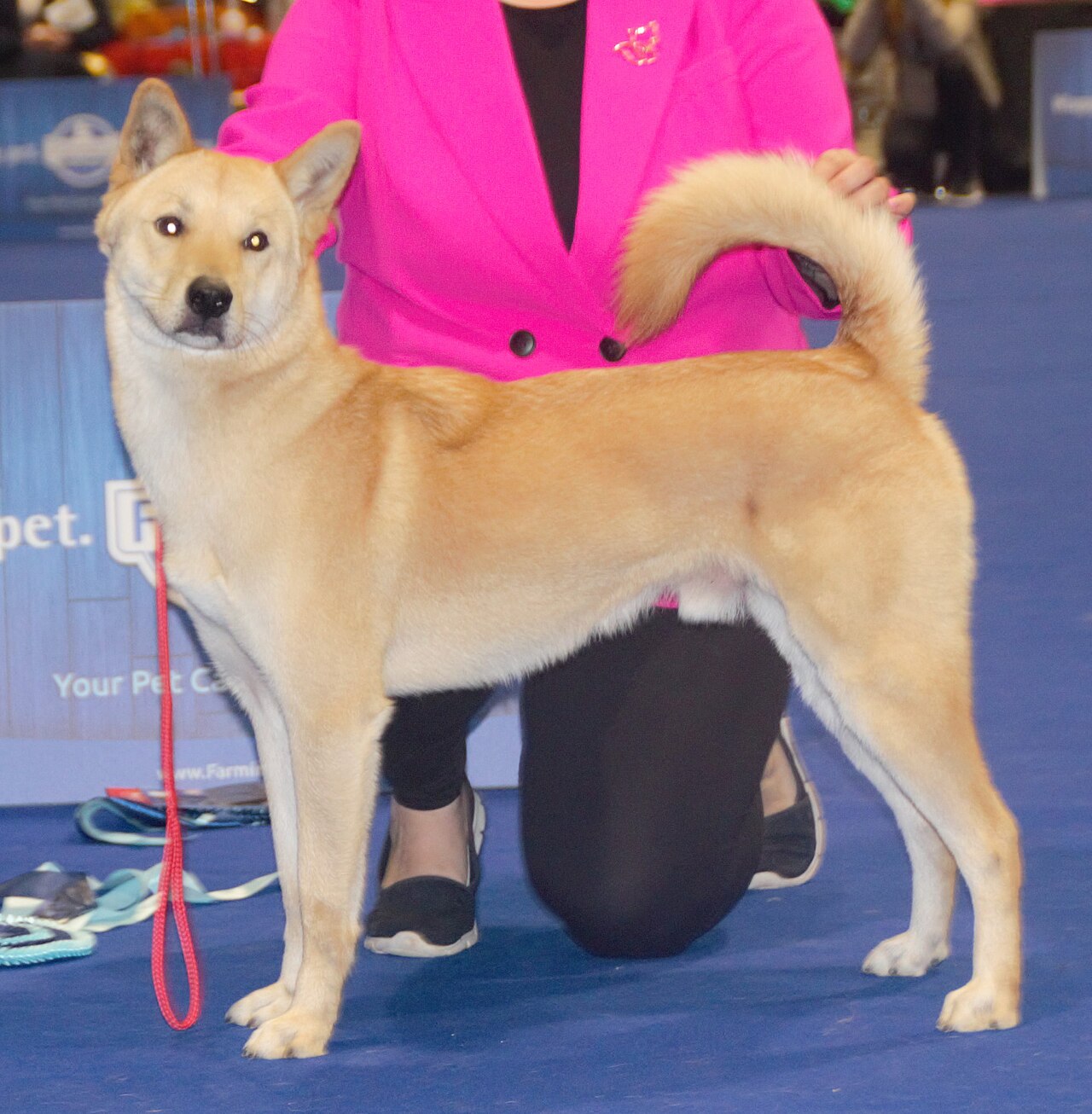
A well-proportioned, medium-sized spitz, slightly longer than tall (10 : 10.5), with thick triangular prick ears that point slightly forward, small almond-shaped dark eyes and a well-feathered tail carried rolled or sickle-shaped over the back. The double coat has a stiff, slightly standing outer coat and a soft, light undercoat. The standard lists six colors: red fawn, white, black, black and tan, wolf gray and brindle. According to the German club DCNH, most Jindos are gold-orange, which is the red fawn of the standard.
| Males | Females | |
|---|---|---|
| Height | 19.5-21.5 in (FCI 50-55 cm) | 17.5-19.5 in (FCI 45-50 cm) |
| Weight | 40-50 lbs (FCI 18-23 kg) | 30-40 lbs (FCI 15-19 kg) |
| Lifespan | 14-15 years | 14-15 years |
| Coat | Stiff outer coat, dense light undercoat | Same |
Centimeters and kilograms are from the FCI standard, inches from the UKC standard, pounds and lifespan from the AKC. Many rescue Jindos and Jindo mixes are larger or smaller than this.
Exercise and daily life
The AKC calls the Jindo a high-energy hunting dog bred to travel many miles, with "impeccable house manners", as long as it gets an active outlet. Plan on at least an hour or two a day: brisk walks, hikes, scent games and, once grown, running. Jindos enjoy lure coursing and agility and have even run on sled dog teams.
Off leash is safe only in a fully fenced area. A Jindo that sees a deer or a cat will go, and the standard credits it with a good sense of direction, not with a good recall. It is a known escape artist: the AKC says Jindos learn to open crates and escape yards, and the breed can jump or climb fences and dig under them. Breed sources advise a solid fence at least 6 feet high, no climbing aids next to it, and a dig guard at the bottom. Double doors or a gate habit at the front door help too.
Training
The Jindo is very smart and learns fast, but it thinks for itself and works for people it trusts. The KJAA, as quoted by PetMD, recommends that owners do the training themselves; a professional can help, but the bond is built by you. Short sessions, food rewards, calm consistency and a lot of socialization in the first year work best. Harsh corrections damage the bond.
Typical difficulties:
- Recall around wildlife. Use a long line, and accept that it may never be reliable off leash in open country.
- Handling. Practice vet-style handling, nail trims and the muzzle from puppyhood, with treats. An adult that has never learned it can react strongly when held by a stranger.
- Other dogs. With its low tolerance for rude dogs, meetings on leash can go wrong fast. Keep distance, reward calm looking, and skip crowded dog parks.
- Food. Jindos are light eaters. The AKC warns that leaving food down all day or mixing treats into the bowl quickly makes them picky.
Grooming
Easy most of the year. A weekly brushing with a slicker or pin brush is enough, the coat repels dirt and the dog has little odor. Twice a year the Jindo blows its coat: the AKC says the whole undercoat comes out over a month or more, so plan on daily brushing with an undercoat rake and a lot of vacuuming then. Do not shave the coat. Trim nails regularly.
Health
The Jindo is generally healthy and long-lived. The AKC says it often reaches 14 years or more and names two issues to be aware of:
- Hypothyroidism. An underactive thyroid that causes weight gain, lethargy and coat problems. It is treated with a daily tablet for life.
- Discoid lupus erythematosus (DLE). An autoimmune skin disease that affects the nose and face, with loss of pigment, crusting and sores. Sun makes it worse.
The AKC also notes that systematic health testing is recent, so the hips and eyes of the breed are not fully known yet. Ask a breeder for the thyroid results of both parents and about hips and eyes. With rescue dogs, have a vet check the new dog fully: dogs from Korean farms and shelters may arrive with skin problems, parasites or untreated injuries, and some have never lived in a house.
Cost
Breeders are rare in North America. Cost guides quote anything from about $500 to over $2,000, and the puppy marketplace Good Dog puts typical breeder prices at $2,000 to $2,250, so a realistic budget is $1,500 to $3,000 for a puppy with UKC or AKC FSS papers from parents with health results, plus travel if the breeder is far away. Start with the KJAA. Cheap "Jindo" puppies without papers are usually mixes.
The far more common route is rescue. South Korea passed a law in January 2024 that bans breeding and slaughtering dogs for meat from February 7, 2027. By September 2026, 1,339 of the 1,537 registered dog meat farms had closed. Groups like Humane World for Animals (formerly Humane Society International) and smaller rescues have flown many farm and shelter dogs to the US, Canada and the UK, and many of them are Jindos or Jindo mixes. US rescues that fly dogs in from Korea list adoption fees of roughly $900 to $1,600, usually including spay or neuter, vaccines, microchip and the flight. Since August 2024, CDC rules require every dog entering the US to be at least 6 months old, microchipped and covered by a CDC Dog Import Form, so a rescue from Korea arrives as an adolescent or adult.
Running costs are moderate: roughly $1,000 to $1,800 a year for food, routine vet care, preventives and insurance. Grooming costs little. Budget once for a fence that really holds.
Who it suits and who it does not
Good match for:
- Experienced owners who know a primitive, independent breed
- Singles and couples who want one deeply loyal, quiet and clean companion
- Hikers and active people with a high, secure fence
- Adopters ready to give a Korean rescue Jindo time, patience and a fenced yard
Not a match for:
- First-time owners or anyone who wants an easy, biddable dog
- Homes with cats, rabbits or other small pets
- Owners who dream of off-leash walks, dog parks or a dog that greets every guest
- Homes that want two dogs of the same sex. If you like the look, the Shiba Inu is smaller, the Shikoku is a close Japanese cousin with similar needs, and the Akita is much bigger; for a friendlier spitz, consider the Finnish Spitz