Origin and history
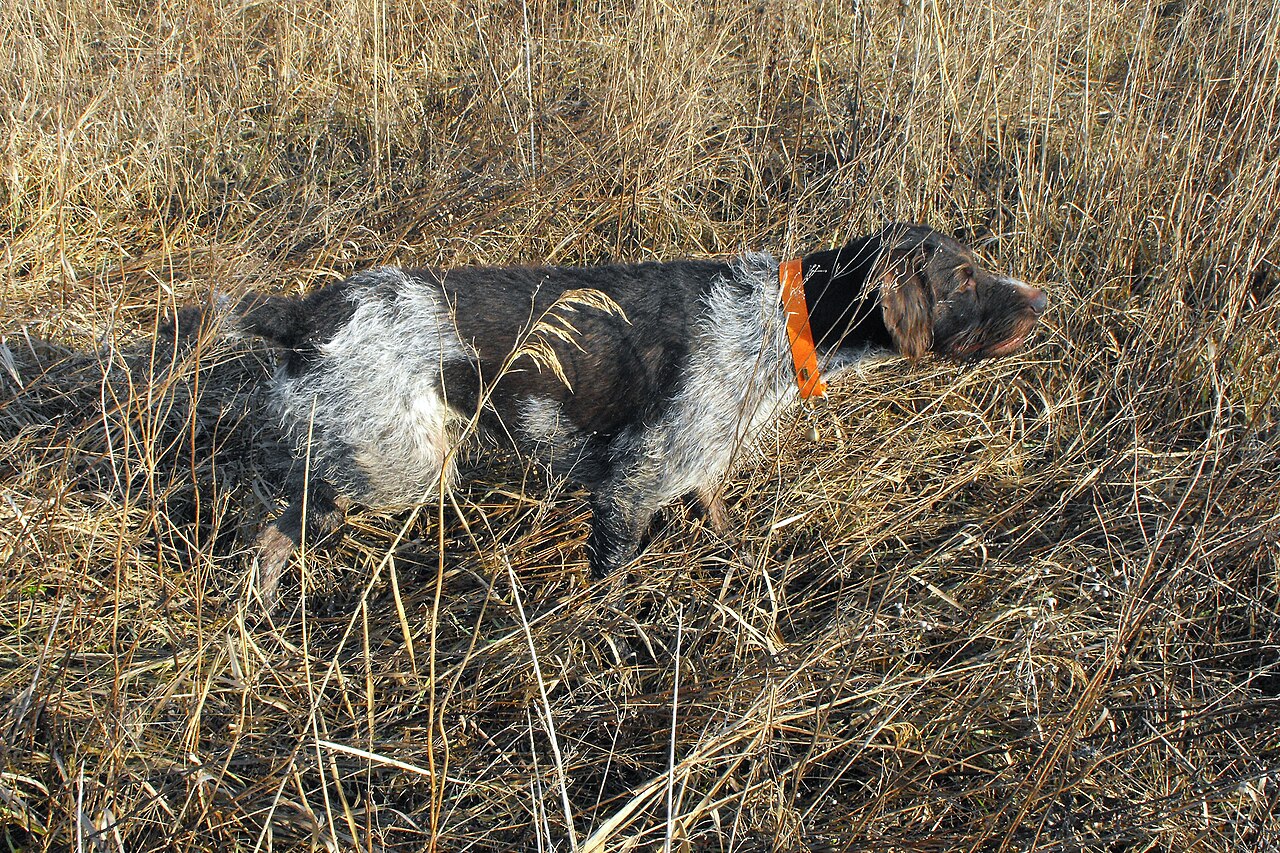
The German Wirehaired Pointer was built in Germany around 1900 as one dog for everything a hunter on foot needs: pointing and retrieving birds, retrieving from cold water, tracking wounded deer and dealing with foxes. In German it is the Deutsch Drahthaar, often shortened to "Drahthaar" or DD.
Breeders combined the best rough-coated types of the time (Pudelpointer, Griffon Korthals, the German Broken-Coated Pointer) with the German Shorthaired Pointer. The Verein Deutsch-Drahthaar (VDD) was founded in 1902 and is still the breed's parent club in Germany. Its principle is breeding for performance first: in the VDD, a dog may only be bred after it has passed hunting tests, documented proof of hardness on predators (Härtenachweis), hip X-rays and a conformation and coat review. The current FCI standard is No. 98, group 7 (pointing dogs, with working trial).
The AKC recognized the breed in 1959 as the German Wirehaired Pointer, in the Sporting Group. In the US there are effectively two breeding programs. AKC dogs can be bred by anyone with registered parents, and health and field testing is voluntary. The VDD-GNA, the North American group of the German club, breeds "Drahthaars" under the German rules, with pedigrees issued by the VDD stud book in Germany, so every breeding dog has passed field and water tests and hip screening. Enthusiasts often treat them as different dogs.
Temperament and character
The FCI standard asks for a dog that is firm, self-controlled and balanced, not gun-shy or game-shy, and neither shy nor aggressive. The AKC standard adds that it is at times aloof but not unfriendly with strangers, and a loyal, affectionate companion that is eager to please.
In daily life that means:
- It is a hunter first. Birds, cats, squirrels and deer trigger strong drive. Many GWPs are not safe off leash near game until well trained, and some never are.
- It is sharper than most pointers. The breed was selected to handle foxes and other predators. That hardness can show up as intolerance of small pets or other dogs, especially in males.
- It bonds closely to its own people and is often reserved or watchful with visitors. It will bark at arrivals, but it is not a guard dog.
- It is good with kids in its own family when raised with them, but a bouncy young GWP knocks toddlers over.
Size and appearance
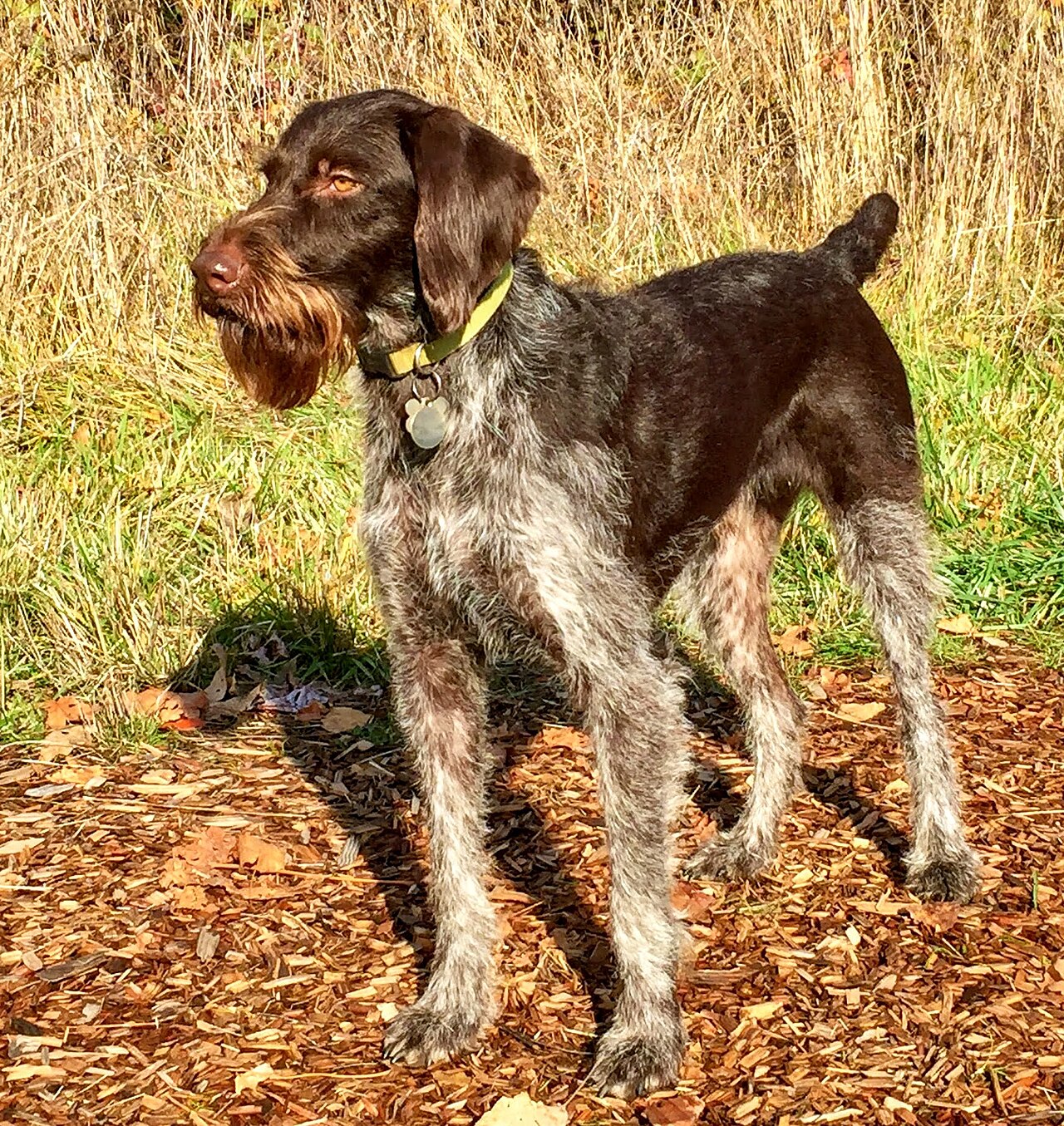
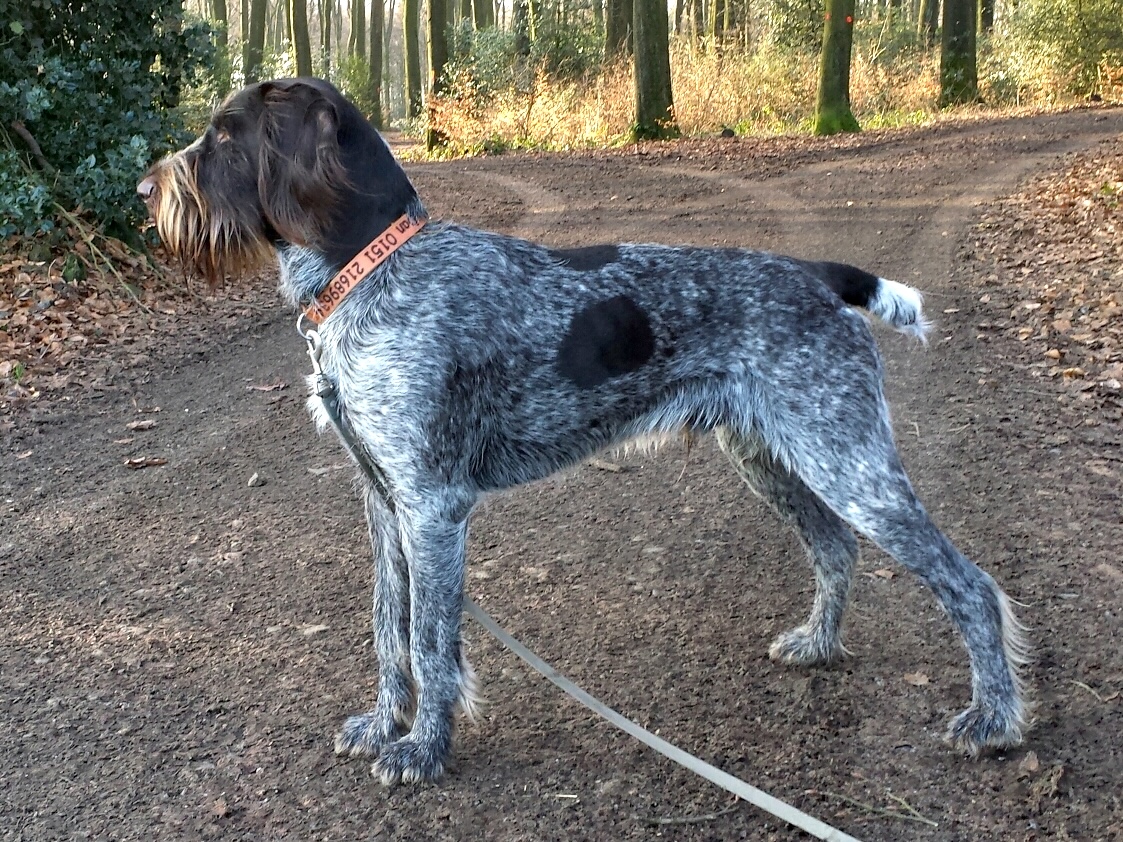
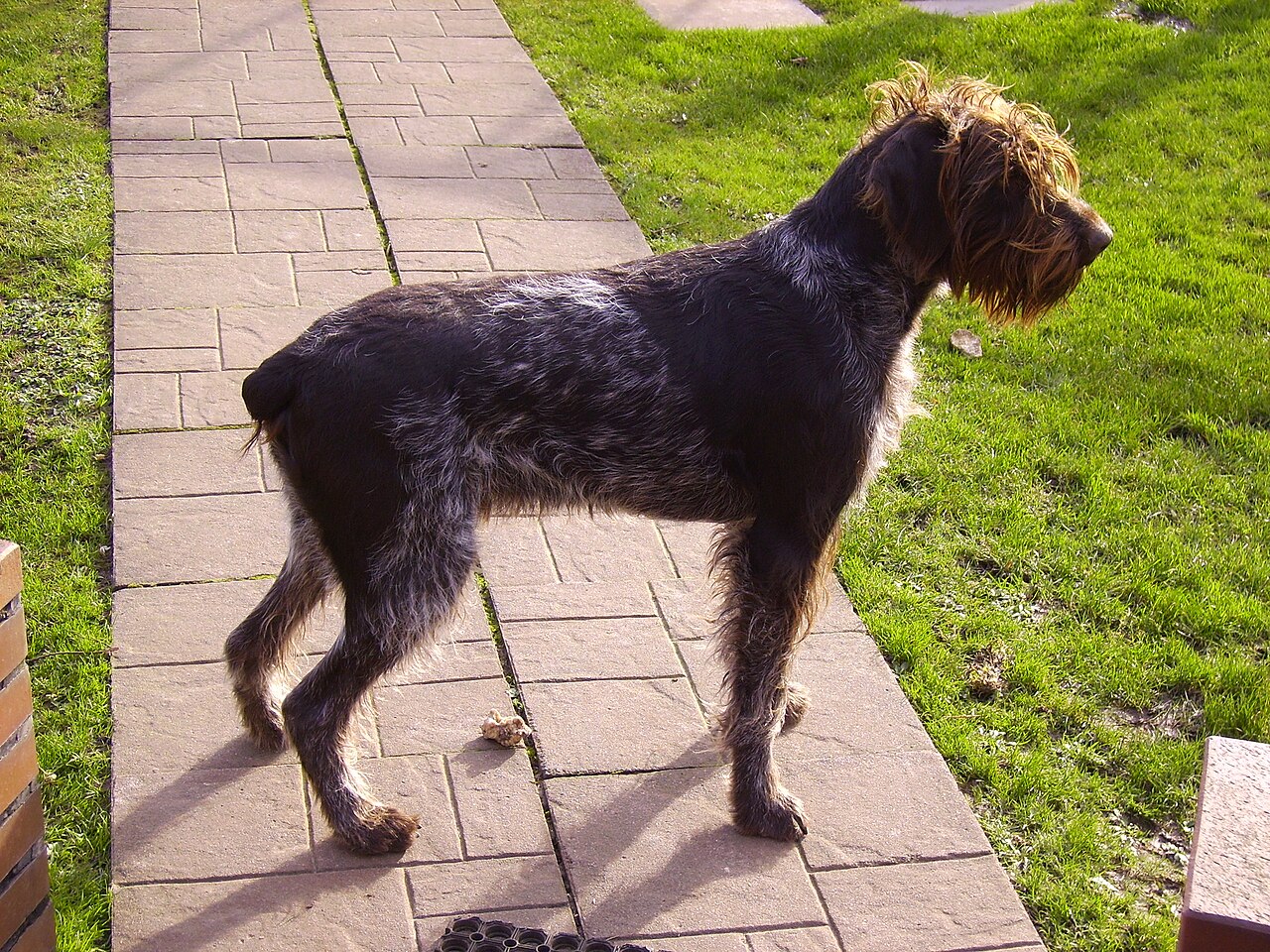
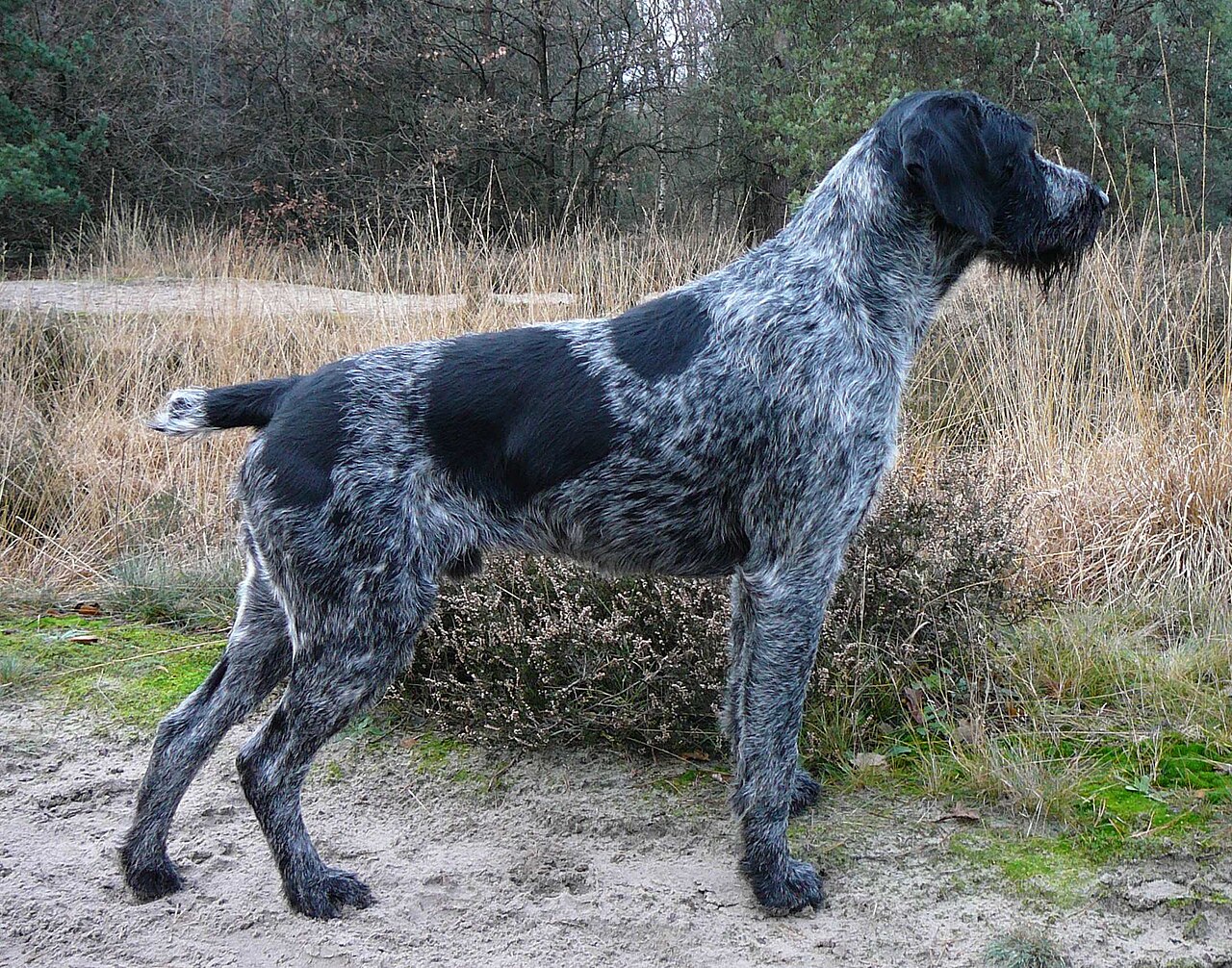
A medium-large, athletic dog with a harsh, wiry outer coat, a dense undercoat in winter, and a distinct beard and eyebrows. Colors are liver and white (roan, ticked or patched), solid liver. The FCI standard also allows black roan, which the AKC standard penalizes severely.
| Males | Females | |
|---|---|---|
| Height | 24-26 in | smaller, not under 22 in |
| Weight | about 55-70 lbs | about 50-60 lbs |
| Lifespan | 12-14 years | 12-14 years |
| Coat | Wire, 1-2 in, weather-resistant | Same |
The AKC standard sets height only; the weights are typical figures for the breed. A 2024 UK study of dog longevity put the breed's median lifespan at about 13 years.
Exercise and daily life
Plan on at least one to two hours a day of real exercise, much of it off-leash running in a safe place, plus work for the nose.
The best outlet is hunting. Hunt tests (AKC, NAVHDA), tracking and long hikes in cool weather are good substitutes.
This is not an apartment dog. A house with a securely fenced yard in a rural or suburban area works best, with a tall fence: a bored GWP climbs and digs. Left alone and underused all day, it tends to become destructive or noisy.
Training
The breed learns fast and loves to work, but it is independent and stubborn in adolescence. What works: early socialization with people, dogs and household pets, a reliable recall trained long before the dog is near game, and calm, consistent handling. Harsh corrections tend to shut down a young dog or make it defiant.
Typical problems:
- Chasing and ignoring the recall once the nose takes over.
- Predatory behavior toward cats and small pets if not managed from day one.
- Same-sex aggression in some adult males.
Grooming
Low effort for a wire coat. Brush once or twice a week, more during seasonal shedding. Many owners hand-strip dead hair a couple of times a year to keep the coat tight and harsh. Clipping softens the coat and is not recommended. Check ears, feet and the beard after time in the field. Shedding is light to moderate.
Health
A generally sturdy breed. Conditions to know:
- Hip and elbow dysplasia. The VDD only breeds from dogs with hips graded A or B; in the US, ask for OFA or PennHIP results for both parents.
- Von Willebrand disease (type II). An inherited bleeding disorder described in the breed in a 1996 veterinary study. A DNA test exists, and it is part of the breed's CHIC requirements.
- Eye problems, mainly entropion (rolled-in eyelids, a disqualifying fault in the FCI standard); an annual eye exam is part of CHIC.
- Hypothyroidism.
- Bloat (gastric torsion), as in all deep-chested breeds.
The GWPCA's CHIC program asks for hip and elbow evaluations, a thyroid test, an eye exam and a vWD DNA test. Note that a CHIC number only shows the tests were done, not that the results were good.
Cost
Puppies from good breeders usually cost $1,000 to $2,500. Litters from parents with field titles, or VDD-GNA litters, tend to sit at the upper end. Running costs are roughly $1,200 to $2,000 a year: food for a 50-70 lb active dog, routine vet care, preventives, insurance and training. Hunt test fees and field gear come on top.
Who it suits and who it does not
Good match for:
- Hunters who want one dog for upland birds, waterfowl and tracking
- Very active owners with a fenced yard and access to open land
- People who enjoy training and want to do hunt tests or tracking
Not a match for:
- Apartments and city life
- Owners who mostly want a calm house dog or have little time
- Homes with cats, rabbits or poultry the dog cannot be kept away from
- First-time owners who want an easy, very social dog. Look at a Vizsla for a softer pointer, or the Wirehaired Pointing Griffon for a wire coat with a gentler temperament. A Weimaraner needs just as much exercise.