Origin and history
The Australian Terrier was the first breed developed in Australia, and one of the few terriers created outside Britain. The FCI standard traces it to the "Broken Coated Terriers" of Tasmania, New South Wales and Victoria, a type that free settlers around Campbelltown and Ross in Tasmania were already breeding in the early 1800s: rough-coated dogs with a blue body and tan markings, about ten pounds, known as good watchdogs. Skye, Scottish and Dandie Dinmont Terriers are named as the main ingredients, with Yorkshire Terrier added at intervals. The AKC adds Cairn and Norwich to the list. The Silky Terrier comes from the same stock.
On farms and at mines in rough country, these small dogs killed rats, mice and snakes, warned of visitors and lived in the house with their people. The AKC calls them "fearless all-purpose exterminators" that were also "eternally devoted pets when the day's work was done".
The first breed club was founded in Melbourne in 1887, and a standard followed. According to the AKC, it was the first native breed officially recognized in Australia and the first Australian breed recognized abroad. The Kennel Club (UK) gave it breed status in 1933, the FCI accepted it in 1963, and the AKC recognized it in 1960 as a member of the Terrier Group. The parent club is the Australian Terrier Club of America (ATCA). The breed is uncommon in the US: it ranked 150th in AKC registrations in 2025.
Temperament and character
The AKC sums it up as "courageous, affectionate, spirited", a dog that "approaches life with plenty of the old-time terrier curiosity and grit". The FCI standard calls it "essentially a working terrier" whose "loyalty and even disposition" make it a good companion. In daily life:
- It bonds closely with its family. The AKC says it is people-oriented and "won't be happy if left alone too much". It rates it 4 out of 5 for affection and 5 out of 5 with young children.
- It is a real terrier. The urge to chase small animals "has never left them", says the AKC. Hamsters, rats, rabbits and pet birds are prey, and a strange cat in the yard is a target.
- It is fairly good with other dogs. The AKC gives 3 out of 5 and advises care when adding another dog to the household.
- It is an alert watchdog. The AKC rates it 4 out of 5 as a watchdog and 3 out of 5 for barking: it announces visitors but is not a nonstop barker.
It is a big dog in a small body: confident, curious and tough, but also cuddly at home.
Size and appearance
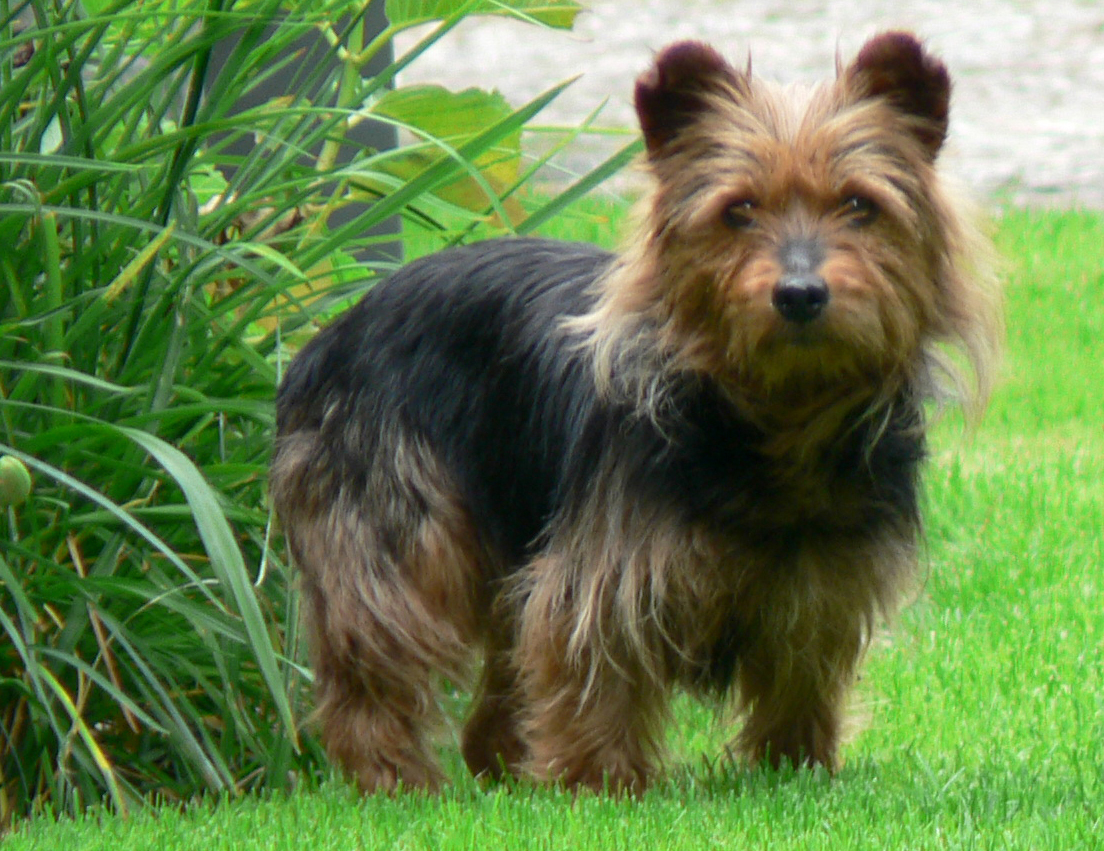
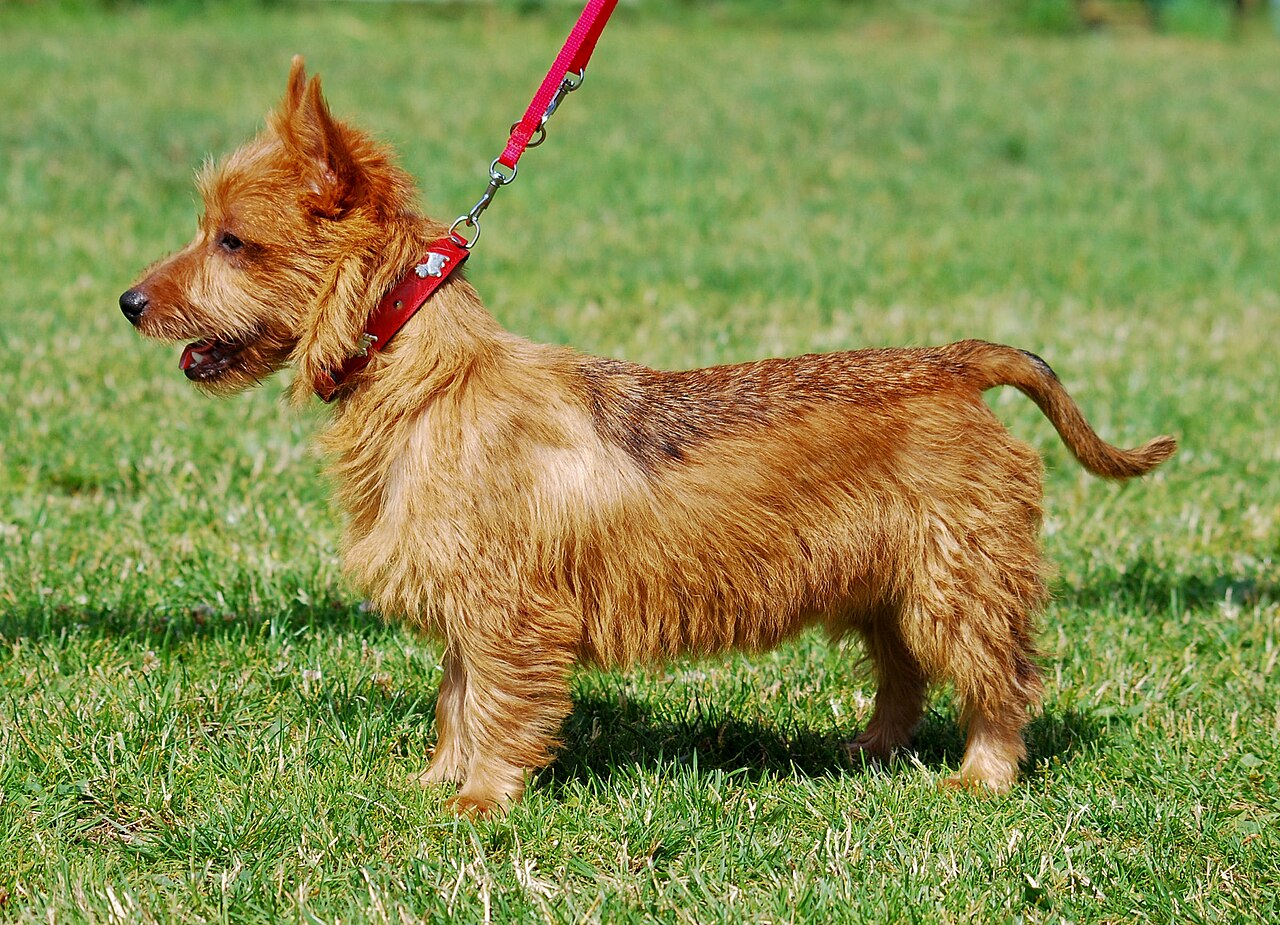
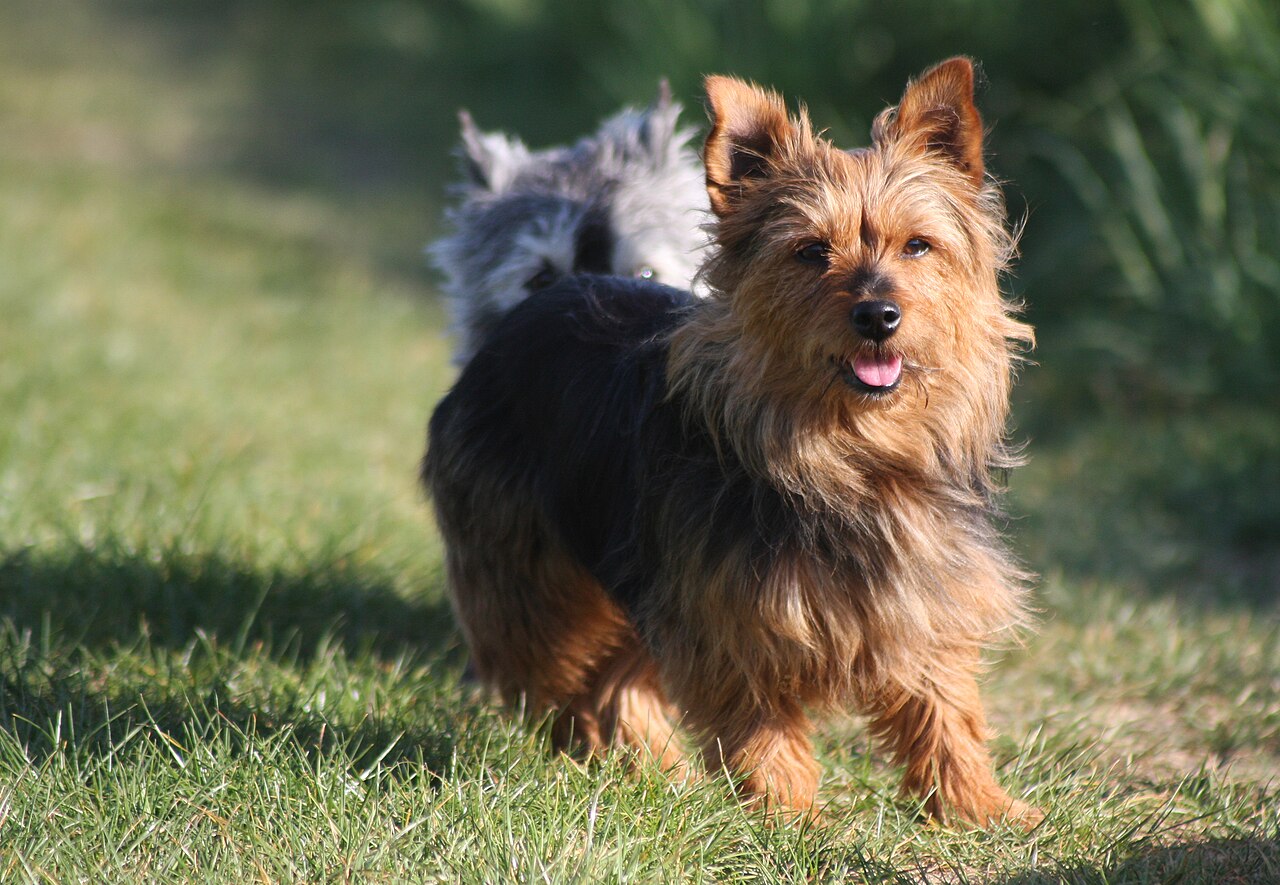
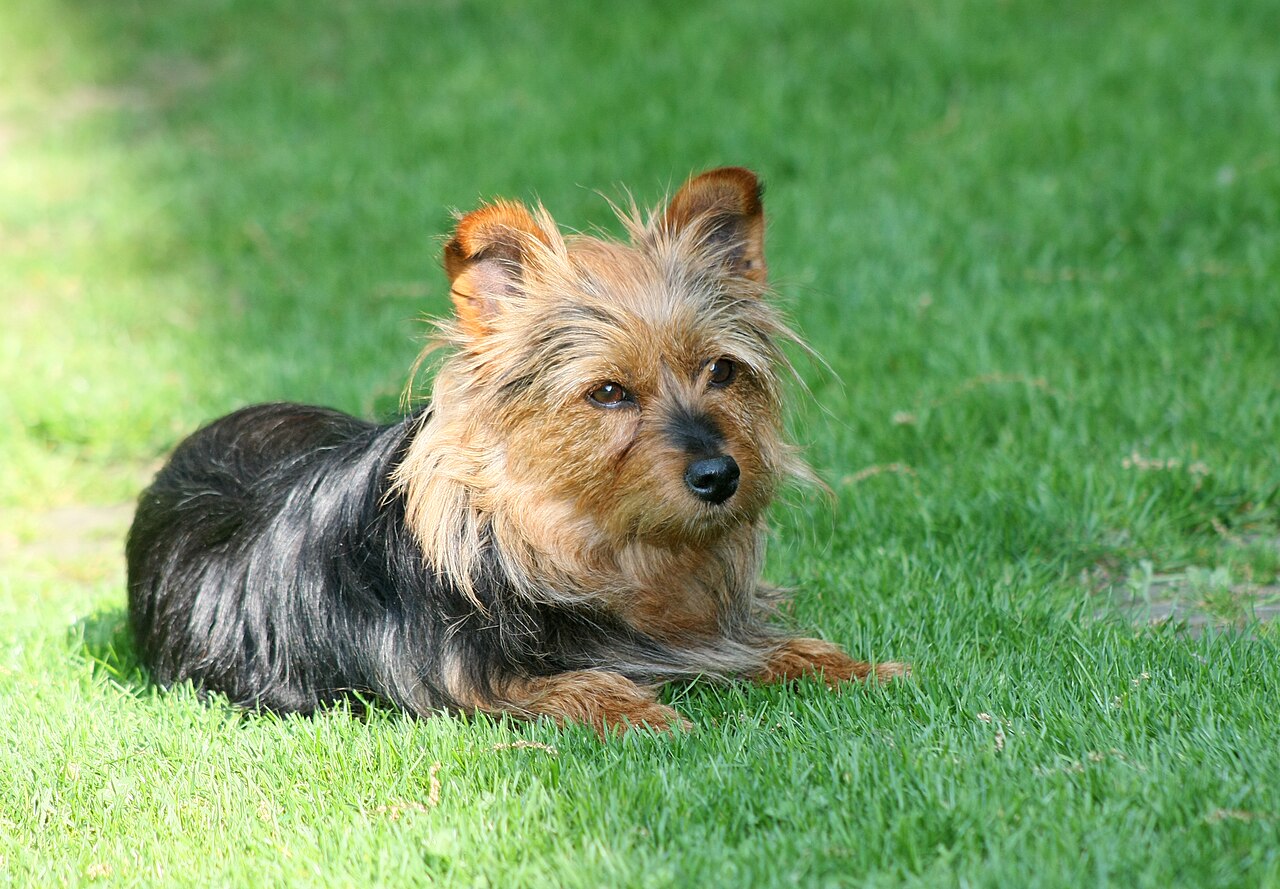
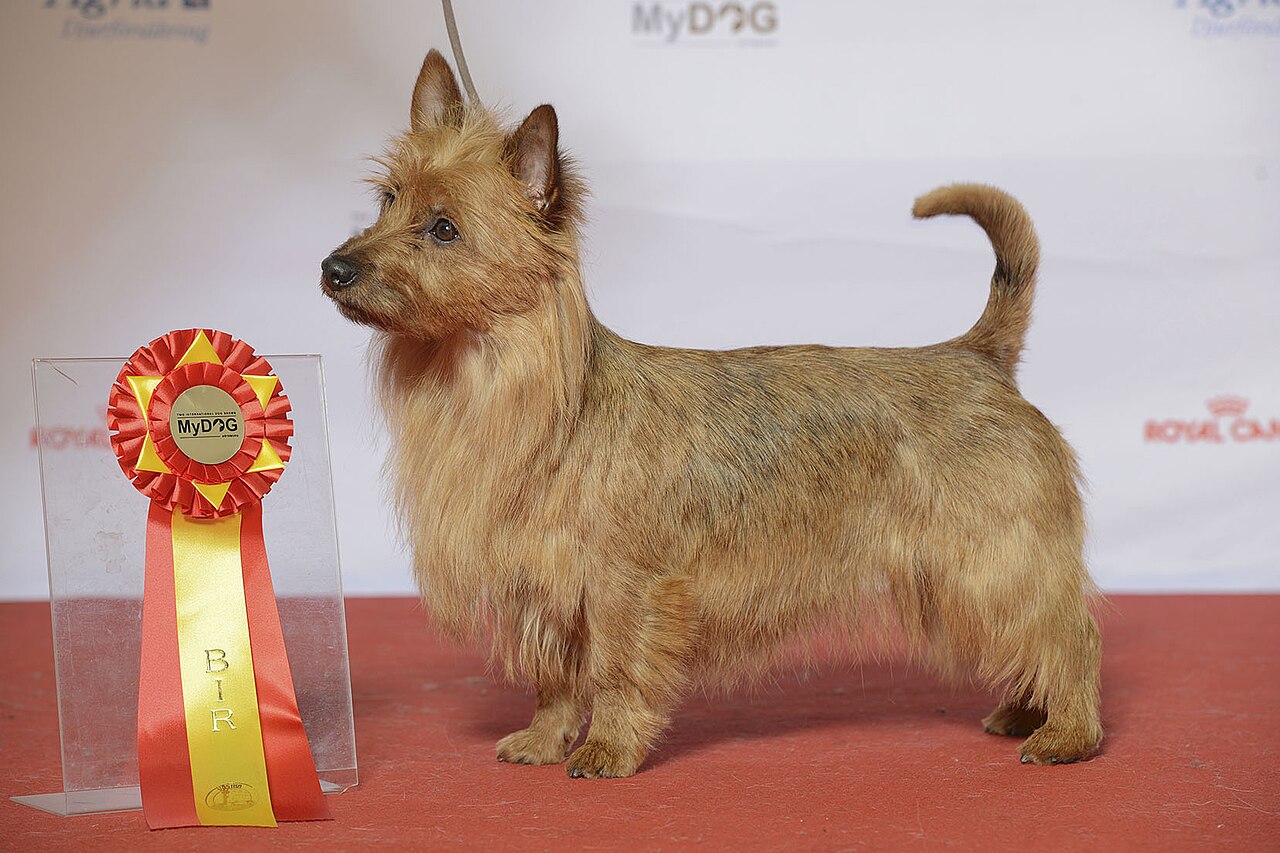
A sturdy, low-set terrier, rather long in proportion to height, with a long strong head, small erect pointed ears and dark eyes. The coat is the trademark: a harsh, straight topcoat about 2.5 inches (6 cm) long over a short soft undercoat, a ruff around the neck that runs into an apron on the chest, and a soft, lighter topknot on the head. The muzzle, lower legs and feet are short-haired.
Two color types are allowed. Blue and tan: a blue, steel blue or dark grey-blue body with rich tan on the face, ears, legs and underside, and a blue or silver topknot. Solid red or sandy, ideally with no dark shading. White on the chest or feet is a fault.
| FCI standard | AKC | |
|---|---|---|
| Height | about 10 in (25 cm), bitches slightly less | 10-11 in |
| Weight | about 14 lbs (6.5 kg) for dogs, bitches slightly less | 15-20 lbs |
| Lifespan | about 11-15 years | 11-15 years |
| Coat | Harsh, straight, about 2.5 in, soft undercoat | Same |
The AKC gives a life expectancy of 11 to 15 years. A 2002 ATCA survey found an average of about 11 years, and a UK survey of breed club members a median of just over 12. In the US the tail is usually docked; the FCI standard accepts a docked or a natural tail.
Exercise and daily life
The AKC rates the Aussie 3 out of 5 for energy and 3 out of 5 for mental stimulation needs, but warns that terriers in general have a high energy level and that boredom leads to unwanted behavior. Plan on daily walks plus play sessions. The AKC rates it 4 out of 5 for adaptability and says it adjusts to almost any home, including an apartment, as long as it gets enough exercise for body and brain.
Off-leash freedom is the problem. The AKC is clear that an Aussie "should never run loose": it may chase a cat or squirrel so far that it cannot find its way back. Walks should be on leash and play in a securely fenced yard. Many Aussies enjoy dog sports, and the ATCA showcases them in agility, earthdog, barn hunt, tracking, nose work, rally, obedience, Fast CAT and dock diving.
Training
The AKC rates the Aussie 4 out of 5 for trainability and calls it a quick study, but also an independent thinker that needs a "firm, consistent approach". It gets bored with routine, so sessions will be short "whether the owner wants them to be or not". Food, toys and praise work best. Puppy classes and basic obedience are strongly recommended.
Typical difficulties:
- Recall around prey. Use a long line, and do not trust the recall when a cat or rabbit runs.
- Digging. It was bred to go after vermin; give it a digging spot and check the fence.
- Alert barking. Thank it once, call it away and reward quiet.
- Meeting other dogs. Introduce new dogs carefully and keep greetings short with big, rough dogs.
Grooming
Easy, but not zero. The AKC says the harsh, weatherproof coat repels dirt and mud, and a quick brushing once a week is usually enough. Long hairs growing in front of and between the eyes can irritate them; they are easily plucked out with fingers or tweezers. Hair on the ears is kept short, and loose dead hair is plucked from time to time to keep the outline tidy. The FCI standard calls for an untrimmed coat, so it is never clipped.
Bathe only when needed. The AKC warns that shampoo softens the harsh coat, which then loses its dirt-shedding ability, and too much bathing dries the skin. Shedding is minimal (AKC: 1 out of 5), but the Aussie is not on the AKC's list of hypoallergenic breeds. Trim nails regularly and check the ears.
Health
The AKC describes Australian Terriers as "generally quite healthy" and a "very sturdy breed". Conditions found in the breed:
- Luxating patella (slipping kneecap), common in small breeds.
- Legg-Calve-Perthes disease, a hip problem that shows up as limping and pain in young dogs.
- Diabetes. It was the most frequently reported condition in the ATCA's 2002 health survey, so watch for heavy drinking and frequent urination.
- Allergies of the skin and digestive tract, and thyroid disease, which is why breeding dogs are tested for it.
- Weight gain. The AKC warns that some get fat easily, so measure food and count treats.
The ATCA recommends three tests for breeding dogs as part of the CHIC program: patellas, thyroid and an eye exam by a veterinary ophthalmologist. Ask for the results for both parents and check them in the OFA database.
Cost
Australian Terriers are rare, so expect a waiting list. Plan for roughly $1,000 to $2,000 for a puppy: price guides give $1,000 to $1,800, and puppies from show breeders with health-tested parents can cost more. The ATCA breeder referral and puppy listings are the best place to start, and its rescue program places adult dogs.
Running costs are about $800 to $1,400 a year for food, routine vet care, preventives and the odd grooming visit; pet insurance adds to that. A small dog eats little, but budget for a secure fence and training classes. Most states require a rabies vaccination, and many cities a dog license.
Who it suits and who it does not
Good match for:
- Families with kids who want a sturdy small dog rather than a fragile toy
- Apartment and city dwellers who walk their dog every day
- Owners who want a low-maintenance coat that sheds little
- People who want a watchdog that does not bark all day
Not a match for:
- Homes with hamsters, rats, rabbits or pet birds
- People who want off-leash walks in open country
- Owners who are away all day and leave the dog alone
- People who want an always-obedient dog that never argues. For a similar Australian dog with a silky coat, try the Silky Terrier; for a classic Scottish working terrier, the Cairn Terrier; for a small terrier that is a little easier to live with, the Norwich Terrier