Origin and history
The Aussiedoodle is a cross between the Australian Shepherd and the Poodle. It appeared in North America as part of the wider "doodle" trend; Chewy and PetMD date the first deliberate litters to around the 1990s, but no founding breeder or kennel is documented. The goal was the Aussie's brains and athleticism with the Poodle's low-shedding coat.
The Aussiedoodle is not a breed in the kennel club sense. The AKC and UKC do not register it, there is no breed standard and no parent club that sets health-testing rules. Litters are labelled by generation:
- F1: Australian Shepherd x Poodle, 50/50, the most variable coat
- F1b: F1 Aussiedoodle crossed back to a Poodle, roughly 75% Poodle, usually curlier and lower shedding
- F2 / multigen: Aussiedoodle x Aussiedoodle, more variable unless both parents are coat- and colour-tested
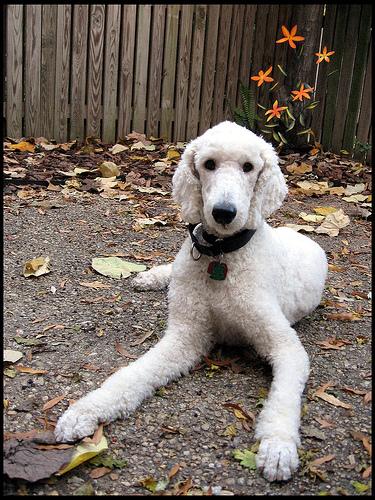
Size depends on the Poodle used: Standard, Miniature or Toy.
Temperament and character
Expect a very smart, very busy dog. Two working breeds go into the mix: a herding dog bred to work livestock all day and a Poodle originally used as a water retriever. Most Aussiedoodles are affectionate with their family, playful well into adulthood and quick to read people.
Typical behaviours owners should expect:
- Herding instinct. Many try to round up children, other pets or joggers by circling, staring or nipping at heels. This needs redirecting early, not punishing.
- Boredom problems. Without daily work they invent their own: chewing, digging, barking, fence running.
- Some reserve with strangers inherited from the Aussie side; early socialisation matters.
- A strong bond to one or two people and little patience for long days alone.
Puppies vary a lot. One leans towards the intense, watchful Aussie, a littermate towards the bouncier Poodle. Meeting both parents tells you more than any label.
Size and appearance
There is no standard. The figures below are typical ranges from veterinary-reviewed and pet-industry sources, and they overlap.
| Size | Weight | Height | Lifespan (estimate) |
|---|---|---|---|
| Miniature | 25-45 lbs (11-20 kg) | 14-18 in (36-46 cm) | 10-15 years |
| Standard | 45-70 lbs (20-32 kg) | 18-23 in (46-58 cm) | 10-15 years |
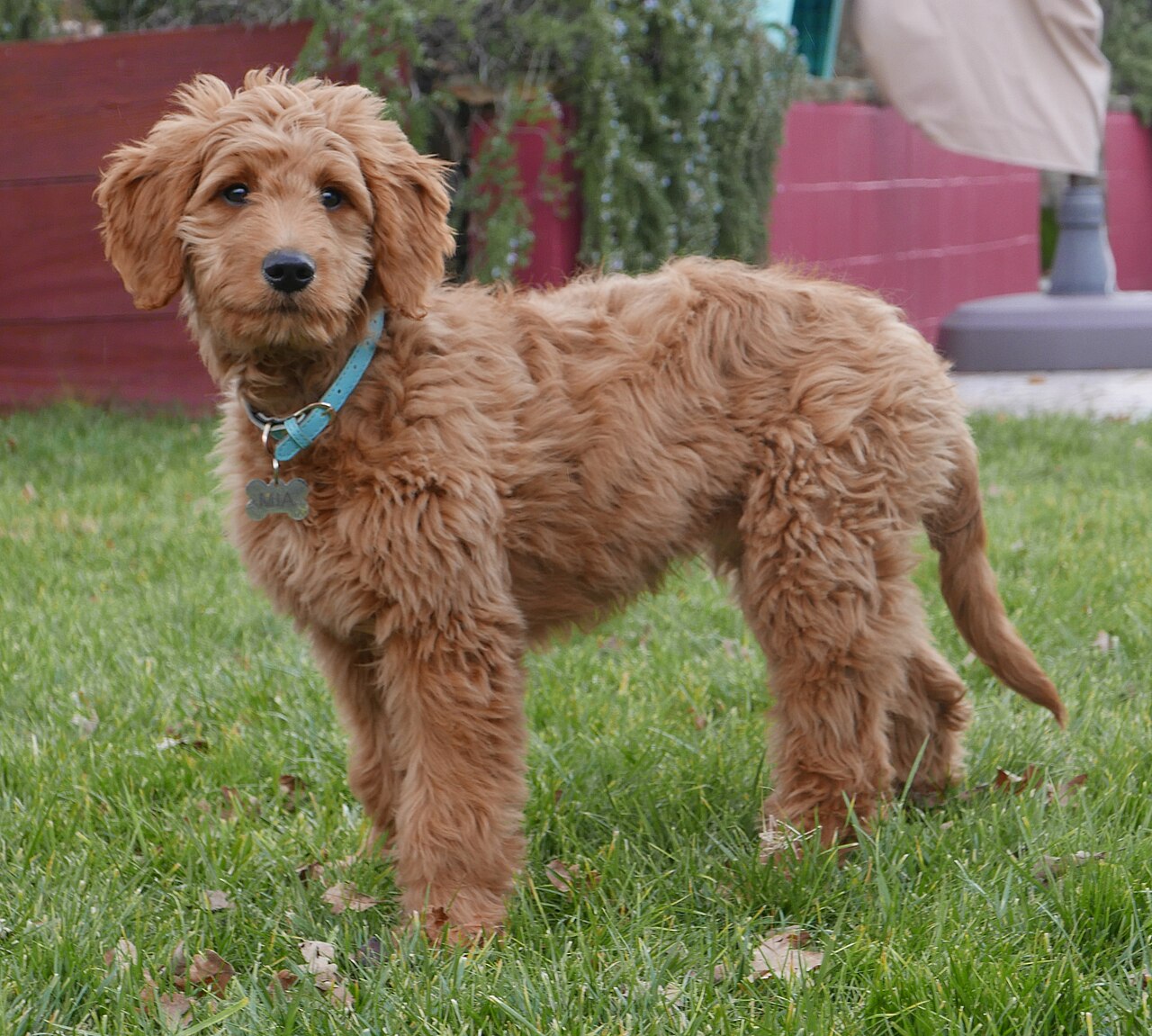
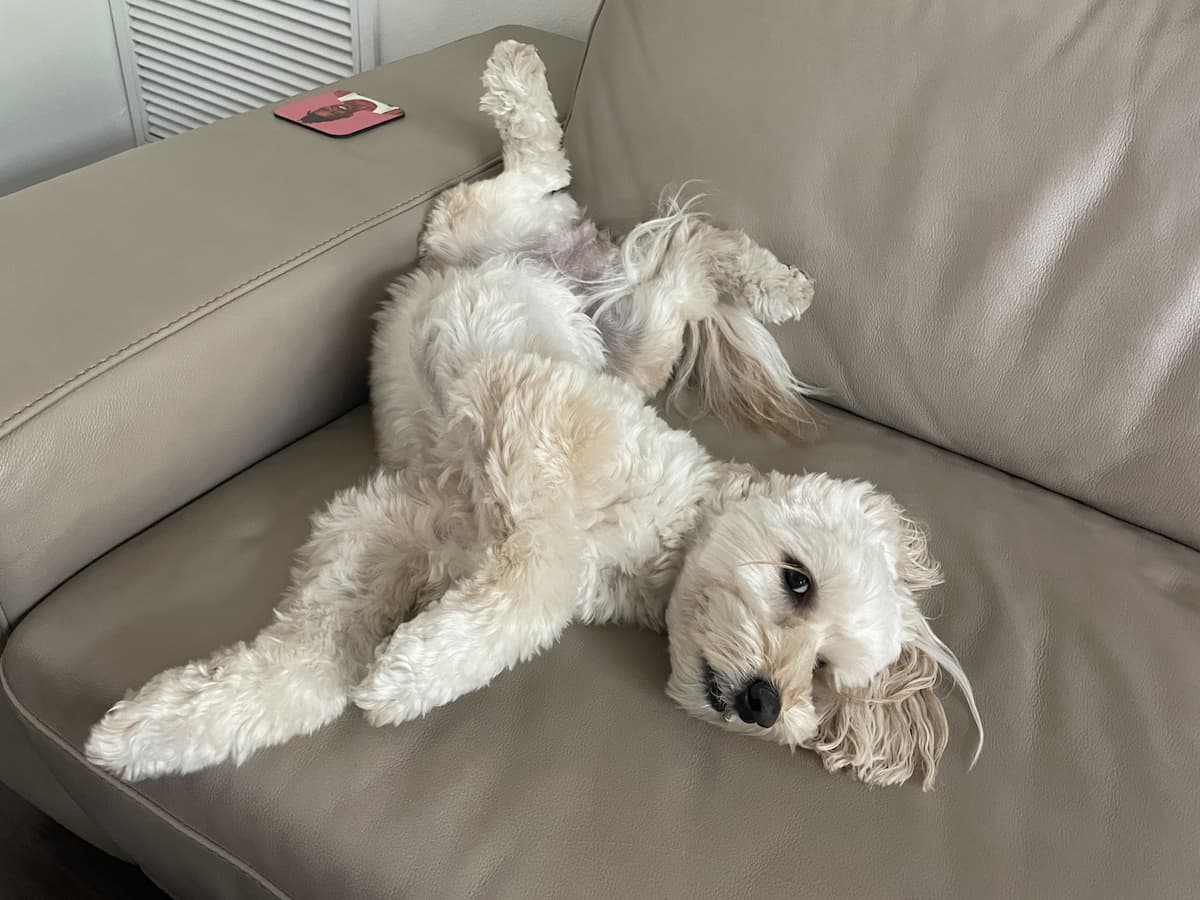
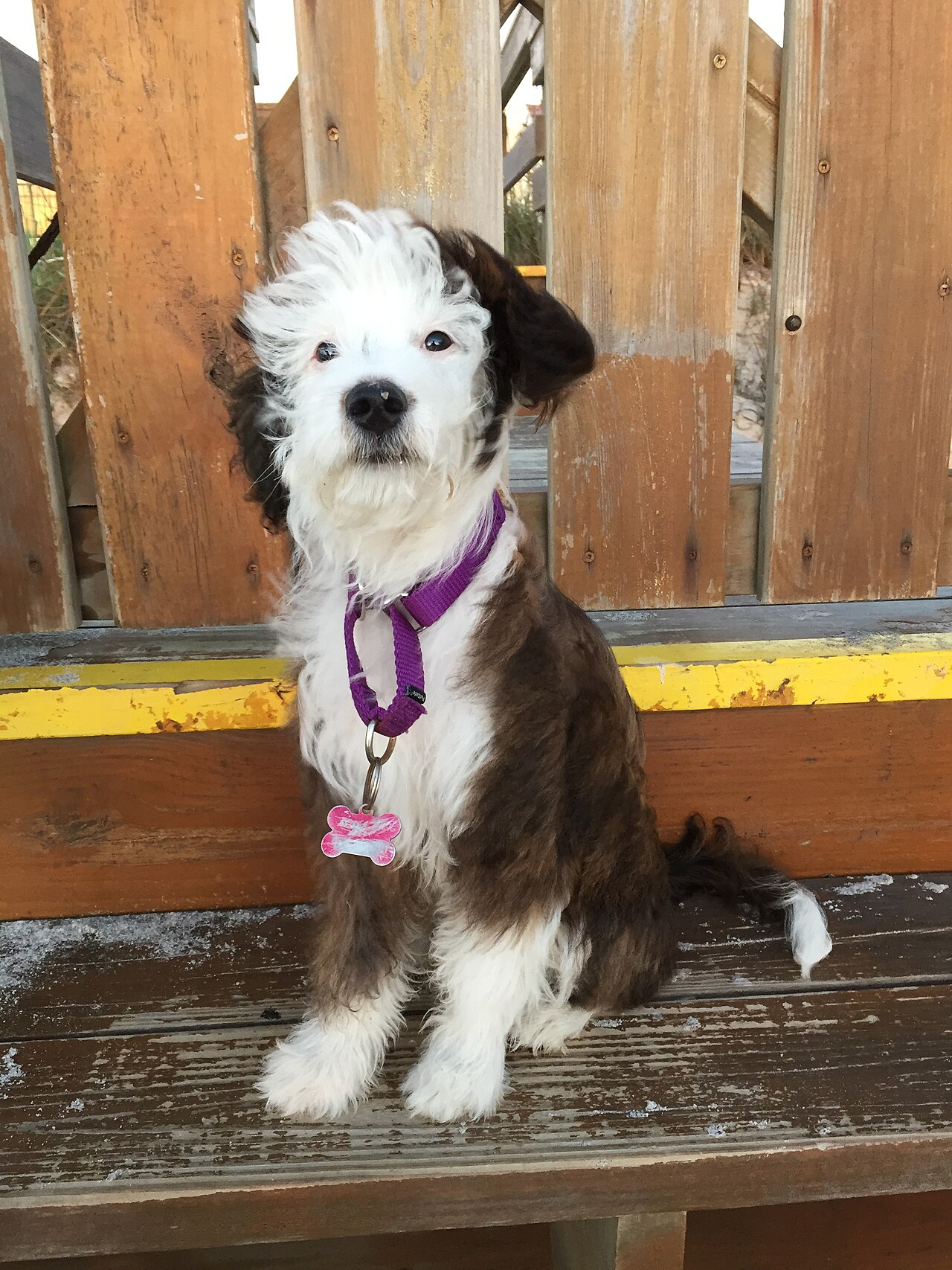
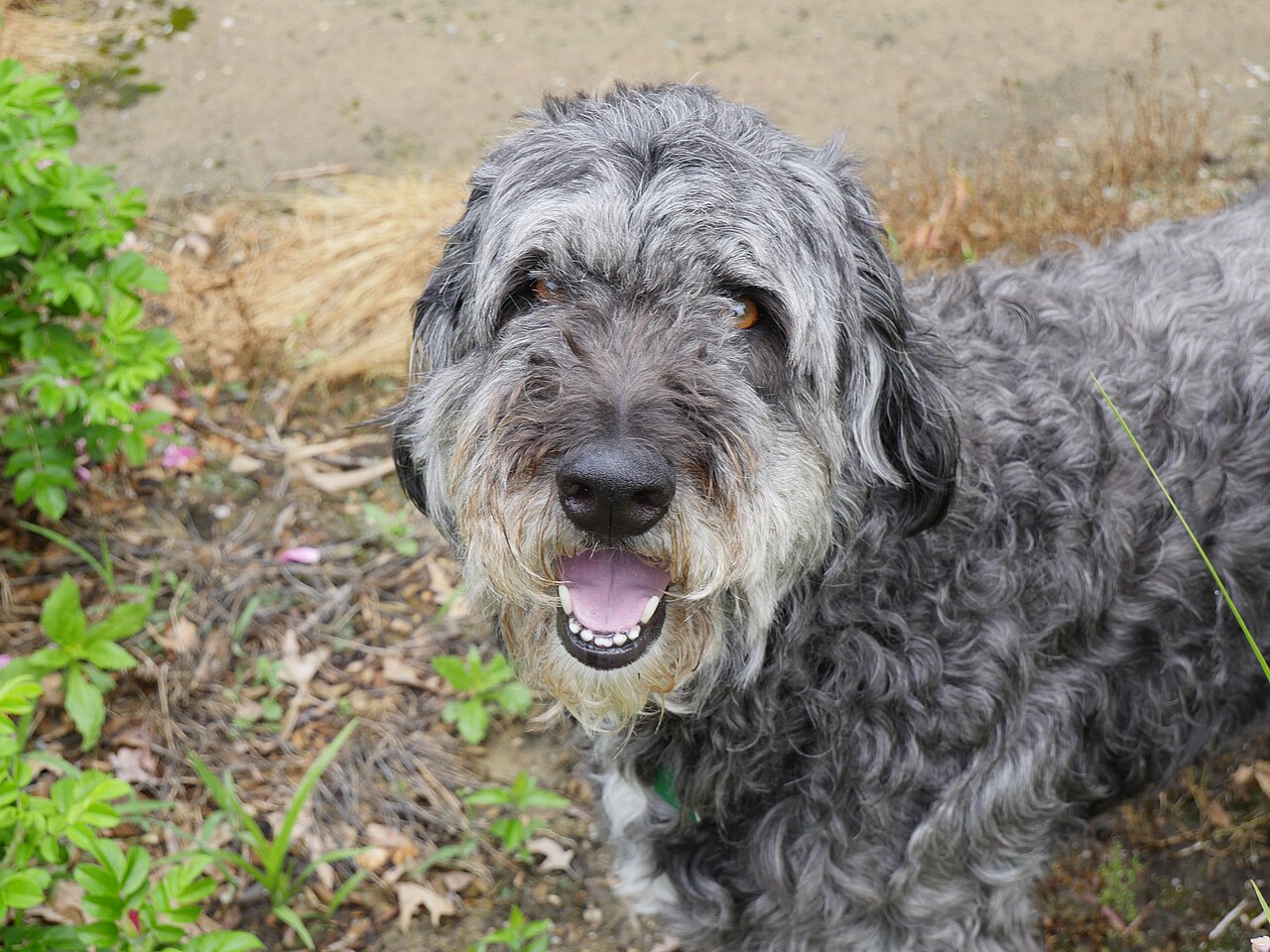
Toy Aussiedoodles under 25 lbs are also sold, usually from a Toy Poodle or a Miniature American Shepherd parent. The coat ranges from straight to wavy to tightly curled. Merle (blue merle, red merle) is the colour most buyers ask for, alongside tricolour, black, red and parti patterns. Blue or partly blue eyes are common in merles.
Exercise and daily life
This is a high-energy dog. Plan on at least an hour of real exercise every day, more for a young Standard: running, hiking, fetch, swimming, plus mental work such as scent games, trick training or puzzle feeders. Agility, herding trials and canicross suit them well.
A large yard is not a substitute for activity, and a fence matters because many will chase cars, bikes and wildlife. A Mini can live in an apartment only with a committed, active owner. Not suited to a household that is out eight to ten hours a day.
Training
Aussiedoodles learn fast, which cuts both ways: they also learn bad habits fast. Short, varied sessions with food and play rewards work best; repetition bores them.
- Teach an alternative to heel-nipping (a toy in the mouth, a "find it") from the first weeks.
- Build calm: a settle-on-a-mat cue is as important as tricks for this mix.
- Practise short absences from puppyhood.
- Socialise widely with people, kids and other dogs before 16 weeks.
Grooming
Wavy and curly coats shed little but mat easily behind the ears, under the collar, in the armpits and on the legs. Brush down to the skin with a slicker and comb several times a week, and book a professional groom every 6 to 8 weeks. Straight-coated F1 Aussiedoodles can shed like an Aussie, which has a double coat and sheds seasonally.
Health
Both parent breeds bring known inherited problems, and crossing does not remove them. A 2024 Royal Veterinary College study of Cockapoos, Labradoodles and Cavapoos found that for 86.6% of the common disorders compared, crossbreeds had the same risk as their purebred parents. Aussiedoodles were not studied and there is no published lifespan study for them, so the figures above are estimates.
MDR1 drug sensitivity. Washington State University estimates that about 50% of Australian Shepherds carry the MDR1 mutation. Affected dogs can react severely to common drugs such as loperamide, acepromazine, some chemotherapy agents and high doses of ivermectin. Test your dog or ask for the parents' results, and tell your vet.
Merle x merle. Two merle parents produce, on average, one double merle puppy in four. Double merles are often deaf, blind or born with small, malformed eyes (microphthalmia). A 2009 study in the Journal of Veterinary Internal Medicine found 25% of double merles deaf in one or both ears, against under 4% of single merles. The risk appears when a merle Aussiedoodle is bred to another merle dog. Merle can also hide in a dog that looks solid ("cryptic merle"), so a merle DNA test on both parents is the only safe check.
Other conditions documented in the parent breeds:
- Hip and elbow dysplasia
- Hereditary cataract (HSF4 mutation, Australian Shepherd type)
- Collie eye anomaly and progressive retinal atrophy (prcd-PRA occurs in both parent breeds)
- Idiopathic epilepsy (Aussie side)
- Hypothyroidism, sebaceous adenitis and Addison's disease
- Bloat (GDV) in Standard-size dogs
Ask to see for both parents: OFA or PennHIP hips, OFA elbows and a current eye exam by an ACVO ophthalmologist. For the Aussie parent, DNA results for MDR1, HSF4, CEA and prcd-PRA; the AKC herding-group list shows the national breed club recommends hips, elbows and an eye exam as a minimum. For the Poodle parent, the Poodle Club of America asks for prcd-PRA and patellas in Minis and Toys, and thyroid, NEwS and von Willebrand tests in Standards. A merle DNA test on any merle-coloured or merle-producing parent.
Cost
Puppies from breeders who health-test typically cost $1,500 to $4,000, with merle and Mini puppies at the top of the range. After the first year, expect roughly $1,500 to $3,000 a year for food, routine vet care, grooming, insurance and supplies.
Aussiedoodles are a favourite of puppy mills and online resellers. Walk away from sellers who ship sight unseen, cannot show test results for both parents, always have puppies available or sell "rare double merle" puppies. Doodles also end up in rescue, often surrendered over energy or grooming.
Who it suits and who it does not
Suits:
- Active people and families who hike, run or want a dog sport partner
- Owners who enjoy training and can give the dog a job every day
- People with mild allergies who choose a curly or F1b coat and meet the dogs first
Does not suit:
- Sedentary homes or anyone wanting a calm, low-key dog
- Households where the dog would be alone most of the day
- Owners not ready to brush several times a week and pay for grooming
For a similar dog with more predictability, compare the Australian Shepherd, the Miniature American Shepherd, the Border Collie or the Bernedoodle.