Origin and history
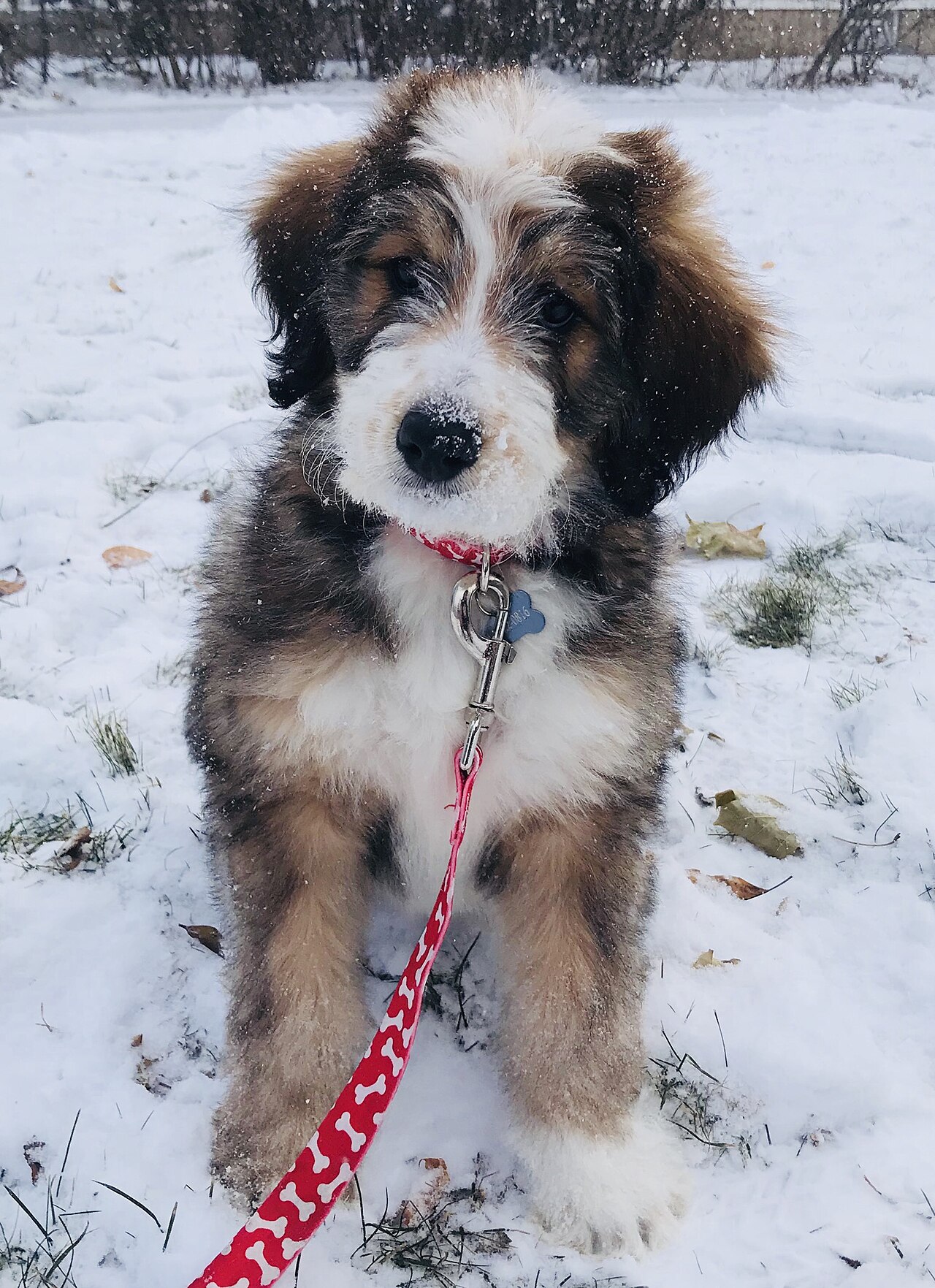
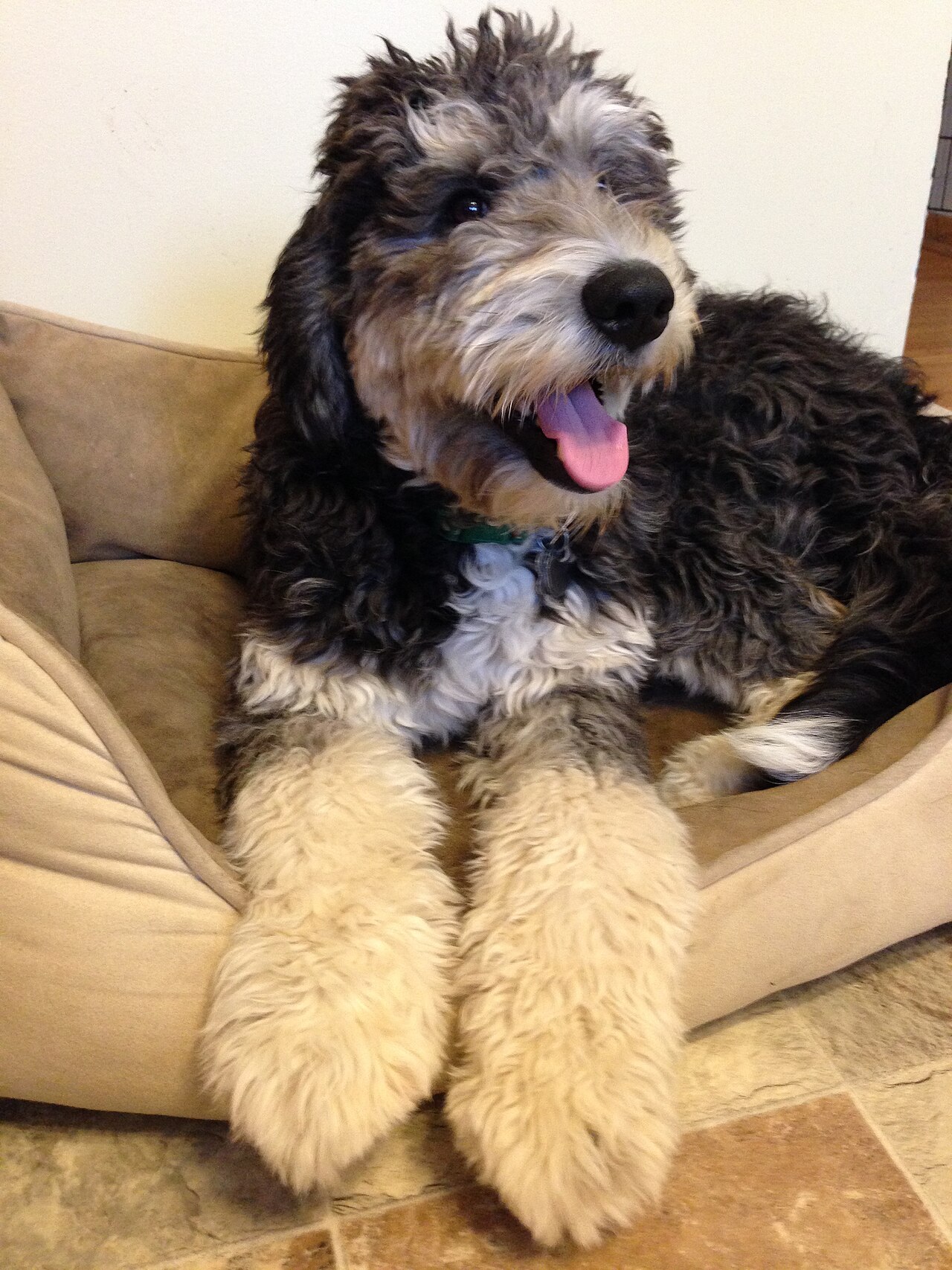
The Bernedoodle is a cross between the Bernese Mountain Dog and the Poodle. Canadian breeder Sherry Rupke of SwissRidge Kennels in Ontario began breeding them deliberately in 2003, after several years of producing Goldendoodles. Her stated goal was a dog with the Berner's easygoing temperament but a longer life and a lower-shedding coat.
The Bernedoodle is not a breed in the kennel club sense. The AKC does not register it, there is no breed standard, and no breed club controls health testing. Litters are labelled by generation: F1 is 50/50, F1b is an F1 crossed back to a Poodle (roughly 75% Poodle). Generation shapes coat and size more than any marketing label.
Temperament and character
Most inherit the Berner's soft, people-oriented nature and the Poodle's quickness: a dog that follows you from room to room, leans its weight against your legs. PetMD's vet-reviewed profile describes them as goofy and gentle dogs that bark mainly when surprised or playing.
Typical behaviours owners should expect:
- Clinginess. Many do poorly when left alone for long stretches and can develop chewing or whining.
- Puppy silliness that lasts into the second year. A standard Bernedoodle is a 60 lb toddler for a while.
- Sensitivity. Harsh handling makes them shut down; they respond well to calm, consistent people.
- Generally friendly with children, other dogs and cats when raised with them, though a large adolescent can knock over a small child by accident.
Puppies vary: one leans towards the calm, slightly stubborn Bernese, another towards the busy Poodle. SwissRidge notes that minis and tinies tend to have a little more energy than standards.
Size and appearance
Size depends on which Poodle was used. The figures below are typical ranges reported by veterinary and breeder sources, not guarantees; there is no standard.
| Size | Weight | Height | Lifespan (estimate) |
|---|---|---|---|
| Standard | 60-100 lbs (27-45 kg) | 23-29 in (58-74 cm) | 12-15 years |
| Mini | 20-45 lbs | 18-22 in | 14-16 years |
| Tiny / toy | under 20 lbs | 12-17 in | up to 18 years |
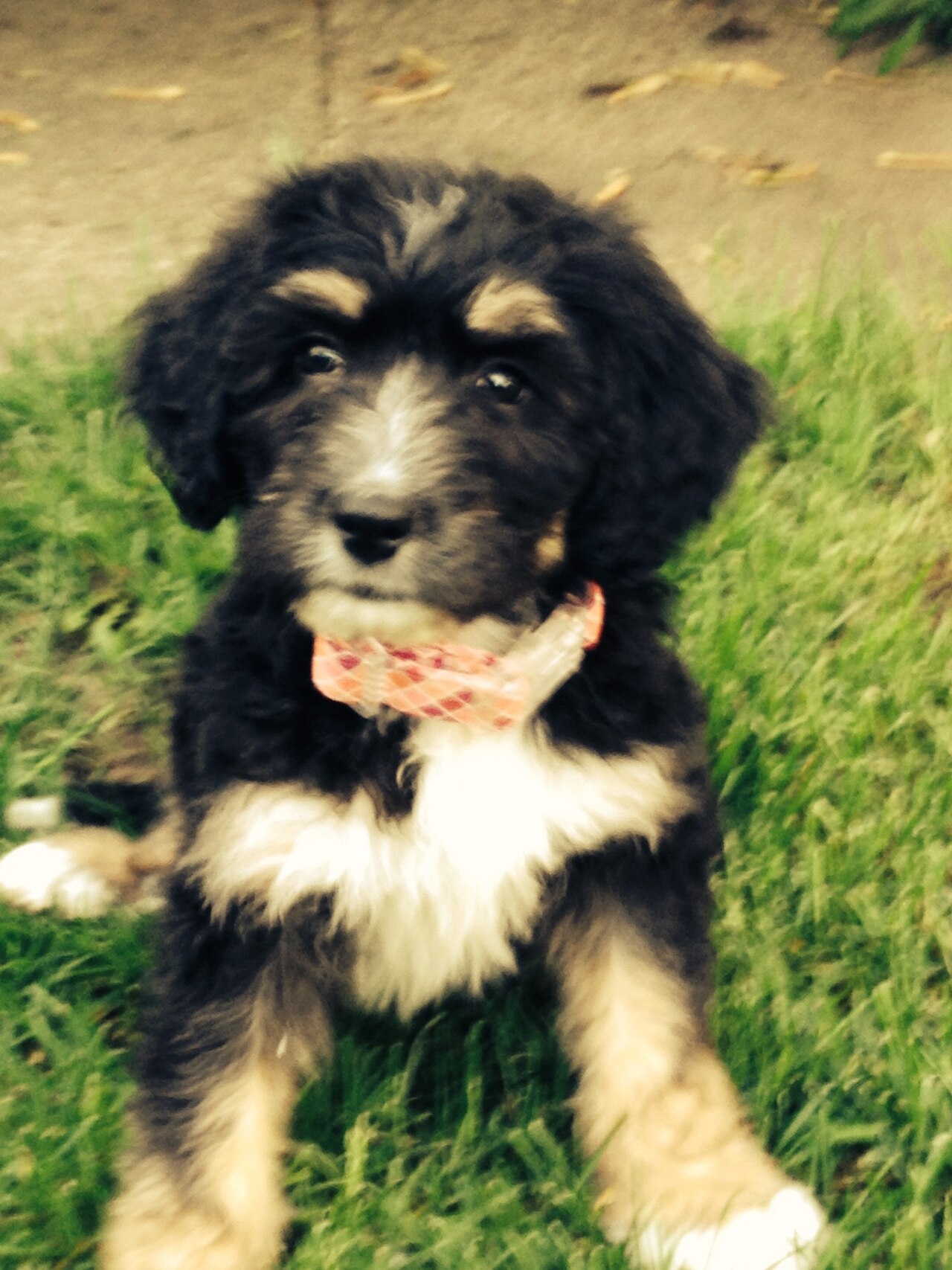
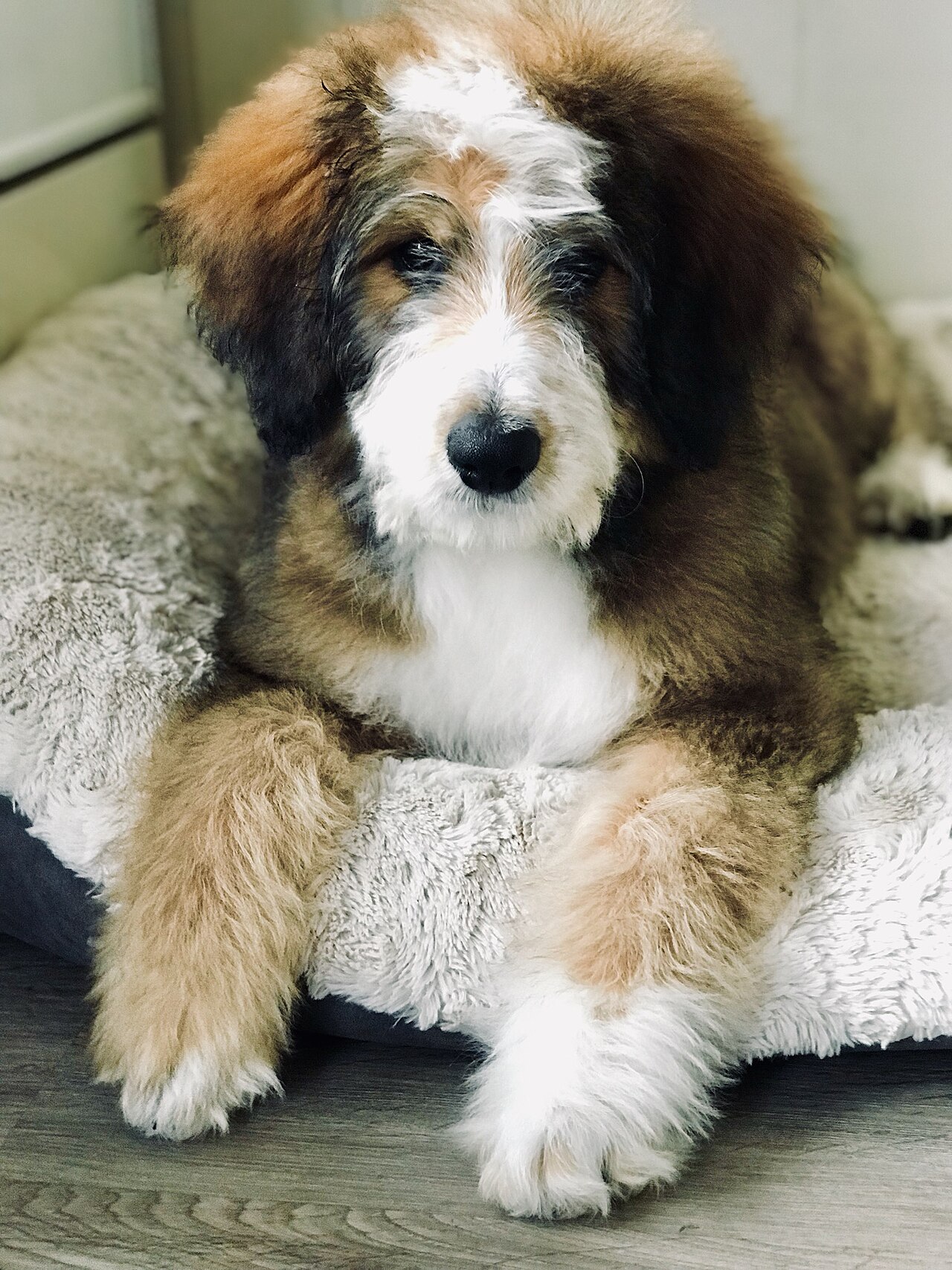
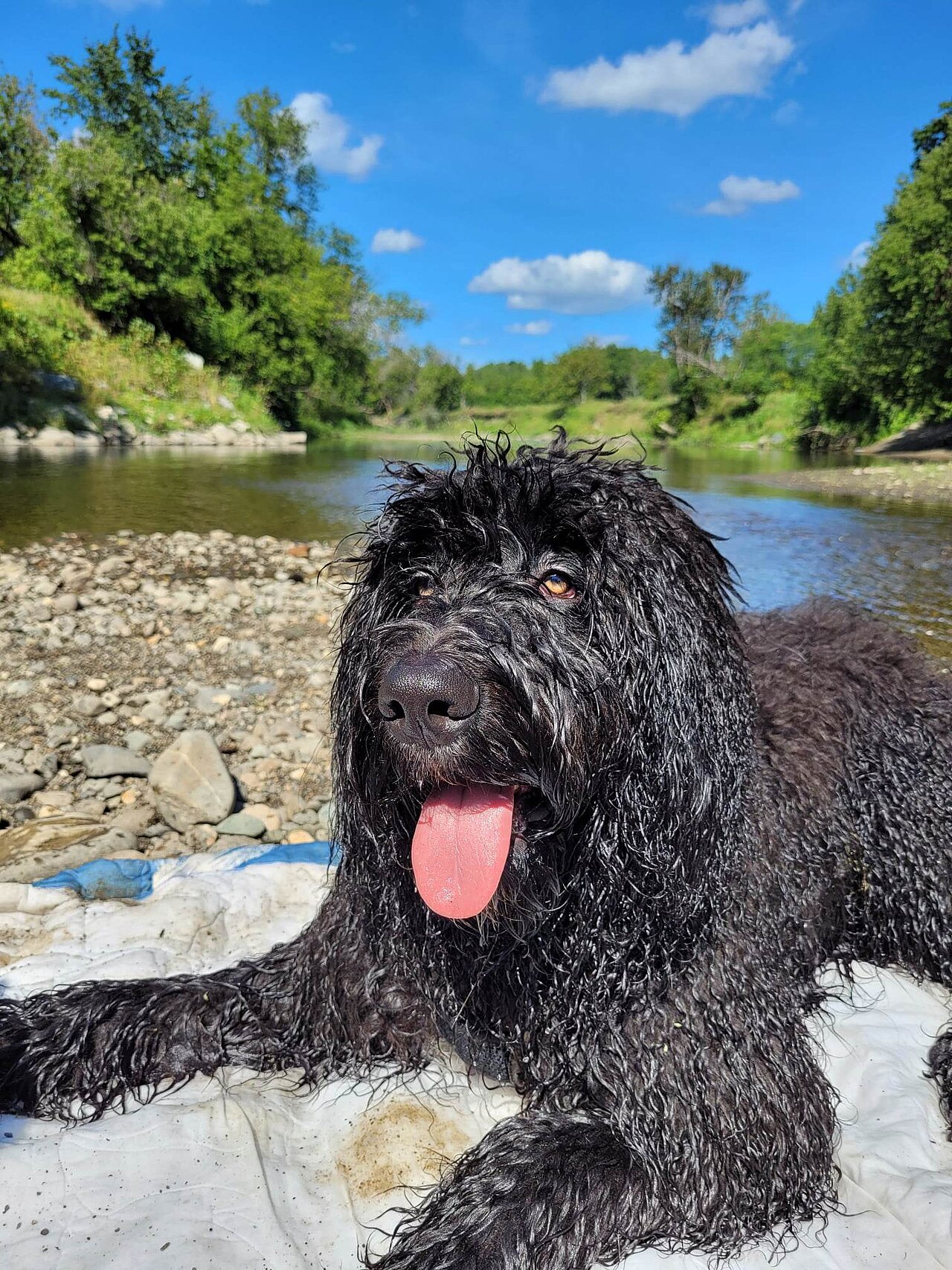
The coat ranges from straight to wavy to tightly curly. The classic colour is the Bernese tricolour (black, white and rust), but black and white, all black, sable and merle also appear.
Exercise and daily life
A standard Bernedoodle needs at least two proper walks a day plus play and mental work such as sniffing games or puzzle feeders. They are not marathon dogs; most are happiest with steady activity and time with their people.
A standard is a poor fit for a small apartment. A mini or tiny can manage in a flat with daily outings. The thick coat and Bernese heritage mean many struggle in heat; walk early and late in summer and watch for heavy panting. Plan for company: this is not a dog for a household that is out eight to ten hours a day.
Training
Bernedoodles usually learn fast and enjoy food rewards, but many have a stubborn streak from the Bernese side: they understand the cue and decide whether it is worth it. Keep sessions short and upbeat.
- Start loose-leash walking early. A 70 lb dog that pulls is hard work.
- Teach "off" and four paws on the floor before the dog is big enough to knock people over.
- Practise short absences from puppyhood to head off separation problems.
Grooming
This is the biggest practical commitment. Wavy and curly coats shed little but mat easily behind the ears, under the collar and in the armpits. Plan on brushing down to the skin with a slicker and comb several times a week and a professional groom every 6 to 8 weeks. Petful puts professional grooming at roughly $70 to $150 per visit depending on size and coat condition. Straight-coated Bernedoodles shed noticeably and should not be bought as allergy dogs.
Health
The Bernese parent is the main concern. AKC lists its lifespan as 7 to 10 years, and a Swiss study of 389 Bernese Mountain Dogs found a median lifespan of 8.4 years, with cancer (neoplasia) behind 58% of deaths. Histiocytic sarcoma is the best-known of these cancers. The Poodle side adds Addison's disease, sebaceous adenitis and bloat in Standards.
Crossing does not erase these. A 2024 Royal Veterinary College study of Cockapoos, Labradoodles and Cavapoos found that for 86.6% of the 57 common disorders compared, the crossbreeds' risk did not differ from their purebred parents. Bernedoodles were not in that study, and there is no published lifespan study for them; the lifespan figures above are estimates from vet-reviewed sources, not measured data. Conditions to know about:
- Hip and elbow dysplasia
- Cancer, including histiocytic sarcoma
- Degenerative myelopathy and von Willebrand disease (both parent breeds can carry them)
- Progressive retinal atrophy and other inherited eye disease
- Bloat in large dogs
- Allergies and skin problems
Ask to see results for both parents: OFA or PennHIP hips, OFA elbows, a current eye exam by a board-certified ophthalmologist, a cardiac exam, and DNA tests for degenerative myelopathy and von Willebrand disease. Poodle parents should also have the Poodle Club of America's recommended NEwS test.
Cost
Puppies from established breeders typically cost $2,000 to $5,000, with tricolour and smaller sizes at the top end. After the first year, expect roughly $2,000 to $3,500 a year for food, routine vet care, grooming, insurance and supplies, and more for a standard with health problems.
Who it suits and who it does not
Suits:
- Families who want a large, gentle companion and are home a lot
- People with mild allergies who choose a curly or F1b coat and meet the dogs first
- Owners who are happy to brush several times a week and pay for regular grooming
Does not suit:
- Small apartments (standard size) or hot climates without air conditioning
- Anyone wanting a low-maintenance coat or a low-cost dog
- Households where the dog would be alone most of the day
For more predictability, compare the Goldendoodle, the Labradoodle or a Standard Poodle.