Origin and history
The American Bulldog descends from the working bulldogs that immigrants brought to the American South. On farms they caught and held loose cattle and semi-wild hogs, drove off predators and guarded the homestead.
By the end of World War II the type had almost disappeared. According to the United Kennel Club's breed history, John D. Johnson, a returning veteran, led the revival together with Alan Scott and other breeders. Their work produced the two lines you still see today:
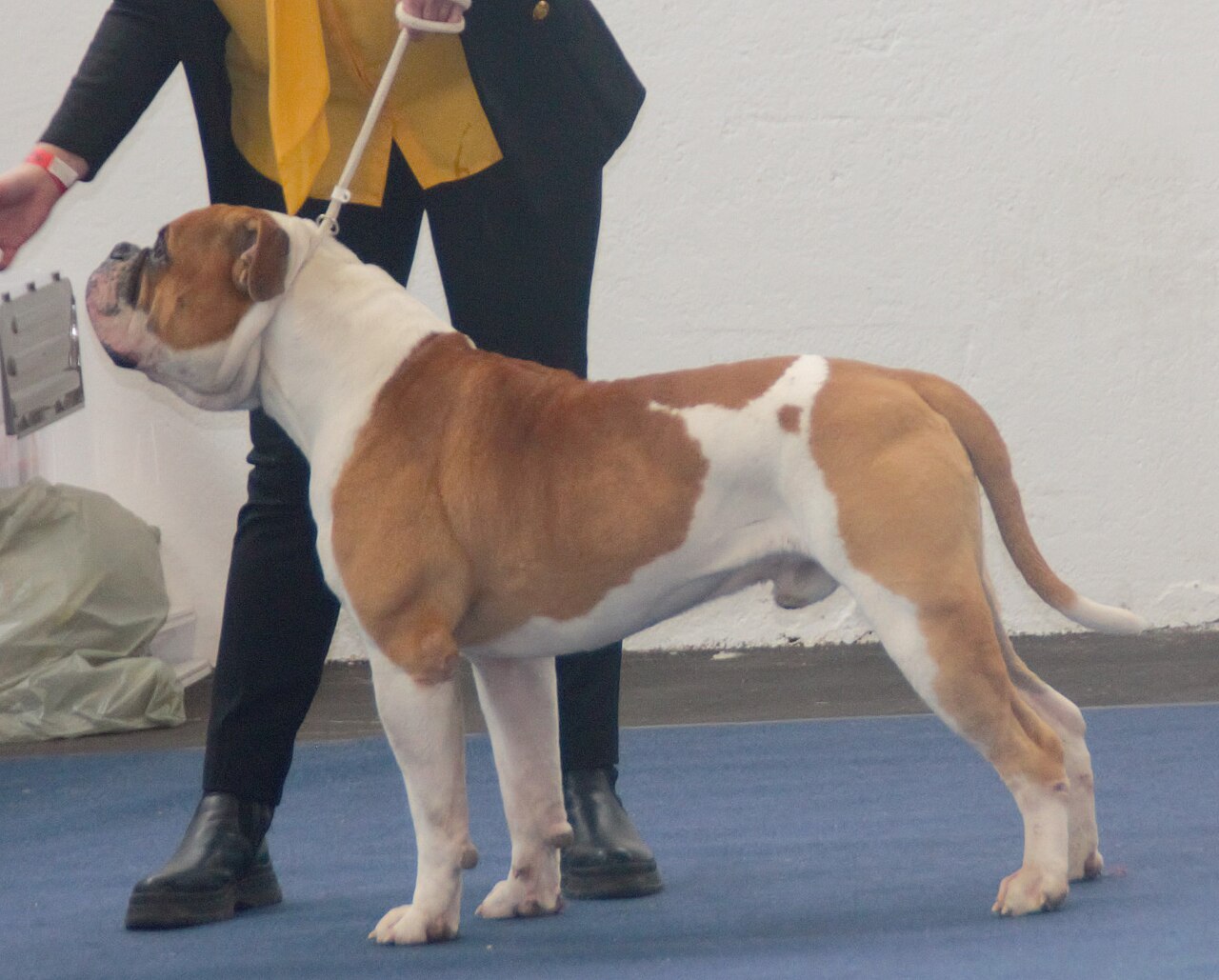
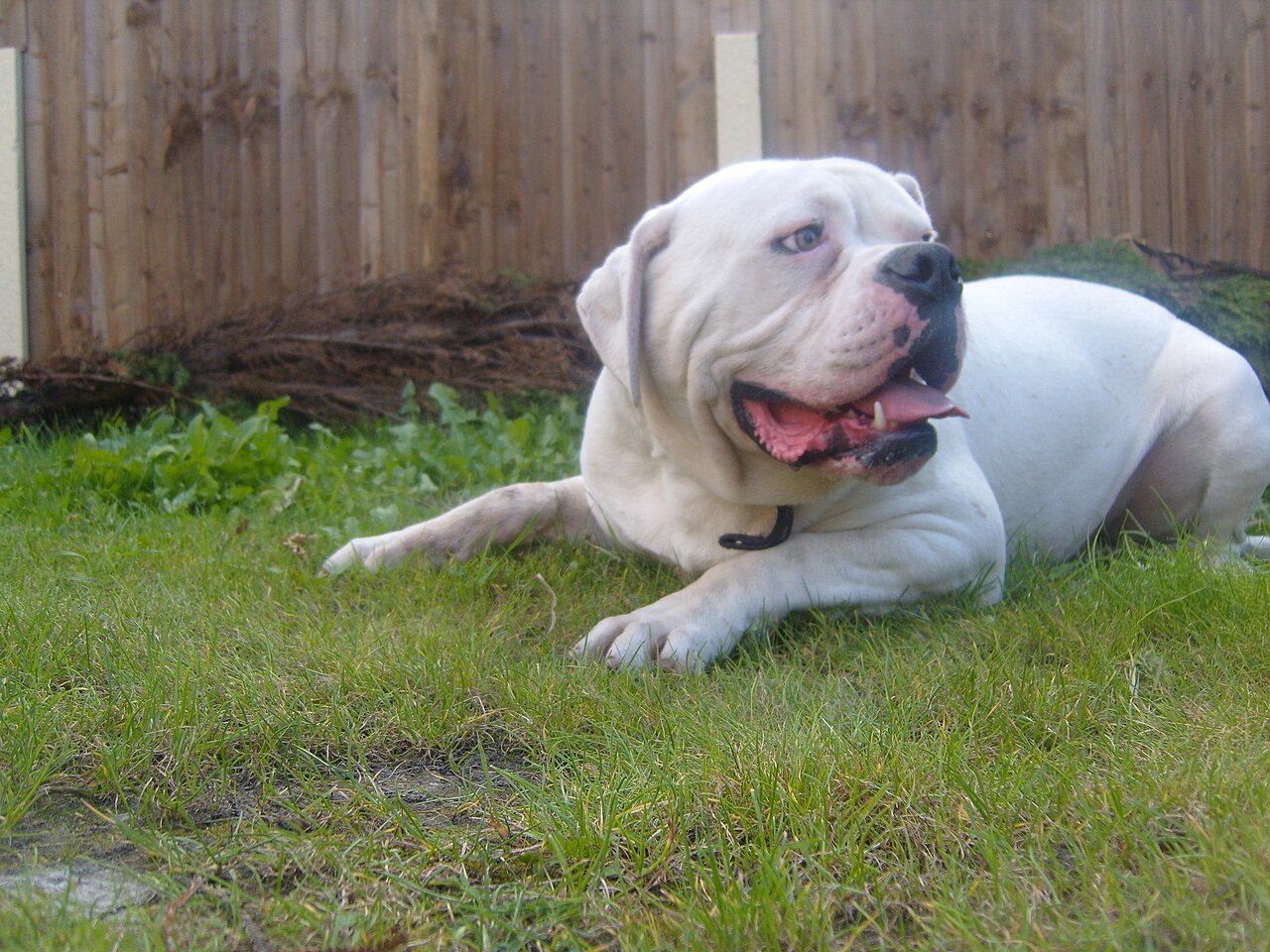
- Johnson type (often called bully): heavier bone, bigger head, shorter muzzle, more stop and a more pronounced underbite.
- Scott type (often called standard or performance): leaner and more athletic, with a longer muzzle and a less extreme bite.
Many dogs today are a mix of both. The UKC recognised the breed on January 1, 1999. The AKC lists it in the Foundation Stock Service, its record-keeping program for breeds that are not yet fully recognised, so American Bulldogs cannot be shown in regular AKC conformation classes. The FCI does not recognise the breed. Registration papers often come from the UKC, the NKC or the American Bulldog Association.
Temperament and character
The UKC standard describes the ideal dog as "a gentle, loving family companion who is fearless enough to face an angry bull or a human intruder". In daily life that means:
- With its family it is affectionate, playful and often very physical.
- With strangers it ranges from reserved to suspicious. The standard notes that young dogs may be standoffish and that confidence typically develops by about 18 months.
- It guards house and yard by instinct. Most do not need any protection training to take that job seriously.
- Tolerance of other dogs varies. Same-sex conflicts are common in adults, and the catch-dog heritage means a strong prey drive towards cats and small animals.
It is a high-energy, strong dog that tends to do everything at full speed. A well-raised American Bulldog is reliable with its own children, but a dog this strong and bouncy can knock a toddler over without meaning to.
Size and appearance
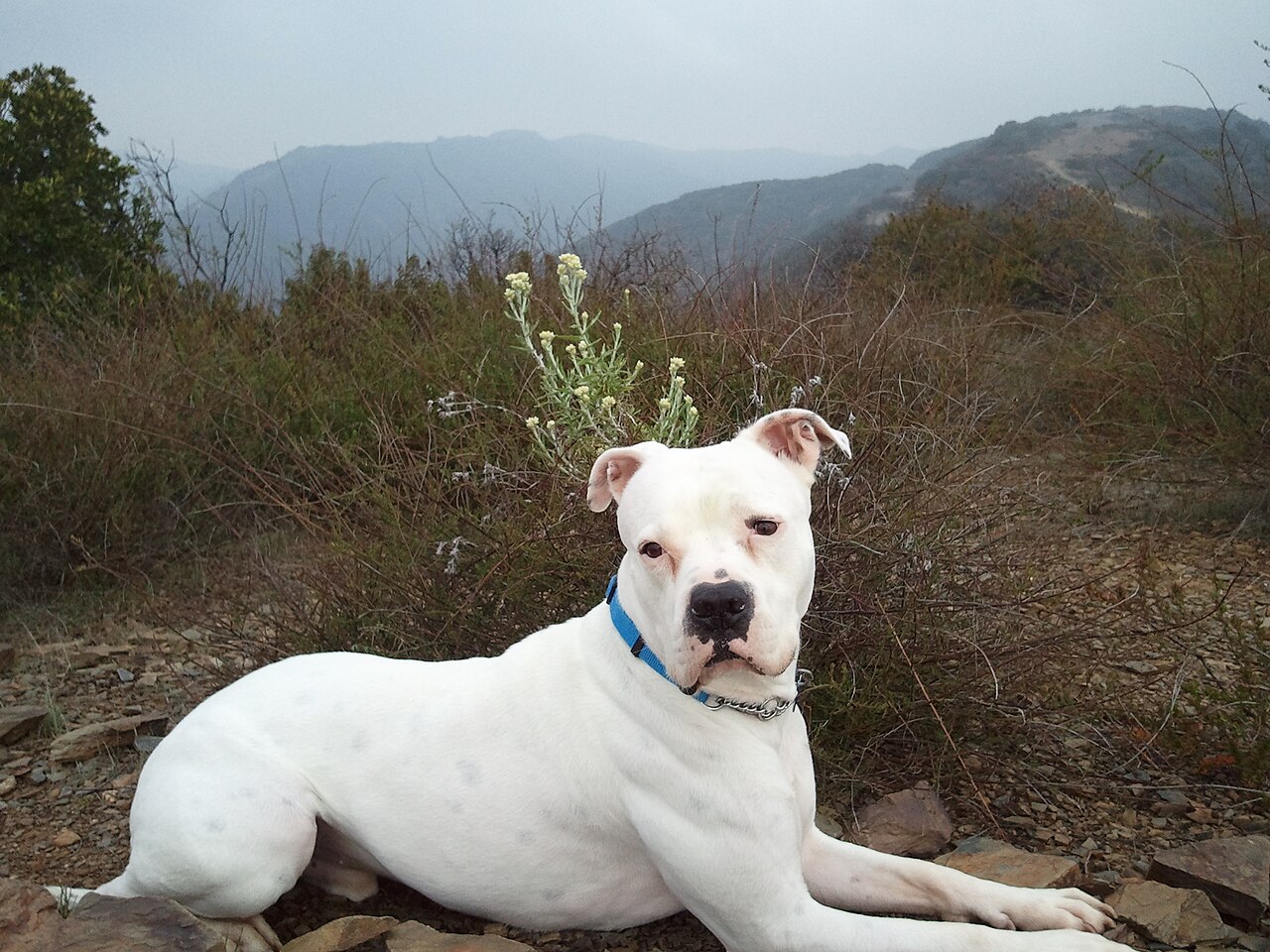
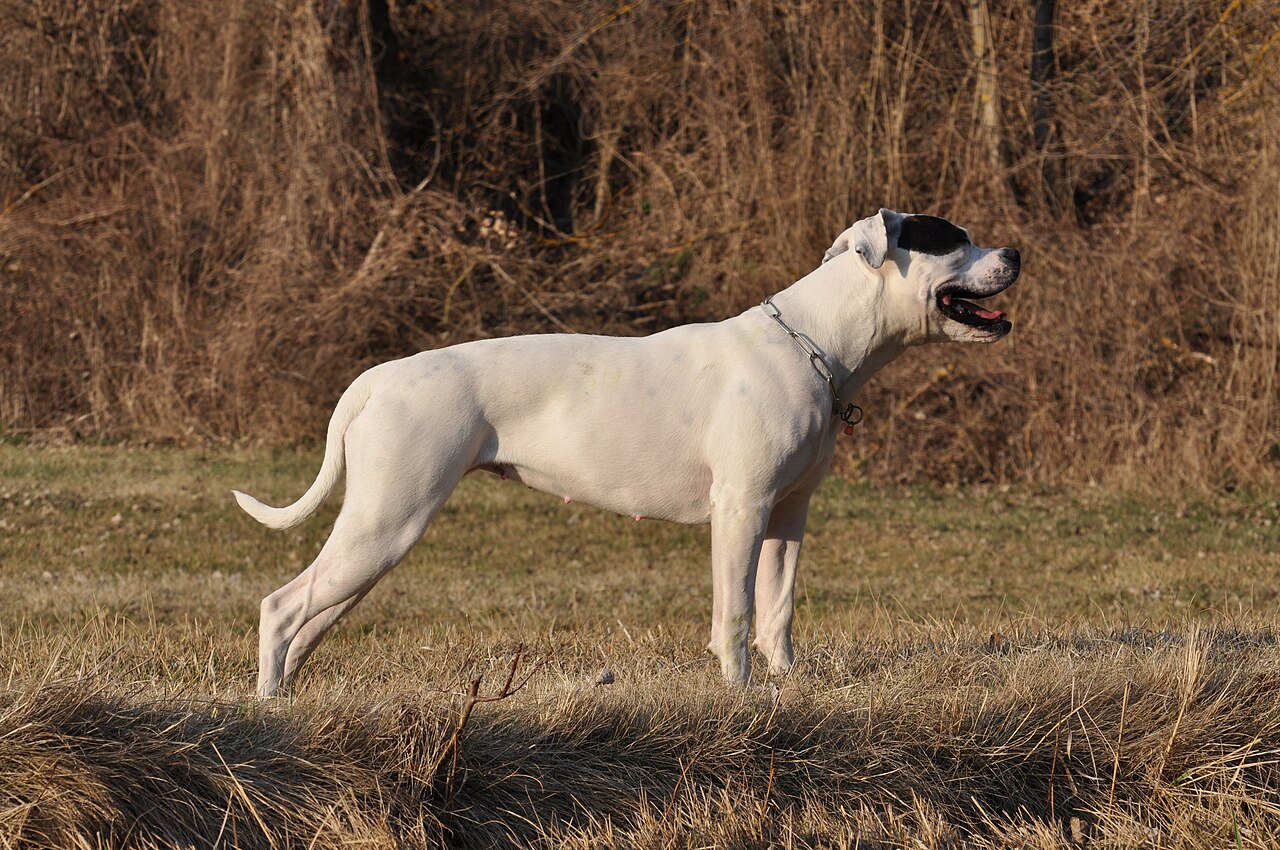
A short-coated, muscular dog, slightly longer than tall, with a broad head and a powerful jaw. The UKC allows solid colours, white with coloured patches, and brindle. Solid black or blue without white, merle, tricolour and a full black mask are disqualifications, and a coat longer than one inch, feathering or a wavy coat are also disqualifications.
| Males | Females | |
|---|---|---|
| Height (UKC) | 22-27 in | 20-25 in |
| Weight (typical) | 60-120 lbs | 60-120 lbs |
| Lifespan | 10-15 years | 10-15 years |
| Coat | Short, smooth | Short, smooth |
The UKC gives no weight range, only that weight should be in proportion to height. Males are clearly heavier than females, and the type matters even more: heavy Johnson-type males sit at the top of the range, lean Scott-type females at the bottom.
Exercise and daily life
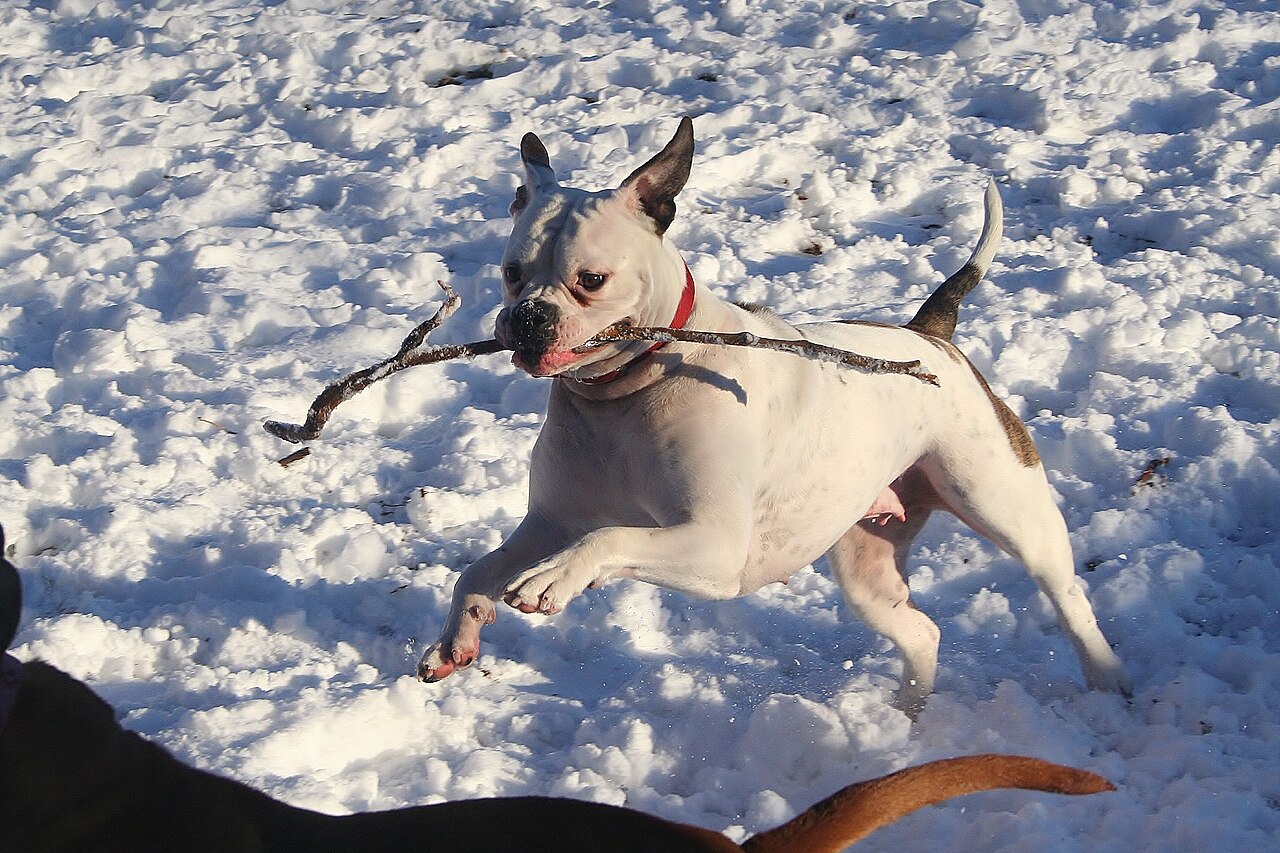
Plan on at least an hour of real activity a day, plus some mental work. Scott-type dogs in particular are athletic and enjoy running, flirt poles, weight pulling and tug games. Bully-type dogs tire faster and handle heat poorly, so exercise them in the cool hours.
A house with a securely fenced yard is the realistic setup. Apartment life can work with a calm adult and a dedicated owner, but shared hallways, elevators and neighbours' dogs are a daily test.
Training
The breed is intelligent and food-motivated but can be stubborn, especially in adolescence. What works:
- Short, upbeat sessions with food and toys. Harsh corrections tend to create a defensive dog or one that simply stops listening.
- Early, broad socialisation: visitors, children, vets, traffic, other dogs. Continue through the second year, when guarding usually switches on.
- Impulse control from day one: wait at doors, calm greetings, a solid "leave it" and recall.
- Loose-leash walking while the puppy is still small enough to hold.
Typical problems are leash pulling, jumping on people, over-guarding the house and same-sex dog aggression. Most American Bulldogs need impulse control far more than bite work.
Grooming
Minimal. Brush weekly with a rubber curry, more often during seasonal sheds. Bully-type dogs with facial folds need those folds wiped and kept dry. Check ears, brush teeth and trim nails regularly.
Health
The breed is generally sturdy, but a few problems come up often enough to ask about:
- Hip and elbow dysplasia
- Neuronal ceroid lipofuscinosis (NCL, also called NCL10), a recessive brain disease caused by a mutation in the CTSD gene. Affected dogs develop progressive loss of coordination, usually starting between 1 and 3 years of age. There is a DNA test.
- Congenital ichthyosis (ICT-A), a recessive skin disease linked to the NIPAL4 gene that causes scaly, flaky skin from puppyhood. There is a DNA test.
- Cherry eye, entropion and other eyelid problems
- Skin allergies and, in short-muzzled lines, heat intolerance
Ask the breeder for hip and elbow evaluations (OFA or PennHIP) on both parents and DNA results for NCL and ICT-A. Two carriers should never be bred together. An eye exam is a sensible extra. Typical lifespan is 10 to 15 years.
Cost
A puppy from a breeder who health tests and DNA tests the parents typically costs $1,000 to $3,000, with proven working or show lines at the top. Rescues place American Bulldogs and mixes for much less. Puppies far below this range usually come without any health testing.
Running costs for food, routine vet care, preventives and basic supplies come to roughly $1,500 to $2,500 a year for a dog this size. Add a solid fence, a large crate and possibly a higher home insurance premium.
Who it suits and who it does not
Good fit:
- Active owners who want a sturdy, athletic dog for hiking, running or dog sports
- A house with a securely fenced yard
- Experienced owners who will invest in socialisation and impulse control, perhaps after a Boxer
Not a good fit:
- First-time owners who want an easy, low-energy dog; a Bulldog is calmer, though it has its own health issues
- Homes with cats or several dogs of the same sex
- Anyone whose lease or insurance excludes the breed
- People looking for a pure guardian: the Cane Corso and Boerboel are heavier, more serious guard breeds that need even more experience