Origin and history
The Small Münsterländer comes from the Münsterland region of northwest Germany. The FCI standard says breeding there has been documented since about 1870, and that the breed carries the blood of much older flushing and pointing dogs.
In 1912 German hunters founded an association to preserve the type as an independent hunting breed. The aim, in the standard's words, was a medium-sized, passionate, intelligent and affectionate dog that is "fully versatile" in field, forest and water. Dr. Friedrich Jungklaus wrote the first breed standard in 1921. Today the German breed club is the Verband für Kleine Münsterländer, and the current FCI standard is No. 102, Group 7 (continental pointing dogs, spaniel type), with a working trial.
Despite the name, it is not a smaller version of the Large Münsterländer. The two come from the same region but from different breeding stock, and the Large is black and white while the Small is always brown and white.
In the US the breed is still rare. The AKC added it to the Foundation Stock Service in 2006 and moved it to the Miscellaneous Class on January 1, 2021, with the Small Munsterlander Club of America as parent club. The UKC recognizes it as a gun dog.
Temperament and character
The FCI standard describes a dog that is intelligent and quick to learn, full of temperament but even, friendly toward people and "suitable for family life", with close contact to its handler and a strong, persevering hunting drive. In daily life that means:
- It is a hunter first. Pointing, retrieving and tracking are bred in, and they do not switch off in a suburb.
- It is very people-oriented. It wants to be where you are. Vetstreet warns that being banished to the backyard with little human company makes it miserable.
- It is sensitive. Harsh corrections or a tense household shut it down. It responds far better to calm, fair handling.
- It is not a guard dog. It will bark at arrivals, but it is friendly with visitors and has no real protective instinct.
With children it is usually gentle and playful. The catch is not the kids but the workload: this dog needs a job as well as a family.
Size and appearance
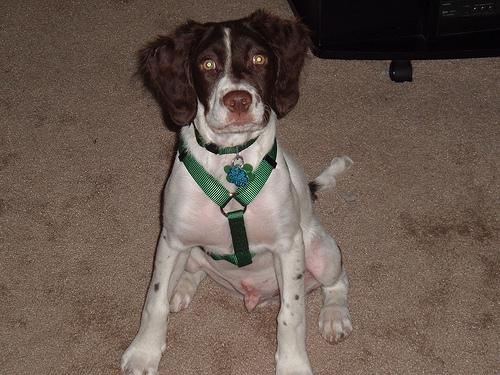
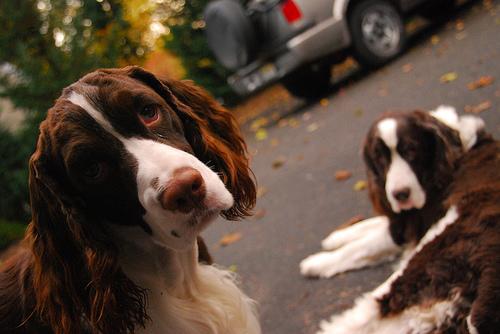
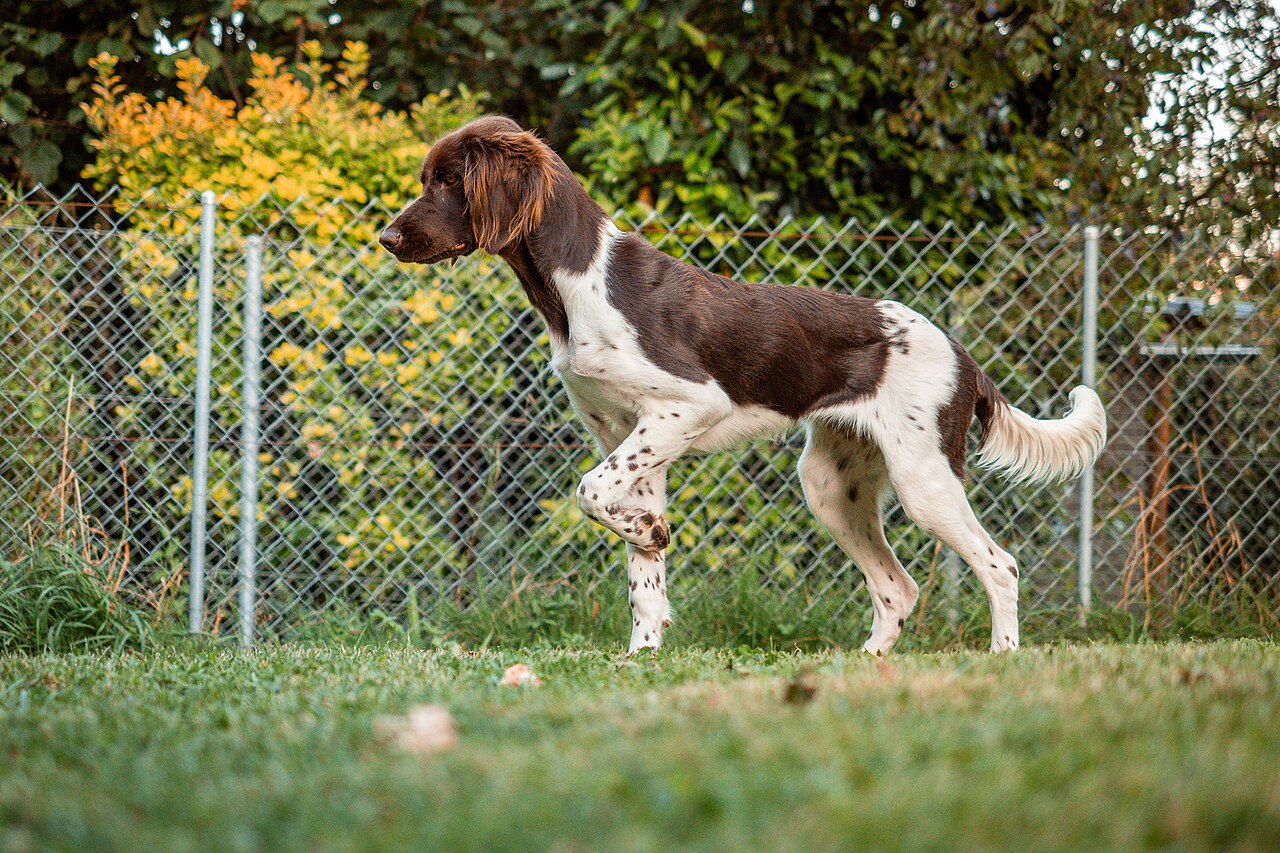
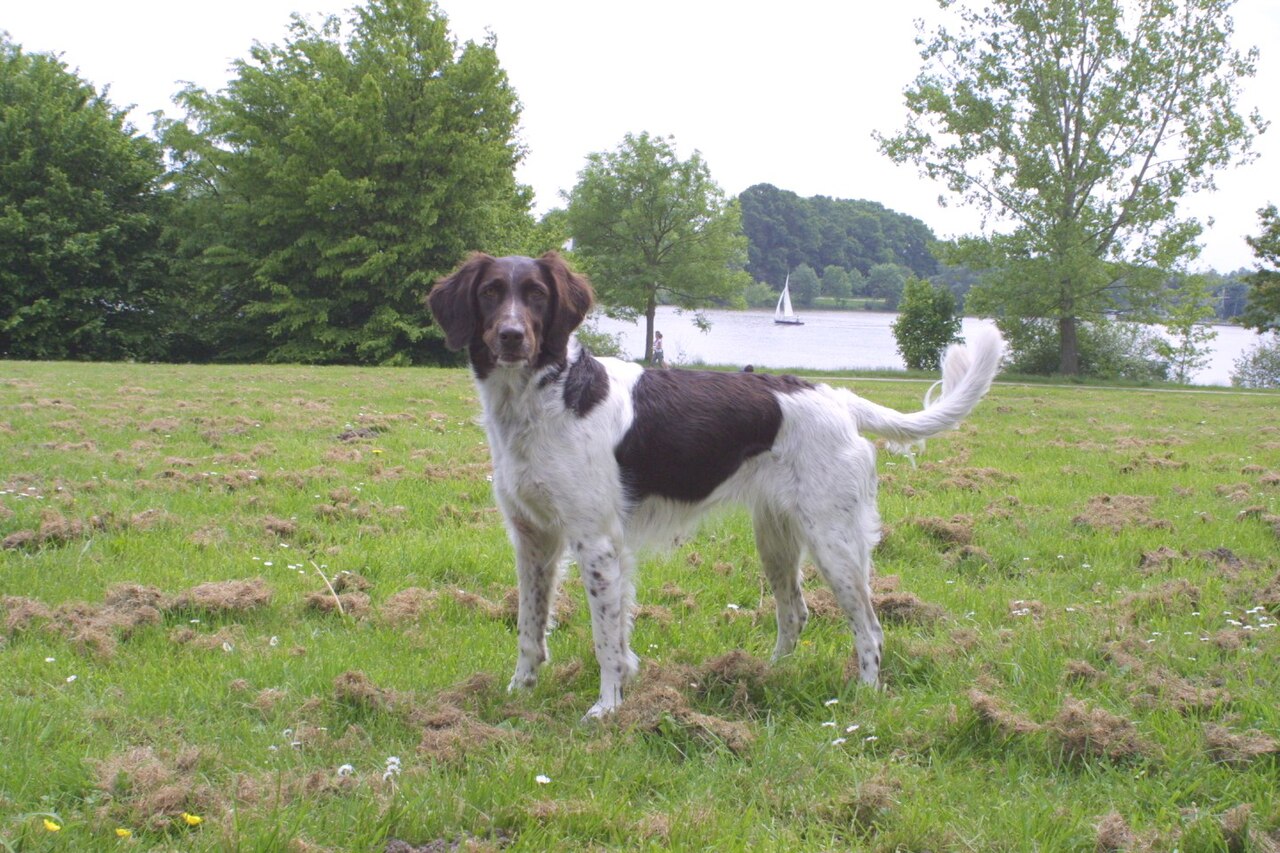
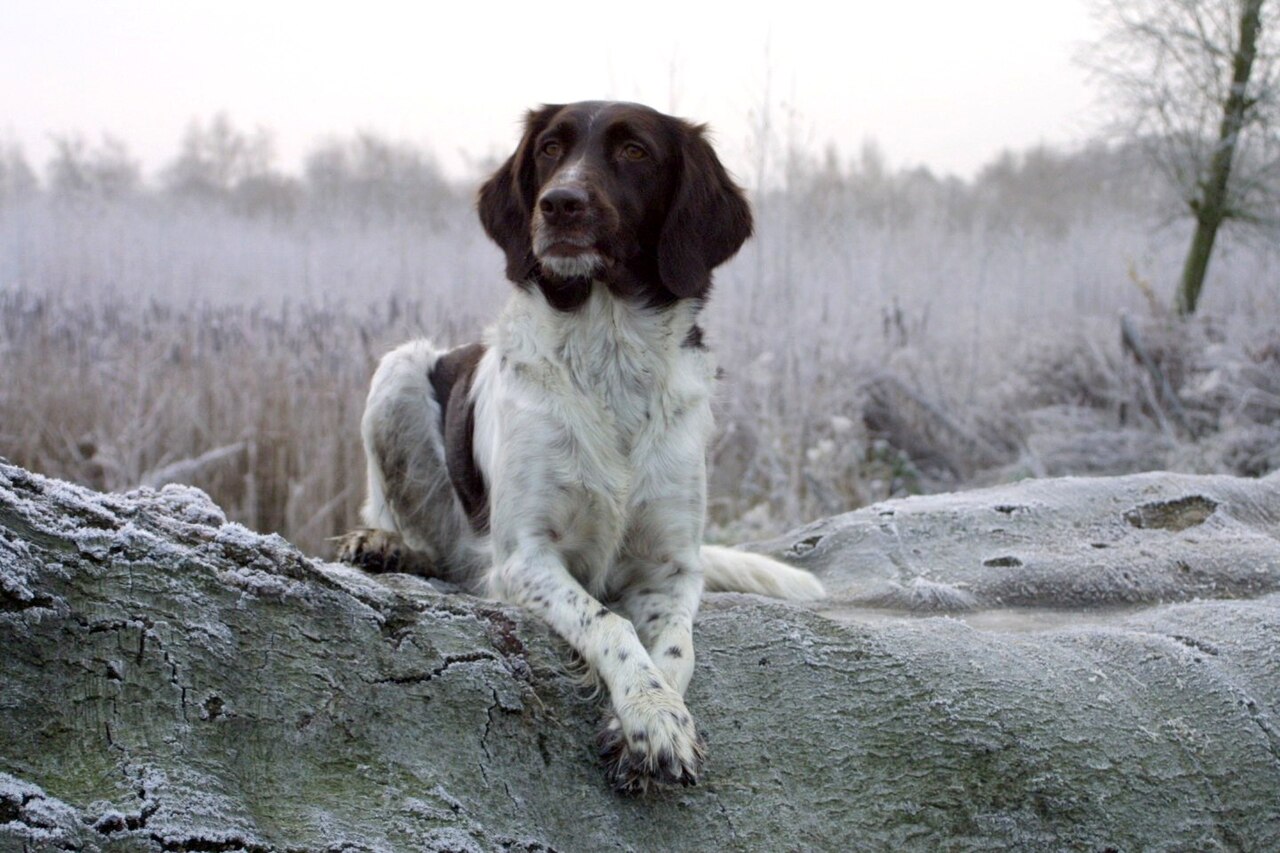
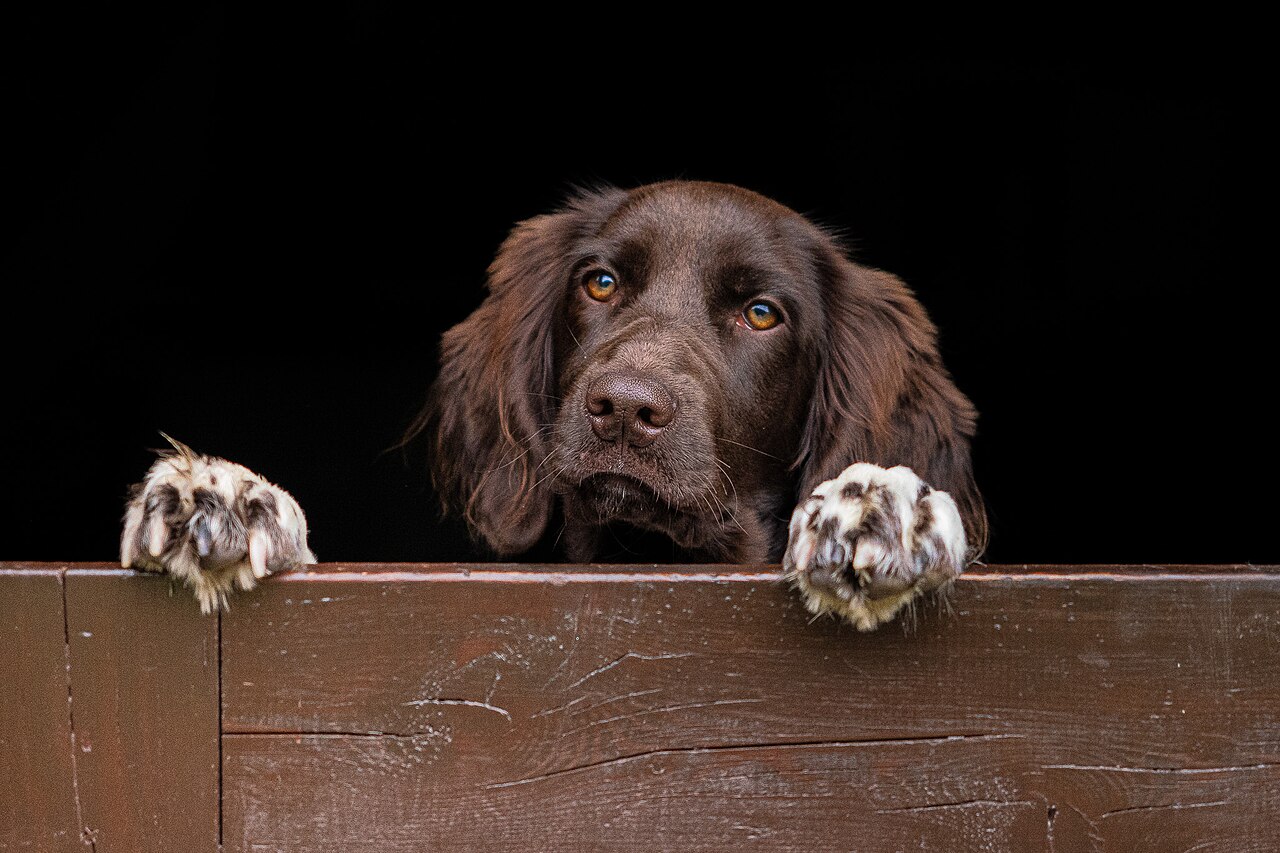
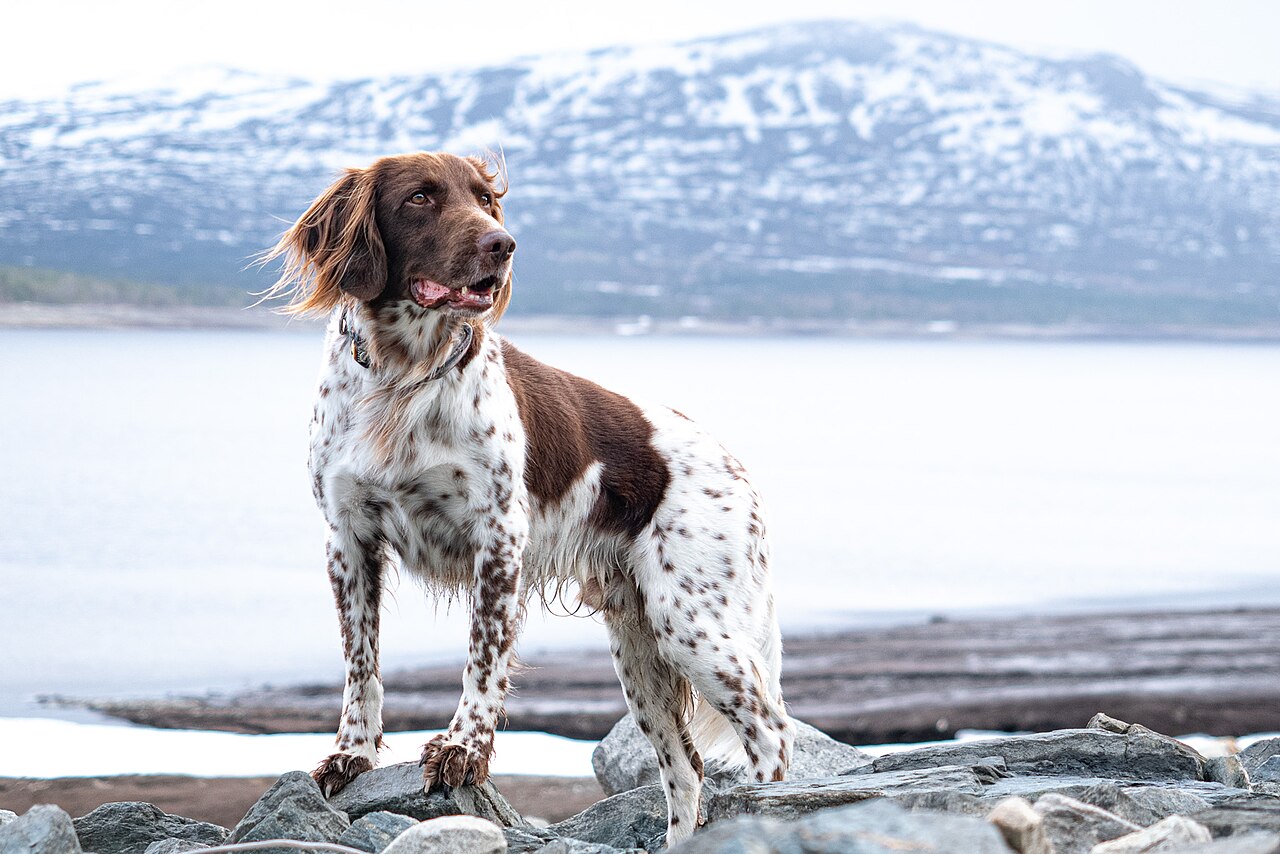
A medium-sized, well-balanced dog, slightly longer than tall, with a dense, medium-length coat that is straight or slightly wavy, feathering on the front legs and a long flag on the tail with a white tip. Colors are brown and white or brown roan, with patches, a brown mantle or ticking. Tan markings on the muzzle, eyes and legs (the "Jungklaus markings") are allowed.
| Males | Females | |
|---|---|---|
| Height | 20.5-22 in (52-56 cm) | 19.5-21.5 in (50-54 cm) |
| Weight | about 45-60 lbs | about 40-55 lbs |
| Lifespan | 12-14 years | 12-14 years |
| Coat | medium-long, dense, water-repellent | same |
The standard sets no weight; the figures above are typical for fit working dogs.
Exercise and daily life
Plan on two hours a day of real activity, including off-leash running where it is safe and some nose work. A walk around the block does not touch this dog. It swims readily, so lakes and ponds are a bonus, not a problem.
The best outlet is hunting, or NAVHDA and AKC pointing breed hunt tests. Without hunting: tracking, retrieving games, dock diving, long hikes. Apartment life does not work, and a house with a fenced yard is close to a requirement.
Because it is so attached to people, it does poorly when left alone for long workdays. Teach short absences gradually from puppyhood and plan for a dog walker or daycare if you work away from home.
Training
The Small Münsterländer is one of the easier gundogs to train. It wants to cooperate, learns fast and stays close to its handler in the field. What works: rewards, short sessions, and retrieving and nose work built into everyday life.
Typical difficulties:
- Recall around game. A bird or rabbit outweighs everything you taught. Use a long line until recall is reliable, and keep it on in areas with deer.
- Sensitivity. A raised voice can undo a week of work. Stay calm and end sessions on success.
Grooming
Moderate. Brush once or twice a week, and after every day in the field check for burrs, seeds and ticks in the feathering, ears and armpits. Shedding is moderate, heavier during seasonal coat changes. No trimming is required beyond tidying hair between the pads.
After swimming, dry the ears: hanging ears that stay damp are prone to infections.
Health
The breed is generally considered healthy, and congenital problems are uncommon. Conditions to know:
- Hip dysplasia. The main orthopedic concern. The US club requires breeding dogs to have hips rated Good or Excellent by OFA or a PennHIP score of 0.50 or lower (Vetstreet). The German club includes hip quality in its breeding value estimate.
- Eyelid problems. Entropion, ectropion and distichiasis are disqualifying faults in the standard, so breeders select against them.
- Ear infections, mainly in dogs that swim a lot.
- Obesity, especially in dogs that hunt in the fall and sit idle the rest of the year.
Ask to see the parents' OFA or PennHIP hip results, an eye exam, and ideally an elbow evaluation, which the AKC lists among the club's recommended tests.
Cost
Puppies from established breeders usually cost $1,500 to $2,500. Litters are few, waiting lists are normal, and some buyers import from Germany, which adds transport and paperwork. Annual costs are roughly $1,200 to $2,000: food for a 40-60 lb active dog, routine vet care, preventives, insurance and training or hunt test fees.
Who it suits and who it does not
Good match for:
- Hunters who want one dog for upland birds, waterfowl and tracking
- Very active owners who hike, run or train several hours a week
- Families with a house, a fenced yard and someone home much of the day
- First-time gundog owners willing to train consistently
Not a match for:
- Apartments or owners who want a calm house dog (look at a Cavalier King Charles Spaniel)
- Households where the dog is alone eight hours a day
- People who want a guard dog
Hunters who want a bigger, tougher pointer can look at the German Shorthaired Pointer; for a smaller bird dog, the Brittany; for flushing rather than pointing, the English Springer Spaniel.