Origin and history
The Large Münsterländer is a German versatile gundog from the Münsterland and Lower Saxony. The FCI standard traces it back through the old pointing and flushing dogs to the white-and-patched bird and hawking dogs of the Middle Ages. It belongs to the same family of German longhaired pointers as the Small Münsterländer and the German Longhaired Pointer (Deutsch-Langhaar).
For a long time it simply was a Deutsch-Langhaar in black and white. In 1909 the Langhaar club finally excluded black from breeding, and in 1919 enthusiasts founded a club for the pure breeding of the black-and-white Münsterland pointers. Planned breeding started in 1922 from a foundation list of 83 dogs. Today the stud book is kept by the Verband Große Münsterländer e.V. in Germany, a member of the VDH and of the German working gundog federation (JGHV). The current FCI standard is No. 118, Group 7 (continental pointing dogs, spaniel type), with a working trial.
Despite the name, it is not a bigger version of the Small Münsterländer. The two share a region and a name, but the Small comes from different stock and is always brown and white.
In North America the breed dates back to 1966, when Kurt von Kleist introduced it. According to the Large Munsterlander Association of America (LMAA), more than 80 dogs have been imported from Europe since then and over 2,000 puppies have been registered in North America. The AKC added the breed to its Foundation Stock Service in July 2023, and in August 2024 named the LMAA as its parent club. As of 2026 it is still an FSS breed, one step before the Miscellaneous Class. LMAA keeps its own registry and breeding approval program.
Temperament and character
The FCI standard asks for a dog that is "tractable and easily taught", dependable for hunting, especially after the shot, and of "lively temperament without being nervous". Aggressive or overly shy dogs are disqualified, and so is any degree of gun shyness. The LMAA describes the breed as calm, gentle and intelligent. In daily life that means:
- It is a hunting dog, not a house dog that happens to hunt. Pointing, retrieving on land and water and tracking wounded game are bred in.
- It stays in touch with you. LMAA says it adjusts its range to the cover, ranging out in open country and working closer in dense cover, while always staying responsive to the handler.
- It is sensitive. Vetstreet notes that its sensitive nature calls for a light touch. Harsh training backfires.
- It needs people. An LM banished to the backyard with little company is an unhappy dog.
The German breed club calls it very good with children. With kids the breed is rarely the problem. The problem is a family that has no time for training and long days outdoors.
Size and appearance
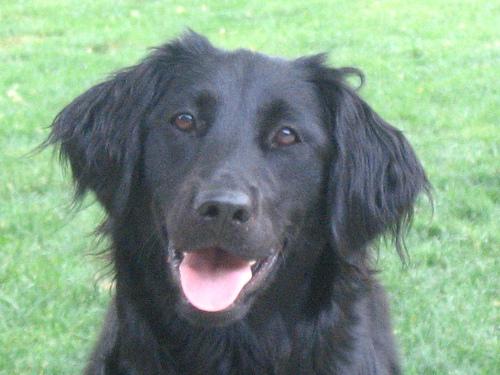
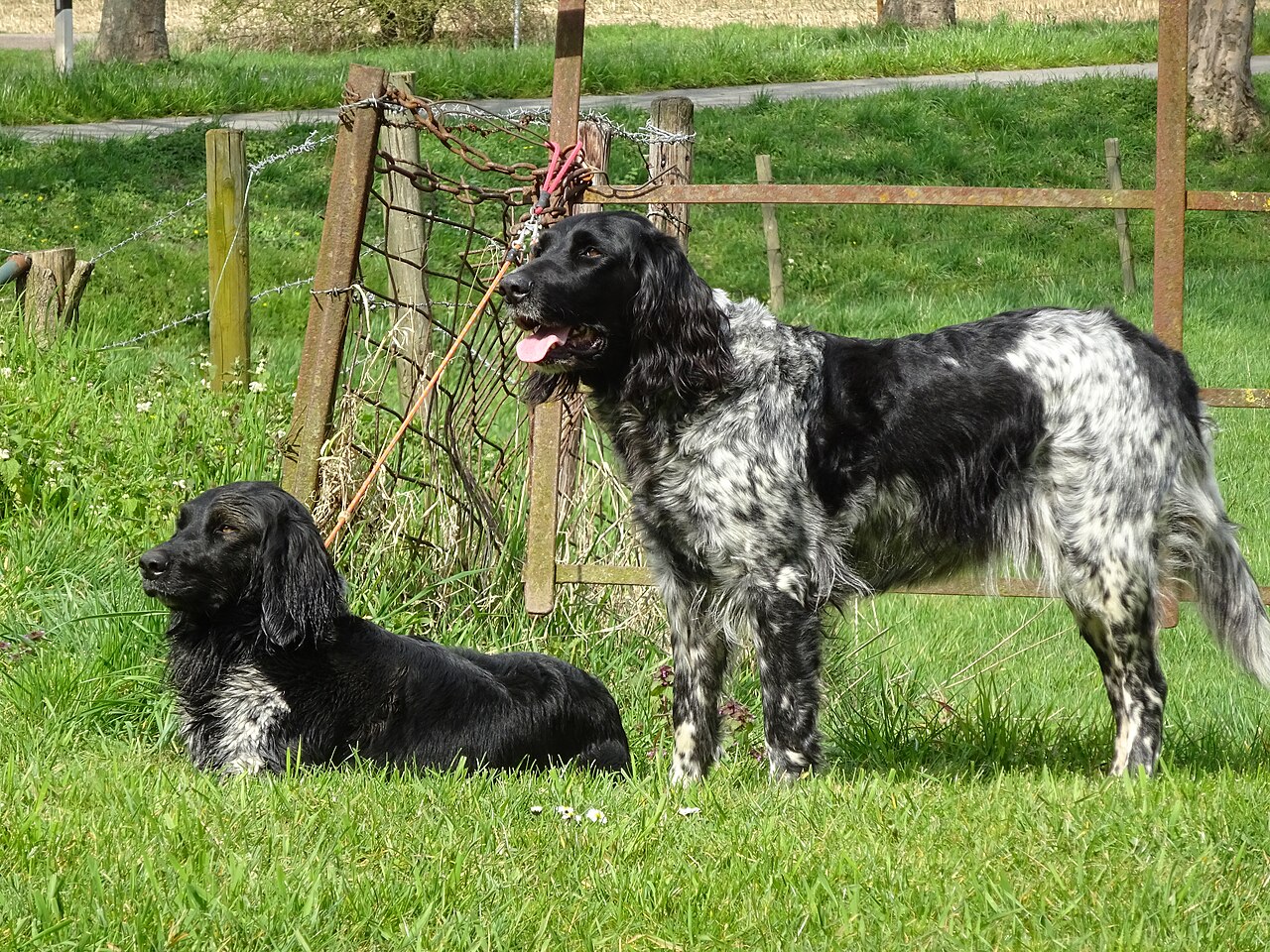
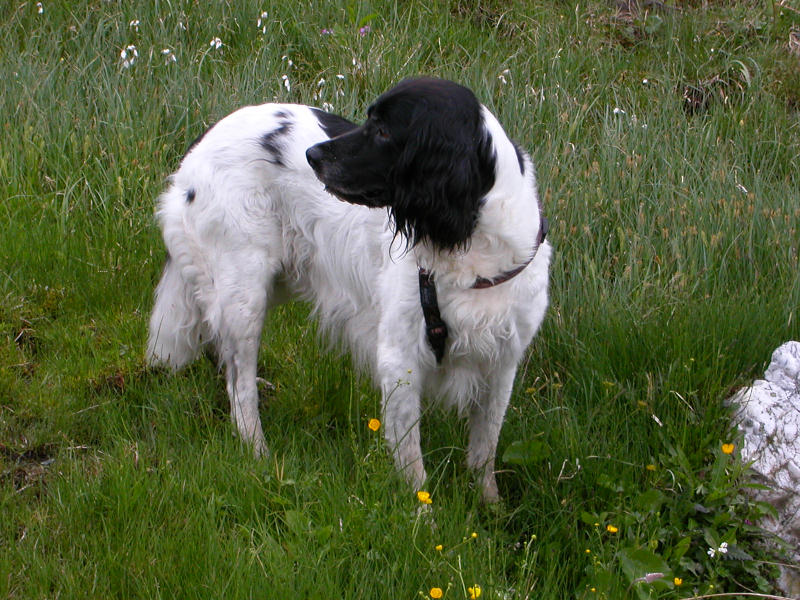
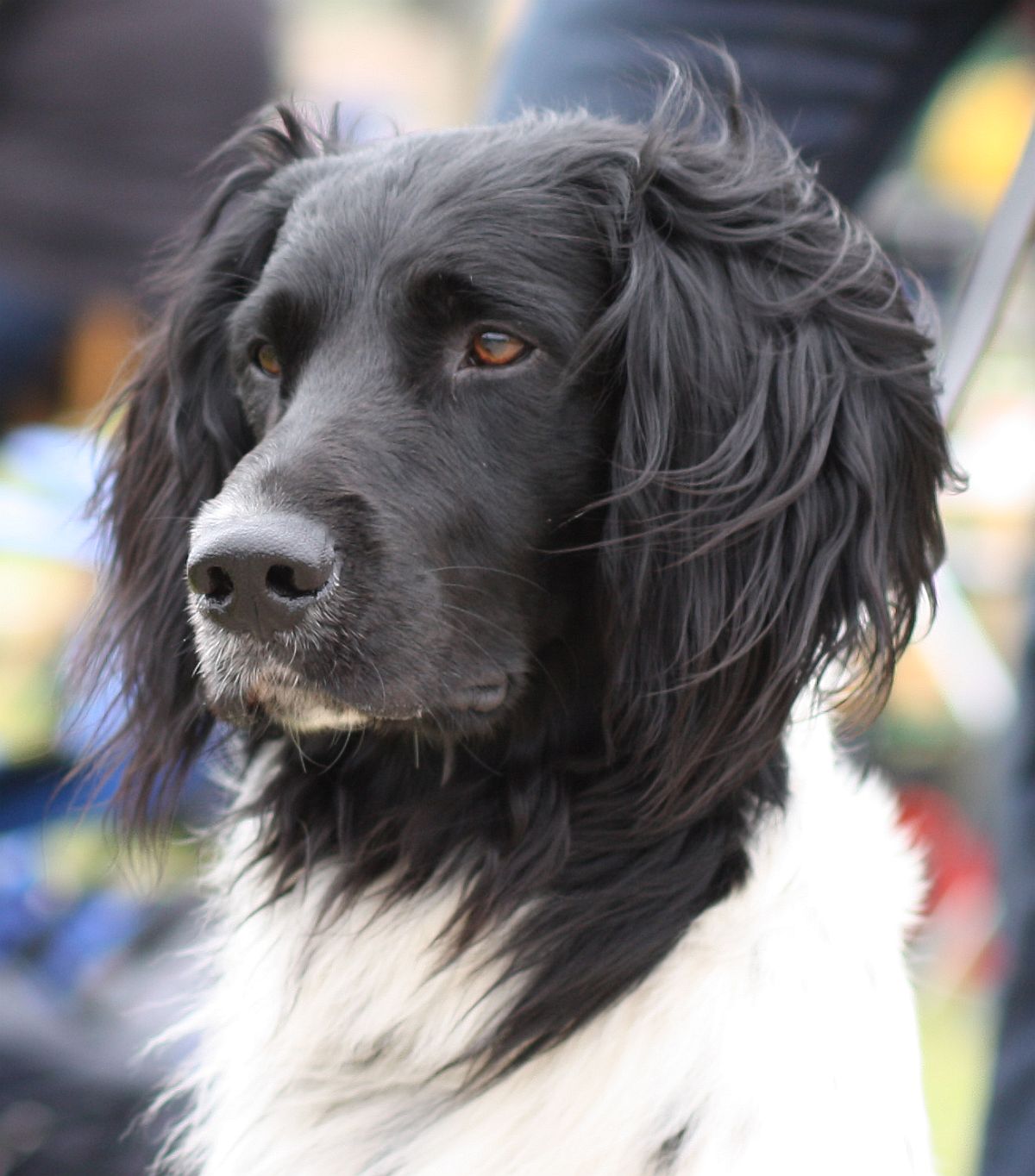
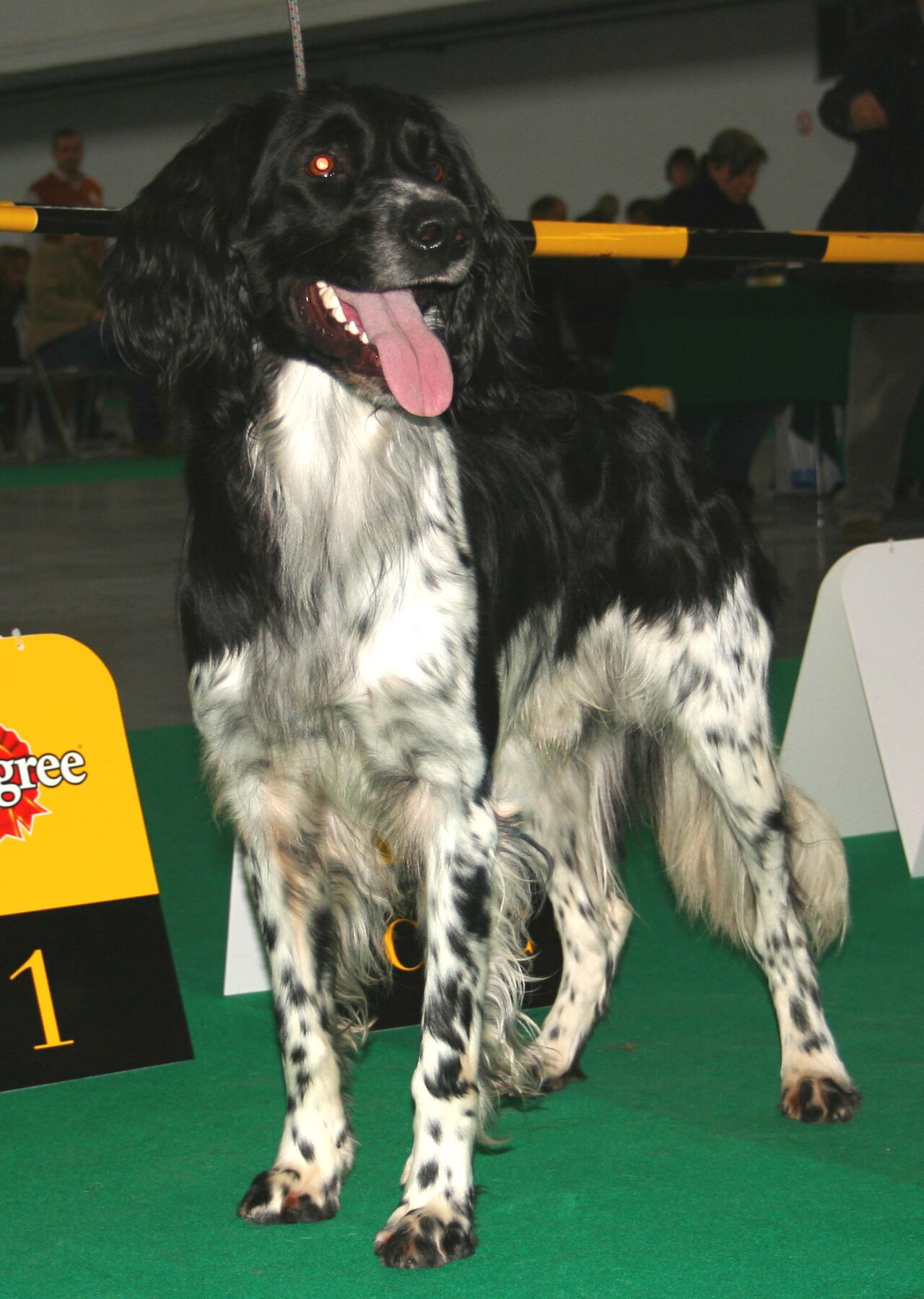
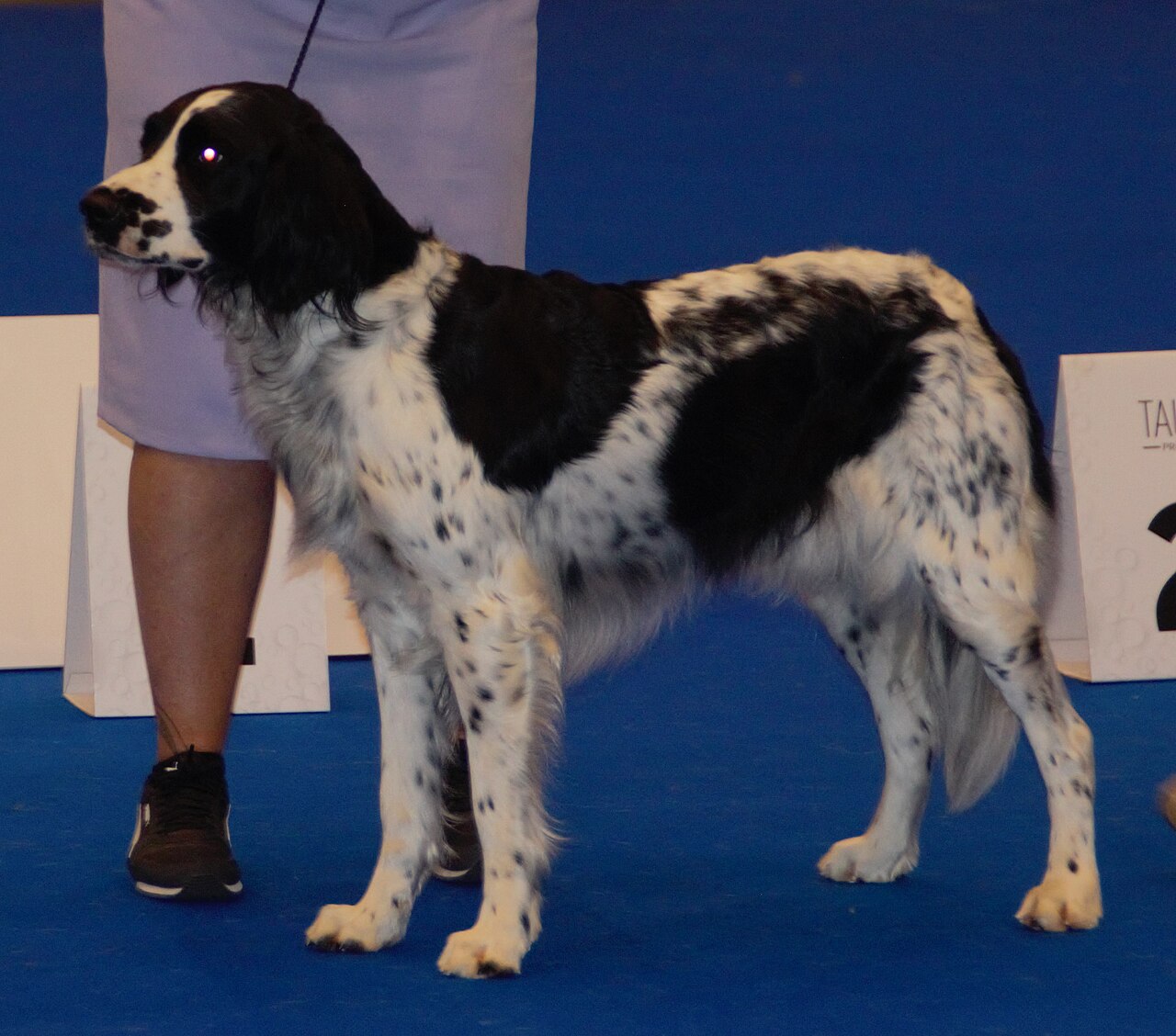
A strong, muscular dog with a racy outline, about as long as it is tall. The coat is long and dense but sleek, never curly, with heavy feathering on the legs and tail and long fringes on the ears. The head is short-haired and always black, sometimes with a white blaze. The FCI standard allows three color varieties: white with black patches and ticking, blue roan, or solid black.
| Males | Females | |
|---|---|---|
| Height | 23.5-25.5 in (60-65 cm) | 23-25 in (58-63 cm) |
| Weight | about 65 lbs (30 kg) | about 65 lbs (30 kg) |
| Lifespan | 12-14 years | 12-14 years |
| Coat | long, dense, sleek | same |
The standard tolerates up to 2 cm (about 0.8 in) above these heights. The AKC lists a range of 23-26.5 inches and 50-70 lbs.
Exercise and daily life
Plan on two hours or more a day of real work: off-leash running where it is safe and legal, retrieving, swimming, tracking. A neighborhood walk barely registers with this dog.
The best outlet is hunting. If you do not hunt, the closest substitutes are NAVHDA or VHDF training days, tracking and long hikes with plenty of water. LMAA puts it bluntly: the breed's strong hunting instincts can lead to frustration for dog and owner in a non-hunting home.
The long coat keeps it warm in cold water and thick cover, but LMAA calls it a compromise for temperate climates and suggests that shorthaired breeds suit upland hunting in the hot South better. Apartment life does not work. A house with a securely fenced yard is close to a requirement.
Training
Usually easy and rewarding. The breed wants to cooperate, learns quickly and is valued for steady work after the shot. What works: rewards, short sessions, lots of retrieving, and a structured program such as the NAVHDA Natural Ability Test in the first year.
Typical difficulties:
- Steadiness. LMAA notes that many LMs point from early puppyhood, but their passion for retrieving means steadiness has to be trained.
- Recall around game. Deer or a running rabbit can override everything. Use a long line until recall is solid.
- Overcorrection. A raised voice can undo a week of progress with a sensitive dog.
Grooming
Moderate. Brush two or three times a week and comb out the feathering after every day in the field, checking ears, armpits and feet for burrs, seeds and ticks. Shedding is moderate. The coat needs no clipping beyond tidying the hair between the pads.
After swimming, dry the ears: long hanging ears that stay damp invite infections.
Health
The breed is generally sound, and the clubs on both sides of the Atlantic select hard for health. Conditions to know:
- Hip and elbow dysplasia. The main orthopedic concern. LMAA requires hip and elbow evaluations by OFA at 24 months or older before a dog may be bred, and states that all its sires and dams are certified free of hip dysplasia. In Germany only dogs with free or near-normal hips and free or borderline elbows may be bred.
- Hyperuricosuria (HUU). An inherited defect in uric acid handling that lets uric acid build up in the urine and form stones, usually in the bladder. It is autosomal recessive, and a DNA test exists. The German club tests breeding dogs where the pedigree requires it, and since January 6, 2025 the UK Kennel Club registers imported Large Münsterländers only with a clear or carrier result.
- Eye problems. Vetstreet reports cataracts in the breed, and entropion and ectropion are disqualifying faults in the standard.
- Other conditions the German club excludes from breeding: epilepsy, aseptic necrosis of the humeral head (a front-leg lameness), spontaneous cruciate ligament rupture and cryptorchidism. Vetstreet also mentions osteochondrosis.
Ask to see OFA hip and elbow results for both parents, their HUU status and an eye exam, plus their field test scores.
Cost
Puppies are rare and litters are mostly born in spring and early summer. In 2025 a breeder in Fergus Falls, Minnesota, listed puppies at $2,000 each. Expect roughly $1,500 to $2,500, a waiting list, and possibly travel to pick up your dog. Annual costs run about $1,200 to $2,000: food for a 50-70 lb active dog, routine vet care, preventives, insurance and training or test fees.
Who it suits and who it does not
Good match for:
- Hunters who want one dog for upland birds, waterfowl and tracking
- Families who hunt and want the dog in the house, not in a kennel
- Active owners with a house, a fenced yard and access to open country
- People willing to train and test their dog in the first two years
Not a match for:
- Non-hunters looking for a family dog (a Golden Retriever is the more honest choice)
- Apartments and long workdays alone
- Hot climates with long summers
Hunters who prefer a shorter coat can look at the German Shorthaired Pointer or the German Wirehaired Pointer; for a lighter, brown-and-white dog, the Small Münsterländer; for a long-coated bird dog without the tracking focus, the English Setter.