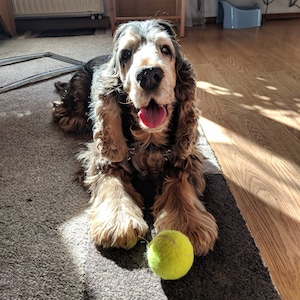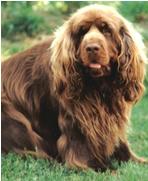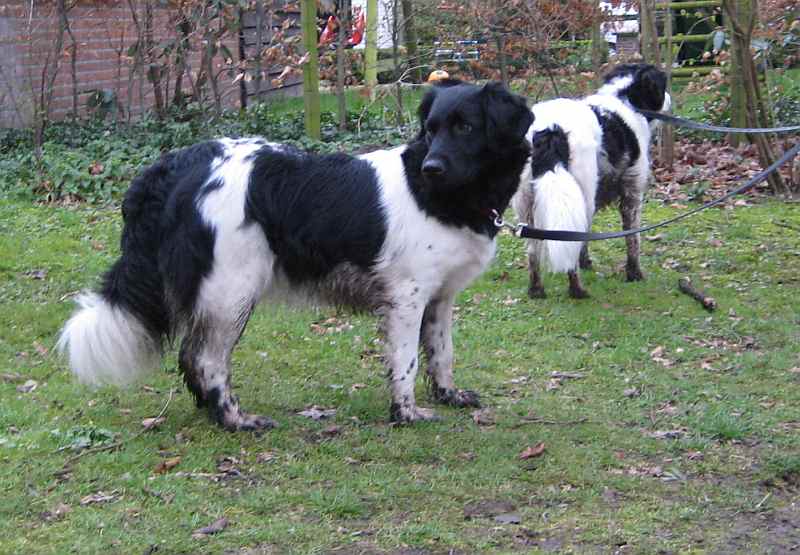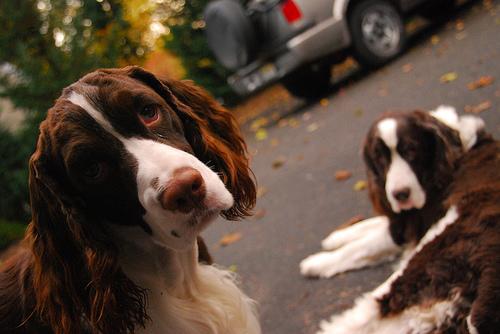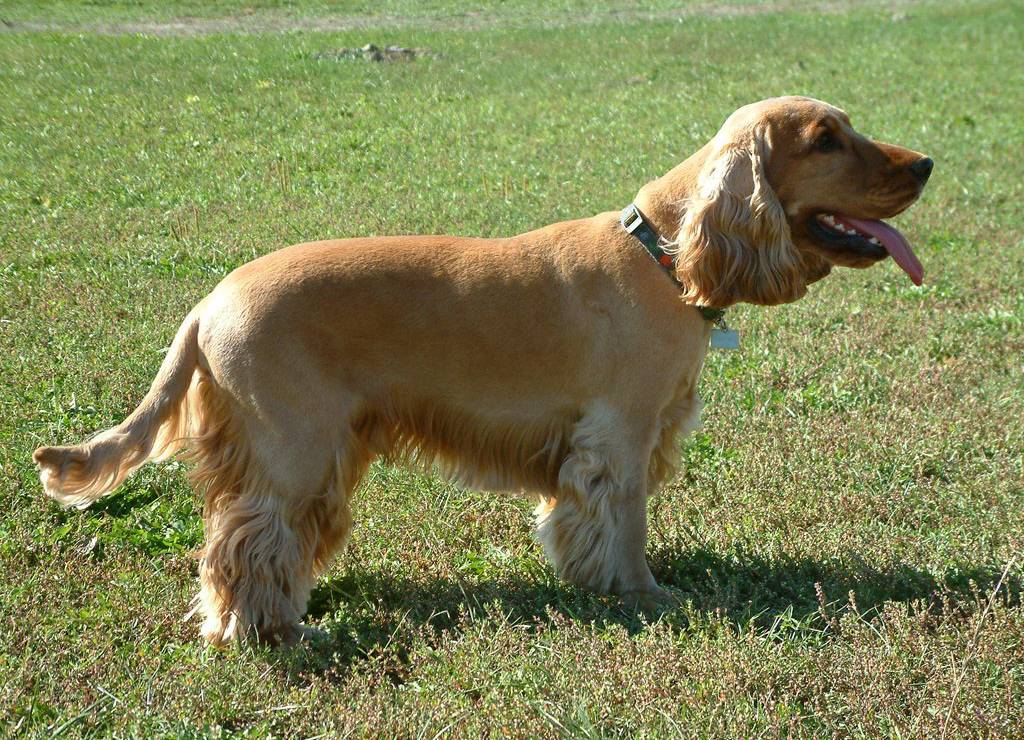
Origin and history
The English Cocker Spaniel is a British flushing spaniel, bred to push woodcock out of thick cover and retrieve it. The name comes from that job: the "cocking spaniel". Britain's Kennel Club recognized the Cocker as separate from the Field and Springer Spaniels soon after its founding in 1873.
In America the breed took another road. By the 1930s US breeders favoured a smaller dog with a rounder head and more coat, so fanciers of the original type founded the English Cocker Spaniel Club of America in 1936, and the AKC recognized the English Cocker as a separate breed in 1946. Outside the US this dog is simply "the Cocker Spaniel"; the American type is the American Cocker Spaniel.
- Size: English 15-17 in and 26-34 lbs; American about 13.5-15.5 in and 20-30 lbs.
- Head: English muzzle as long as the skull; American short muzzle, domed skull.
- Coat: the American carries far more coat on legs and belly.
- Purpose: the English Cocker is still a working gundog; the American has long been a companion and show dog.
There is also a split inside the breed. Show lines are sturdier, with longer ears and coat. Working lines ("working cockers") are lighter, shorter-coated and far more driven. Same breed on paper, two different dogs at home.
Temperament and character
The standard calls it "merry", with an ever-wagging tail, and that fits. A typical English Cocker greets people with its whole back end, follows you from room to room and wants in on everything. It is soft-natured and shuts down under harsh handling. Most get on well with other dogs and with children who respect them.
Outdoors the nose rules: it zigzags, pushes into every hedge and loves water and mud. Indoors it carries things, so socks and shoes get delivered to you as gifts.
Two honest points. Resource guarding of food, toys and stolen items is common and should be prevented from puppyhood with trading games, not confrontation. Then there is "rage syndrome". A 1996 survey (Podberscek and Serpell) found solid-coloured dogs, especially golden and red, more often described as aggressive than parti-colours. A 2023 VetCompass study of 10,313 English Cockers in UK practices found aggression recorded in 4.01% of dogs, almost twice the general dog population, and 7.0% in solid colours against 3.66% in bi-colours. Researchers now see this mostly as ordinary aggression (guarding, fear) with a genetic component, not a seizure-like "rage". Meet the parents and ask the breeder directly about temperament in their lines.
Size and appearance
| Males | Females | |
|---|---|---|
| Height | 16-17 in | 15-16 in |
| Weight | 28-34 lbs | 26-32 lbs |
| Lifespan | 11-14 years | 11-14 years |
| Coat | Flat, silky, feathered | Same |
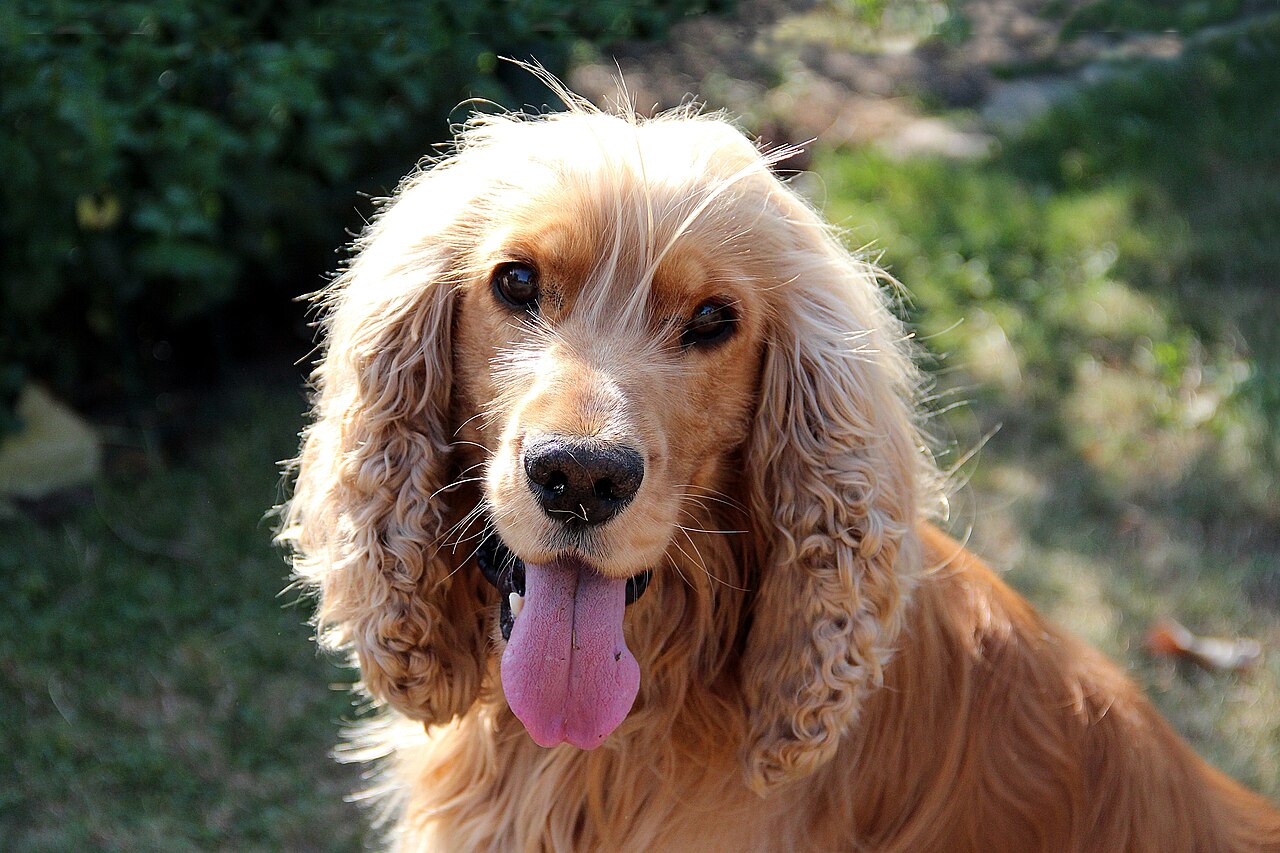
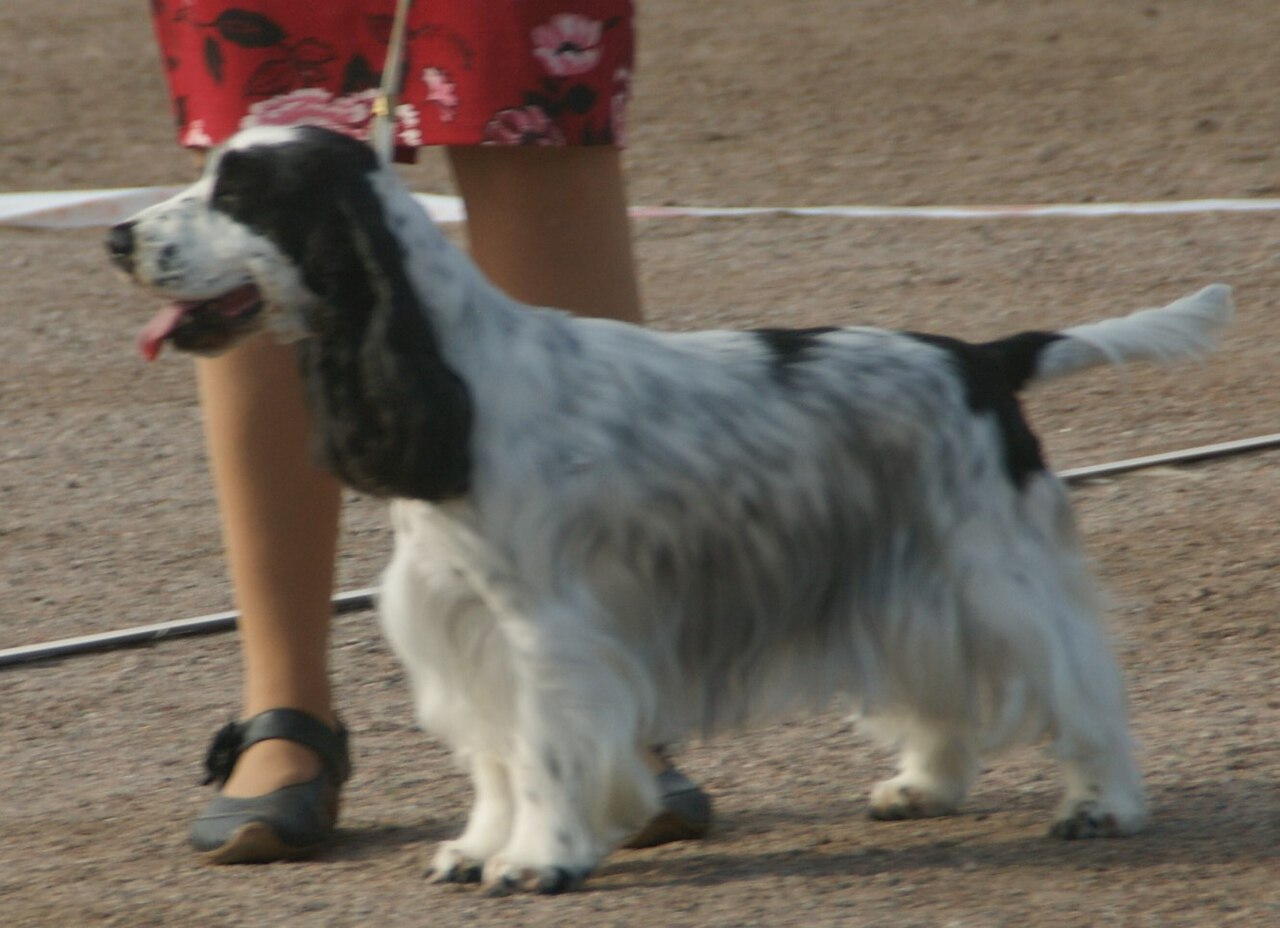
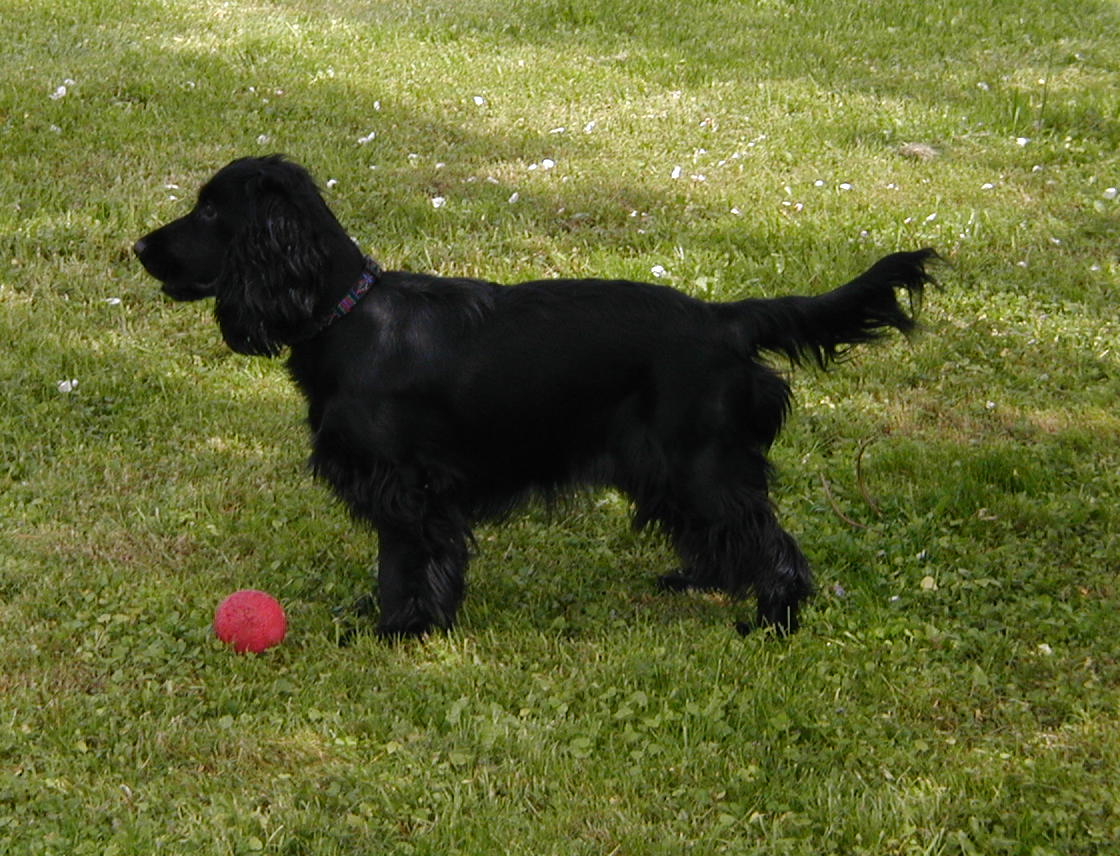
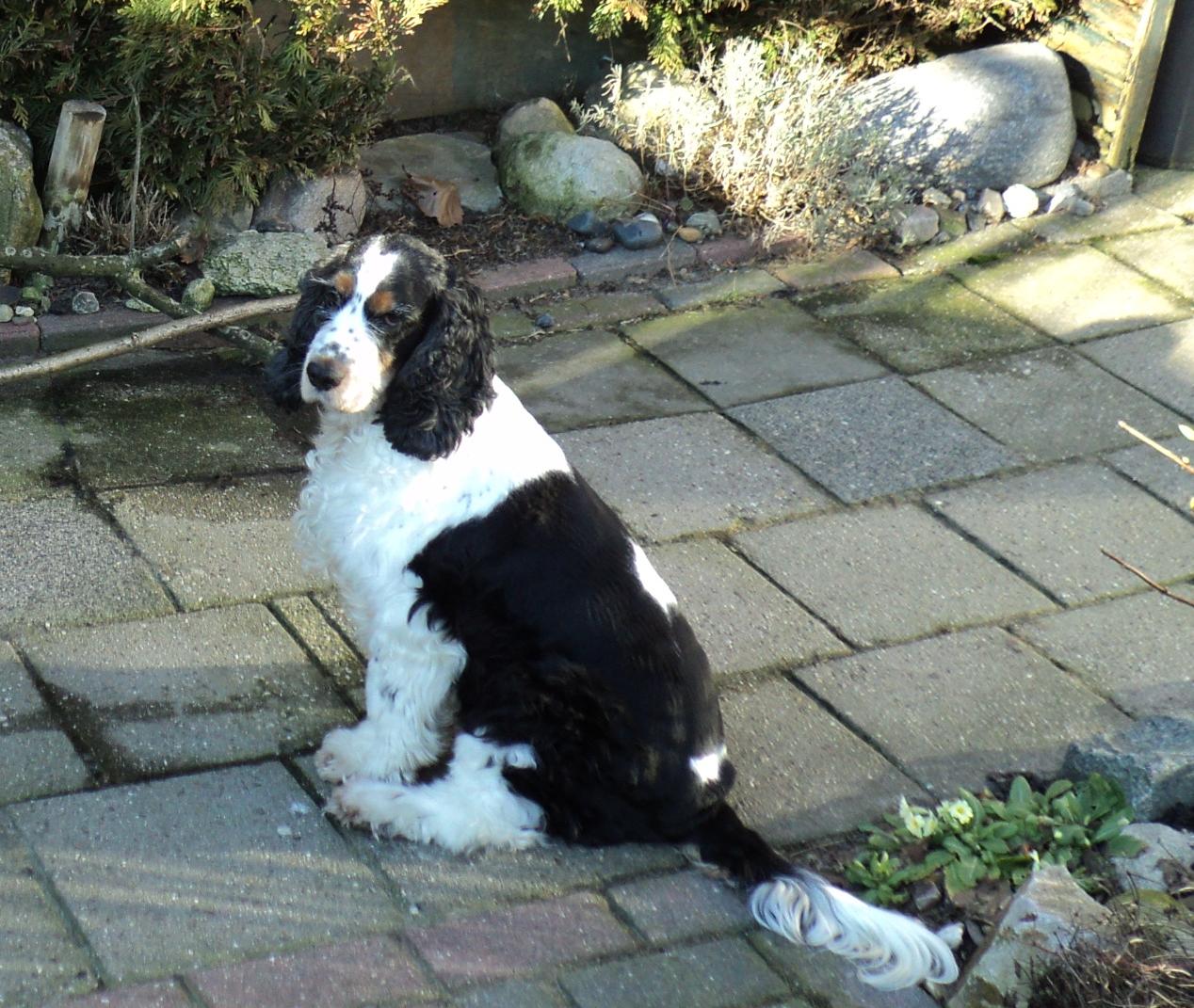
That is about 38-43 cm and 12-15.5 kg. Colours include solids (black, red, golden, liver), parti-colours, tricolours and roans.
Exercise and daily life
Plan at least an hour a day, split into walks with real sniffing time, plus some brain work. Working lines often need closer to two hours and a job such as retrieving, scent work or agility, much like the bigger English Springer Spaniel. Bored, the English Cocker barks, chews and starts its own hunting games.
A show-line dog can live in an apartment if the walks happen every day. Long hours alone suit it badly: it was bred to work beside a person. Recall needs real training, because a pheasant or rabbit switches the brain off.
Training
English Cockers learn quickly and work well for food, play and retrieves. Keep sessions short. Typical hurdles:
- Recall around game, especially in working lines
- Resource guarding, handled by trading, never by snatching
- Scavenging and pulling on walks
- Over-excited greetings
Dummy retrieving and scent work suit them perfectly.
Grooming
Brush two or three times a week to keep the feathering on ears, chest and legs free of mats, and pick out grass seeds after walks. Show coats need a trim every 6-8 weeks; working coats are easier. Check and clean the heavy ears weekly, because ear infections are one of the breed's most common vet visits.
Health
In the VetCompass study median lifespan was 11.4 years (females 12.0, males 11.0). The most common problems were dental disease (21%), ear infections (10%), obesity (10%) and anal sac impaction (8%). Inherited conditions to know:
- Progressive retinal atrophy (prcd-PRA), gradual blindness, DNA test
- Familial nephropathy (FN), kidney failure usually between 6 months and 2 years, DNA test
- Adult onset neuropathy (AON), DNA test
- Acral mutilation syndrome (AMS), mainly working lines, DNA test
- Hip dysplasia, glaucoma, luxating patellas and congenital deafness
For AKC CHIC certification parents need an OFA hip evaluation, an annual eye exam by a board-certified ophthalmologist and a prcd-PRA result; the breed club also recommends FN, AON, patella and BAER hearing tests. Ask to see them.
Cost
Puppies from health-testing US breeders usually cost $1,200-$2,500, show prospects at the top. Budget roughly $1,200-$2,200 a year for food, vet care, preventatives, insurance and grooming; professional trims are a big part of that.
Who it suits and who it does not
Good fit:
- Active families who walk daily in any weather
- People keen on gundog work, scent work or agility
- Owners wanting a medium dog for a smaller home
- Someone home most of the day
Poor fit:
- Dogs alone 8+ hours a day
- Owners wanting low grooming (consider a Labrador Retriever)
- Anyone unwilling to work on recall and guarding