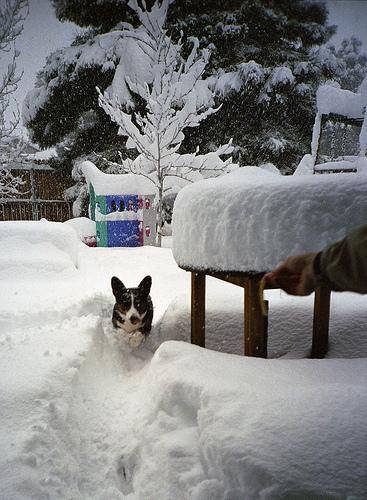
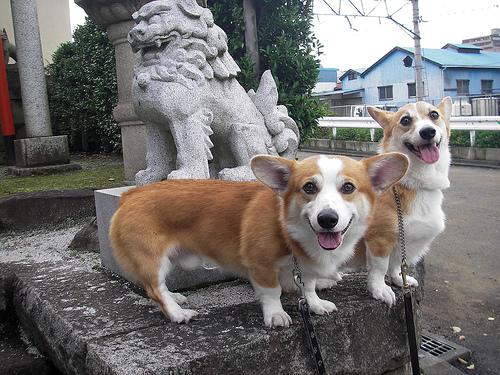
These are two separate breeds from neighboring counties of Wales, Cardiganshire and Pembrokeshire, which were shown as one breed until the UK Kennel Club split them in 1934. They share the long, low body, the cattle-herding past and every one of our ratings. How to tell them apart:
- Tail. The Cardigan has a long, fox-like tail. The Pembroke's is short: some are born with a natural bobtail, others have been docked. In the US docking is legal and the AKC standard calls for a docked tail; in the UK, Germany and the Netherlands docking is banned, so long-tailed Pembrokes are common there.
- Ears. Cardigan ears are larger, with rounded tips; Pembroke ears are medium-sized and more pointed.
- Build. The Cardigan is the heavier dog: 25-38 lbs at 10-13 in, compared with up to 30 lbs at 10-12 in for the Pembroke.
- Colors. Only the Cardigan comes in blue merle and brindle. Pembrokes are red, sable, fawn or black and tan, usually with white markings.
- Character. The Pembroke is usually described as the outgoing one, the Cardigan as steadier and more reserved with strangers. These are tendencies, not rules.
- Rarity. The Pembroke is far more common, not least thanks to Queen Elizabeth II, who kept Pembrokes for most of her life. A Cardigan puppy often means a waiting list.
Health is similar: both breeds are prone to degenerative myelopathy (ask for both parents' SOD1 DNA results) and to the disc problems of a long back on short legs. Cardigan breeders also test for an inherited eye disease, PRA (rcd3). On average the Cardigan lives a little longer: 12-15 years versus 12-13.
Pick the Cardigan for the long tail, merle or brindle colors and a steadier temperament, if you can wait for a puppy; pick the Pembroke for a slightly smaller, more outgoing dog that is easier to find.