Origin and history
The Beauceron is a French herding dog, called Berger de Beauce at home, after the Beauce plains southwest of Paris. Despite the name, the type was found across northern France. It was bred to move and guard big flocks over long distances every day, working as a "living fence" along unfenced fields.
The first description of a dog like it is usually traced to a 16th-century manuscript. A text by the Abbé Rozier (d. 1793), published in 1809, separated the long-coated sheepdogs of the Brie from the short-coated dogs of the Beauce. The split still stands: the Briard is the Beauceron's long-haired cousin. The first Berger de Beauce entered the French stud book (LOF) in 1893, and the French breed club, Les Amis du Beauceron, was founded in 1922.
As sheep herding declined, the French club promoted the breed as a guard dog. The French army used Beaucerons in both World Wars as messenger dogs, for trailing and for mine detection. The AKC accepted the breed for registration on March 1, 2007, and it has competed in the Herding Group since June 2007. The current FCI standard is No. 44, group 1.
Temperament and character
The FCI standard asks for a dog that is "frank" and "self-assured", gentle and fearless, and disqualifies dogs that are aggressive or overly shy. The American Beauceron Club warns it "can be overwhelming for a novice owner". In daily life:
- It is serious and watchful. Reserved with strangers, protective of home and people. This is aloofness, not fear, and it guards without being taught.
- It is strong-willed. Bred to make decisions alone with a flock, it learns fast but wants a reason, and it tests a handler it does not respect.
- It is sensitive. It reacts badly to harsh handling and to being shut out of family life. It does not suit homes where everyone is away all day.
- It matures slowly. Expect a long adolescence; many breeders say the dog is not really settled until two to three years.
With its own family, including children it grew up with, a well-raised Beauceron is usually devoted. But a heavy herding dog may bump, circle or try to control running kids, so supervision is not optional.
Size and appearance
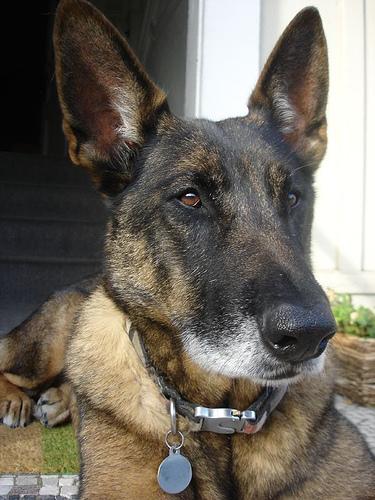
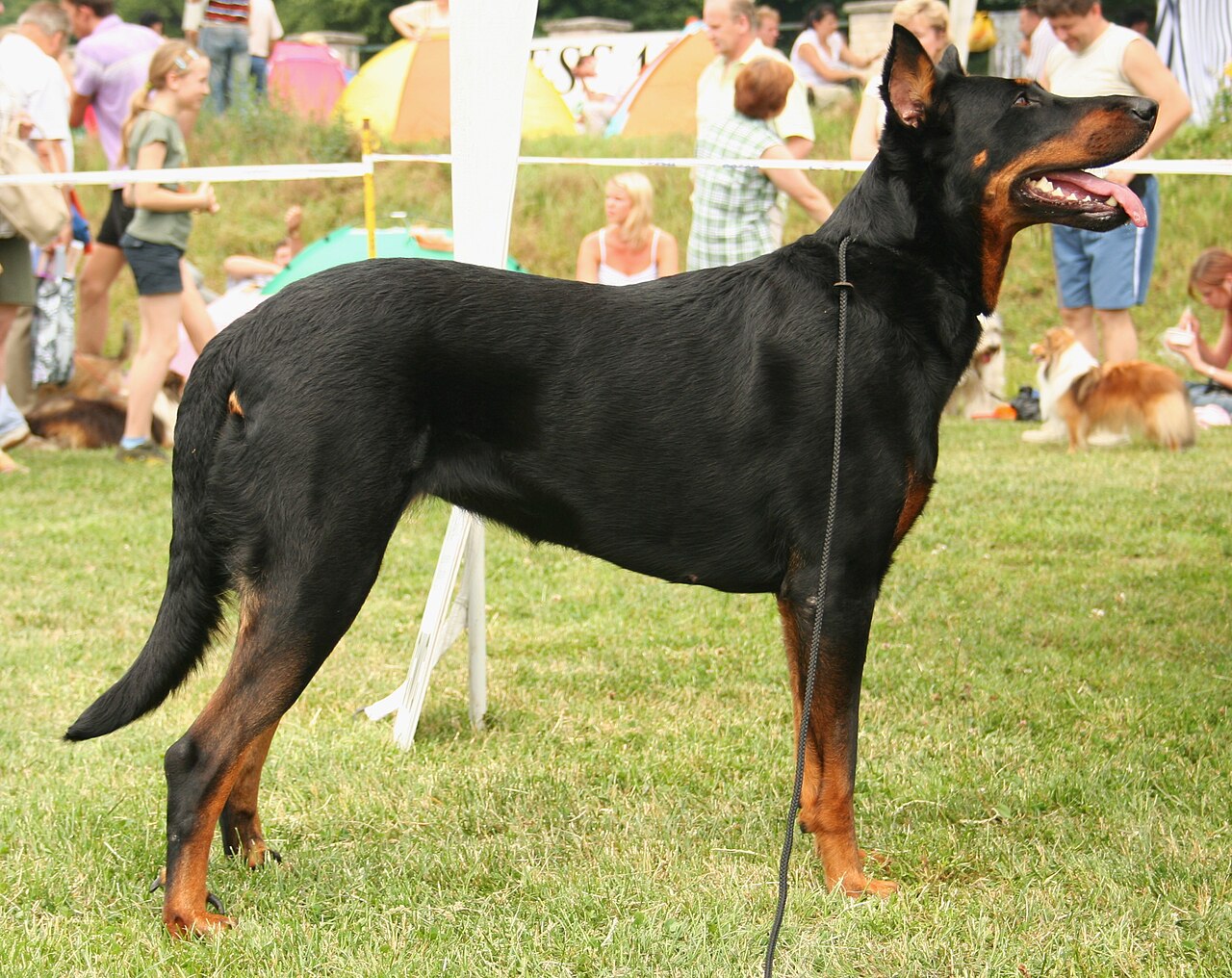
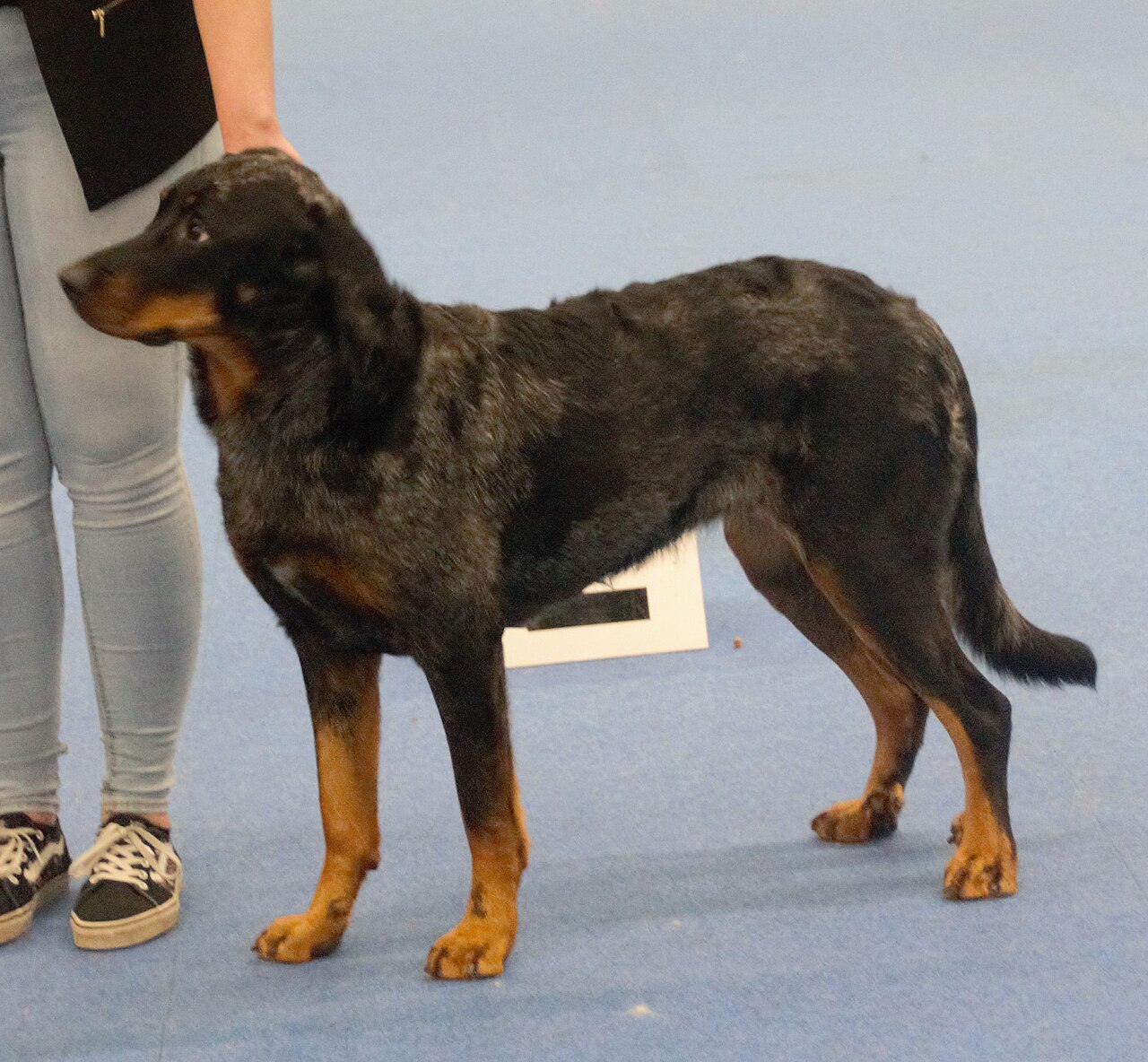
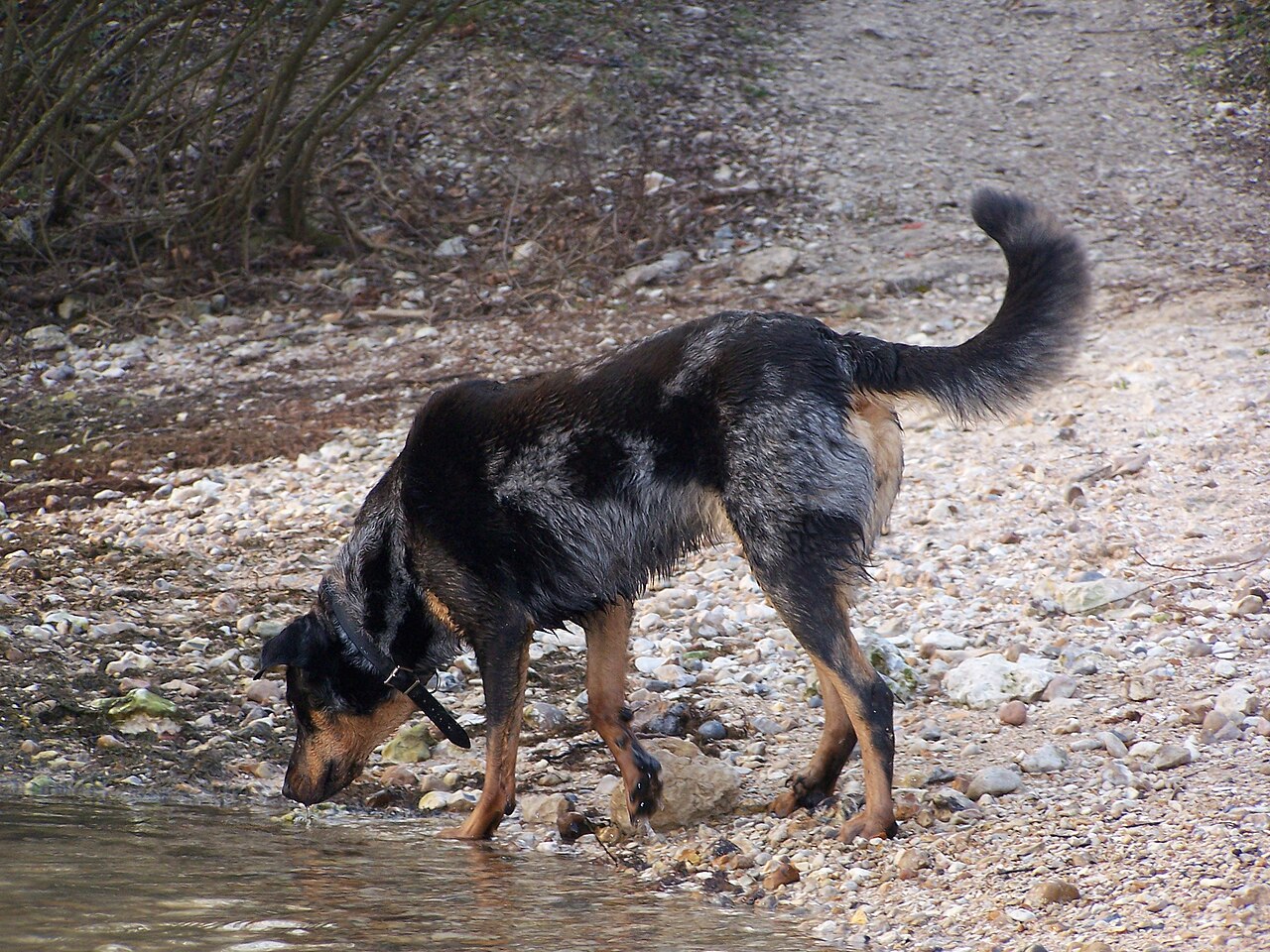
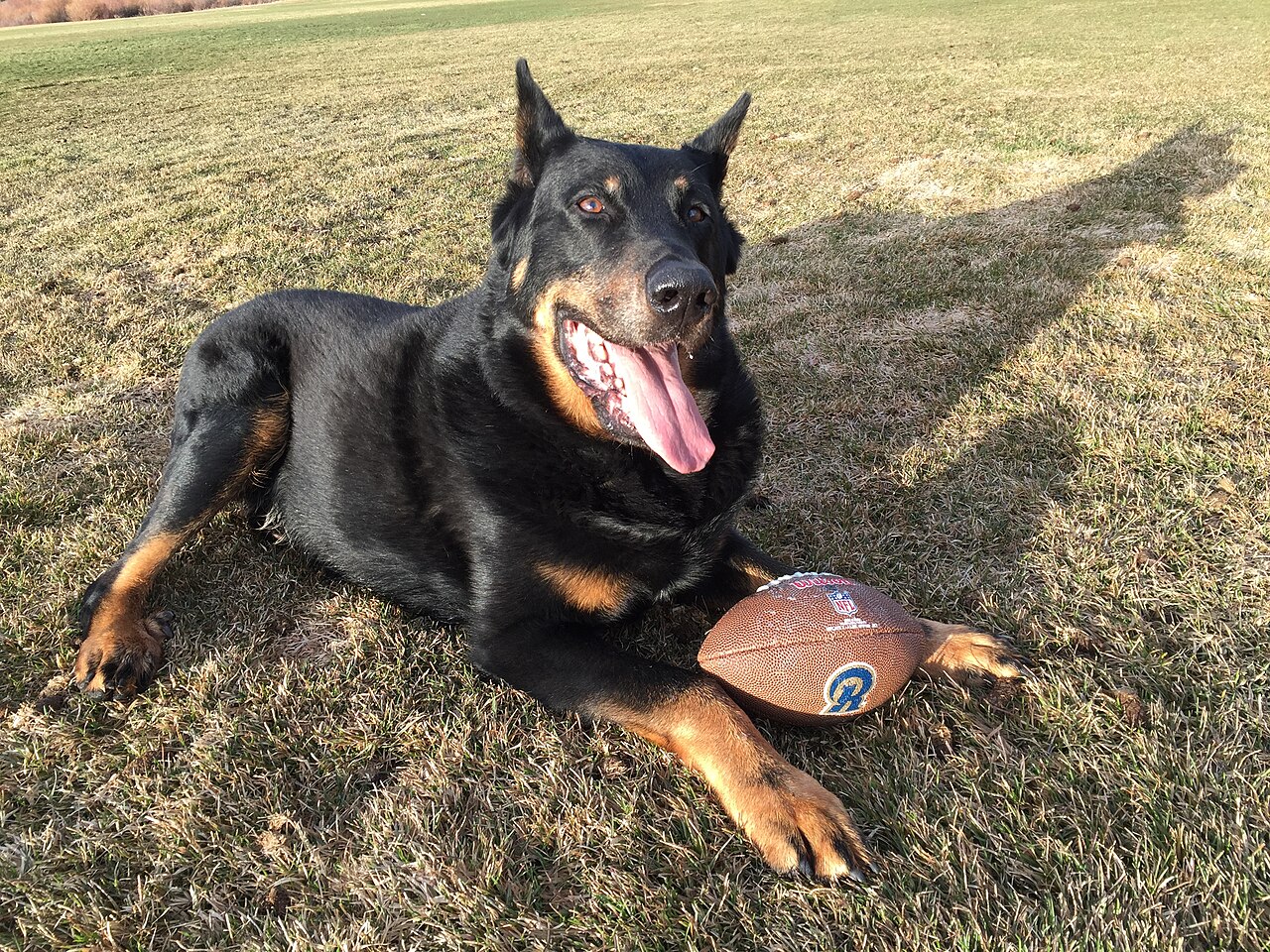
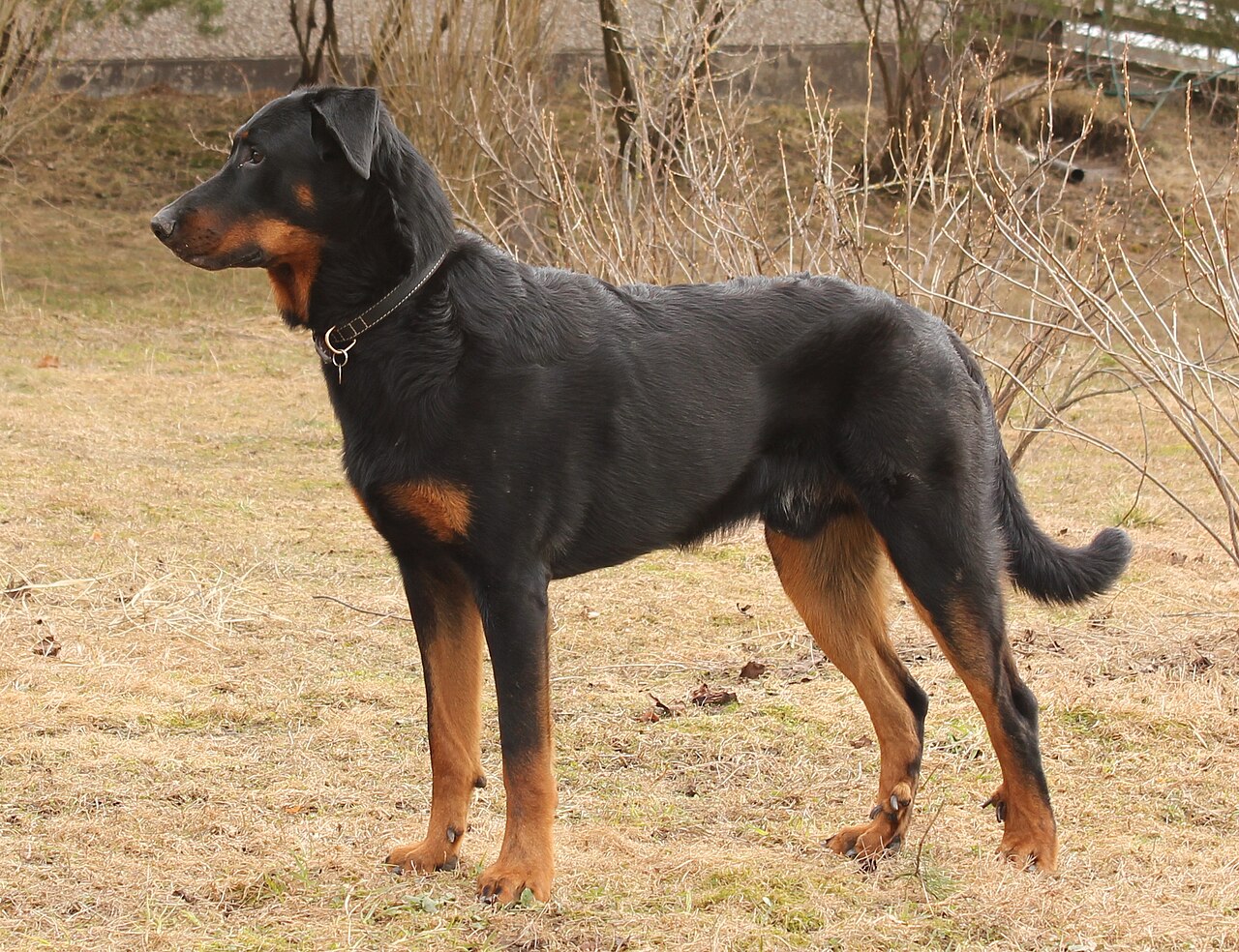
A big, solid, muscular dog, slightly longer than tall, with a short, harsh coat over a dense undercoat. Two colours are allowed: black and tan, with the tan "red stockings" on the legs that gave the nickname bas-rouge, and harlequin (grey, black and tan). The standard requires double dewclaws on the hind legs; a single dewclaw or none disqualifies the dog.
| Males | Females | |
|---|---|---|
| Height | 25.5-27.5 in (65-70 cm) | 24-27 in (61-68 cm) |
| Weight | 70-110 lbs, males at the upper end | same range, usually lighter |
| Lifespan | 10-12 years | 10-12 years |
| Coat | Short, harsh, dense undercoat | Same |
The FCI standard gives no weight; the figures are typical US breed profile ranges.
Exercise and daily life
This is a high-energy working dog. Plan on two hours of activity a day with a real job in it: herding if you can find sheep, tracking, obedience, protection sports, long hikes. Under-stimulated Beaucerons become destructive, and at this size that gets expensive.
It is not an apartment dog. It fits best in a house with a securely fenced yard, in a suburban or rural setting. Check HOA rules and your homeowner's insurance first: some insurers and landlords restrict large guarding breeds.
Training
What works: early, broad socialization (people, dogs, traffic, visitors), short varied sessions, calm consistency and a handler who is clear without being rough. In experienced hands the breed does well in obedience, herding trials and protection sports.
Typical difficulties:
- A teenage phase well past the first birthday, with selective hearing and testing of limits.
- Guarding that turns into overprotection if nobody shapes it. Teach early that you decide who comes in.
- Herding kids, bikes and other pets: circling, blocking, nipping at heels.
Grooming
Low effort. Weekly brushing removes dead hair; during the seasonal shed, when the undercoat comes out in clumps, brush daily for a few days. Baths are rarely needed. Trim the nails regularly, including the double dewclaws, which do not wear down and can grow into the skin if forgotten.
Health
The Beauceron is generally robust, but the American Beauceron Club lists conditions to know:
- Hip dysplasia. The main orthopaedic concern. Elbow problems and osteochondritis dissecans (OCD) also occur.
- Bloat (gastric dilatation-volvulus). A deep-chested breed at real risk. Feed two or three smaller meals and avoid hard exercise right after eating. A swollen belly and retching without result is an emergency.
- Dilated cardiomyopathy (DCM). The club has raised money for a DCM fund.
- Eye disease. The club recommends a yearly exam by a veterinary ophthalmologist.
- Allergies, food or environmental.
- Dewclaw injuries. The double dewclaws can catch and tear during hard running.
The club's health award asks for OFA hip, elbow, cardiac and eye results plus a temperament test. Ask for the same on both parents and check them in the OFA database yourself.
Cost
Puppies from established US breeders usually cost $1,500 to $2,500. The breed is still uncommon, so waiting lists and imports from France are normal; importing adds transport and fees.
Running costs come to roughly $1,200 to $2,000 a year: food for a 70-110 lb dog, routine vet care, preventives, insurance and training. Bloat surgery or heart treatment can cost thousands on top, a good reason to insure early, before anything counts as pre-existing.
Who it suits and who it does not
Good match for:
- Experienced owners who have raised a large, independent working dog before
- Homes with a fenced yard in a suburban or rural setting
- People who want a real watchdog and enjoy training, herding or dog sports
- Active owners with time every day, for years
Not a match for:
- First-time owners or people who want an easy family dog
- Apartments and homes where everyone is out all day
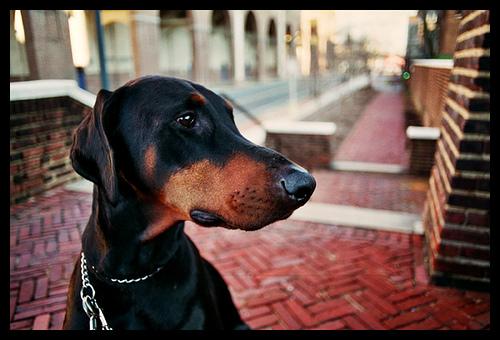
- People who want protection without the training. A Doberman is similar but more handler-focused; a Belgian Malinois or Dutch Shepherd has even more drive and is no easier