Origin and history
The Tibetan Spaniel, or "Tibbie" to its fans, is a small companion dog from the Himalayas. It is not a spaniel in the Western sense and has nothing to do with Cockers or Cavaliers. The AKC places it among the old Asian companion types that also produced the Pekingese, the Pug and the Lhasa Apso. The name probably comes from an old European word for a lady's lap dog, not from any hunting work.
Buddhist monasteries kept and bred these dogs for centuries. The parent club says they rarely left the monasteries except as gifts to respected friends, and the AKC notes they were sent as gifts to the palaces of China. Their job was company and watching: Tibbies sat high on the monastery walls, scanned the valley and raised the alarm for the monks and the big Tibetan Mastiffs below. The often repeated story that they turned prayer wheels is, according to the parent club, now doubted. They certainly served as bed warmers on cold Himalayan nights.
The first dogs reached England in 1898, but very few were bred until after World War II. Britain is still the breed's patron country at the FCI, where it is standard No. 231 in Group 9 (Companion and Toy Dogs), Section 5 (Tibetan breeds). The FCI published a revised standard in 2026.
In the US, imports started in 1966 and the Tibetan Spaniel Club of America (TSCA) was founded in 1971. The AKC recognized the breed in the early 1980s (the AKC lists 1983, the parent club 1984), and it shows in the Non-Sporting Group together with its countrymen, the Lhasa Apso and the Tibetan Terrier. It stays a quiet niche breed: 126th in AKC registrations in 2024 and 122nd in 2025.
Temperament and character
The FCI standard sums it up in a few words: "Gay and assertive, highly intelligent, aloof with strangers. Alert, loyal but independent." The AKC calls it "frisky and curious" and says it forms "a tight, worshipful bond" with its people. In daily life:
- It is a watchdog in a small body. It likes a high lookout, often the back of the sofa or a windowsill, and it reports anything unusual. The parent club says it barks at the unusual, but not needlessly.
- It is devoted to its family. The TSCA describes affection "akin to worship" and says Tibbies do poorly as kennel dogs. Expect a dog that wants to be where you are.
- It is reserved with strangers. Aloofness is in the standard, but nervousness and shyness are faults. A well-bred Tibbie watches visitors first and warms up on its own terms.
- It has a mind of its own. It is clever and sensitive to your moods, but it will decide whether your request is worth following.
The AKC rates it 5 out of 5 with young children and in the middle with other dogs. The parent club says it usually gets along with other pets. Kids still need to learn that a 10-pound dog is not a toy.
Size and appearance
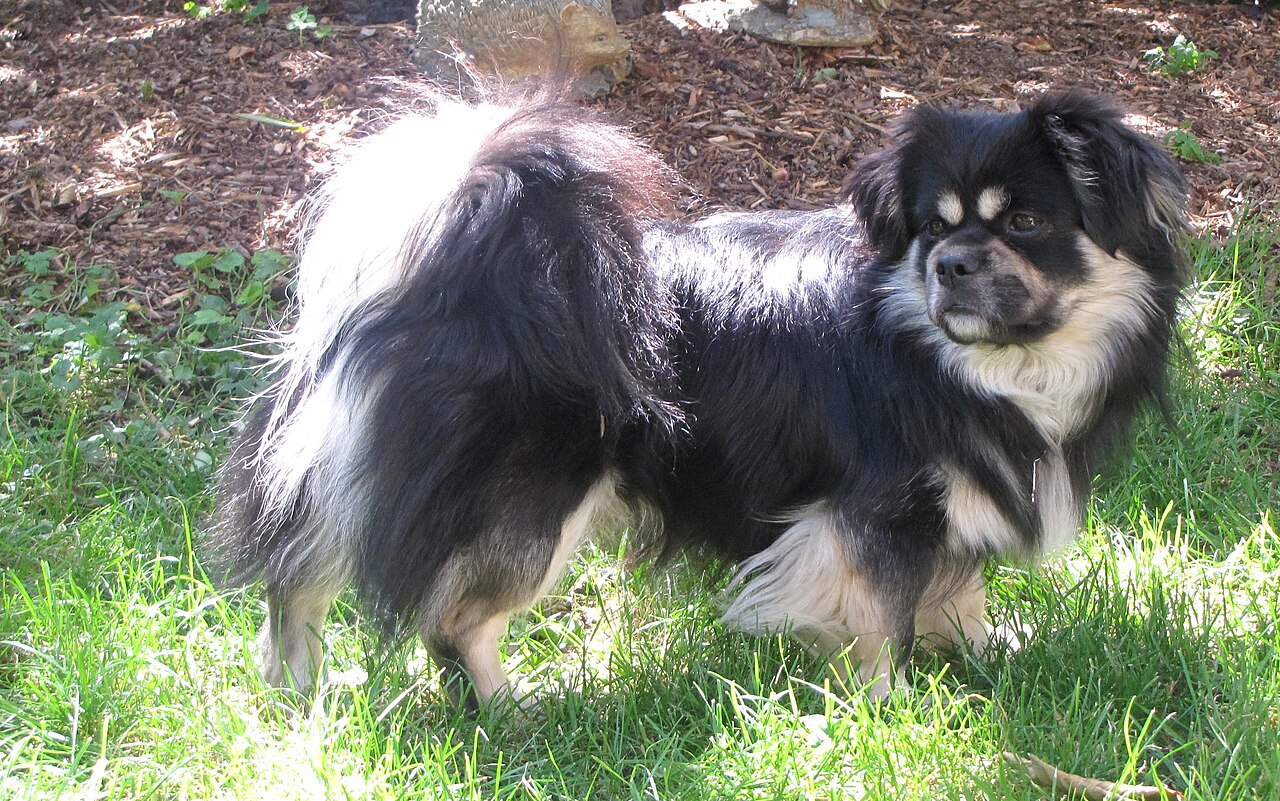
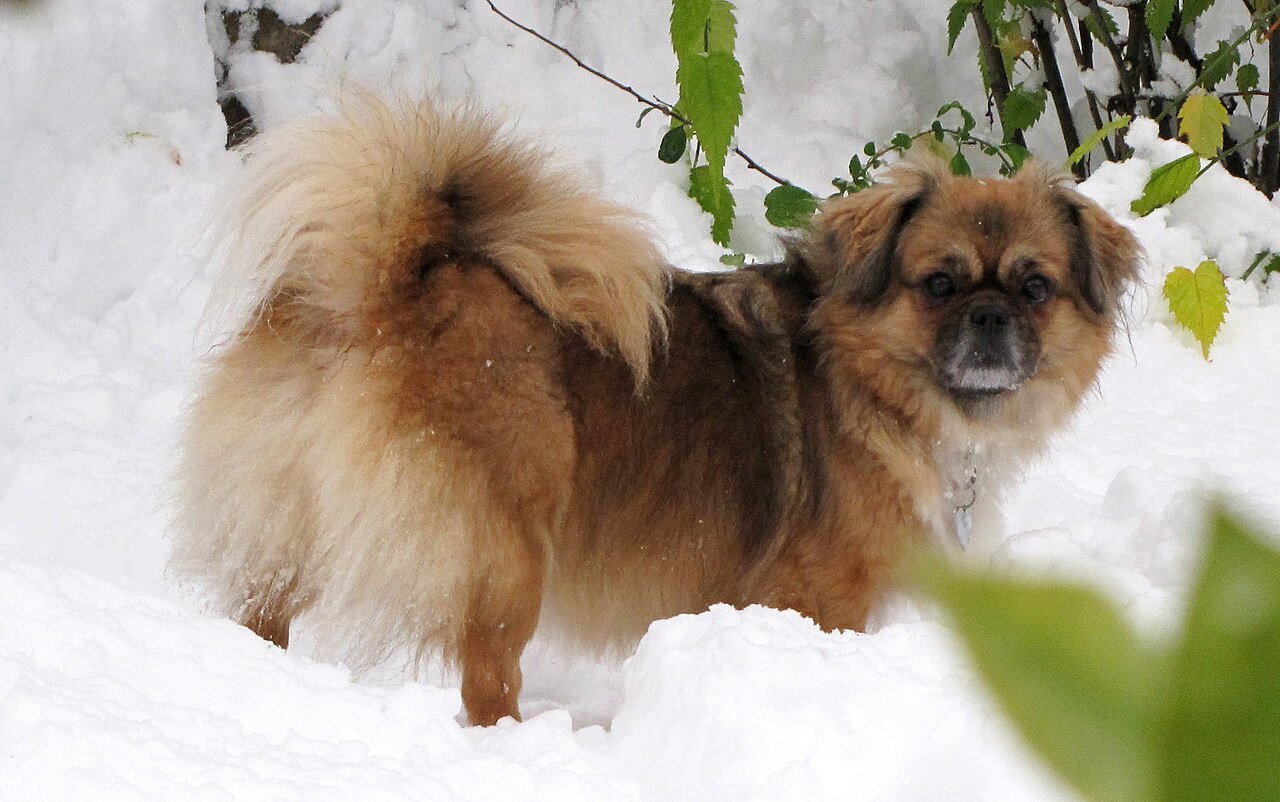
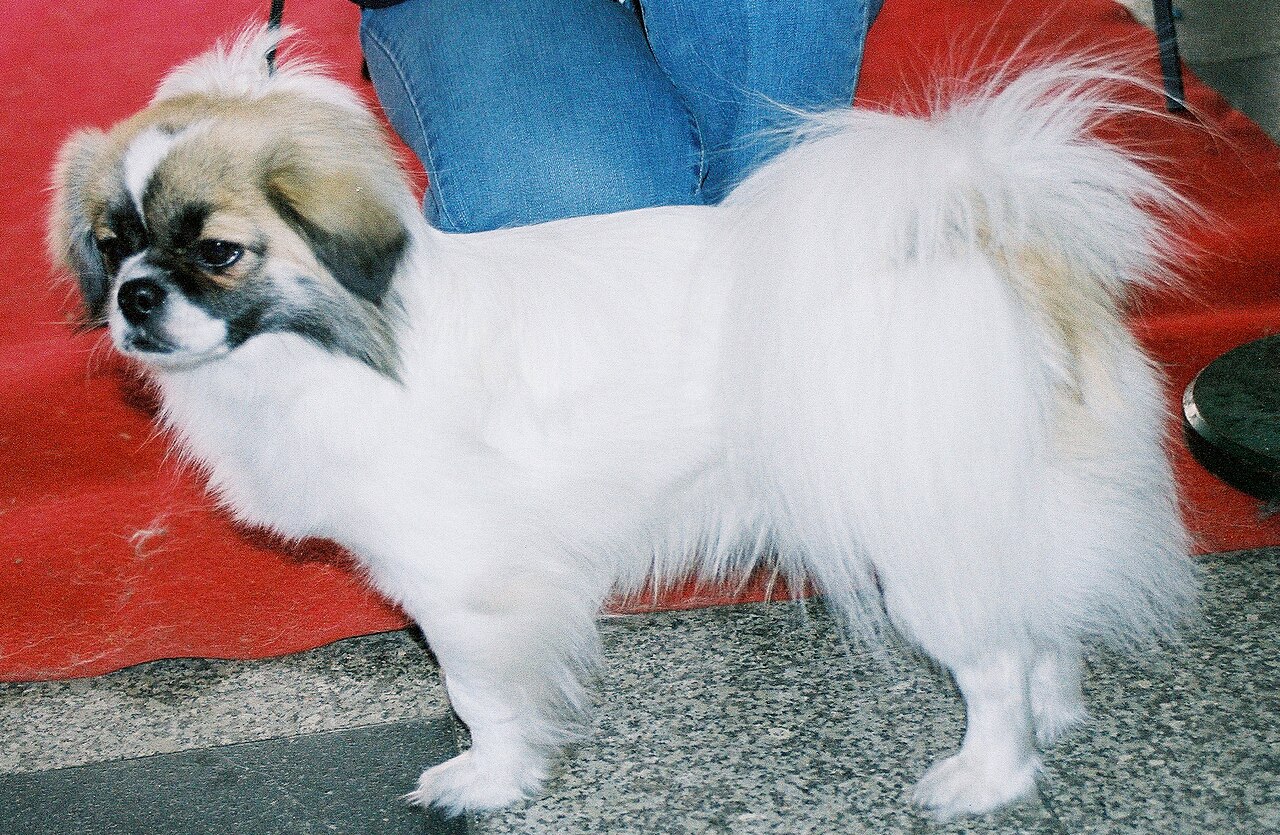
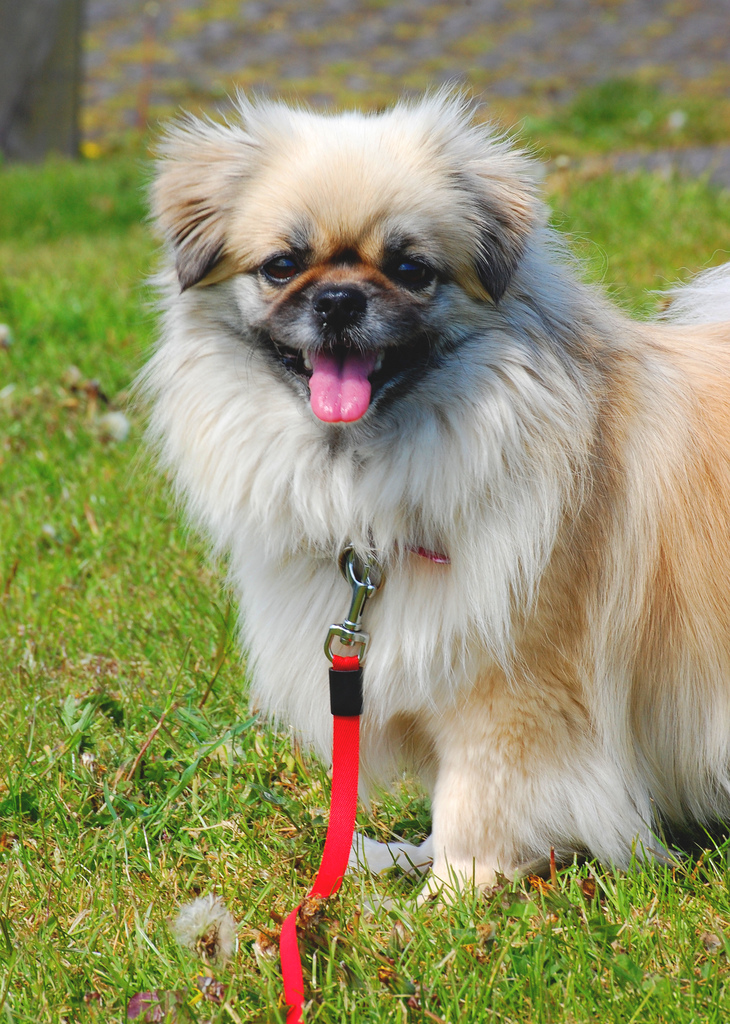
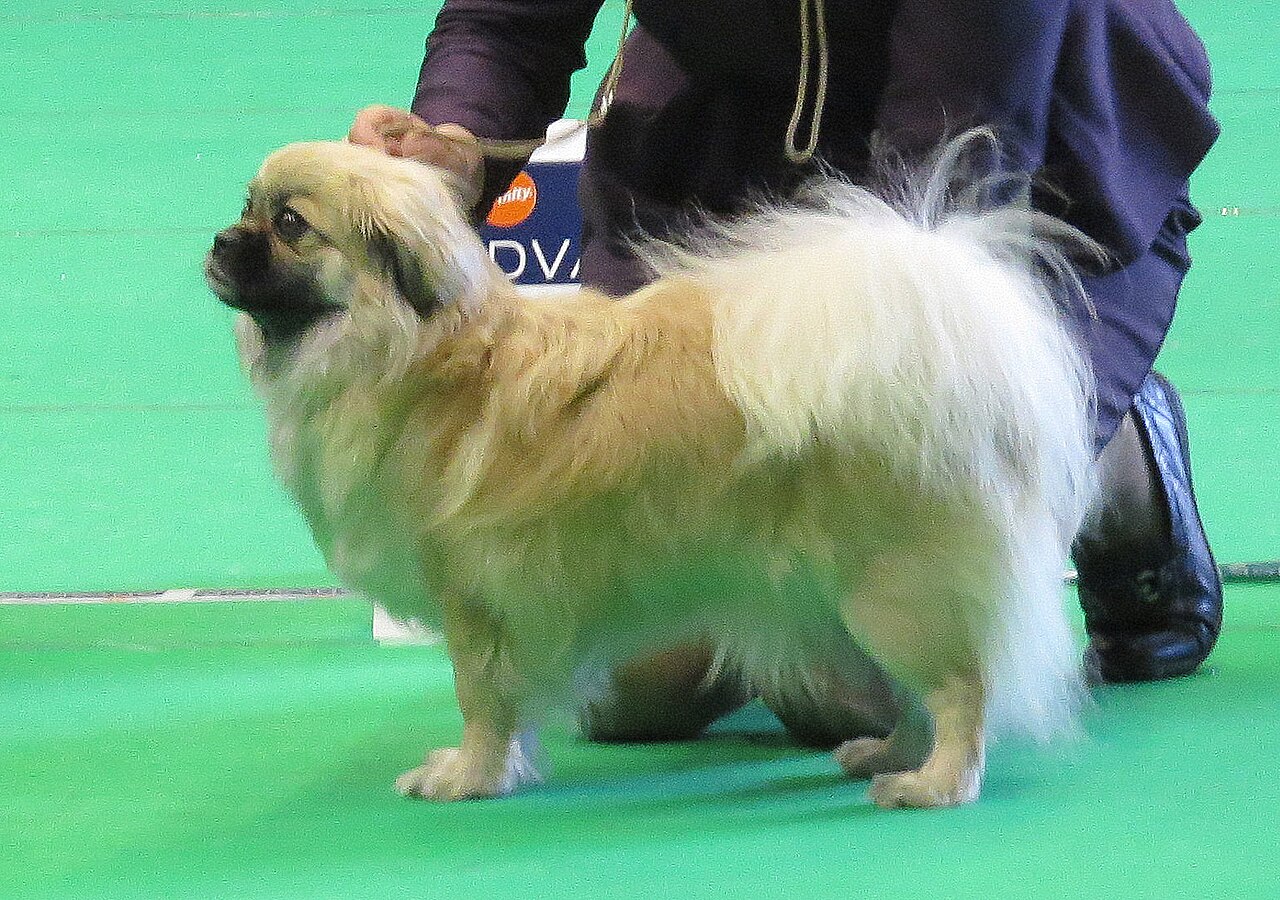
A small, active dog, slightly longer than tall, with a small, slightly domed head, a blunt, medium-length muzzle without wrinkles, a slightly undershot bite, dark oval eyes and feathered drop ears. Males carry a mane or "shawl" around the neck, more than females do. The plumed tail curls over the back when the dog moves. The feet are harefeet with feathering between the toes. The double coat is silky, flat-lying and of moderate length. All colors and mixes are allowed; the FCI standard excludes only merle.
| Males | Females | |
|---|---|---|
| Height | about 10 in | about 10 in |
| Weight | 9-15 lbs | 9-15 lbs |
| Lifespan | 12-15 years | 12-15 years |
| Coat | Silky double coat of moderate length, mane in adults | Same, usually less mane |
Height and weight are from the AKC standard; the FCI standard gives about 25.4 cm and 4.1-6.8 kg, the same numbers in metric. The AKC lists a life expectancy of 12-15 years, and the parent club says many live to 15 or more.
Exercise and daily life
The AKC rates its energy as average. A Tibbie is as happy lying around the house as it is running in the yard. A daily walk is the baseline, and the AKC says it can keep up with an owner on long walks or jogs. Play, short trick sessions and new places to sniff fill the rest.
The AKC is clear that "a fenced yard is a must": it is quick, curious and independent, and its recall is not a given. It adapts well to an apartment, and the parent club says it is as happy in a small flat as in a large house, as long as its people are around. Its coat handles cold better than heat, so plan walks for cooler hours in summer.
Training
The AKC calls Tibbies smart and eager to please, and they can do well in agility, scent work, rally and obedience. In the same breath it warns that they have "a very independent mind" and decide if and when they will do what is asked. Its trainability rating is in the middle. Start early, keep it short and fun, and reward with food and play. Harsh methods make it stubborn.
Typical difficulties:
- Recall. Train it in a fenced area and on a long line. Do not count on it near busy roads.
- Alert barking. Thank the dog once, call it away from the window and reward quiet.
- Wariness of strangers. Plenty of calm visitors, places and sounds in the first months. The AKC calls puppy socialization "a must".
- Being alone. It bonds tightly, so teach short absences from puppyhood on.
Grooming
Easy compared with the Lhasa Apso or the Shih Tzu. The AKC calls it a natural breed that is not trimmed, except for the hair under the feet. Brush once or twice a week and comb the fringes, the mane and especially the hair behind the ears, which tends to mat. Bathe now and then.
The breed does shed, and the AKC says a heavy shed can come at any time of year; a bath with conditioner helps then. Tell your groomer not to do a "sanitary cut": the AKC warns that Tibbies lick and itch badly afterwards. Start nail trims early, because many Tibbies dislike them.
Health
The AKC and the parent club describe the Tibbie as a generally healthy, long-lived breed. Issues to know about:
- Progressive retinal atrophy (PRA). An inherited disease of the retina that leads to blindness. One form, PRA3, is caused by a variant in the FAM161A gene and has a DNA test; average onset is around 5 to 7 years. Other forms exist that the test does not catch.
- Cherry eye. A prolapsed gland in the third eyelid, usually corrected surgically.
- Patellar luxation, a slipping kneecap, as in many small breeds.
- Portosystemic shunt (liver shunt). The AKC says puppies should be checked for it before going to their new homes.
The parent club recommends a patella evaluation and an eye exam by a board-certified ophthalmologist for breeding dogs. Ask for both results for both parents and check them in the OFA database, and ask about the PRA3 DNA status.
Cost
Price guides put a Tibetan Spaniel puppy anywhere from about $800 to $3,500. From a breeder who tests both parents, plan on roughly $1,500 to $3,000, and expect a waiting list, since litters are few. Start with the TSCA breeder directory and the AKC Marketplace. Cheap "Tibbie" puppies without AKC papers or eye and patella results are a red flag.
Running costs are modest: roughly $700 to $1,200 a year for food, routine vet care, preventives and insurance. There is no professional grooming bill if you brush at home. Most states require a rabies vaccination, and many cities a dog license.
Who it suits and who it does not
Good match for:
- Apartment and city dwellers who want a small dog that is not a fragile toy
- Families with children who treat a dog with respect
- People who want an alert little watchdog with a natural, easy coat
- Owners who walk daily and enjoy an independent, clever companion
Not a match for:
- People who want an obedience star that does everything on the first ask
- Homes where the dog would be alone all day or kept outside
- Homes with thin walls or neighbors who complain about any barking
- People who want a dog that loves every stranger. For a bigger Tibetan dog with a long coat, look at the Tibetan Terrier or the Lhasa Apso; for an Asian lap dog with a softer attitude, the Japanese Chin; for a cuddly Western spaniel, the Cavalier King Charles Spaniel