Origin and history
The Pomsky is a cross between a Pomeranian and a Siberian Husky. It is one of the youngest designer crosses: the first documented litter was born in Arizona in 2012, bred by Tressa Peterson and Joline Phillips.
The size gap between the parents shapes how the cross is made. A Pomeranian weighs 3 to 7 lbs, a Husky 35 to 60 lbs. For a first-generation litter, breeders use a Husky mother and a Pomeranian father, almost always by artificial insemination, because a toy-sized mother could not safely carry large puppies.
The Pomsky is not a recognized breed. The AKC and UKC do not register it, and neither does the FCI. Private breeder associations such as the Pomsky Club of America and the International Pomsky Association keep their own records and size goals, but there is no closed stud book and no standard that a judge or a vet could hold a puppy against.
The labels you will see in ads:
- F1: Husky x Pomeranian, 50/50, the least predictable in size
- F2: Pomsky x Pomsky
- F1b / multigen: back-crosses and later generations, often bred smaller and more uniform
Temperament and character
Expect a husky personality in a smaller body. A typical Pomsky is playful, curious, alert and very attached to its people. The two traits owners mention most:
- It talks. Both parents are vocal. Pomskies bark at the door, and many howl, whine and "talk back" like a Husky. In an apartment with thin walls, this matters more than size.
- It runs. The Husky side brings an urge to roam, a strong prey drive toward cats, squirrels and small pets, and real skill at escaping. Many Pomskies dig under fences, slip collars or bolt through an open door.
The Pomeranian side often adds a bold, bossy streak and suspicion of strangers. Pomskies do well with respectful older children; toddlers who grab are harder. They sound the alarm but are not guard dogs.
With no standard, temperament varies by litter. Meeting the mother tells you more than any ad.
Size and appearance
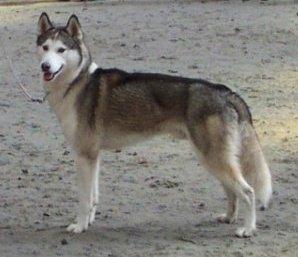
There is no official size. Adults land somewhere between the two parents:
| Pomeranian (AKC) | Typical Pomsky | Siberian Husky (AKC) | |
|---|---|---|---|
| Weight | 3-7 lbs | 20-30 lbs | 35-60 lbs |
| Height | about 6-7 in | 10-15 in | 20-23.5 in |
| Lifespan | 12-16 yrs | 12-15 yrs | 12-14 yrs |
F1 dogs often end up at the top of that range or above it; later generations are usually bred toward the lower end. Ads for "teacup" or "toy" Pomskies under 10 lbs are a red flag: dogs that small are either mostly Pomeranian or bred for size at the cost of health.
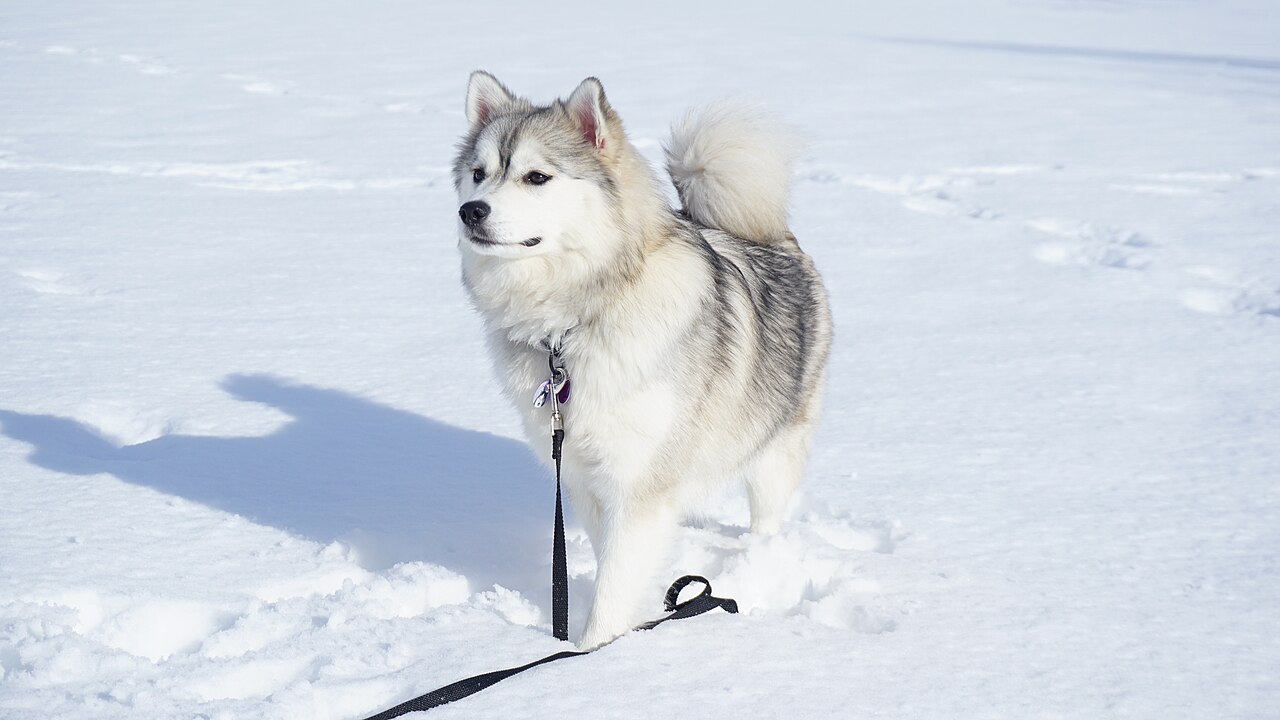
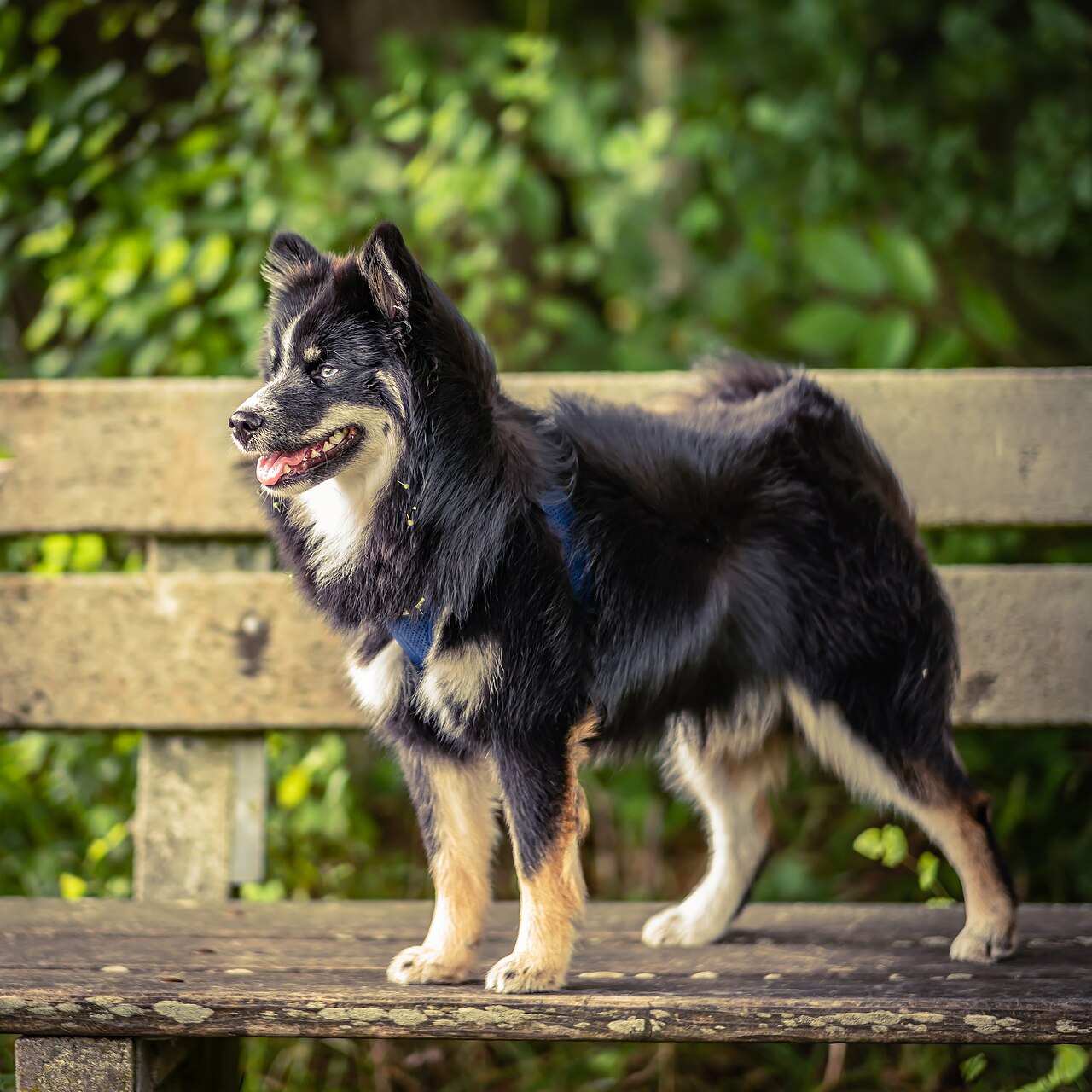
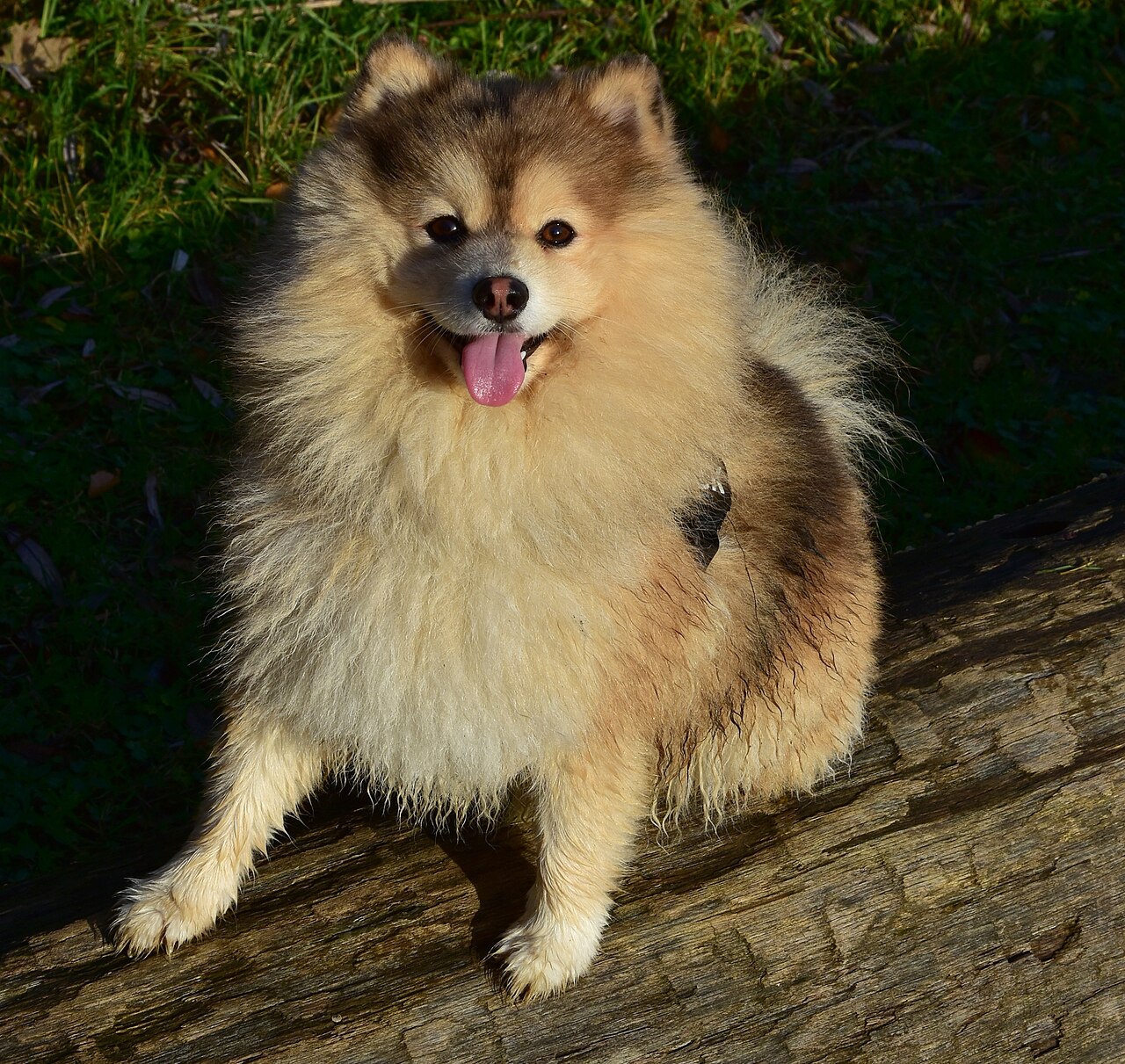
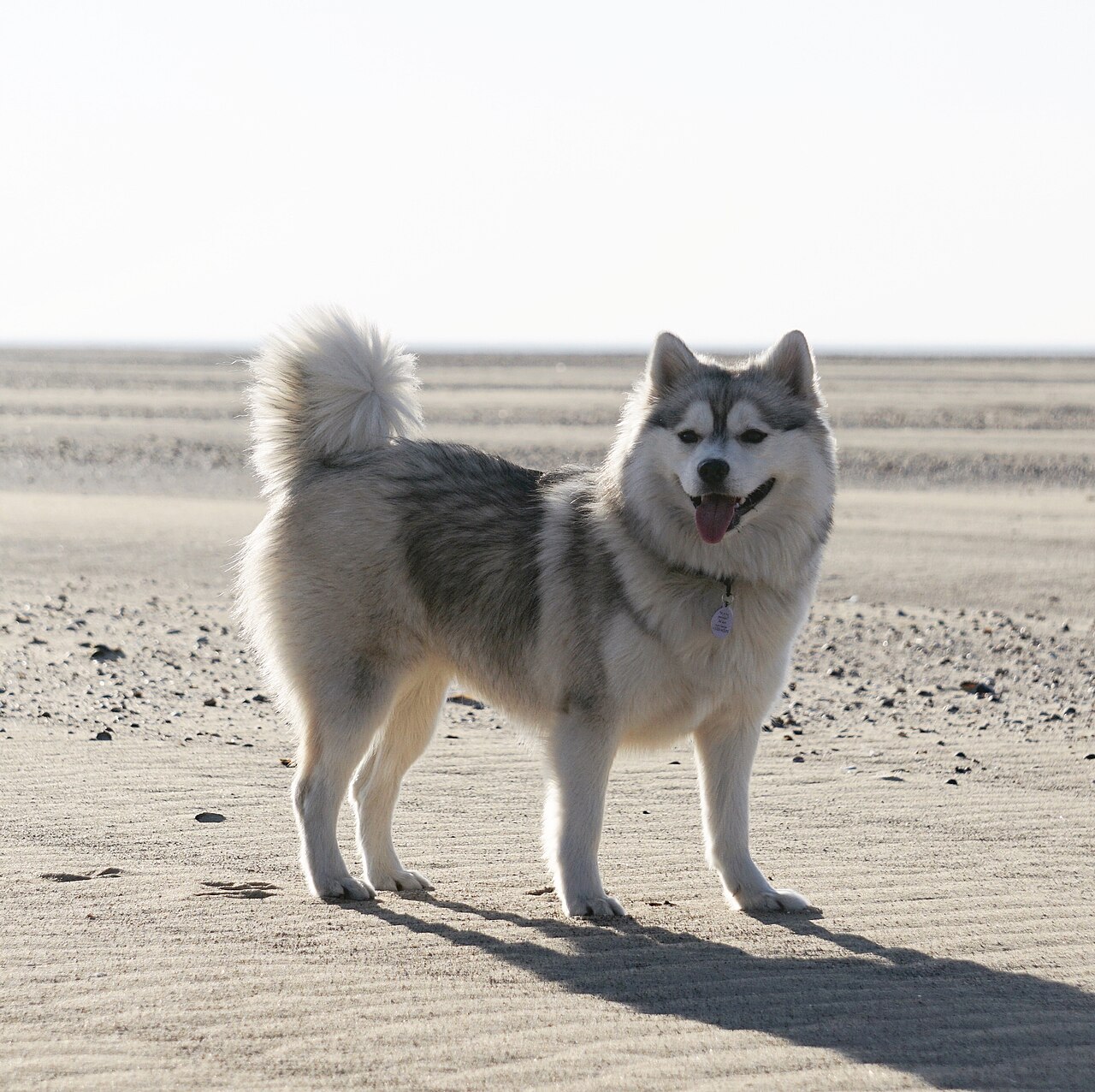
The coat is a medium-length double coat. Many buyers want husky markings and blue eyes, and breeders price accordingly, but coat color, eye color and mask are the least reliable traits in a cross.
Exercise and daily life
This is an active dog. Plan on 60 to 90 minutes a day of walks, play and sniffing games. A bored Pomsky barks, chews and tries to escape.
In practice:
- leash or a secure fence; recall is unreliable in most Pomskies
- check fences for gaps and digging spots, use an escape-proof harness
- in summer, walk early and late because of the double coat
Apartment life works size-wise; the noise is the real question if you share walls.
Training
Pomskies are smart and learn quickly, but the Husky side asks "what's in it for me?". Short, varied sessions with food rewards work best; harsh corrections backfire.
Typical problem areas:
- barking and howling, especially when left alone
- house training, which can take longer than with larger breeds
- recall, as soon as something more interesting appears
- resource guarding and snappiness if the dog is never taught to accept handling
Grooming
Both parents have a dense double coat, so the Pomsky sheds year-round and heavily during its seasonal coat blows, usually twice a year. Brush two or three times a week, and daily during a shed, with an undercoat rake and a slicker brush.
Do not shave the coat. Clipping a double coat can damage regrowth and removes its protection from sun and heat. Brush teeth regularly: dental disease is common in small dogs with Pomeranian genes.
Health
A cross does not cancel out the problems of its parents; it can inherit from both. Conditions to know about:
- Patellar luxation (slipping kneecaps), common in Pomeranians
- Hip dysplasia, from the Husky side and in larger Pomskies
- Eye diseases known in Huskies, such as hereditary cataracts and progressive retinal atrophy (PRA)
- Collapsing trachea and dental disease, from the Pomeranian side
- Coat and skin problems, such as alopecia X (Pomeranian) and zinc-responsive dermatosis (Husky)
The Siberian Husky Club of America expects breeding dogs to have hip evaluations and a yearly eye exam by a board-certified ophthalmologist. Ask a Pomsky breeder for the same on both parents, plus a patella exam on the Pomeranian. With no club checking breeders, those papers are the only quality control you get.
Cost
| Item | Typical cost |
|---|---|
| Puppy from a health-testing breeder | $2,000-$5,000 |
| Food | $300-$500 a year |
| Vet care and prevention | $500-$900 a year |
| Insurance | $30-$60 a month |
| Grooming tools or occasional deshed | $100-$300 a year |
Expect roughly $1,300 to $2,400 a year in total. High prices for blue eyes, "rare" colors or tiny size say nothing about health testing. The Pomsky is also a frequent target of online puppy scams: never pay a deposit for a puppy you have not seen with its mother.
Who it suits and who it does not
Suits:
- active people who want a husky look in a smaller dog
- owners with time for daily exercise, training and brushing
- homes with a secure yard, or owners committed to leash walking
Does not suit:
- people who want a quiet dog, or neighbors who share a wall
- homes with cats, rabbits or small pets, unless the dog was raised with them
- anyone who wants to know exactly what size and look they are getting
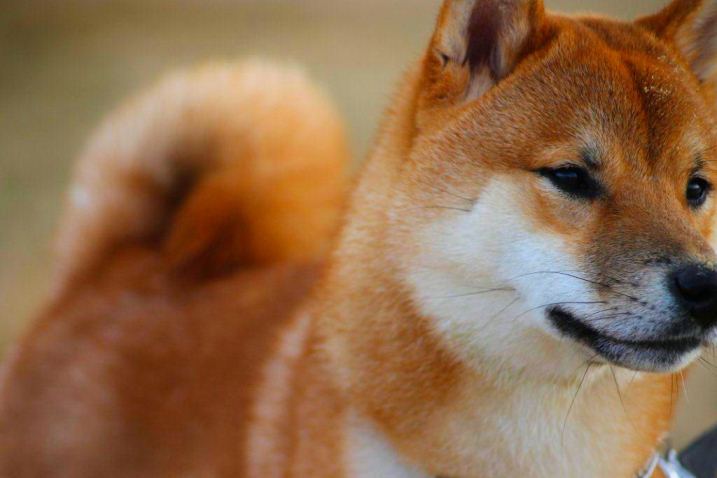
If you want a predictable small dog, the Pomeranian or the Japanese Spitz have standards behind them. For a small Spitz-type breed with a standard behind it, compare the American Eskimo Dog or the Shiba Inu; the real husky only comes full-size, as the Siberian Husky.