Origin and history
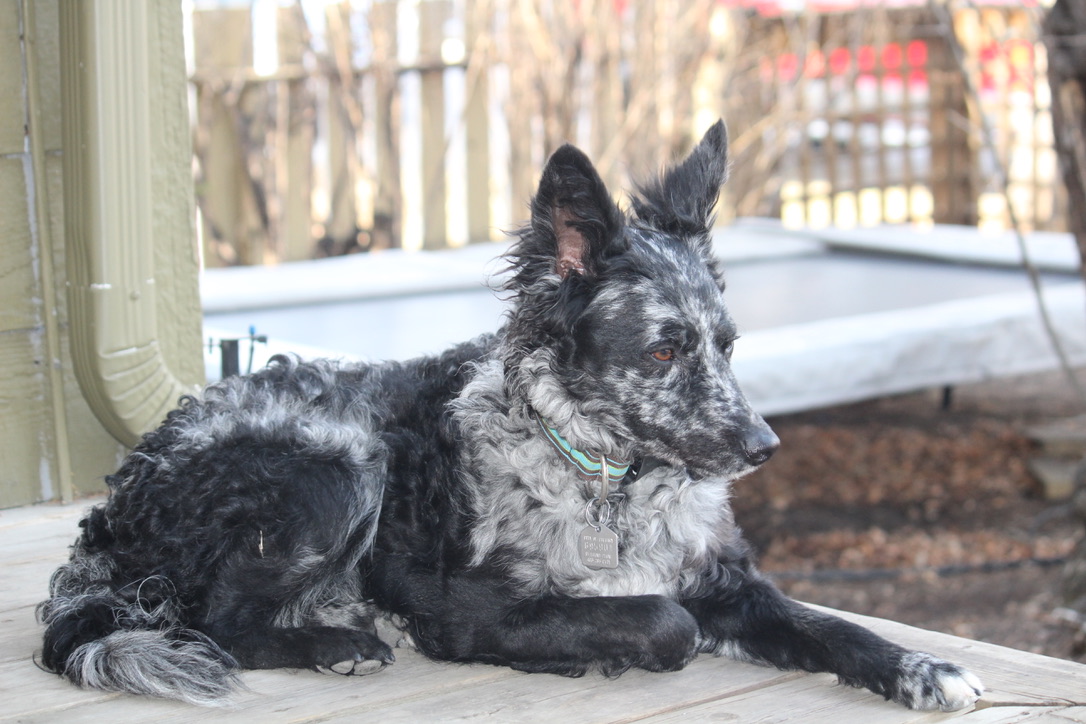
The Mudi (say "moodie") is a small-to-medium farm dog from Hungary. The FCI standard says the breed came into being between the 18th and 19th centuries, from Hungarian herding dogs crossed most probably with prick-eared German herding dogs. For a long time Hungarian shepherds simply split their dogs into big ones (Kuvasz, Komondor) and small ones, and the small ones were bred together. That is why the early history of the Mudi, the Puli and the Pumi is largely the same story.
The breed got its name around 1930 from Dr. Dezső Fényes, director of the museum in Balassagyarmat, who was one of the first to breed this prick-eared type separately. By 1936 it was officially recognized in Hungary. World War II nearly wiped it out. In 1966 Dr. Zoltán Balassy wrote a new standard from the handful of survivors, and the FCI approved it the same year. Today it is FCI standard No. 238, Group 1, Section 1 (Sheepdogs), without working trial; the current text was published in 2023.
In the US the Mudi was recorded in the AKC Foundation Stock Service from 2004, could enter companion events from January 1, 2008, and became a fully recognized breed in the Herding Group in 2022. The parent club is the Mudi Club of America, AKC parent club since October 2015. It is still rare: the club estimates no more than a few thousand Mudis worldwide, most of them in Hungary, followed by Finland. In AKC registrations it ranked 122nd in 2024 and 125th in 2025.
Temperament and character
The FCI standard describes the Mudi as "extremely able to learn, of lively temperament, courageous, watchful, keen to work, alert and adaptable". The AKC standard adds that it is "sensibly suspicious and therefore an excellent watchdog". In Hungary it still works flocks of up to 500 sheep, drives cattle and, according to the standard, is even used on wild boar. In daily life:
- It is a worker in a small body. Quick, tough and fearless with livestock. The Mudi Club of America sums the breed up in one word: "scrappy".
- It barks. Alerting is part of the job: at home the Mudi warned the bigger flock guardians. The club calls barking at just about everything one of the only drawbacks of the breed. Teach a quiet cue early.
- It bonds closely and is reserved with strangers. Friendly and playful with its own people, often cool on first meetings. Some lines are shy, so socialization from the first weeks matters.
- Young males can be pushy. The club mentions obstinacy and, in some adolescent males, aggression toward other dogs. Usually a phase, but plan for it.
With children and other pets it does well, the club says, especially if it grows up with them. Like any herding dog it may try to control running kids.
Size and appearance
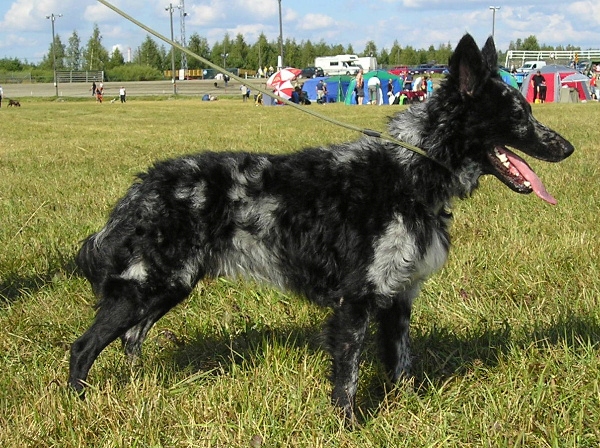
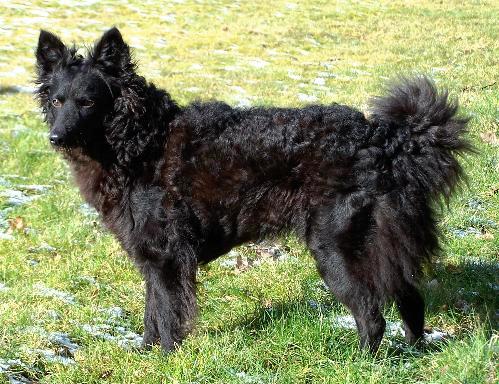
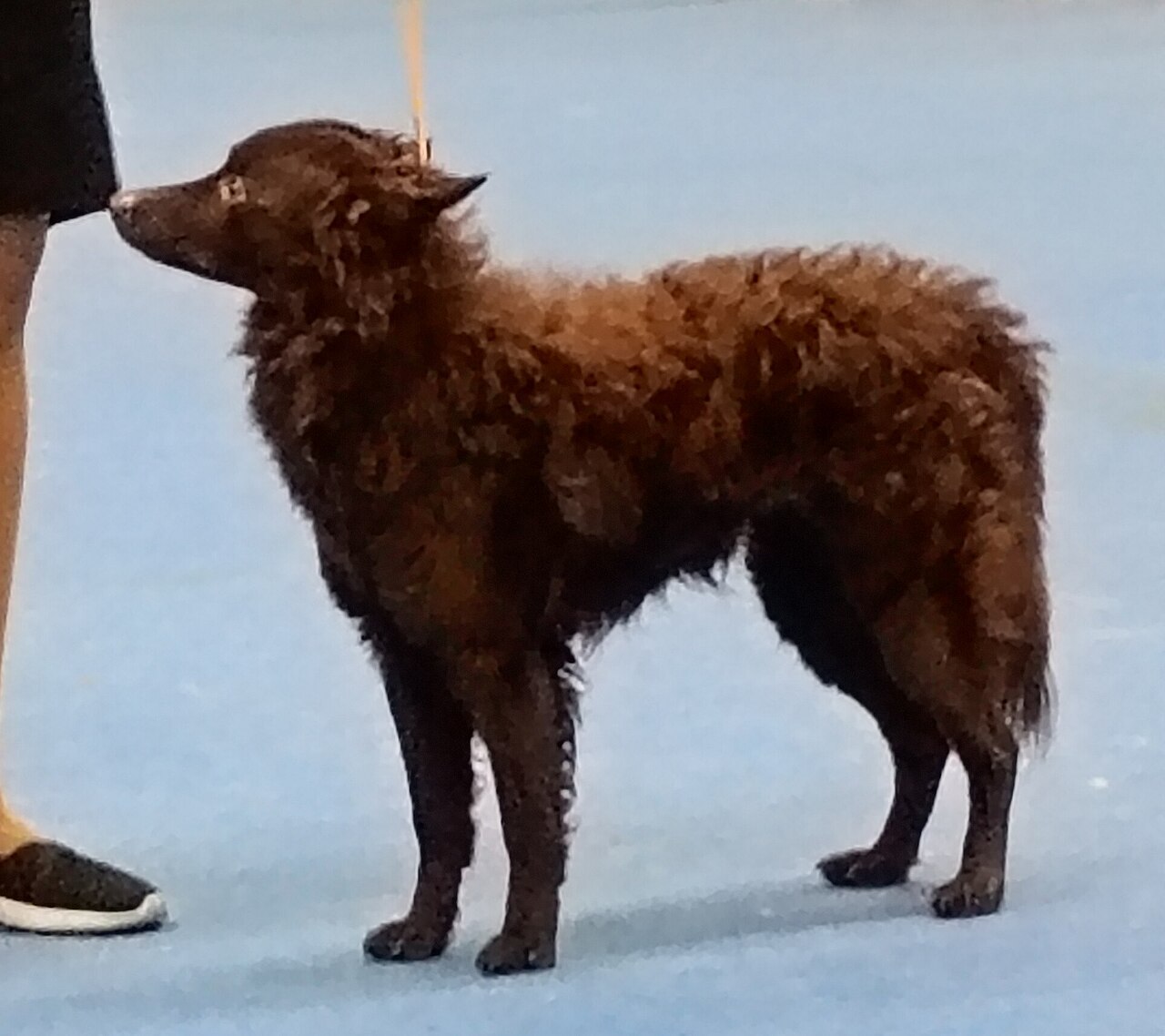
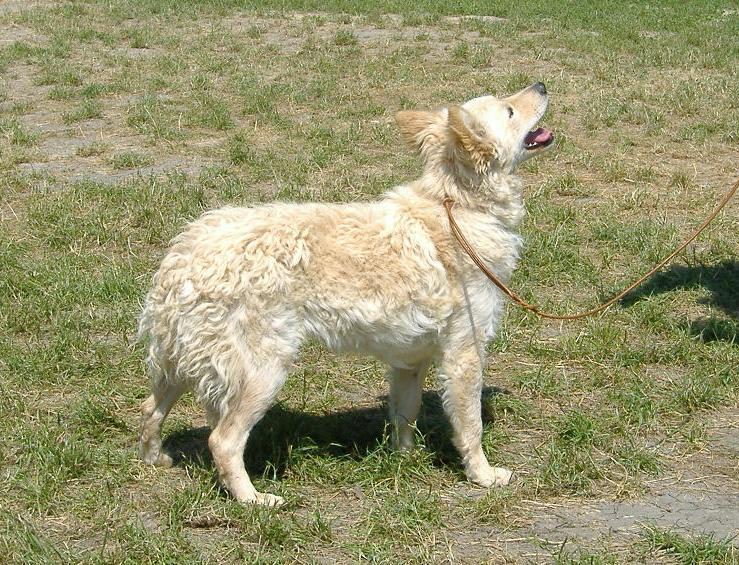
A medium-sized, slightly-longer-than-tall herding dog with a wedge-shaped head and prick ears that move independently "like a radar screen" (FCI). The head and the front of the legs have short, smooth hair; the rest of the body has a dense, shiny coat, very wavy to slightly curly, about 1 to 3 inches long, with featherings on the back of the legs and the tail. Colors: black (by far the most common), white, fawn, ash, brown, ash-brown and the merle pattern (Hungarian cifra). Tail length varies; dogs born with a natural bobtail are not faulted.
| Males | Females | |
|---|---|---|
| Height | 15.5-19 in (FCI 41-47 cm) | 14.5-18 in (FCI 38-44 cm) |
| Weight | 18-29 lbs | 18-29 lbs |
| Lifespan | 12-14 years | 12-14 years |
| Coat | Wavy to curly, short on head and legs | Same |
Heights are from the AKC standard (ideal 17.5 in for males, 16.5 in for females); weight and lifespan from the AKC breed profile.
Exercise and daily life
The AKC rates the Mudi at the top of its energy scale. Plan on at least an hour of real activity every day, plus something for the brain: herding, agility, flyball, frisbee, obedience, scent work. The club says Mudis are calm and relaxed in the house but appreciate a good run outside, and that they are known for digging and for an "extraordinary jumping ability". A bored Mudi goes over or under the fence.
It can live in an apartment if it gets its work and learns to be quiet on cue; the club says so explicitly. Thin walls and a dog that announces every footstep are a real problem, though, so a house with a secure, high fence is easier. Mudis have also worked as search and rescue dogs in Finland and the US.
Training
The AKC puts the Mudi at the top for trainability: biddable and always keen on a job. What works: short, varied sessions, reward-based training, clear rules and early socialization. Harsh handling makes this sensitive dog shut down or dig in its heels.
Typical difficulties:
- Barking. Teach "speak" and "quiet" as a pair, and do not reward the alarm.
- Shyness or suspicion of strangers. Meet many calm people and places before 16 weeks, and keep doing it through adolescence.
- Reactivity to other dogs, especially in young males. Puppy class, then controlled play with stable adult dogs.
- Digging and escaping. Check the fence line before the puppy does.
Grooming
Easy. The AKC calls the Mudi a "wash-and-wear breed": occasional baths, a quick brush or comb to remove dead hair, and regular nail trims. The Mudi Club of America says a good, quick brushing about once a week is all it needs, and rates shedding as light to average. The coat sheds dirt well. Do not trim it for the ring: the AKC standard wants it presented naturally, never sculpted or blown dry.
Health
The AKC calls the Mudi an overall healthy breed. The Mudi Club of America reports cases of epilepsy, hip dysplasia, congenital cataracts and color dilution alopecia, and its screening list adds elbows, knees and the heart. What to know:
- Epilepsy. The most serious concern for owners. There is no screening test, so ask the breeder openly whether seizures have occurred in the line.
- Hip dysplasia. Elbows are X-rayed in the same screening.
- Luxating patella (slipping kneecap), checked by a vet exam.
- Congenital cataracts and other eye disease.
- Color dilution alopecia, a coat and skin problem of dilute ("blue") colored dogs.
For CHIC certification the Mudi Club of America lists a hip evaluation, an elbow evaluation, a patella evaluation, an eye exam by a board-certified ACVO ophthalmologist and a basic cardiac exam. Ask for all five for both parents and check them in the OFA database.
Cost
The Mudi is rare in the US and litters are few, so expect a waiting list and possibly travel. Price guides put a puppy at about $1,500 to $2,500, and many Good Dog breeder listings show $2,500 to $2,800, depending on location. The club's breeder referral page is the best starting point. Be wary of cheap "Mudi" puppies without AKC papers or health tests.
Running costs are moderate for a dog this size: roughly $1,000 to $1,600 a year for food, routine vet care, preventives and insurance. Grooming costs almost nothing. Budget for training classes or a dog sport; this breed needs a job.
Who it suits and who it does not
Good match for:
- Active owners who want a small, tough partner for agility, flyball or herding
- Farms and homes with livestock and a secure fence
- People who want an alert watchdog that is not a big dog
- Owners who like a low-maintenance coat
Not a match for:
- Homes with close neighbors where barking causes trouble
- Owners away all day or looking for a calm couch dog
- People who want a dog that loves every stranger. If you want a similar herding brain with an easier social side, consider the Shetland Sheepdog or the Miniature American Shepherd; for a comparable small, lively herder, the Pyrenean Shepherd; for even more work drive, the Border Collie